


Photo Disclaimer
Description
Indian Spotted Turtle
Scientific Name: Geoclemys hamiltonii
Common Name: Indian Spotted Turtle, Spotted Pond Turtle
Species Overview
Size: Males typically reach 5 to 6 inches (13 to 15 cm), while females grow larger at 6 to 8 inches (15 to 20 cm).
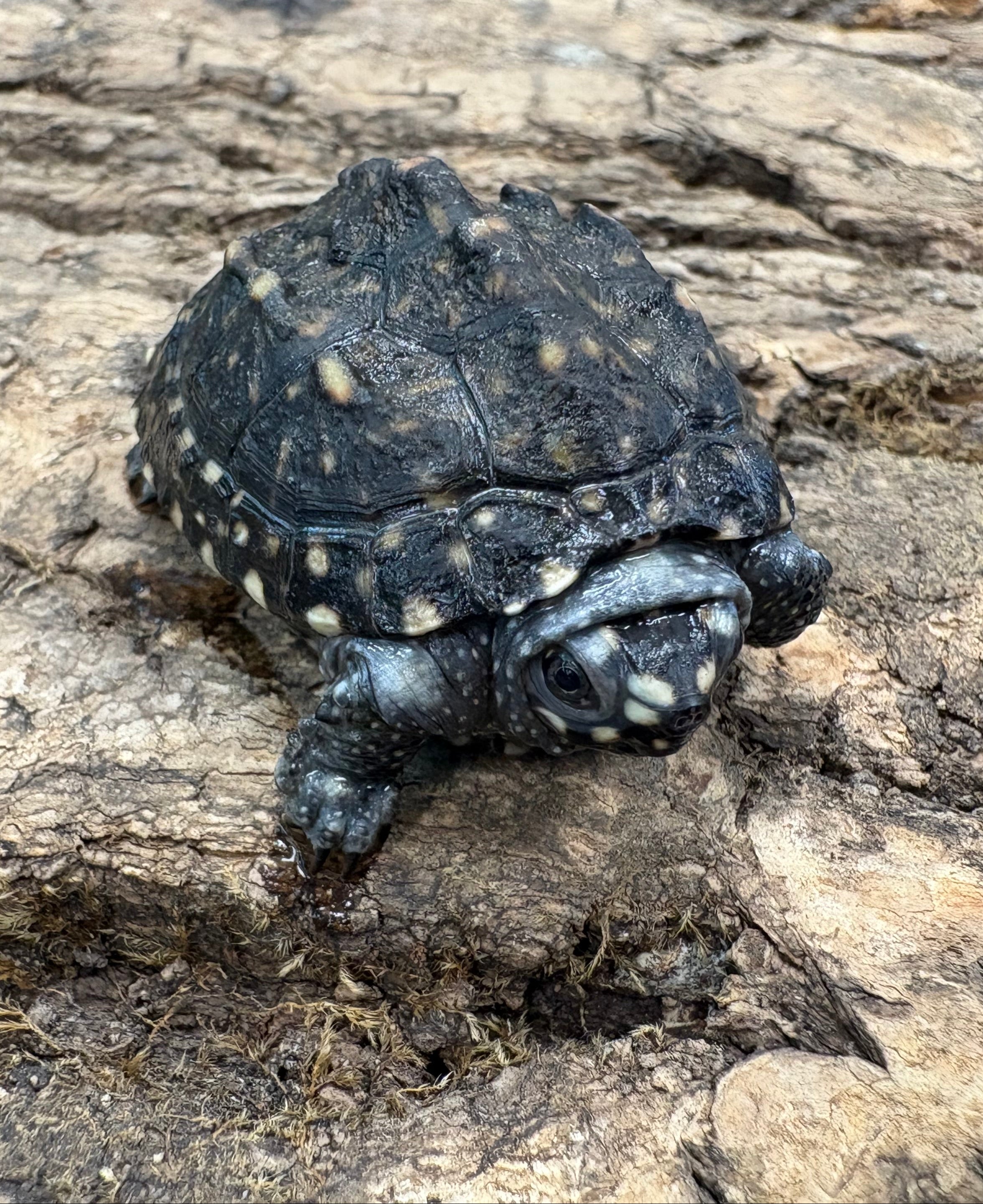
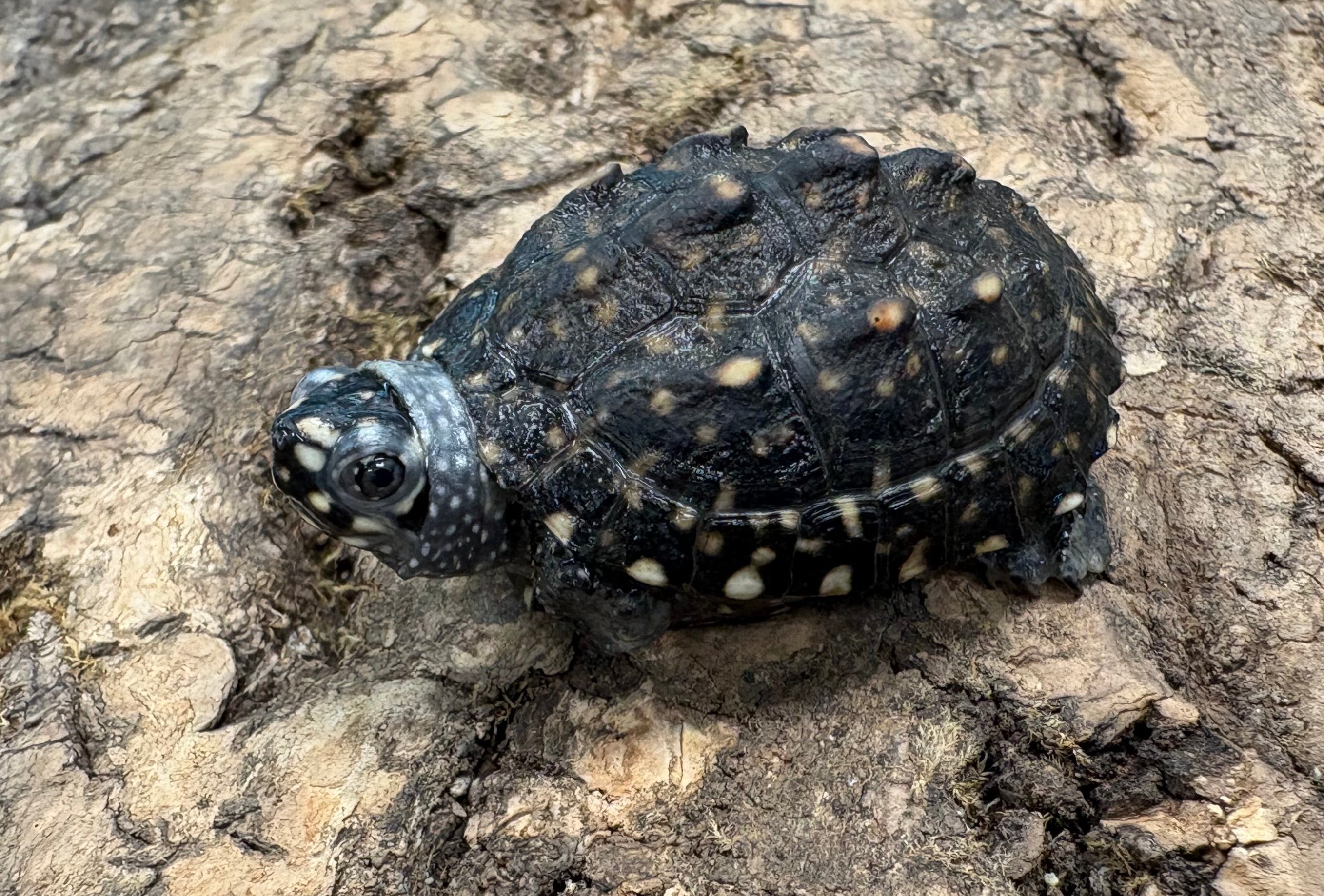
Appearance: The Indian Spotted Turtle is a striking species easily recognised by its glossy black carapace adorned with numerous yellow or cream-coloured spots. The head and limbs are similarly marked with bold yellow speckling, creating a highly contrasting pattern. The plastron is yellow with variable dark blotches. Females tend to be broader and larger-bodied, while males have longer tails and a more tapered build.
Distribution: Found across northeastern India, Nepal, Bangladesh, and parts of Pakistan. It is associated with slow-moving freshwater ecosystems throughout the Indian subcontinent.
Habitat: In the wild, this species inhabits still or slow-moving waters such as ponds, marshes, oxbow lakes, canals, and rice paddies. It prefers shallow, vegetated environments with areas for basking. In captivity, they require a warm aquatic setup with clean water, strong filtration, and a stable basking platform.
Behaviour: Indian Spotted Turtles are diurnal, alert, and active swimmers. They bask frequently and spend time exploring submerged structure and vegetation. They may be shy initially but become more confident with consistent care. Juveniles especially display strong basking and foraging behaviours.
Captive Care
Enclosure: Provide an aquatic enclosure with a minimum footprint of 48 × 24 inches (120 × 60 cm) for one adult. Offer deep water for swimming, submerged hides, driftwood, floating platforms, and aquatic plants for additional cover. Strong filtration is essential due to their sensitivity to poor water quality.
Temperature and Humidity:
Water temperature: 78 to 82°F (26 to 28°C)
Basking area: 92 to 96°F (33 to 36°C)
Ambient air temperature: 80 to 86°F (27 to 30°C)
Lighting: Provide full-spectrum lighting with 10–12% UVB to support shell and bone development. Ensure a secure, dry basking area with easy access from the water.
Diet: Offer a varied omnivorous diet including insects, earthworms, snails, small fish, crustaceans, commercial turtle pellets, aquatic plants, and leafy greens. Juveniles require higher protein intake, while adults benefit from a more balanced mix of plant and animal matter.
Behaviour in Captivity: Indian Spotted Turtles are active, engaging swimmers that adapt well when provided warm, clean water and consistent feeding routines. They appreciate visual cover and will use basking platforms readily.
Special Considerations
• Sensitive to water quality; maintain strong filtration and frequent water changes.
• Provide shaded aquatic areas alongside a strong basking zone.
• Warm water temperatures are important for proper metabolism.
• Juveniles require more protein than adults.
Taxonomy Note
Geoclemys hamiltonii is a monotypic species, meaning it is the only member of its genus. It is closely related to other Asian pond and river turtles within the Geoemydidae family and is recognised for its distinctive spotted pattern.
Genetics Note
There are no recognised morphs for the Indian Spotted Turtle. Variability in spot size, density, and shell contrast reflects natural individual and locality differences rather than selective breeding.