


Photo Disclaimer
Description
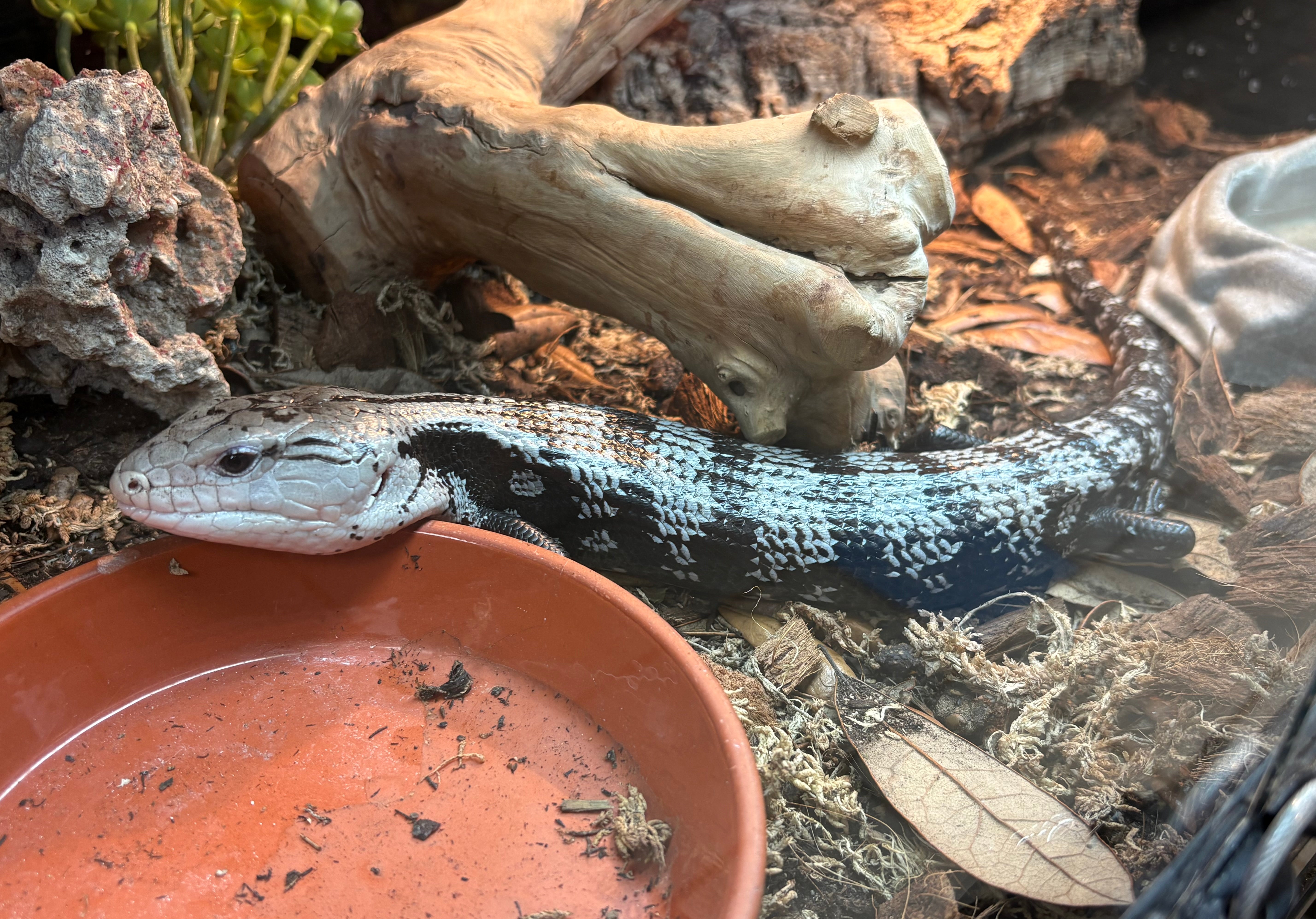
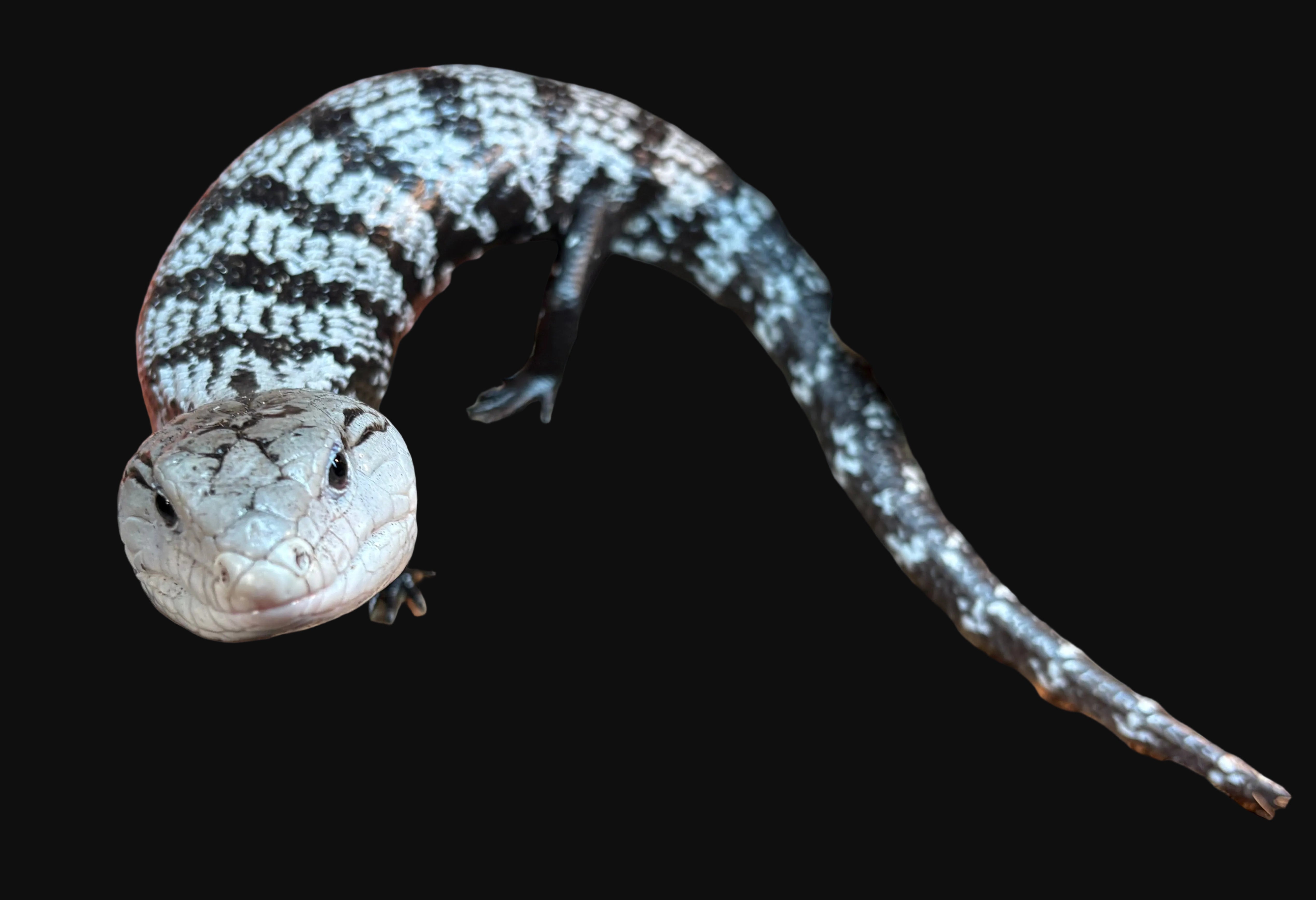
Indonesian Blue Tongue Skink (Axanthic)
Scientific Name: Tiliqua gigas
Common Name: Axanthic Indonesian Blue Tongue Skink
Species Overview
Size: Adults typically reach 18 to 24 inches (46 to 61 cm) in total length, with a sturdy body and broad triangular head typical of the species.
Appearance: Axanthic Indonesian Blue Tongue Skinks lack yellow pigment, resulting in a cool-toned colour palette dominated by greys, blacks, silvers, and charcoal. Banding is often sharper and higher contrast than in wild-type individuals. Some Axanthics display icy silver tones along the back or flanks, giving them a striking monochromatic appearance. Body shape remains consistent with the species: smooth, glossy scales, powerful limbs, and the characteristic bright blue tongue.
Distribution: Indonesian Blue Tongue Skinks occur across the Indonesian archipelago, including Halmahera, Ambon, Seram, and surrounding island groups.
Habitat: These skinks inhabit humid tropical forests with deep leaf litter, abundant ground cover, and consistent moisture. They frequently shelter under logs, bark, and vegetation, thriving in environments with stable humidity.
Behaviour: Indonesian Blue Tongue Skinks are crepuscular to diurnal and rely heavily on secure hiding spaces. They display defensive behaviours such as puffing up, hissing, and showing their blue tongue. As a species, they tend to be more moisture-dependent and sometimes more secretive than Australian blue tongue species.
Captive Care
Enclosure: Provide a spacious terrestrial enclosure at least 48 inches × 24 inches × 24 inches (120 × 60 × 60 cm). Use deep substrate to support humidity and burrowing, along with cork flats, logs, and multiple hides. Floor space is more important than vertical height.
Temperature and Humidity:
Basking area: 95 to 100°F (35 to 38°C)
Ambient temperature: 80 to 85°F (27 to 29°C)
Night temperatures: 72 to 75°F (22 to 24°C)
Maintain humidity between 70 and 90 percent using deep substrate, misting, and partially covered enclosures.
Lighting: Provide full-spectrum lighting with moderate UVB (5 to 7 percent). While some keepers maintain these skinks without UVB, its inclusion supports long-term metabolic health and natural behaviour.
Diet: Offer a balanced omnivorous diet consisting of high-quality wet dog or cat food (protein foundation), cooked lean meats, snails, roaches, hard-boiled eggs, leafy greens, squash, sweet potato, and berries. Supplement calcium and multivitamins as appropriate.
Behaviour in Captivity: Indonesian Blue Tongue Skinks are generally calm but often more reclusive than Australian species. They adapt well with consistent routines, deep substrate, and secure hiding areas. Handling tolerance varies by individual and improves with slow, gentle interaction.
Special Considerations:
• High humidity is essential for proper shedding and overall health.
• Provide deep substrate to allow burrowing and moisture retention.
• Ensure ample hides to reduce stress.
• Axanthic individuals benefit from balanced lighting to enhance their silver-grey tones.
Taxonomy Note
This skink belongs to Tiliqua gigas, a species complex native to Indonesia and neighbouring regions. Members of this group are distinguished from Australian blue tongues by their humidity dependence, smoother scales, and more elongated bodies.
Genetics Note
Axanthic (recessive): Removes or reduces yellow pigment, producing cool-toned coloration dominated by grey, black, and silver. Visual Axanthic individuals express the trait fully, showing minimal to no warm tones.
Natural variation: Some Axanthics display darker charcoal contrasts, while others develop brighter silver backs depending on lineage and environmental conditions.