


Photo Disclaimer
Description
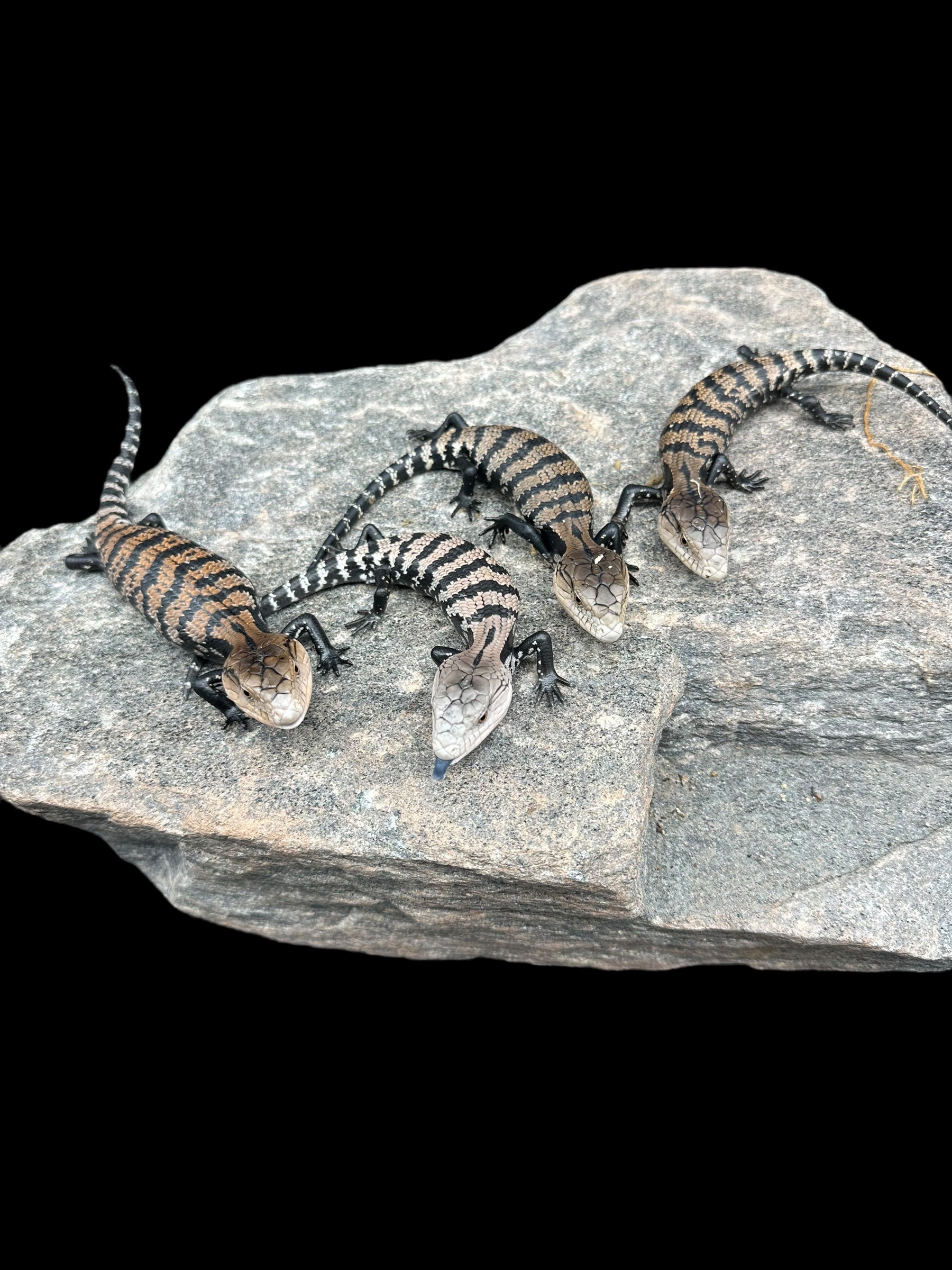
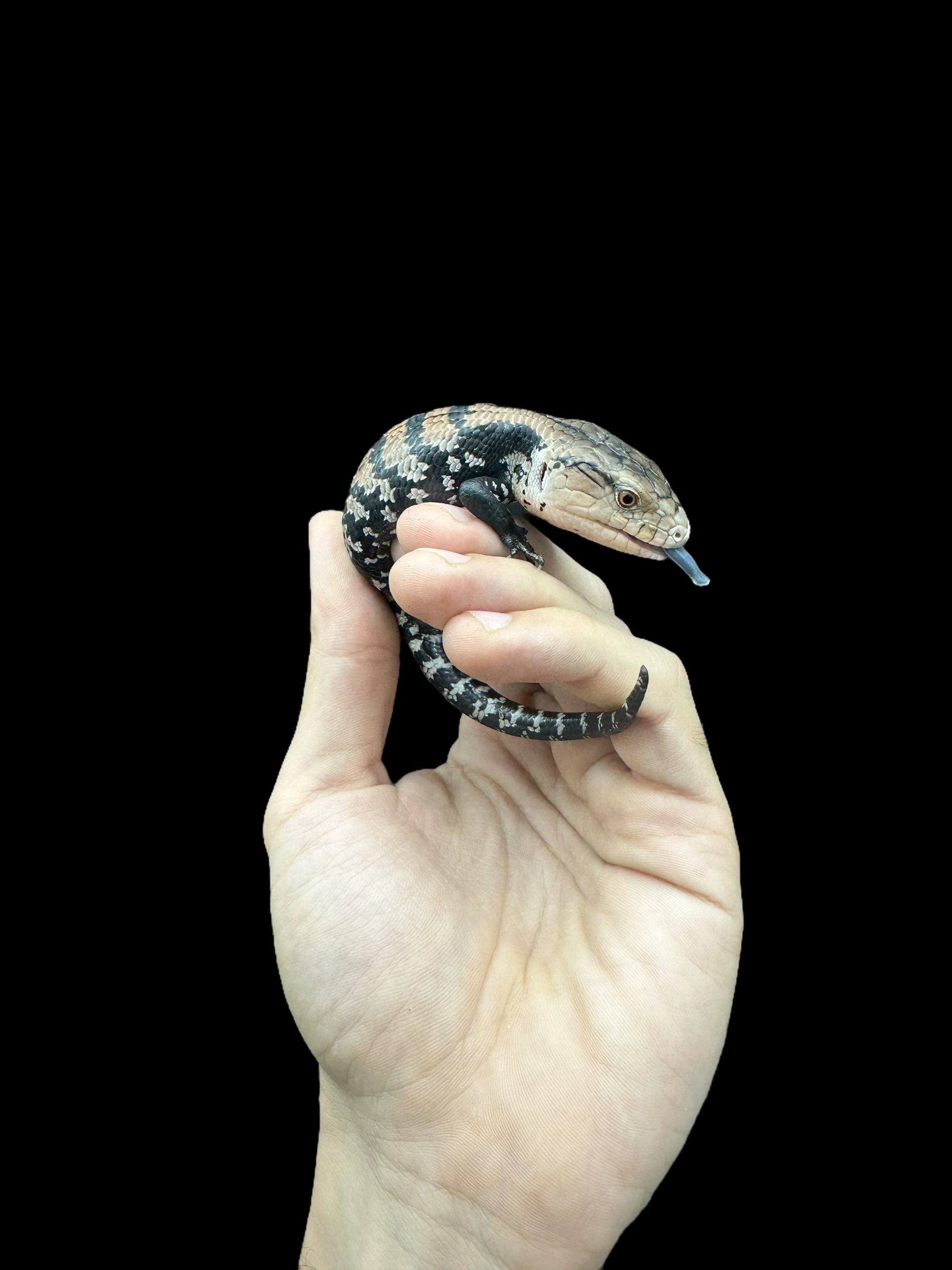
Indonesian Blue Tongue Skink (Halmahera)
Scientific Name: Tiliqua gigas
Common Name: Halmahera Blue Tongue Skink
Species Overview
Size: Adults typically reach 18 to 24 inches (46 to 61 cm) in total length, with a thick body, strong limbs, and a broad triangular head.
Appearance: Halmahera Blue Tongue Skinks are characterized by dark, bold banding over a deep brown or charcoal background. Many individuals display subtle reddish, purplish, or wine-coloured hues along the flanks and tail. Their scales are smooth and glossy, and like all blue tongues, they possess the iconic cobalt-blue tongue used for defence. Halmaheras often have a slightly more elongated body and darker, wetter-climate patterning compared to other Indonesian localities.
Distribution: This locality originates from Halmahera Island in the Maluku region of eastern Indonesia.
Habitat: Halmahera Blue Tongue Skinks inhabit humid tropical forests with deep leaf litter, heavy vegetation, and consistently high moisture. They frequently shelter under logs, bark, and natural ground debris and thrive in warm, dense, moisture-rich forest floors.
Behaviour: These skinks are crepuscular to diurnal and rely heavily on secure, tight hiding places. They may hiss, puff up, or display their blue tongue defensively when startled. Halmaheras tend to be more moisture-dependent and sometimes more secretive compared to Australian blue tongue species.
Captive Care
Enclosure: Provide a terrestrial enclosure at least 48 inches × 24 inches × 24 inches (120 × 60 × 60 cm). Include deep substrate for burrowing, cork flats, logs, foliage, and multiple secure hides. Ample floor space is more important than height.
Temperature and Humidity:
Basking area: 95 to 100°F (35 to 38°C)
Ambient temperature: 80 to 85°F (27 to 29°C)
Night temperatures: 72 to 75°F (22 to 24°C)
Humidity should remain between 70 and 90 percent, maintained through deep substrate, misting, and partial enclosure coverage.
Lighting: Provide full-spectrum lighting with moderate UVB (5 to 7 percent). While some keepers house Indonesian skinks without UVB, it is recommended for long-term metabolic and behavioural health.
Diet: Offer a varied omnivorous diet including high-quality wet dog or cat food, cooked lean meats, snails, roaches, hard-boiled eggs, leafy greens, squash, sweet potato, berries, and other vegetables. Supplement calcium regularly and multivitamins as needed.
Behaviour in Captivity: Halmahera skinks tend to be calm but may remain more secretive than Australian species. They thrive when provided with deep substrate, high humidity, and abundant secure hides. Handling tolerance improves with gentle, consistent interaction.
Special Considerations:
• Require consistently high humidity for proper shedding and skin health.
• Deep, moisture-retentive substrate is essential.
• Prone to stress if insufficient hiding spaces are provided.
• Hydration levels directly impact long-term health and shedding.
Taxonomy Note
The Halmahera Blue Tongue Skink is a locality form of Tiliqua gigas, a species found throughout Indonesia and surrounding regions. Compared to Australian blue tongue species, T. gigas skinks have smoother scales, rely more on humidity, and exhibit more elongate body shapes.
Genetics Note
Halmahera Blue Tongue Skinks are a naturally occurring locality rather than a morph. Variation exists within the locality, including differences in band contrast, depth of colour, and the presence of reddish or purplish tones, all of which fall within normal genetic diversity for this island population.