

Photo Disclaimer
Description
Japanese Cave Gecko
Scientific Name: Goniurosaurus orientalis
Common Name: Japanese Cave Gecko
Species Overview
Size: Adult Japanese Cave Geckos typically reach 7–8 inches (18–20 cm) in total length, including the tail. They are medium-sized, slender geckos with delicate limbs and a smooth, fine-grained skin texture.
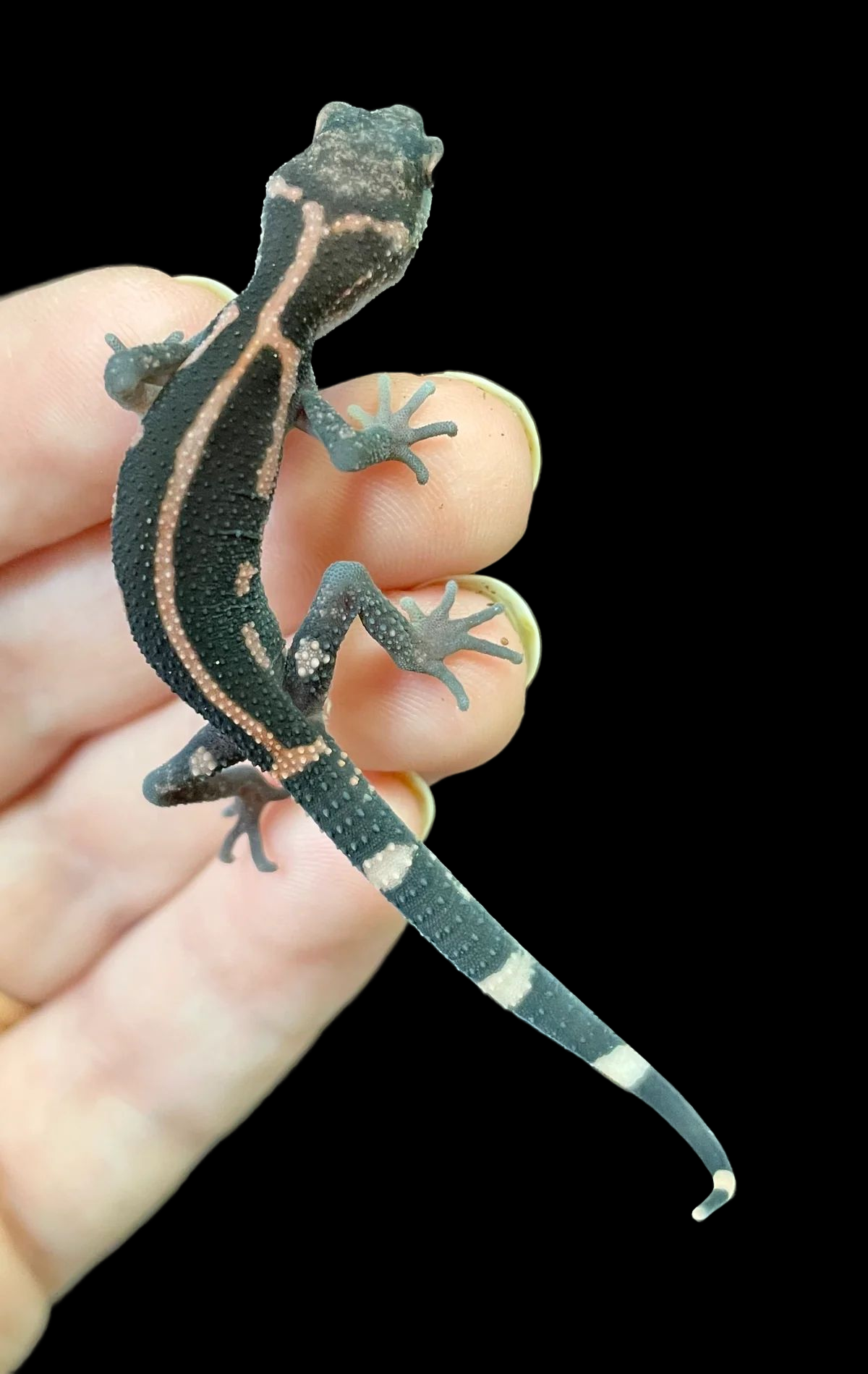
Appearance: This visually stunning species displays a dark, velvety base colour—ranging from deep brown to near black—highlighted by vivid orange or yellow banding across the body and tail. The head is broad and flat with a gentle taper toward the snout, and the large eyes glow crimson or orange-red under low light, giving the species an unmistakable appearance. The banding remains distinct into adulthood, and the tail is long and often banded to match the body.
Distribution: Endemic to the Ryukyu Islands of Japan, where it is found primarily on Okinawa and surrounding small islands.
Habitat: In the wild, Japanese Cave Geckos inhabit moist forest floors, limestone caves, and rocky hillsides, preferring shaded, humid microhabitats. They hide under logs, rocks, and within crevices during the day and emerge at night to hunt for invertebrates. In captivity, they thrive in naturalistic, humid enclosures that replicate these conditions with deep substrate and secure hiding spaces.
Behaviour: These geckos are nocturnal, secretive, and calm when undisturbed. While shy, they rarely act defensively and move slowly and deliberately. They are best kept as display animals but may tolerate gentle, minimal handling once fully acclimated.
Captive Care
Enclosure: Provide a terrestrial enclosure measuring at least 24 inches × 18 inches × 18 inches (60 × 45 × 45 cm) for a single adult. Use a naturalistic setup with soil, moss, and leaf litter to maintain humidity. Include rock hides, bark, and stable décor for security and enrichment.
Temperature & Humidity: Maintain daytime ambient temperatures between 74–80°F (23–27°C) with a localized warm area up to 84°F (29°C). Nighttime temperatures can safely drop to 68–72°F (20–22°C). Keep humidity between 70–90%, achieved through daily misting and the use of live plants or moisture-retentive substrate. Ensure adequate airflow to prevent stagnant conditions.
Lighting: Provide low-level UVB lighting (2–5%) on a 12-hour day/night cycle. Although nocturnal, Japanese Cave Geckos benefit from mild UV exposure for calcium metabolism and natural circadian rhythm regulation.
Diet: Feed a variety of gut-loaded insects such as crickets, roaches, and silkworms. Offer occasional soft-bodied worms or soldier fly larvae for variety. Dust all prey with calcium and multivitamin supplements regularly. Juveniles should be fed daily; adults every 2–3 days.
Behaviour in Captivity: Japanese Cave Geckos are calm, visually striking display animals. With proper humidity, temperature, and security, they become confident feeders and thrive long-term. They are hardy once acclimated and can live 10–15 years in captivity.
Special Considerations: Avoid excessive heat or dryness. Always use a thermostat to regulate heating and mist regularly to maintain stable humidity. Provide multiple hides to prevent stress and ensure successful sheds.
Taxonomy Note
The Japanese Cave Gecko (Goniurosaurus orientalis) belongs to the family Eublepharidae, which also includes the Leopard Gecko (Eublepharis macularius) and African Fat-tailed Gecko (Hemitheconyx caudicinctus). Unlike most geckos, members of this genus have movable eyelids and lack adhesive toe pads. G. orientalis is one of several Goniurosaurus species native to Japan and is recognized by its bold coloration and gentle disposition.
Genetics Note
There are currently no recognized morphs or selectively bred variants of Goniurosaurus orientalis. However, natural variation occurs in the brightness of the orange or yellow banding and overall tone depending on locality. These are naturally occurring regional differences rather than selectively bred traits.