
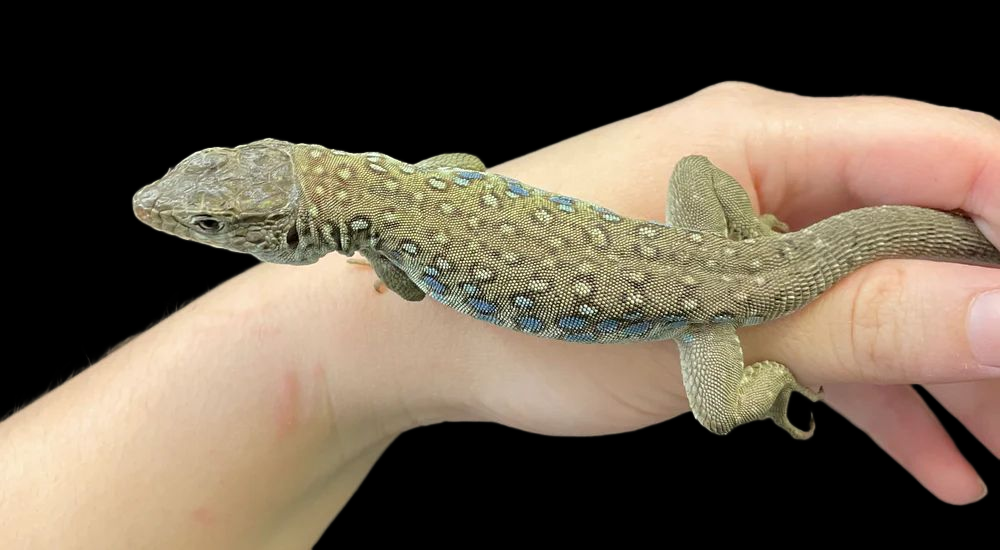
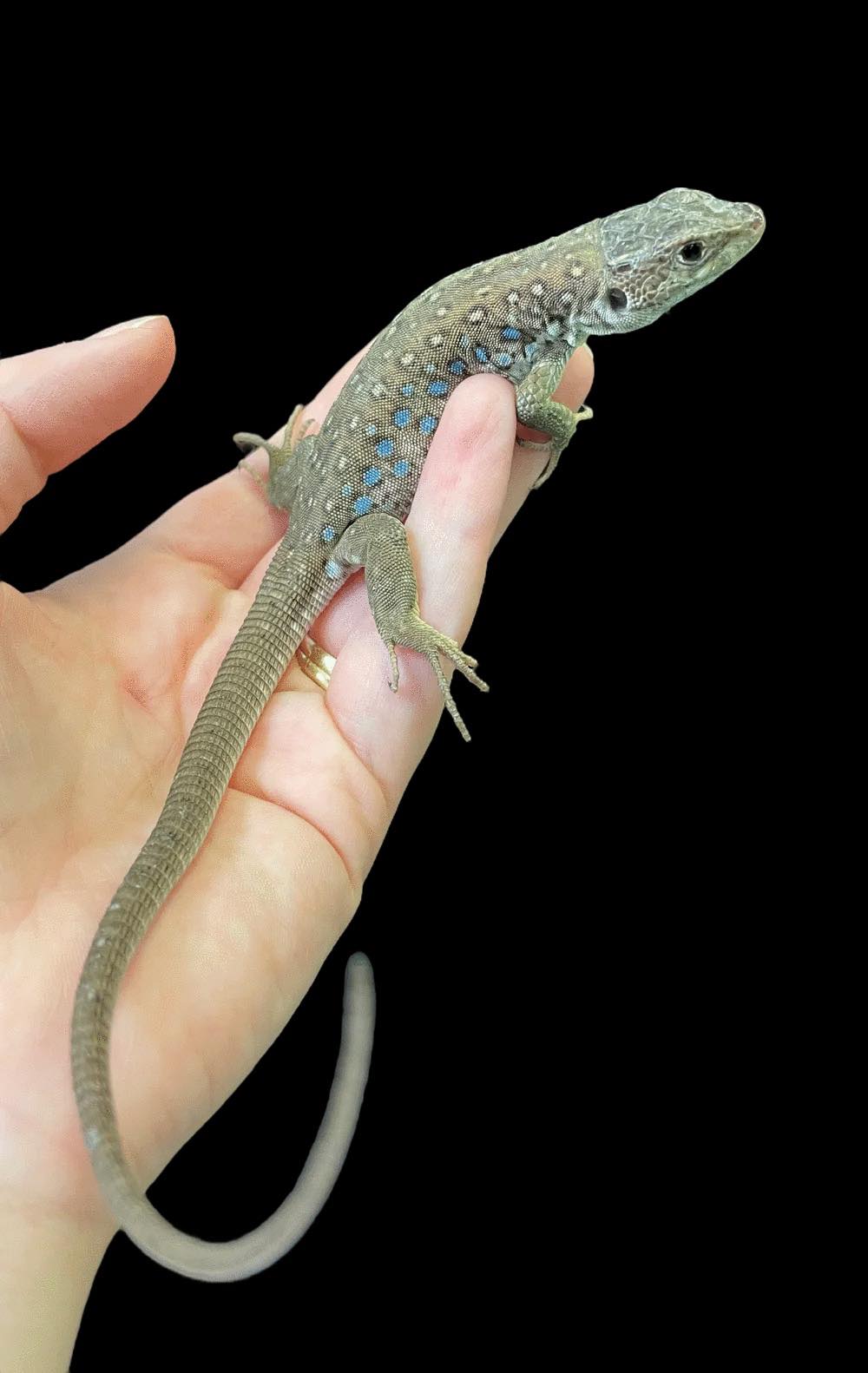
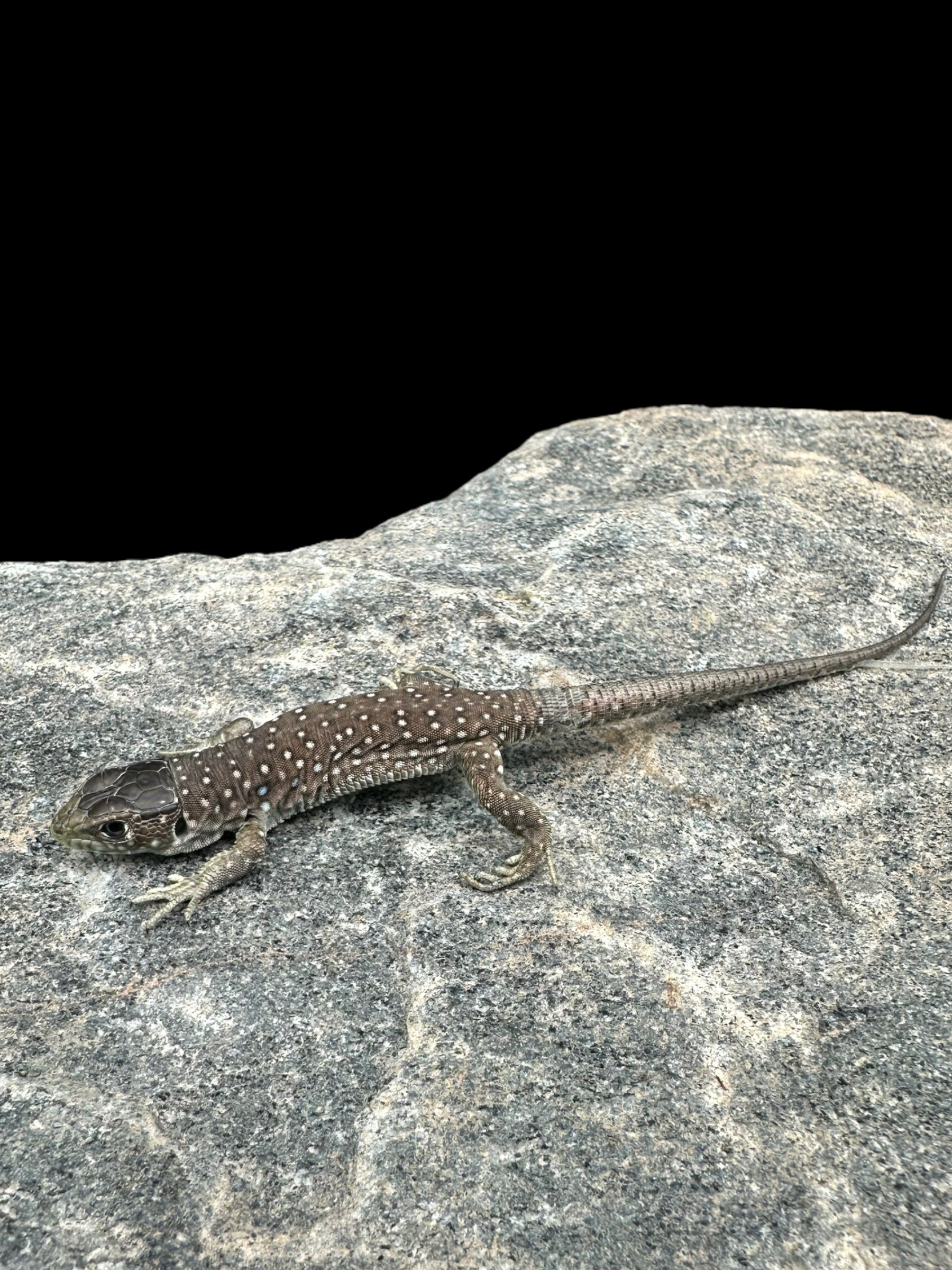


Photo Disclaimer
Description
Jewelled Lacerta
Scientific Name: Timon lepidus
Common Name: Jewelled Lacerta, Ocellated Lizard
Species Overview
Size: Adults typically reach 20–24 inches (50–60 cm) in total length, with some large males approaching 28 inches (70 cm). The tail makes up more than half the total length.
Appearance: Jewelled Lacertas are striking lizards with brilliant green, turquoise, and yellow tones across the body. Their most distinctive feature is the series of round, jewel-like blue ocelli scattered along the flanks, giving the species its name. Males often develop larger heads, bulkier bodies, and more intense colouring. Their scales are small, smooth, and closely set, giving them a refined, glossy appearance.
Distribution: Native to southwestern Europe, including Spain, Portugal, southern France, and parts of western Italy.
Habitat: This species thrives in Mediterranean environments such as scrublands, rocky hillsides, forest margins, stone walls, and open meadows. They favour warm, sun-exposed areas with ample rock crevices and burrows for shelter.
Behaviour: Jewelled Lacertas are diurnal, highly alert, and fast-moving. They are strong climbers and capable diggers, using burrows or rock cavities for protection. Their natural diet is omnivorous, consisting of insects, other invertebrates, small vertebrates, eggs, and seasonal plant matter. They can be territorial, especially males, and rely on visual communication such as head bobs and body posturing.
Captive Care
Enclosure: Provide a spacious enclosure at least 48 inches × 24 inches × 24 inches (120 × 60 × 60 cm) for an adult. Offer ample basking surfaces, rock stacks, cork bark, dense hides, and climbing branches. A deep sandy-soil substrate supports digging and natural movement.
Temperature and Humidity:
Basking area: 105–115°F (40–46°C)
Ambient temperature: 80–90°F (27–32°C)
Night temperatures: 65–72°F (18–22°C)
Humidity should remain moderate (40–60%), with a slightly humid retreat available to aid in shedding.
Lighting: Provide strong full-spectrum lighting with high UVB (10–12%). Intense lighting and clear basking gradients help maintain their vibrant colours and support healthy metabolism.
Diet: Offer a varied omnivorous diet including crickets, roaches, mealworms, superworms, snails, and the occasional pinky mouse for adults. Complement with chopped greens, vegetables, berries, and seasonal fruits. Use calcium and multivitamin supplements routinely. Juveniles require daily feeding; adults can be offered food every 1–2 days.
Behaviour in Captivity: Jewelled Lacertas are active, inquisitive, and bold once established. Many individuals become comfortable with routine and may accept limited handling. They enjoy basking openly and exploring enriched enclosures with multiple elevations and hiding spots.
Special Considerations: Provide secure enclosure latches, as they are strong and capable of pushing through loose lids or doors. Offering naturalistic décor encourages physical activity and reduces stress. Because they can be territorial, adults are best housed singly unless part of a carefully managed breeding group.
Taxonomy Note
The Jewelled Lacerta belongs to the family Lacertidae, a group of agile, sun-loving lizards found throughout Europe and nearby regions. Timon lepidus is one of the largest and most vividly coloured members of the family, well-regarded for its intelligence, alert behaviour, and striking ocelli.
Genetics Note
There are no formal morphs established for the Jewelled Lacerta. Variation exists across natural localities, with differences in the intensity of green or blue colouring, number of ocelli, and seasonal colour changes, but these are natural geographic variations rather than selectively bred morphs.