

Photo Disclaimer
Description
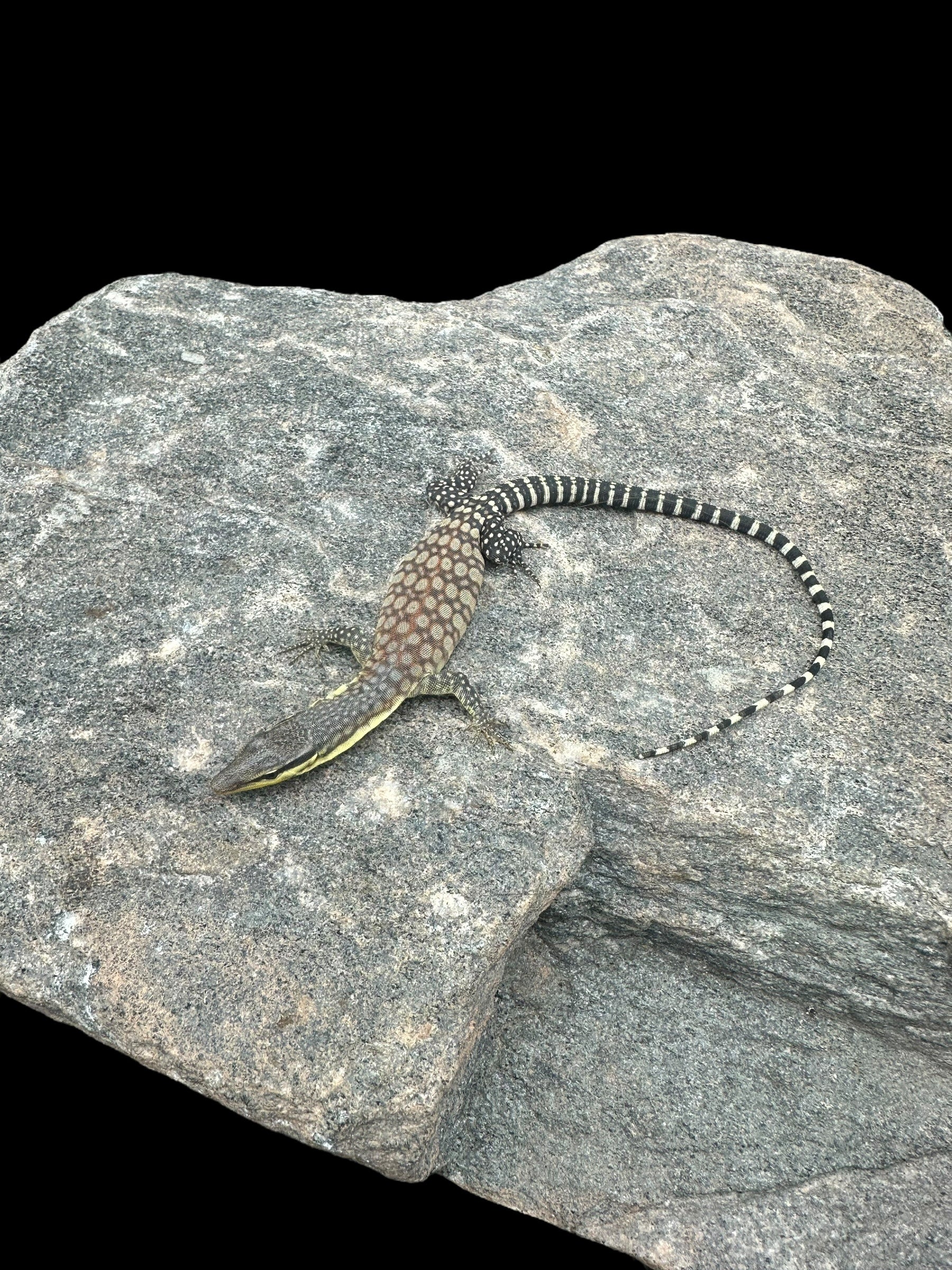
Kimberley Rock Monitor (Varanus glauerti)
Scientific Name: Varanus glauerti
Common Name: Kimberley Rock Monitor, Glauert’s Monitor
Species Overview
Size: Adults typically reach 18 to 24 inches (46 to 61 cm) in total length, with a slim, agile body and a long, whip-like tail that makes up more than half their length.
Appearance: Kimberley Rock Monitors display rich chestnut, reddish-brown, or deep chocolate colours marked with cream or yellow ocelli, speckles, or bands. Their narrow head, pointed snout, and laterally compressed tail reflect their adaptation to cliff and rock-face living. Limbs are long and strong, equipped with sharp claws for climbing. Juveniles generally show brighter patterns than adults.
Distribution: Native to the northwestern region of Australia, particularly the rocky escarpments of the Kimberley Plateau.
Habitat: These monitors inhabit rugged sandstone formations, rocky gorges, and boulder fields. They depend on narrow crevices, cracks, and rock cavities for shelter in a hot, dry, and structurally complex environment.
Behaviour: Kimberley Rock Monitors are diurnal, fast, and highly alert. They spend much of their time basking on sun-exposed rocks, hunting insects, and quickly retreating into tight spaces when threatened. They may tail-lash or gape defensively if cornered.
Captive Care
Enclosure: Provide a vertically oriented enclosure at least 48 inches × 24 inches × 24 inches (120 × 60 × 60 cm) for a single adult. Offer abundant rock structures, stacked slate, vertical climbing panels, cork rounds, and narrow, secure hides to replicate natural crevices and climbing routes.
Temperature and Humidity:
Basking area: 120 to 135°F (49 to 57°C)
Warm side: 95 to 105°F (35 to 40°C)
Cool side: 80 to 85°F (27 to 29°C)
Night temperatures: 70 to 75°F (21 to 24°C)
Humidity should remain between 30 and 50 percent, with deeper sheltered areas retaining slightly higher humidity.
Lighting: Provide strong full-spectrum lighting and high-output UVB (10 to 12 percent). A wide, intense basking zone is especially important for this rock-dwelling species.
Diet: Feed a varied insectivorous diet including roaches, crickets, locusts, black soldier fly larvae, silkworms, mealworms, and occasional pinky mice or quail chicks (sparingly). Supplement insects with calcium and multivitamins.
Behaviour in Captivity: These monitors are active, intelligent, and highly inquisitive. They do best in feature-rich enclosures offering climbing opportunities, basking shelves, and secure retreats. While they may acclimate to a keeper’s presence, they generally prefer minimal handling.
Special Considerations:
• Vertical climbing structures are crucial for their natural behaviour.
• Ensure all rockwork is securely anchored to prevent collapse.
• Provide very hot basking temperatures to support digestion and activity.
• Offer elevated hides and ledges for psychological security and exercise.
Taxonomy Note
This species belongs to the subgenus Odatria, a group of small to medium Australian monitors adapted for agility, climbing, and life among rocky terrain. Varanus glauerti is closely related to Varanus tristis and Varanus acanthurus.
Genetics Note
No known morphs exist for this species. Natural variation includes differences in colour saturation, pattern clarity, and ocelli brightness, all of which are normal for wild populations.