


Photo Disclaimer
Description
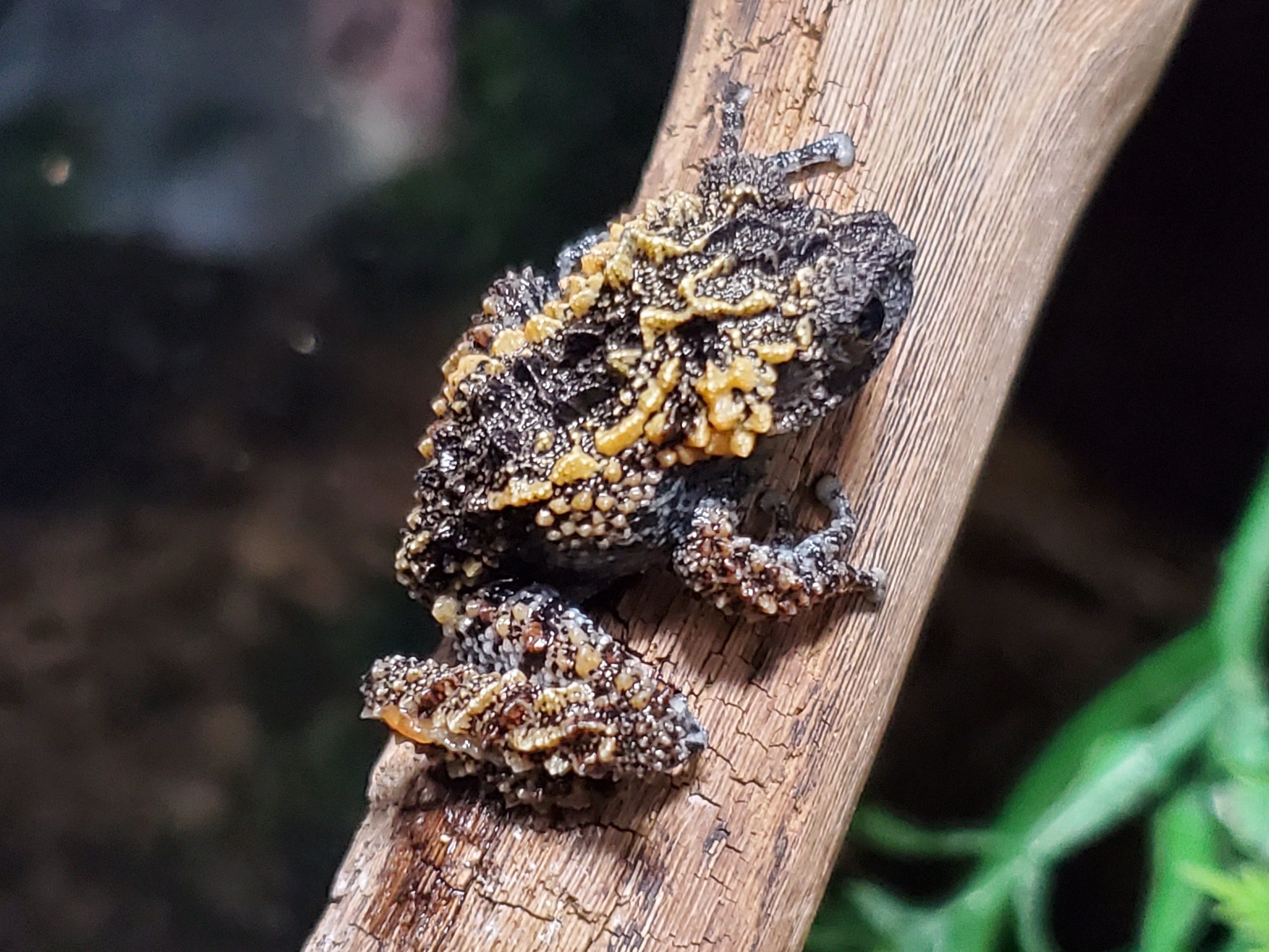
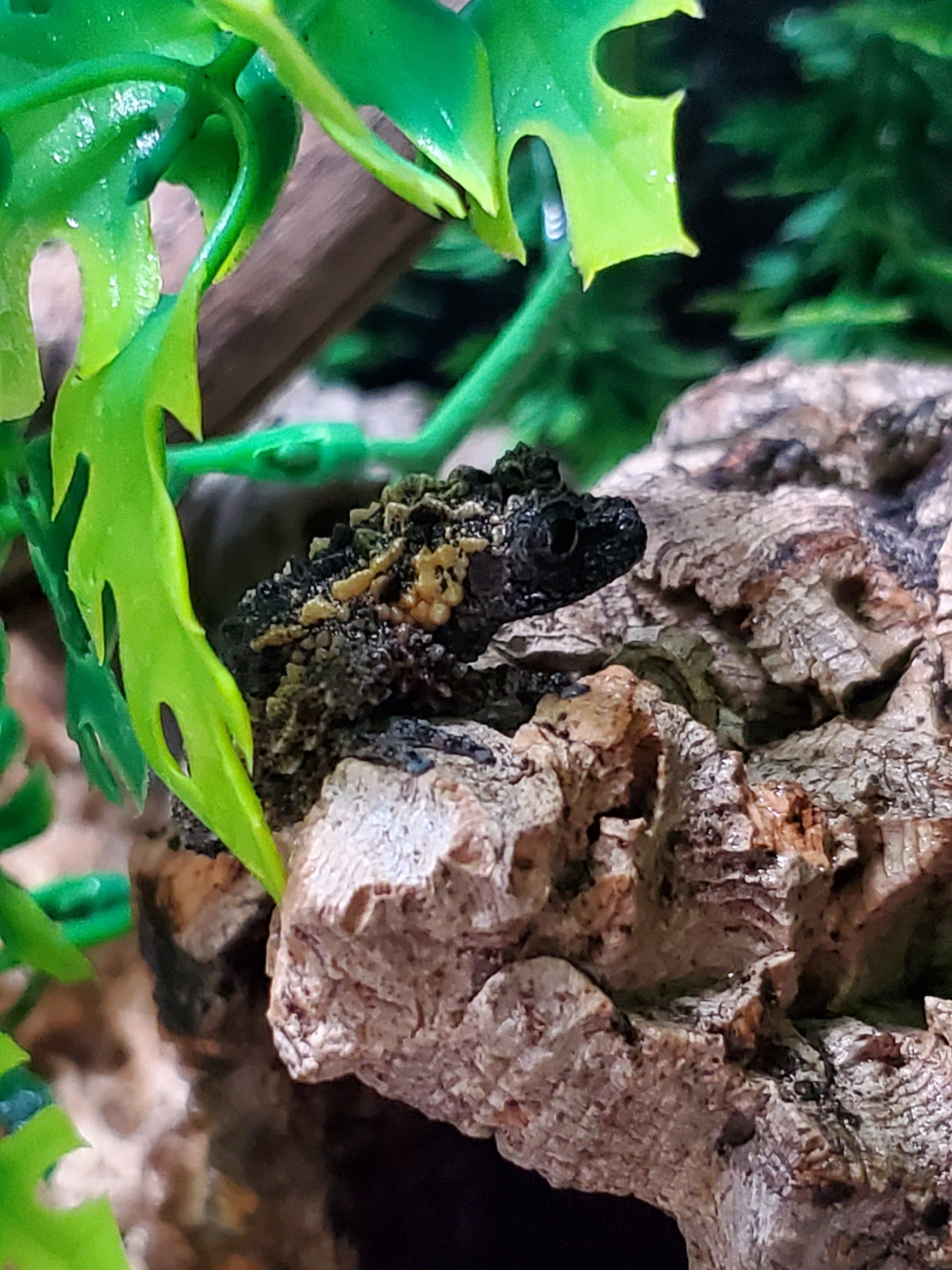
Lava Mossy Frog
Scientific Name: Theloderma gordoni
Common Name: Lava Mossy Frog
Species Overview
Size: Adults typically reach 1.5 to 2 inches (4 to 5 cm), with females slightly larger.
Appearance: The Lava Mossy Frog has a textured, highly camouflaged appearance featuring deep greens, blacks, browns, and distinctive red or maroon speckling that resembles volcanic rock—hence its common name. Raised tubercles and irregular bumps cover the dorsum and limbs, providing a rugged moss-like texture. Eyes are large and bright, commonly copper, red, or golden, standing out against the rugged face. Limbs are slender but strong, with small toe pads adapted for gripping uneven, mossy surfaces.
Distribution: Native to montane regions of Vietnam, where cool temperatures and high humidity dominate the microhabitats.
Habitat: Found on moss-covered rocks, dripping cave walls, seepage zones, and shaded forest areas with constant moisture. This species relies on cool, oxygen-rich water and strong environmental structure.
Behaviour: Nocturnal and cryptic, Lava Mossy Frogs rely on camouflage to evade predators. They are excellent at remaining motionless for long periods. At night they become more active, climbing textured surfaces and exploring ledges. They prefer cool temperatures and do not tolerate heat.
Captive Care
Enclosure: A single adult or small group thrives in an 18 × 18 × 24 inches (45 × 45 × 60 cm) enclosure, while larger groups benefit from a 24 × 18 × 24 inches (60 × 45 × 60 cm) setup. For Theloderma species, the ideal setup uses a filtered-water-base system. Create a false bottom or drainage layer with a clean, filtered water reservoir beneath the land structure. Install a small internal or sponge filter to maintain oxygen-rich, moving water. Above the waterline, provide elevated cork rounds, moss-covered bark slabs, dense textured rock panels, and vertical climbing surfaces where the frogs perch away from open water. Add small pockets of sphagnum or leaf litter only on elevated areas. Use drip walls, rain bars, or seepage features to maintain constant dripping moisture, recreating their natural environment.
Temperature and Humidity:
Ambient temperature: 68 to 75°F (20 to 24°C)
Warm area: up to 76°F (24.5°C)
Night temperature: 60 to 68°F (15 to 20°C)
Humidity: 80 to 100%, with continuous moisture and strong airflow.
Lighting: Provide low UVB (around 2%) with dim, diffused lighting. Bright light should be avoided.
Diet: Offer small insects such as crickets, small roaches, isopods, fruit flies, black soldier fly larvae, and springtails. Supplement prey with calcium and multivitamins.
Behaviour in Captivity: Lava Mossy Frogs are hardy when kept cool, moist, and well-oxygenated. They remain motionless during the day and become active at night. They rely heavily on textured décor to feel secure. Handling should be minimized.
Special Considerations:
• If handling is unavoidable, use wet, powder-free gloves or a soft, damp net—their skin is sensitive and they can leap suddenly.
• Maintain consistently cool temperatures; overheating quickly causes stress.
• Use filtered, oxygenated water; stagnant water leads to rapid decline.
• Provide abundant elevated textured surfaces, not flat, wet substrate.
• Ensure strong airflow despite high humidity.
• Use only dechlorinated or RO water for misting and water features.
• Seal enclosure gaps securely—this species can escape through small openings.
Taxonomy Note
Theloderma gordoni is part of the Rhacophoridae family and belongs to the mossy frog group known for extreme camouflage and reliance on dripping, rocky, saturated environments. It is closely related to T. corticale but is generally smaller and features more reddish mottling.
Genetics Note
There are no recognised morphs for Theloderma gordoni. Natural variation occurs in red speckling, dorsal patterning, and tubercle density, but none represent defined genetic morphs.