

Photo Disclaimer
Description
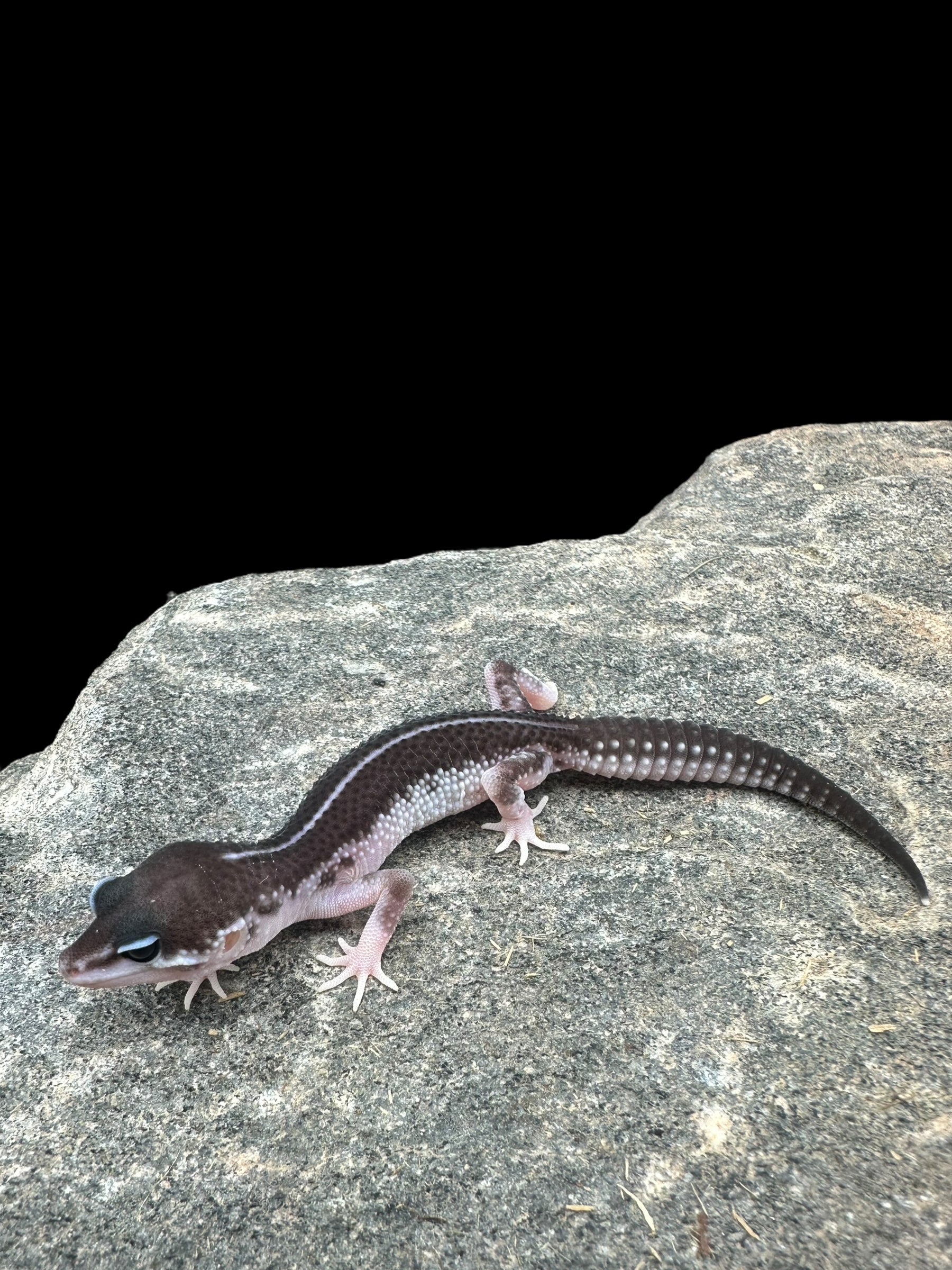
Leopard Gecko (Black Night Super Snow)
Scientific Name: Eublepharis macularius
Common Name: Leopard Gecko (Black Night Super Snow)
Species Overview
Size: Adult Leopard Geckos generally reach 8–10 inches (20–25 cm). They are medium-sized, robust reptiles well adapted to arid environments.
Appearance: The Black Night Super Snow morph combines one of the darkest line-bred traits with a high-contrast genetic pattern trait. Black Night contributes deep charcoal to nearly black pigmentation with dramatically reduced spotting, while Super Snow creates a bold, clean, speckled appearance with an overall pale base and strong pattern reduction. When combined, the result is a dramatic-looking Leopard Gecko with cool white or light grey areas contrasted against deeper, moodier tones from the Black Night lineage. The Super Snow influence produces black eyes (a hallmark of the trait), while patterns may appear tightly speckled or highly reduced depending on expression. This combination is visually striking, with smooth beaded skin and high contrast.
Distribution: The species originates from Pakistan, Afghanistan, northwestern India, and Iran.
Habitat: Wild Leopard Geckos inhabit warm, rocky deserts and scrublands, spending daylight hours sheltering in burrows. In captivity, they thrive in stable, semi-arid environments that replicate these natural conditions.
Behaviour: Leopard Geckos are nocturnal, calm, and curious. They tolerate gentle handling and adapt well to predictable care routines. They display natural behaviours such as burrowing, exploring at night, and active hunting.
Captive Care
Enclosure: Provide a terrestrial enclosure at least 24 inches × 18 inches × 12 inches (60 × 45 × 30 cm). Include essential hides (warm, cool, and humid), and use a sandy soil or clay-based substrate that allows natural digging.
Temperature & Humidity: Maintain a warm side of 88–92°F (31–33°C) and a cool side of 75–80°F (24–27°C). Night temperatures may drop to 70–74°F (21–23°C). Ambient humidity should remain around 30–40%, with a humid hide at 60–70% for proper shedding. Always use a thermostat for heat regulation.
Lighting: Low-level UVB (2–5%) supports calcium metabolism and general health. A 12-hour day/night cycle is recommended.
Diet: Feed gut-loaded insects such as roaches, crickets, silkworms, and mealworms. Adults may be fed every other day; juveniles require daily meals. Dust all prey with calcium and multivitamin supplements. Provide fresh water at all times.
Behaviour in Captivity: Leopard Geckos are hardy and long-lived, often thriving for 15–20 years or more with proper care. They quickly adapt to consistent routines and display predictable feeding and activity patterns.
Special Considerations: Colour and contrast will vary depending on the strength of the Black Night line. Care requirements remain identical to any Leopard Gecko.
Taxonomy Note
The Leopard Gecko (Eublepharis macularius) is a member of the family Eublepharidae. It is one of the most selectively bred reptiles in captivity, known for its wide variety of colour and pattern traits developed through decades of dedicated breeding.
Genetics Note
This morph combines two traits:
-
Black Night (polygenic / line-bred) – Selectively bred for very dark pigmentation with minimal spotting.
-
Super Snow (co-dominant / incomplete dominant, homozygous form) – Produces black eyes, heavy speckling, and reduced patterning.
These traits affect appearance only and do not change general care requirements.