

Photo Disclaimer
Description
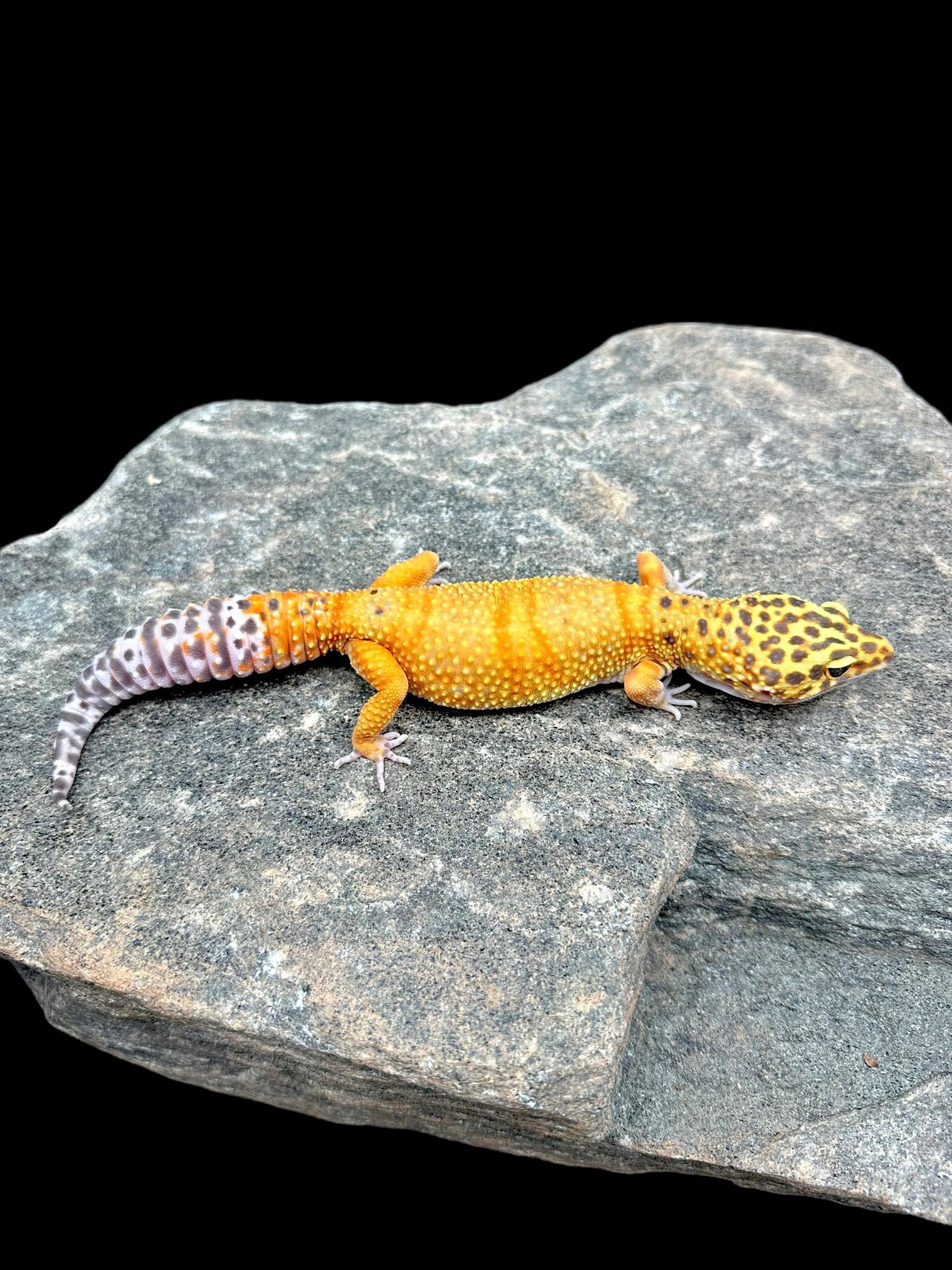
Leopard Gecko (Blood Emerine)
Scientific Name: Eublepharis macularius
Common Name: Leopard Gecko (Blood Emerine)
Species Overview
Size: Adult Leopard Geckos typically reach 8–10 inches (20–25 cm) in total length. They are medium-sized, hardy lizards well adapted to warm, arid habitats.
Appearance: The Blood Emerine morph combines two vibrant line-bred traits that enhance both orange and green tones. The Blood trait amplifies deep and saturated orange pigment, especially around the head, dorsal region, and tail base. The Emerine trait introduces green hues that range from soft olive to vivid emerald, typically appearing along the sides and sometimes blending into the dorsal colouring. Together, these traits produce a visually striking Leopard Gecko with rich oranges, contrasting greens, and reduced dark spotting. The overall effect is a warm yet complex palette, making this combination highly desirable among hobbyists.
Distribution: The species originates from the rocky, arid regions of Pakistan, Afghanistan, northwestern India, and parts of Iran.
Habitat: Wild Leopard Geckos inhabit semi-arid deserts and scrublands, sheltering in burrows or rock crevices. In captivity, they thrive in warm, stable environments with secure hiding places and naturalistic substrate.
Behaviour: Leopard Geckos are nocturnal, calm, and responsive to routine care. They tolerate gentle handling and display typical behaviours such as burrowing, exploring after dusk, and hunting live insects.
Captive Care
Enclosure: Provide a terrestrial enclosure at least 24 inches × 18 inches × 12 inches (60 × 45 × 30 cm). Include a warm hide, cool hide, and humid hide. A sandy soil or clay-based naturalistic substrate supports burrowing behaviour.
Temperature & Humidity: Maintain a warm side of 88–92°F (31–33°C) and a cool side around 75–80°F (24–27°C). Nighttime temperatures may safely drop to 70–74°F (21–23°C). Keep ambient humidity around 30–40%, with a humid hide elevated to 60–70% to aid shedding. Use a thermostat to ensure heat stability.
Lighting: Provide low-level UVB (2–5%) to support long-term skeletal and metabolic health. Maintain a 12-hour day/night cycle.
Diet: Feed gut-loaded insects such as roaches, crickets, silkworms, and mealworms. Adults may be fed every other day; juveniles should be fed daily. Supplement all prey items with calcium and multivitamins. Provide fresh water at all times.
Behaviour in Captivity: Leopard Geckos adjust well to regular feeding and habitat routines. With correct care, they often live 15–20 years or more, remaining hardy and predictable in behaviour.
Special Considerations: Blood and Emerine are line-bred traits; expression varies from bold and intense to subtle. No additional care is required beyond standard Leopard Gecko husbandry.
Taxonomy Note
The Leopard Gecko (Eublepharis macularius) belongs to the family Eublepharidae. Its long history in captive breeding has produced an extraordinary variety of visual and structural morphs, including colour-enhancing lines like Blood and Emerine.
Genetics Note
This morph combines two line-bred traits:
-
Blood (polygenic / line-bred) – Deepens and intensifies orange pigmentation.
-
Emerine (polygenic / line-bred) – Introduces green pigmentation, often blending with orange for a multicoloured effect.
Both traits are polygenic and vary in intensity, requiring selective breeding across generations. They affect appearance only and do not alter care needs.