

Photo Disclaimer
Description
Leopard Gecko (TUG Snow)
Scientific Name: Eublepharis macularius
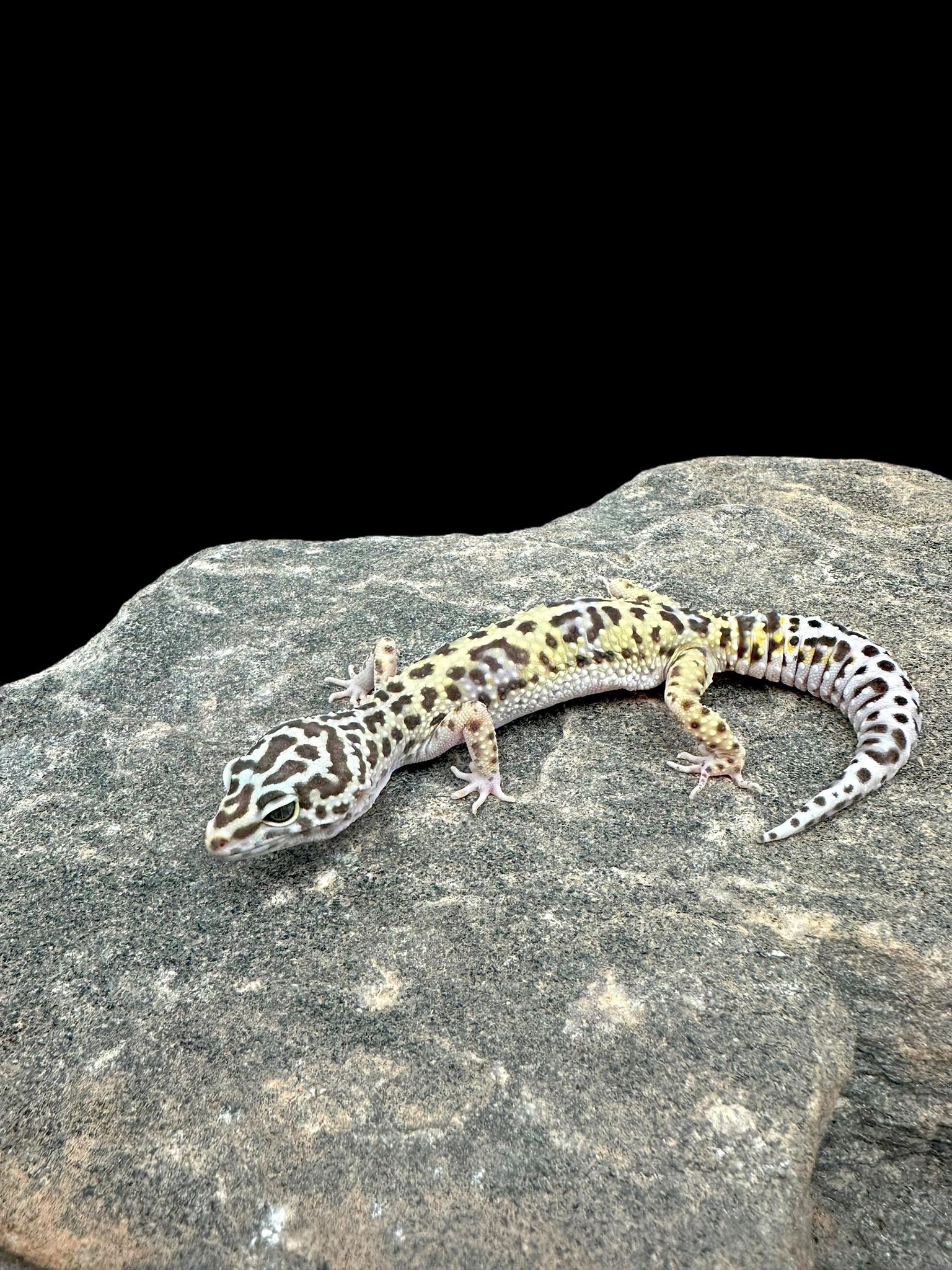
Common Name: Leopard Gecko (TUG Snow)
Species Overview
Size: Adult Leopard Geckos typically reach 8–10 inches (20–25 cm). They are medium-sized, hardy reptiles well adapted to warm, arid environments.
Appearance: The TUG Snow morph is one of the Snow variants developed through selective breeding, known for its cooler colour palette and reduced yellow pigmentation. Hatchlings usually emerge with crisp black-and-white banding that is cleaner and higher contrast than wild-type Leopard Geckos. As they mature, TUG Snows often transition into soft greys, pastel creams, and light yellows, though they maintain noticeably cooler tones compared to Mack Snow or standard Leopard Geckos. Pattern expression varies, but many retain clean, well-defined markings and subtle contrasts into adulthood.
Distribution: Leopard Geckos originate from Pakistan, Afghanistan, northwestern India, and Iran.
Habitat: In nature, they inhabit rocky deserts and scrublands, using burrows or rock crevices for daytime shelter. In captivity, they thrive in warm, semi-arid setups with secure hides and stable temperatures.
Behaviour: Leopard Geckos are nocturnal, calm, and tolerant of handling. They display natural behaviours such as burrowing, nighttime exploring, and active hunting.
Captive Care
Enclosure: Provide a terrestrial enclosure measuring at least 24 inches × 18 inches × 12 inches (60 × 45 × 30 cm). Include warm, cool, and humid hides. A naturalistic sandy soil or clay-based substrate supports digging and natural behaviour.
Temperature & Humidity: Maintain a warm side at 88–92°F (31–33°C) and a cool side at 75–80°F (24–27°C). Night temperatures may drop to 70–74°F (21–23°C). Keep ambient humidity between 30–40%, with a humid hide elevated to 60–70% to support shedding. Regulate heating with a thermostat.
Lighting: Provide low-level UVB (2–5%) and maintain a 12-hour day/night cycle. TUG Snows do not have special lighting sensitivities unless combined with albino traits.
Diet: Offer gut-loaded insects including roaches, crickets, silkworms, and mealworms. Adults typically eat every other day, while juveniles require daily feeding. Dust prey with calcium and multivitamins. Fresh water should always be available.
Behaviour in Captivity: Leopard Geckos are hardy, long-lived reptiles that often reach 15–20 years or more in captivity. TUG Snows are predictable, reliable feeders and adapt well to consistent routines.
Special Considerations: TUG Snow colouration may shift as the gecko matures, sometimes warming slightly with age. They do not exhibit the same degree of yellow reduction or pattern lightening as some Mack Snows, making them a distinct Snow line.
Taxonomy Note
The Leopard Gecko (Eublepharis macularius) belongs to the family Eublepharidae. TUG Snow is one of several Snow morph lines (including Mack Snow and Line-Bred Snows), each with its own selectively bred characteristics.
Genetics Note
This morph includes:
-
TUG Snow (co-dominant / incomplete dominant) – Produces cooler tones, reduced yellow pigmentation, and high-contrast banding in juveniles.
This trait affects appearance only and does not alter Leopard Gecko husbandry.