


Photo Disclaimer
Description
Malayan Box Turtle
Scientific Name: Cuora amboinensis
Common Name: Malayan Box Turtle, Southeast Asian Box Turtle
Species Overview
Size: Males typically reach 6 to 8 inches (15 to 20 cm), while females grow larger at 8 to 10 inches (20 to 25 cm).
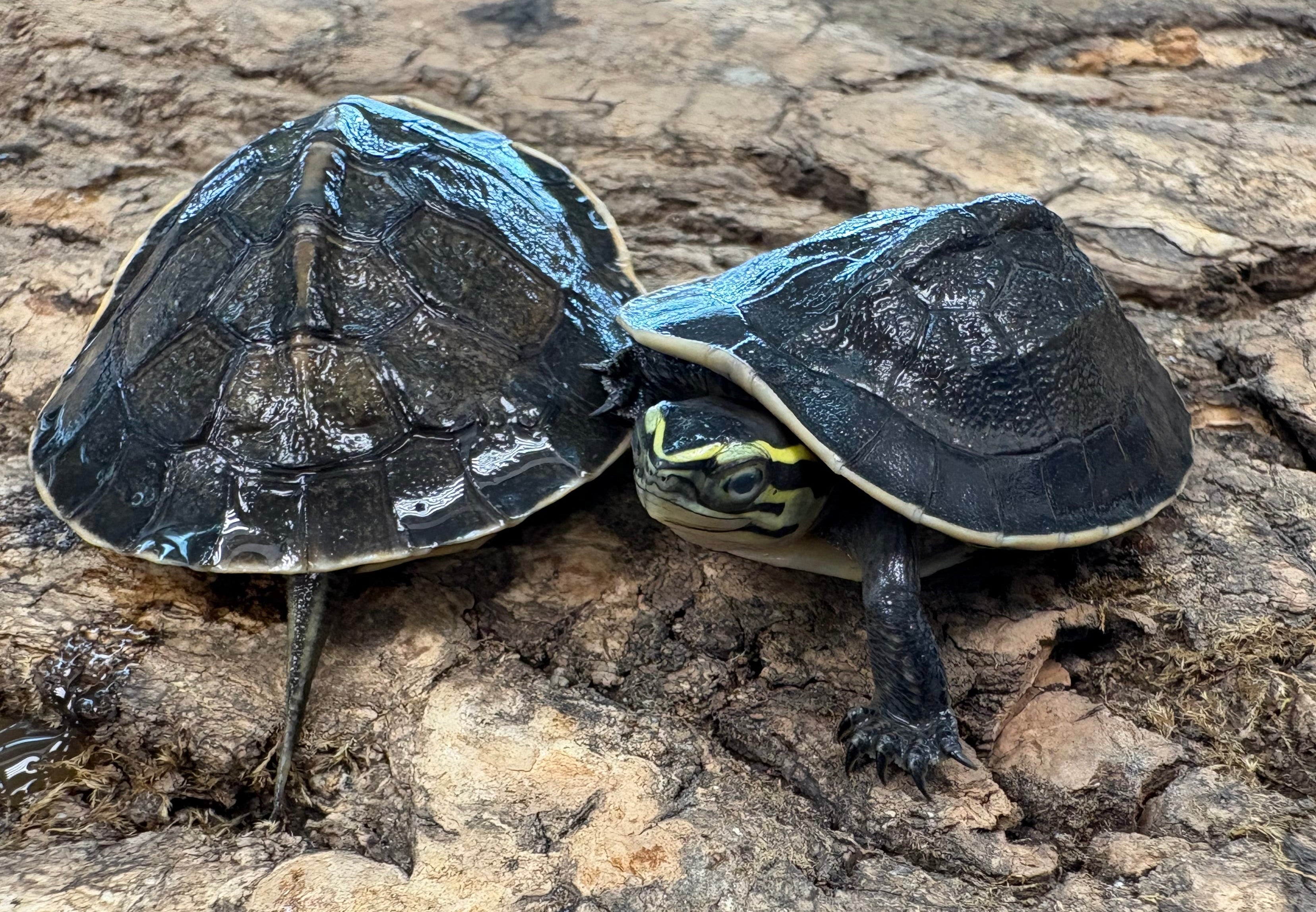
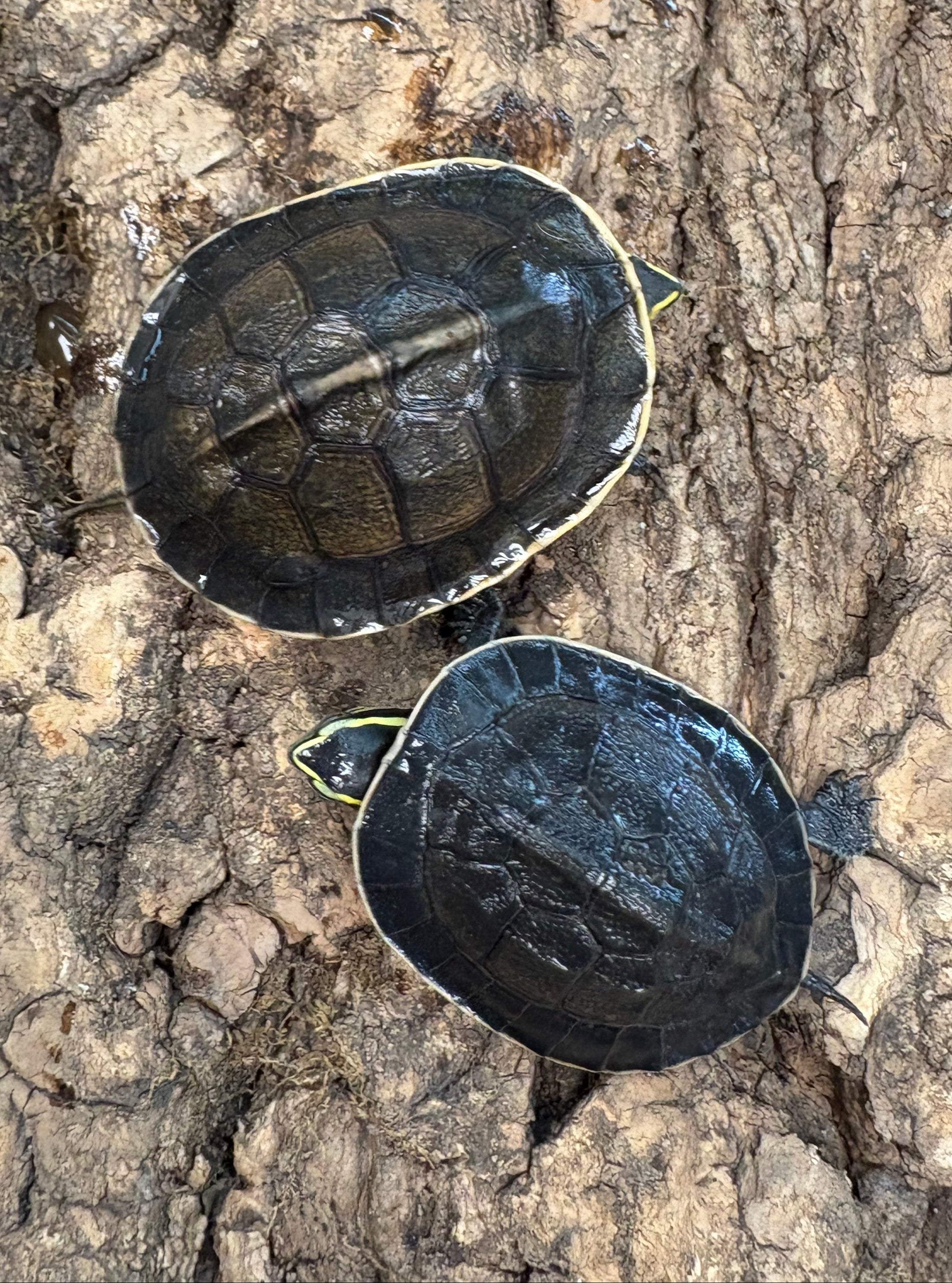
Appearance: The Malayan Box Turtle has a smooth, domed carapace that ranges from dark brown to almost black. The head features bold yellow stripes extending from the snout through the neck, giving the species a distinctive lined appearance. The plastron is usually black with lighter edging. Like all box turtles in the genus Cuora, this species has a fully hinged plastron that allows it to close completely for protection. Females are generally broader with shorter tails, while males have longer, thicker tails and a more concave plastron.
Distribution: Native to Southeast Asia, including Malaysia, Indonesia, Thailand, Myanmar, Singapore, Cambodia, Vietnam, and the Philippines.
Habitat: In the wild, Malayan Box Turtles inhabit marshes, rice paddies, swamps, slow-moving streams, and other water-rich environments surrounded by dense vegetation. They are semi-aquatic and frequently move between land and shallow water. In captivity, they require a humid terrestrial setup with easy access to shallow water for soaking, drinking, and thermoregulation.
Behaviour: Malayan Box Turtles are diurnal, highly alert, and often quite active. They enjoy soaking for extended periods but also spend time foraging on land. They are social in nature compared to other box turtles and tolerate conspecifics better, though space must still be ample. They are hardy when maintained with high humidity and clean water.
Captive Care
Enclosure: Provide a semi-aquatic enclosure with a minimum footprint of 4 × 2 feet (120 × 60 cm) for one adult. The habitat should include a shallow water area large enough for full-body soaking and a terrestrial zone with soil-based substrate, leaf litter, plants, and hides. The enclosure must remain humid, and access to fresh, clean water is essential.
Temperature and Humidity:
Ambient daytime: 78 to 84°F (26 to 29°C)
Basking area: 88 to 92°F (31 to 33°C)
Night temperature: 72 to 76°F (22 to 24°C)
Humidity: 70 to 90%, with moist hides and regular misting.
Lighting: Provide full-spectrum lighting with 10–12% UVB to support shell integrity and healthy calcium metabolism. Ensure the enclosure includes both a solid basking site and shaded, humid retreats.
Diet: Offer a varied omnivorous diet including dark leafy greens, vegetables, fruits in moderation, insects, worms, snails, aquatic plants, and high-quality commercial turtle pellets. Juveniles require more protein, while adults thrive on a balanced mix of plant and animal matter.
Behaviour in Captivity: Malayan Box Turtles adapt well to captivity when the enclosure is warm, humid, and enriched. They are active foragers, frequent soakers, and tend to be more outgoing than North American box turtle species. They become confident with consistent care.
Special Considerations
• Maintain very high humidity alongside clean, shallow soaking areas.
• Sensitive to dehydration; access to water must be constant.
• Provide a large terrestrial area with deep leaf litter for exploring.
• Juveniles require higher protein intake.
Taxonomy Note
Cuora amboinensis includes multiple recognised subspecies across Southeast Asia, each with slight differences in shell shape, striping, and size. Despite these variations, all forms share the characteristic hinged plastron and semi-aquatic lifestyle.
Genetics Note
There are no recognised morphs for the Malayan Box Turtle. Variations in colour intensity, shell darkness, and stripe clarity occur naturally among subspecies and local populations rather than through selective breeding.