

Photo Disclaimer
Description
Malayan Dwarf Toad
Scientific Name: Ingerophrynus parvus
Common Name: Malayan Dwarf Toad
Species Overview
Size: A truly small species, adults typically reach 1 to 1.5 inches (2.5 to 4 cm), with females slightly larger than males.
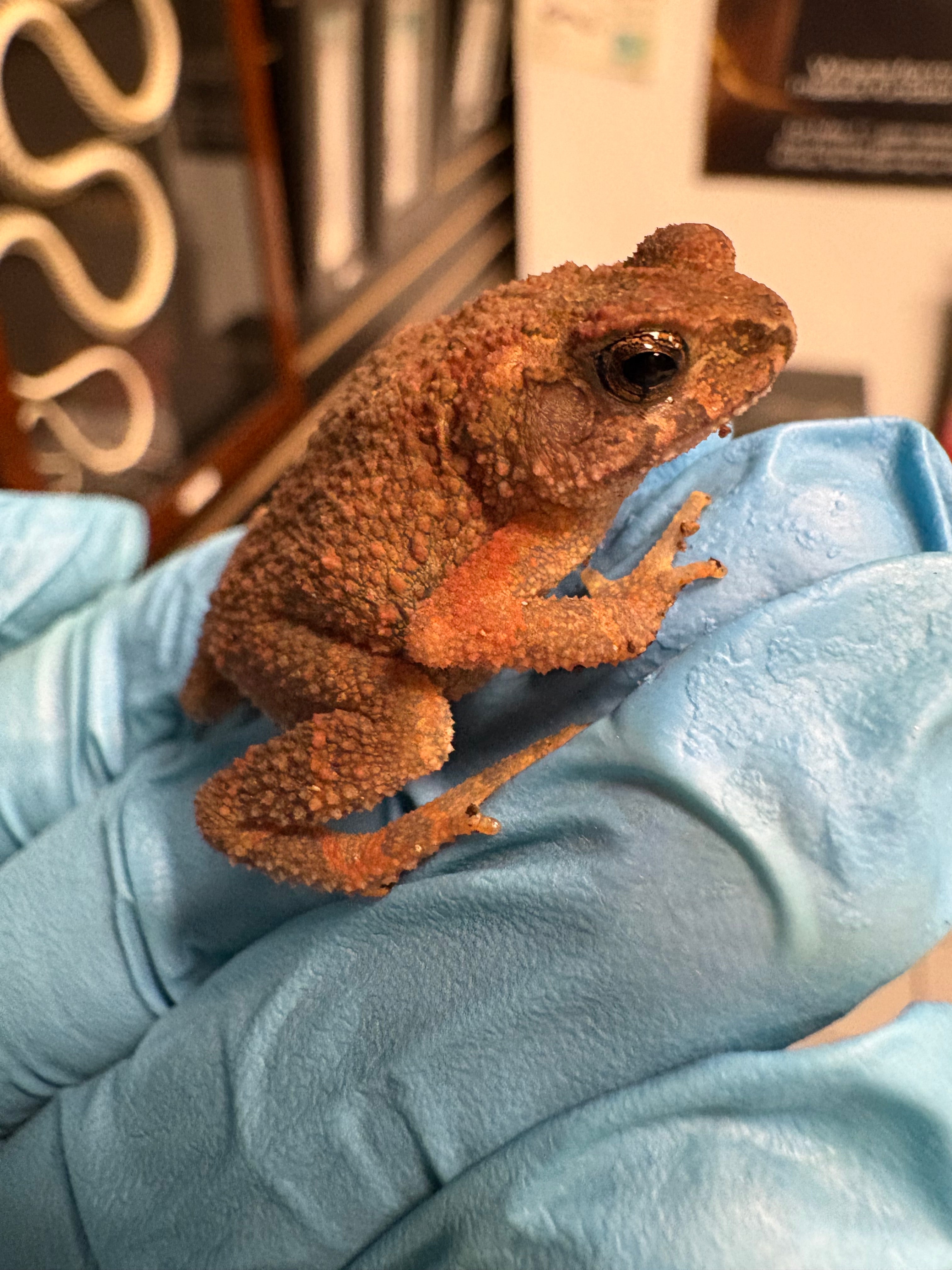
Appearance: The Malayan Dwarf Toad is a tiny, slender-bodied toad with fine granular skin and subtle patterning. Colouration ranges from tan and light brown to darker shades of brown or grey, often with faint mottling or irregular speckles. A pale dorsal stripe may appear in some individuals but is not always present. The limbs are thin and proportionally long for their size, aiding in agile hopping. Parotoid glands are small and not as pronounced as in larger toad species. The underside is pale and generally unmarked. Their small size and muted colours allow them to blend easily into leaf litter.
Distribution: Native to Southeast Asia, including Thailand, Malaysia, and surrounding regions. It typically occurs in lowland forests and secondary growth habitats.
Habitat: Wild individuals are found in moist leaf litter, forest floors, stream edges, and other damp microhabitats within tropical forests. They rely heavily on moisture but avoid standing water except during breeding. In captivity, they require high humidity, deep leaf litter, and numerous hiding spaces.
Behaviour: Primarily nocturnal, Malayan Dwarf Toads are quick, alert, and secretive. They spend much of their time near or within leaf litter, emerging at night to forage for small insects. They are solitary and non-territorial but should not be overcrowded due to their delicate nature and small size.
Captive Care
Enclosure: Given their tiny size, a single adult or small group can be housed comfortably in a 24 × 18 × 18 inches (60 × 45 × 45 cm) enclosure. Provide a deep, moist layer of leaf litter over soil or coconut fibre substrate. Add cork bark pieces, moss clumps, branches, and dense plant cover to create secure microhabitats. Ensure that all décor is scaled appropriately so the toads are not overwhelmed by oversized structures. For larger groups, a 36 × 18 × 18 inches (90 × 45 × 45 cm) enclosure is recommended.
Temperature and Humidity:
Ambient temperature: 74 to 80°F (23 to 27°C)
Warm area: 82°F (28°C)
Night temperature: 70 to 74°F (21 to 23°C)
Humidity: 70 to 90%, maintained through frequent misting. Strong ventilation is important to prevent bacterial growth in warm, humid conditions.
Lighting: Provide low-level UVB (2 to 5%) with shaded areas throughout the enclosure. Bright light is unnecessary and can cause stress. A natural day and night cycle is sufficient.
Diet: Offer a varied diet of appropriately sized prey including fruit flies, pinhead crickets, springtails, small roaches, and tiny worms. Supplement insects with calcium and multivitamins. Due to their size, these toads require very small prey items and more frequent feedings.
Behaviour in Captivity: These toads are shy and may remain hidden for much of the day. With stable humidity and abundant cover, they become active at night and feed readily. Handling is strongly discouraged given their extremely small size and delicate skin.
Genetics Note
There are no recognised morphs for the Malayan Dwarf Toad. Natural variation occurs in dorsal tone, faint patterning, and stripe presence, but these differences are not considered genetically distinct morphs.