


Photo Disclaimer
Description
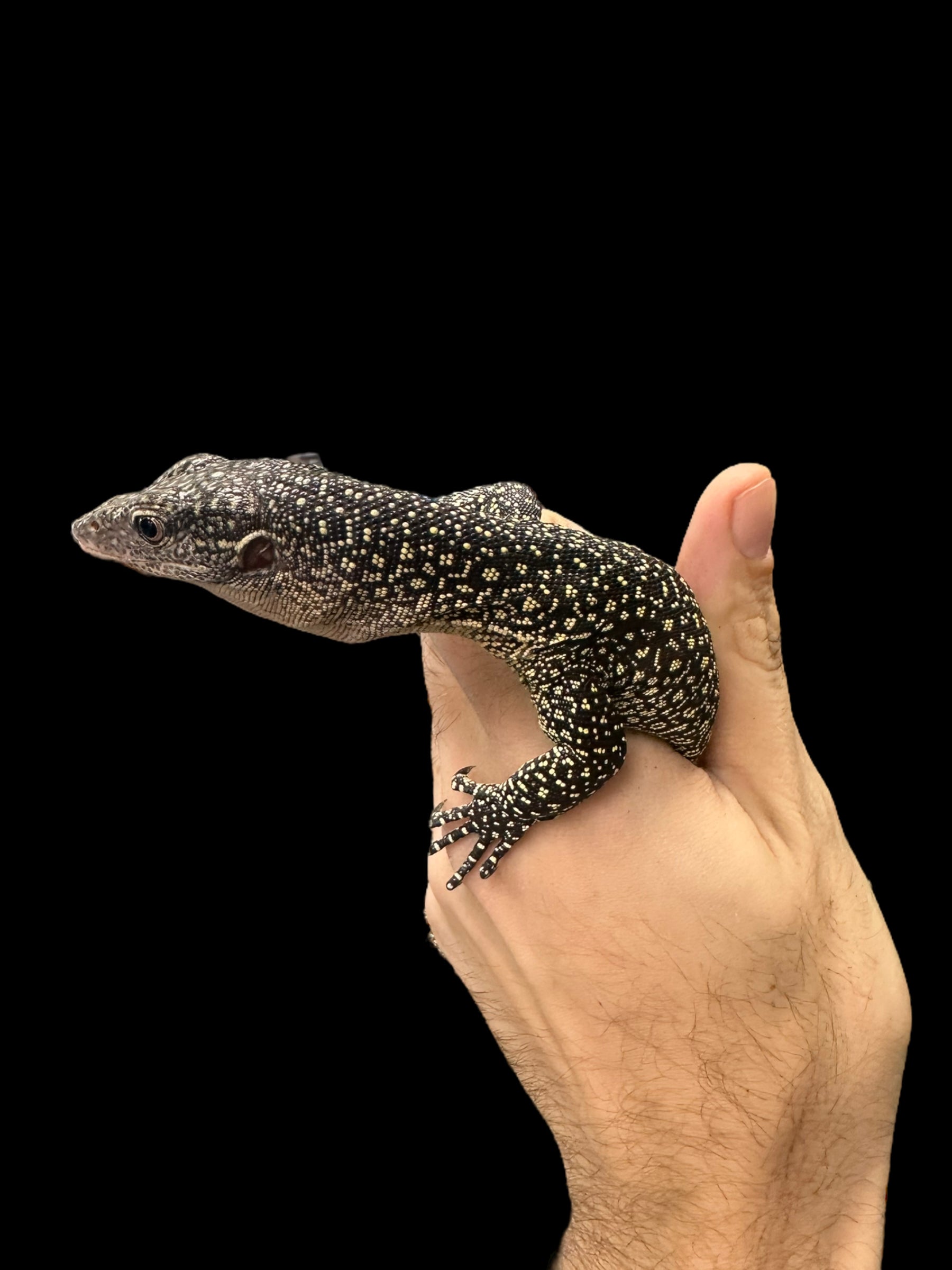
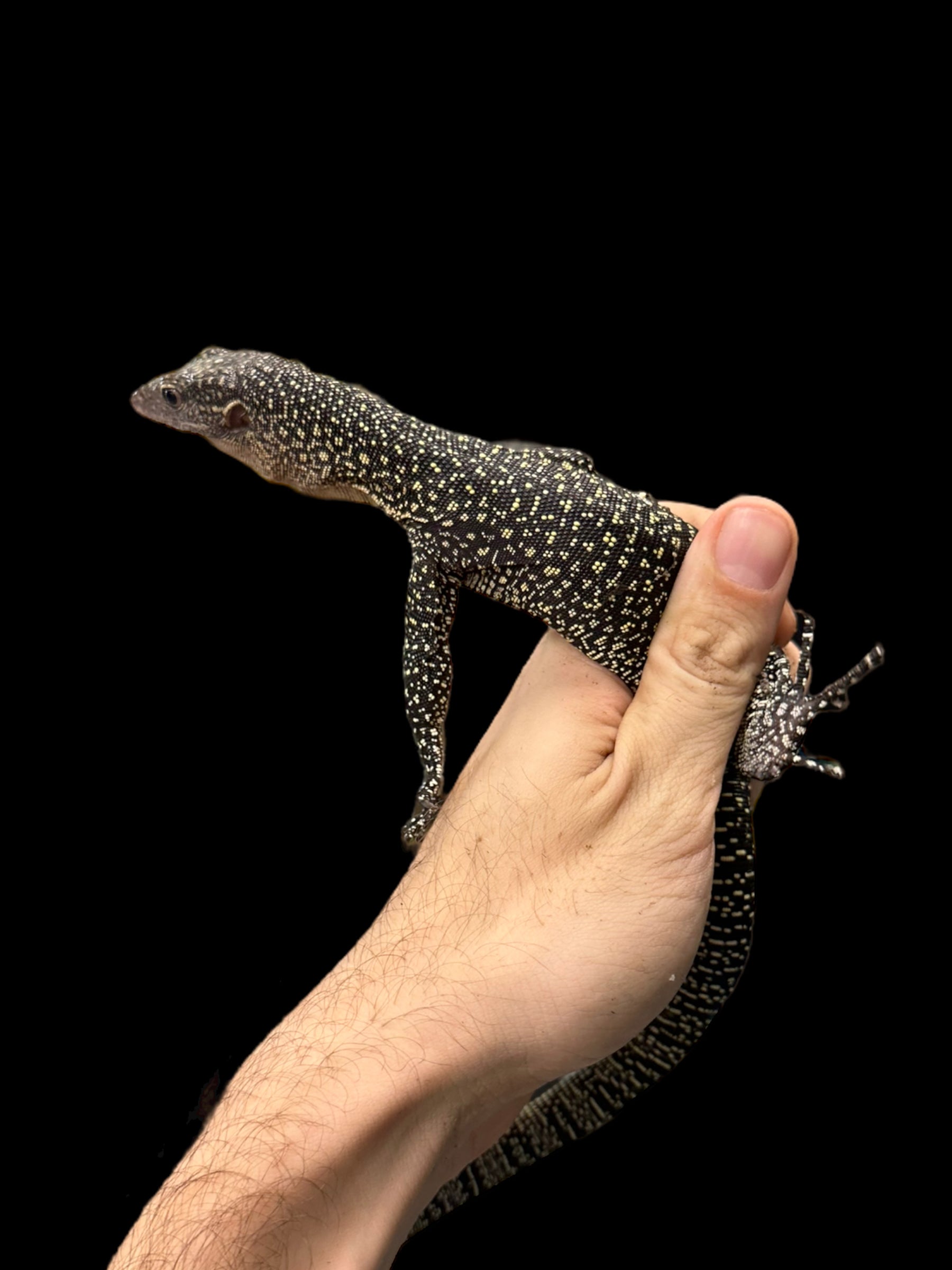
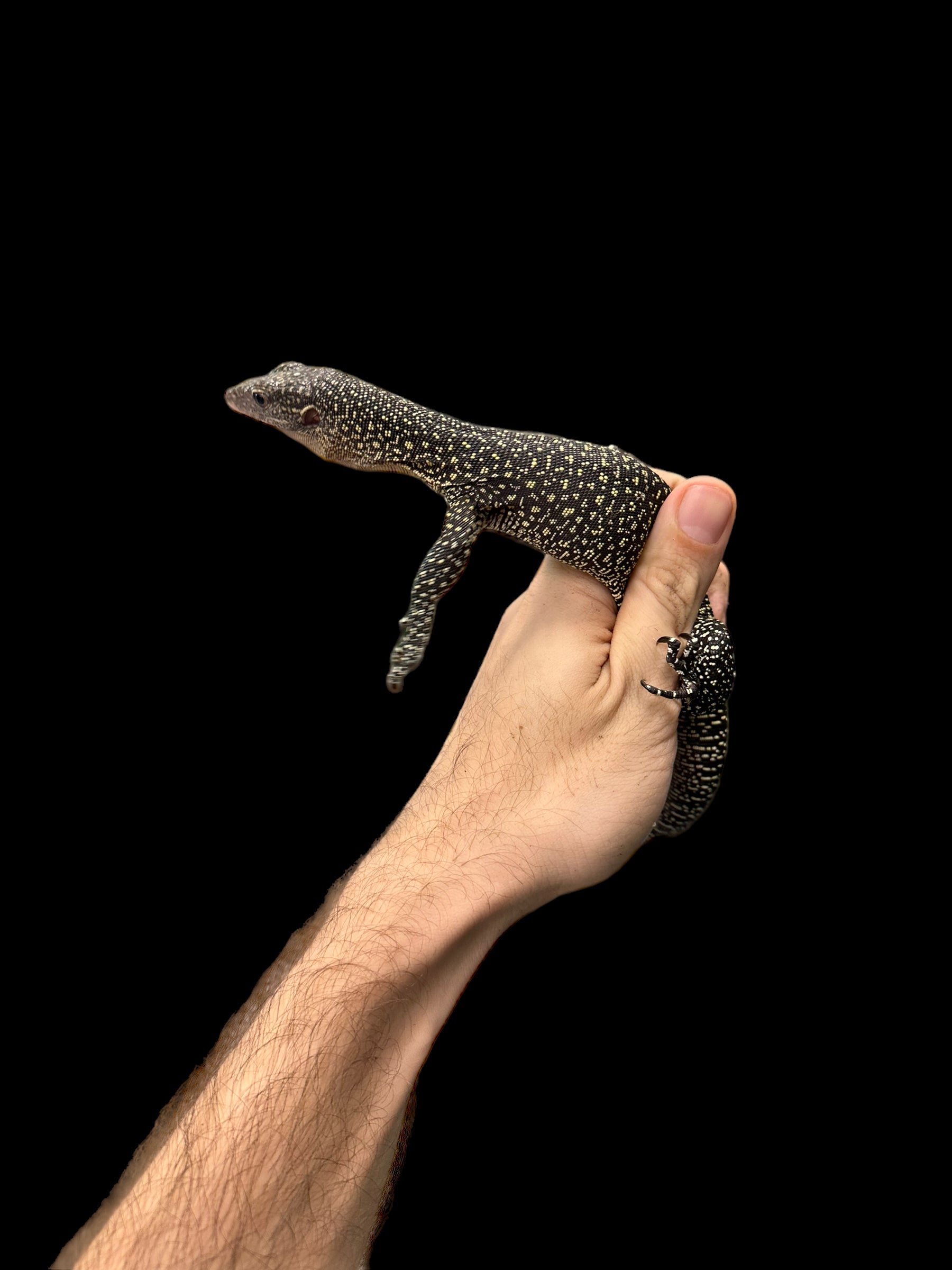
Mangrove Monitor (Varanus indicus)
Scientific Name: Varanus indicus
Common Name: Mangrove Monitor, Pacific Monitor
Species Overview
Size: Adults typically reach 3 to 4 feet (91 to 120 cm) in total length, with long, muscular bodies and strong, laterally compressed tails adapted for swimming.
Appearance: Mangrove Monitors are sleek, powerful monitors with a dark brown to black base colour and bright yellow or cream spotting arranged in bands and ocelli. Their long, narrow head and pointed snout reflect their predatory lifestyle, while their claws and limbs are adapted for both climbing and navigating mangrove terrain. Their tail is extremely long and flattened, used as a rudder during swimming.
Distribution: Found across northern Australia, New Guinea, the Solomon Islands, Micronesia, and numerous Pacific island chains.
Habitat: They inhabit mangrove forests, coastal wetlands, estuaries, and lowland tropical forests. They are semi-aquatic and semi-arboreal, frequently climbing into trees or fleeing into the water when disturbed.
Behaviour: Highly active and intelligent, Mangrove Monitors are diurnal hunters that feed on insects, crustaceans, fish, eggs, amphibians, and mammals. They are capable swimmers and excellent climbers. When threatened, they may hiss, lash their tail, or retreat rapidly to water.
Captive Care
Enclosure: Provide a large, durable enclosure at least 6 feet × 4 feet × 4 feet (180 × 120 × 120 cm) for a single adult, though larger custom builds are preferable. Include strong branches, vertical climbing panels, cork rounds, deep sandy or soil substrate, and a substantial water basin or pond deep enough for full-body soaking and swimming.
Temperature and Humidity:
Basking area: 130 to 140°F (54 to 60°C)
Warm side: 95 to 105°F (35 to 40°C)
Cool side: 80 to 85°F (27 to 29°C)
Night temperatures: 75 to 80°F (24 to 27°C)
Humidity should remain high, between 70 and 90 percent, sustained with regular misting and a large water feature.
Lighting: Provide strong full-spectrum lighting and high-output UVB (10 to 12 percent). Wide, intense basking zones are essential for healthy digestion and metabolic function.
Diet: Offer a varied carnivorous diet including roaches, crickets, locusts, fish, crustaceans, snails, eggs, chicks, rodents, and shellfish. Whole-prey foods should form a significant portion of the diet. Provide calcium and multivitamin supplementation as appropriate.
Behaviour in Captivity: Mangrove Monitors are powerful, curious, and extremely active. They require spacious enclosures, complex climbing areas, and swimming opportunities. They often become accustomed to a keeper’s presence but should still be handled cautiously due to their strength and intelligence.
Special Considerations:
• Enclosure must be escape-proof—Mangroves are strong climbers and diggers.
• Provide a large water feature for swimming and humidity stability.
• Maintain strong airflow alongside high humidity to prevent skin issues.
• Regular enrichment (scent items, climbing changes, puzzle feeders) is essential for mental wellbeing.
Taxonomy Note
Part of the subgenus Euprepiosaurus, Mangrove Monitors belong to a group of semi-aquatic, semi-arboreal monitors found across the Pacific region. Varanus indicus is part of a complex with many regional variations previously grouped under one name.
Genetics Note
No morphs are recognized for this species. Natural variation includes differences in spotting brightness, tail banding, and the overall darkness of the body, reflecting locality-based and environmental influences.