


Photo Disclaimer
Description
Marginated Tortoise
Scientific Name: Testudo marginata
Common Name: Marginated Tortoise
Species Overview
Size: Males typically reach 12 to 14 inches (30 to 36 cm), while females grow larger at 14 to 16 inches (36 to 41 cm).
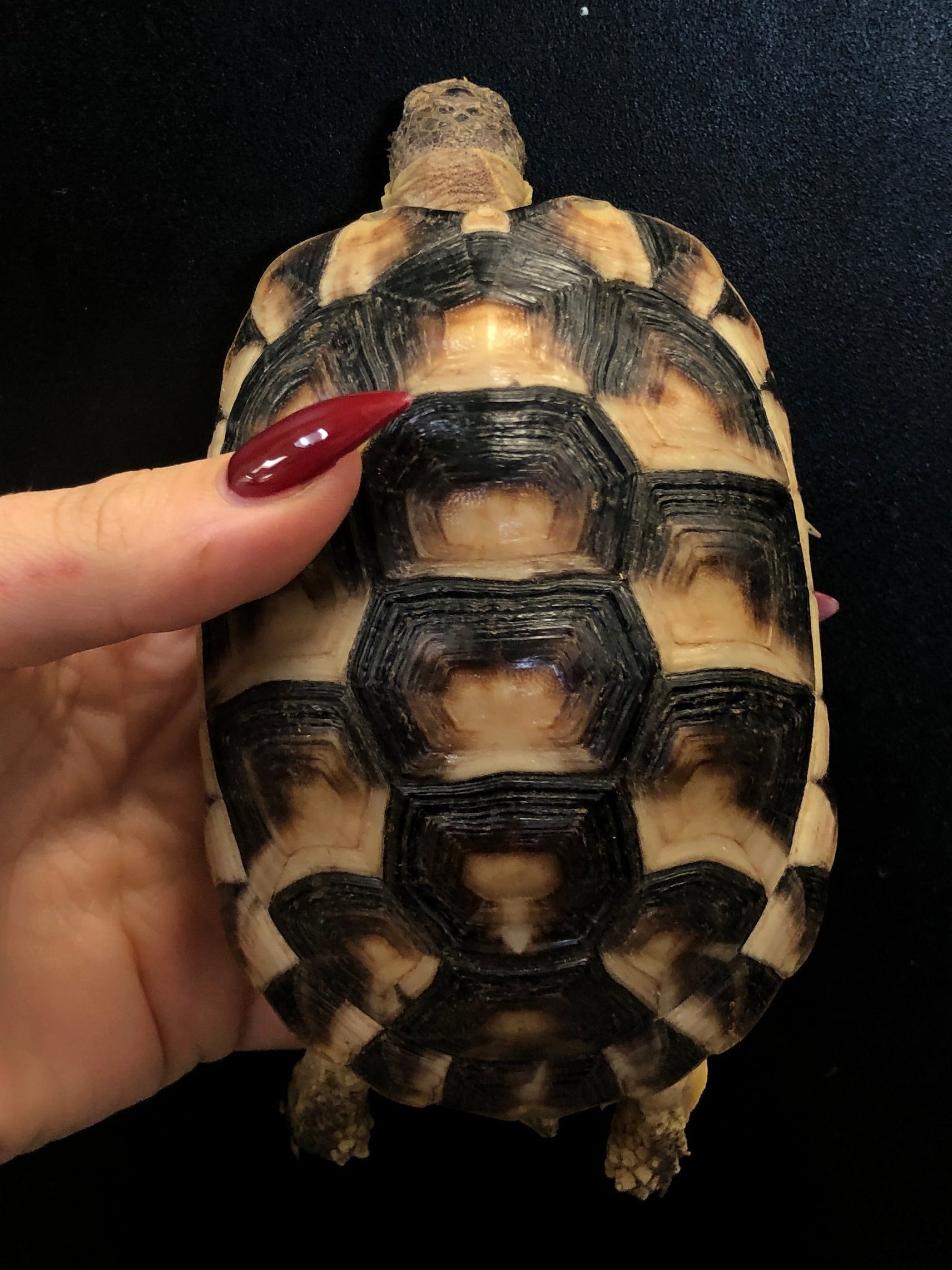
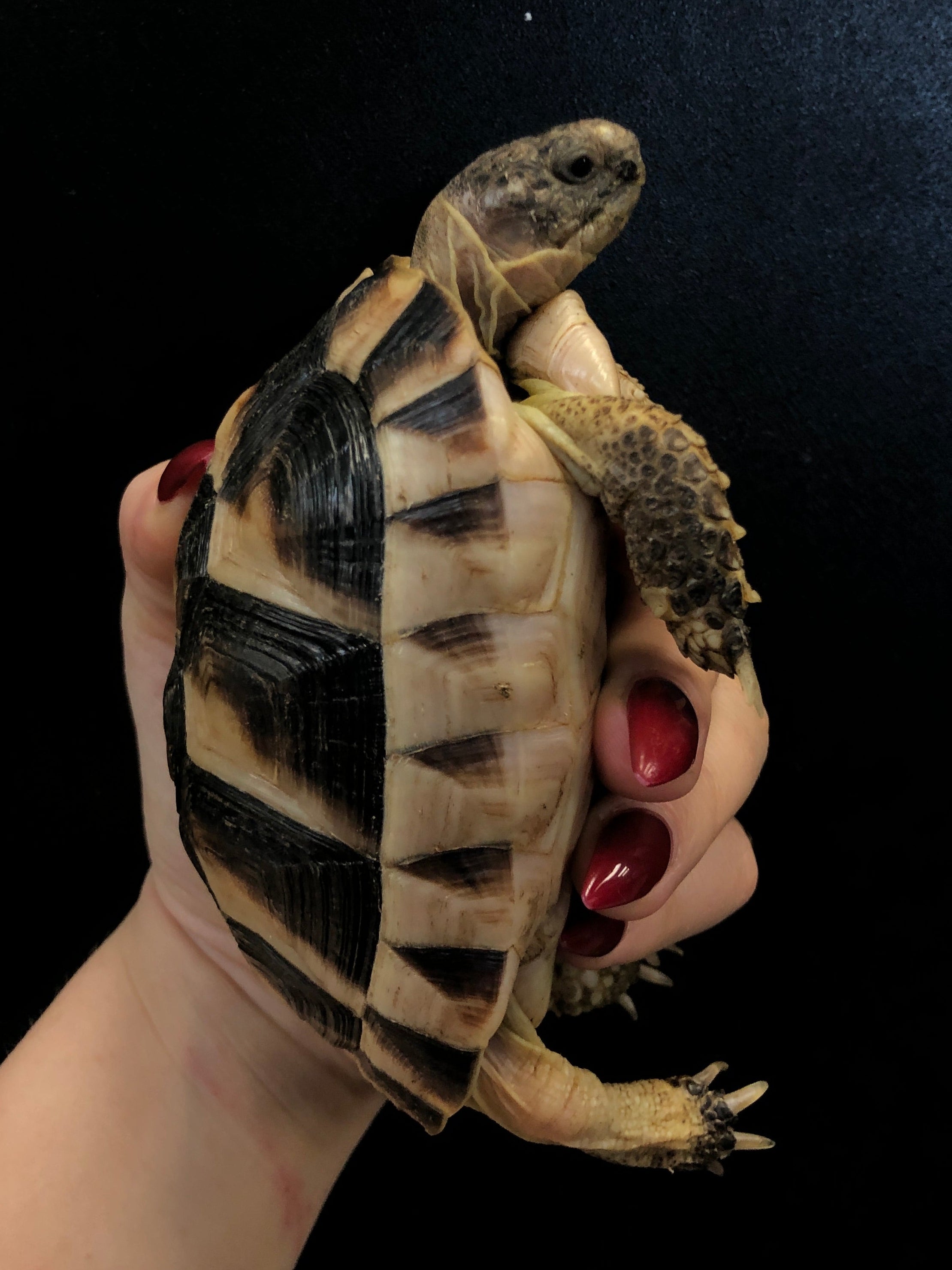
Appearance: The Marginated Tortoise is the largest species within the genus Testudo. It features a dark brown to black carapace with lighter tan or cream highlights. The rear marginals flare outward, creating a distinctive “skirted” appearance that becomes more pronounced with age, especially in males. The plastron is yellowish with dark blotches. Males have longer tails and a more concave plastron, while females possess broader, more rounded shells.
Distribution: Native to Greece and parts of the Balkan Peninsula, with isolated populations in Italy. It inhabits mountainous and Mediterranean environments.
Habitat: In the wild, Marginated Tortoises occupy rocky hillsides, shrublands, dry forests, and Mediterranean grasslands. They prefer warm, dry environments with sparse vegetation, sun exposure, and access to natural shelters. In captivity, they require a large, dry enclosure with deep substrate and ample space for roaming.
Behaviour: These tortoises are diurnal and active grazers. They move steadily across their habitat in search of vegetation and retreat to shaded areas during the hottest hours. They are hardy, alert, and well-suited to outdoor living in warm climates.
Captive Care
Enclosure: Provide a minimum indoor footprint of 6 × 3 feet (180 × 90 cm) for an adult, though larger is strongly preferred due to the species’ size. Outdoor enclosures during warm months offer excellent enrichment. Use a dry soil–sand substrate mix, deep enough for digging. Include stone hides, logs, plants, and shaded retreats.
Temperature and Humidity:
Ambient daytime: 80 to 88°F (27 to 31°C)
Basking area: 95 to 100°F (35 to 38°C)
Night temperature: 65 to 72°F (18 to 22°C)
Humidity: 30 to 50%, with slightly higher humidity pockets in burrows.
Lighting: Provide full-spectrum lighting with 10–12% UVB for proper shell development and metabolism. Ensure a strong basking zone along with shaded areas for thermoregulation.
Diet: Offer a high-fibre herbivorous diet consisting of grasses, edible weeds, succulents, dandelion, plantain, clover, hibiscus leaves, and other fibrous vegetation. Flowers may be offered regularly. Avoid fruits and moisture-heavy foods, which are not natural to their diet.
Behaviour in Captivity: Marginated Tortoises thrive in large, dry enclosures with plenty of space. They enjoy exploring, grazing, and digging. They are robust and adapt well to routine husbandry when kept warm and dry.
Special Considerations
• One of the largest Testudo species; requires ample space.
• Very tolerant of dry environments but needs deep substrate for burrowing.
• Outdoor housing is highly recommended in suitable climates.
• Avoid feeding fruits or soft, watery foods.
Taxonomy Note
Testudo marginata is closely related to the Greek and Hermann’s Tortoises but distinguished by its larger size and flared marginal scutes. Several regional forms exist, including the Sardinian form with slightly different shell shape and coloration.
Genetics Note
There are no recognised morphs for the Marginated Tortoise. Variation in carapace tone, pattern clarity, and the extent of marginal flaring occurs naturally between individual and locality groups.