


Photo Disclaimer
Description
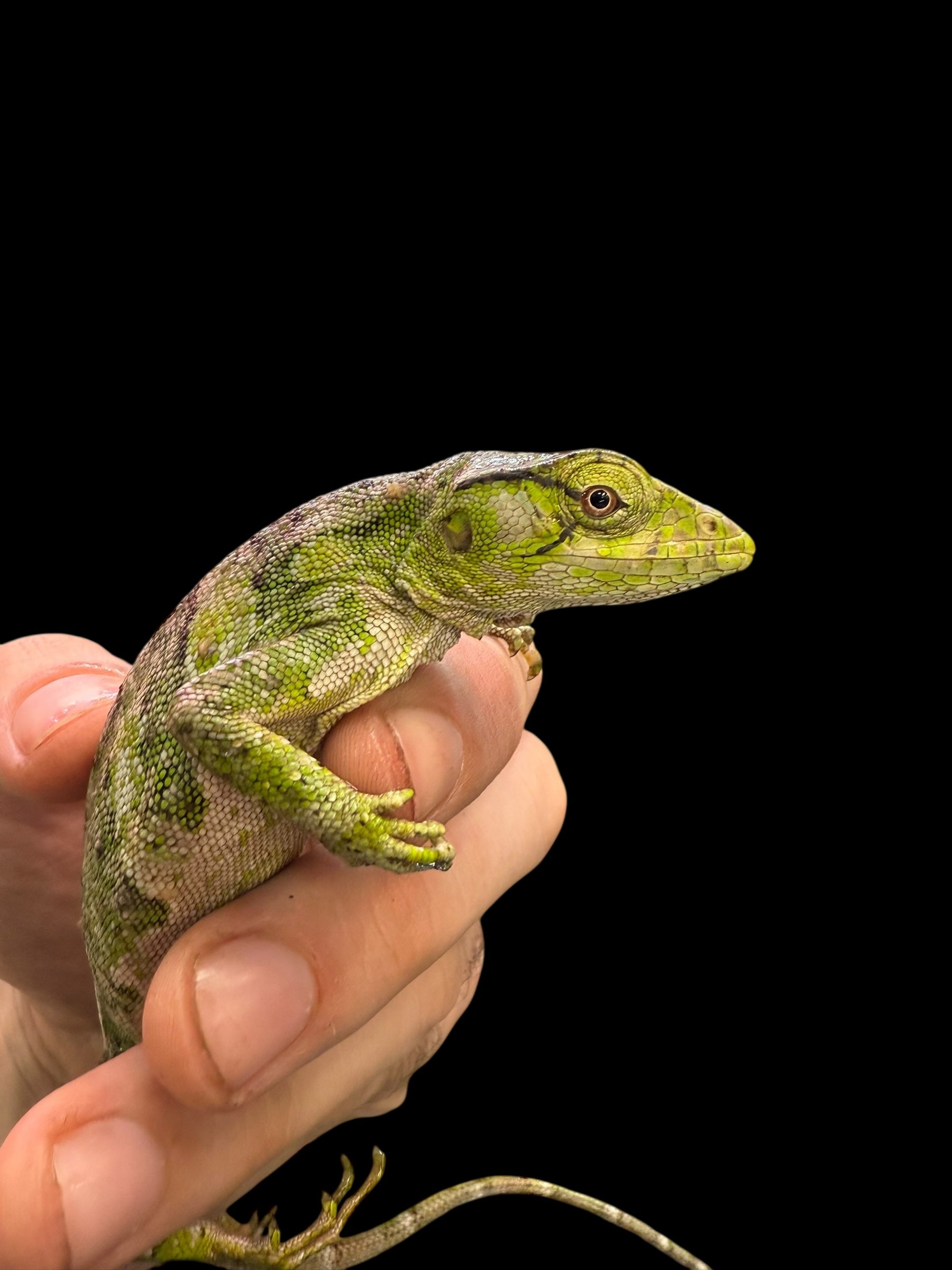
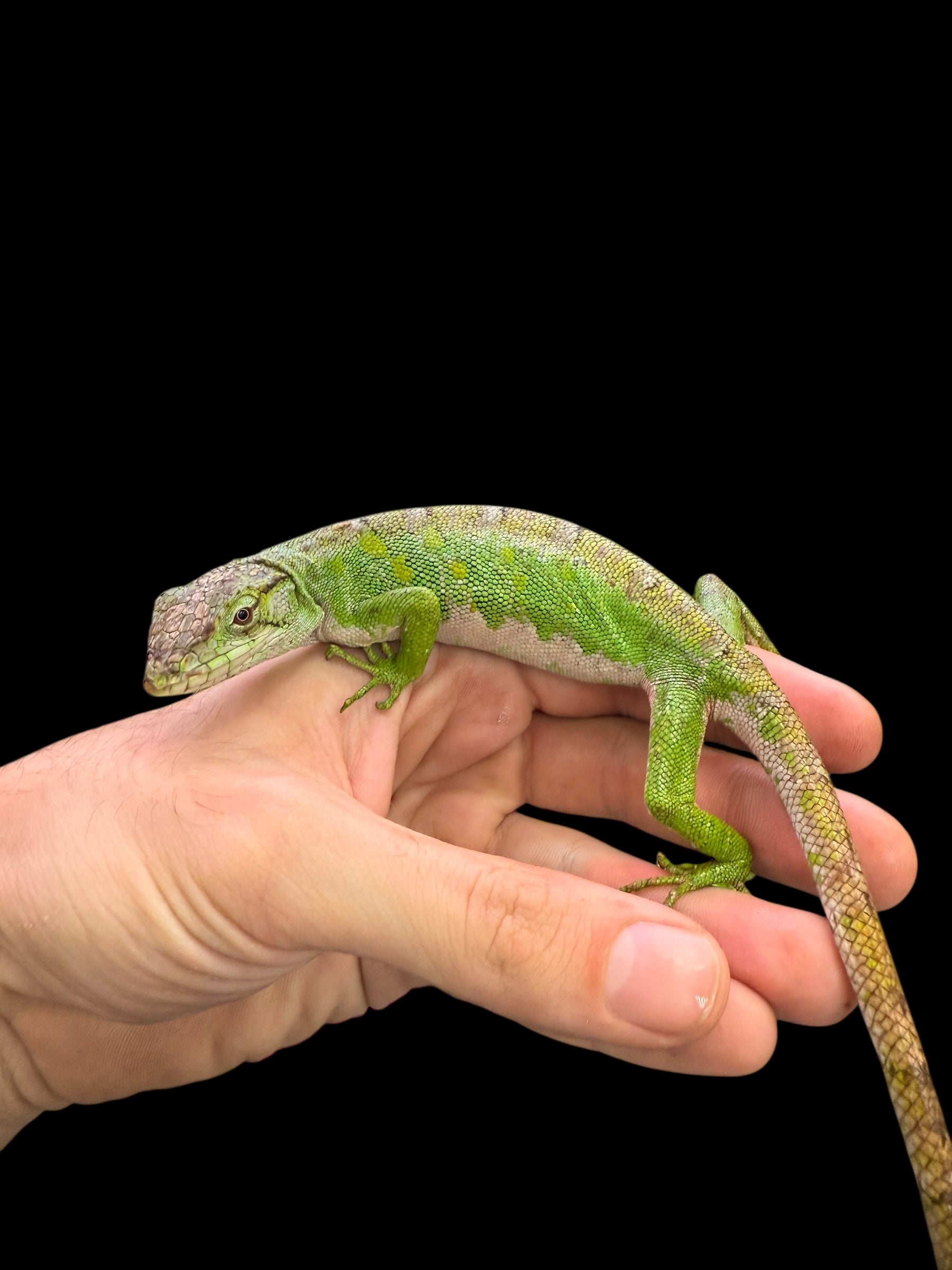
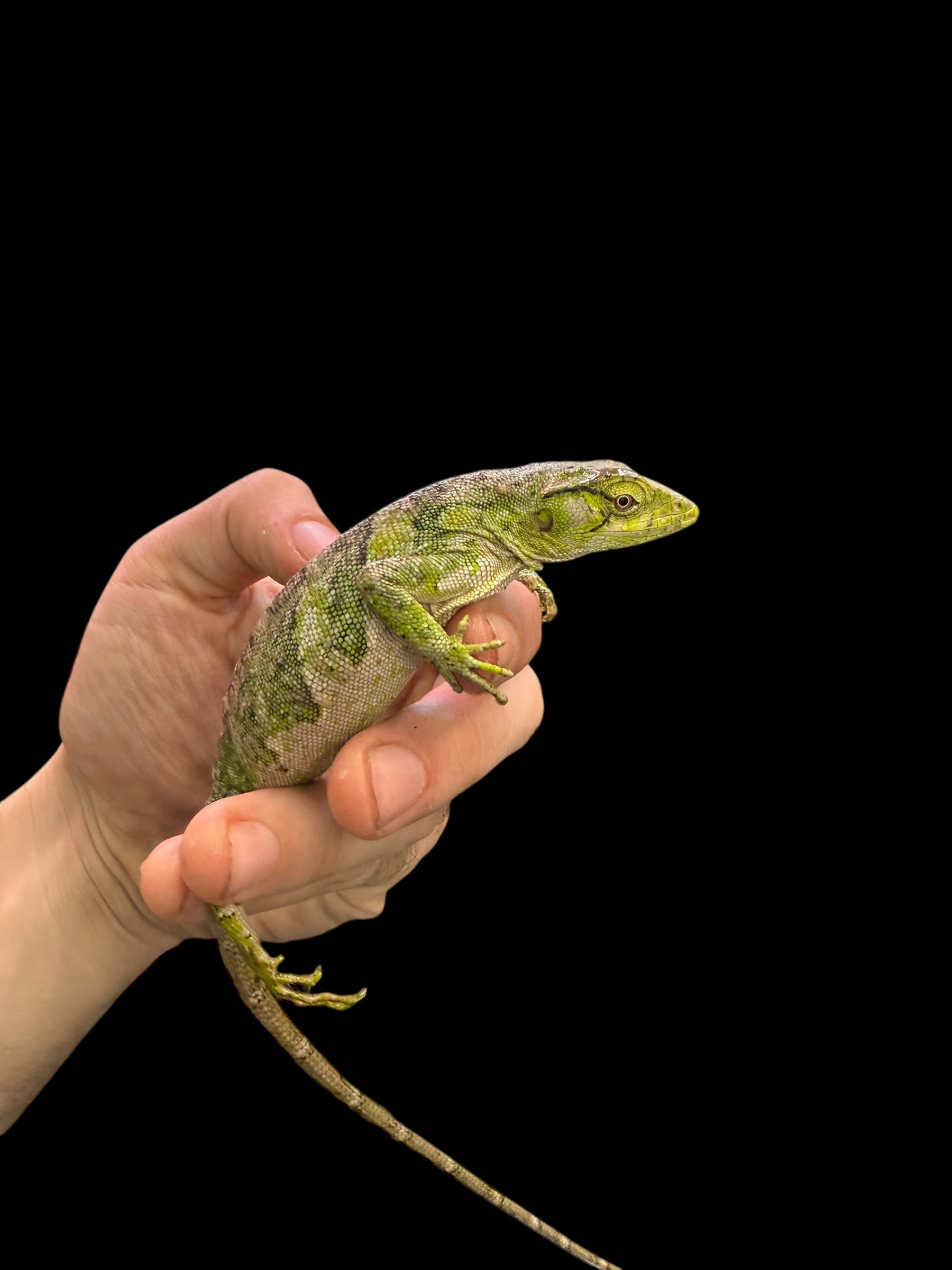
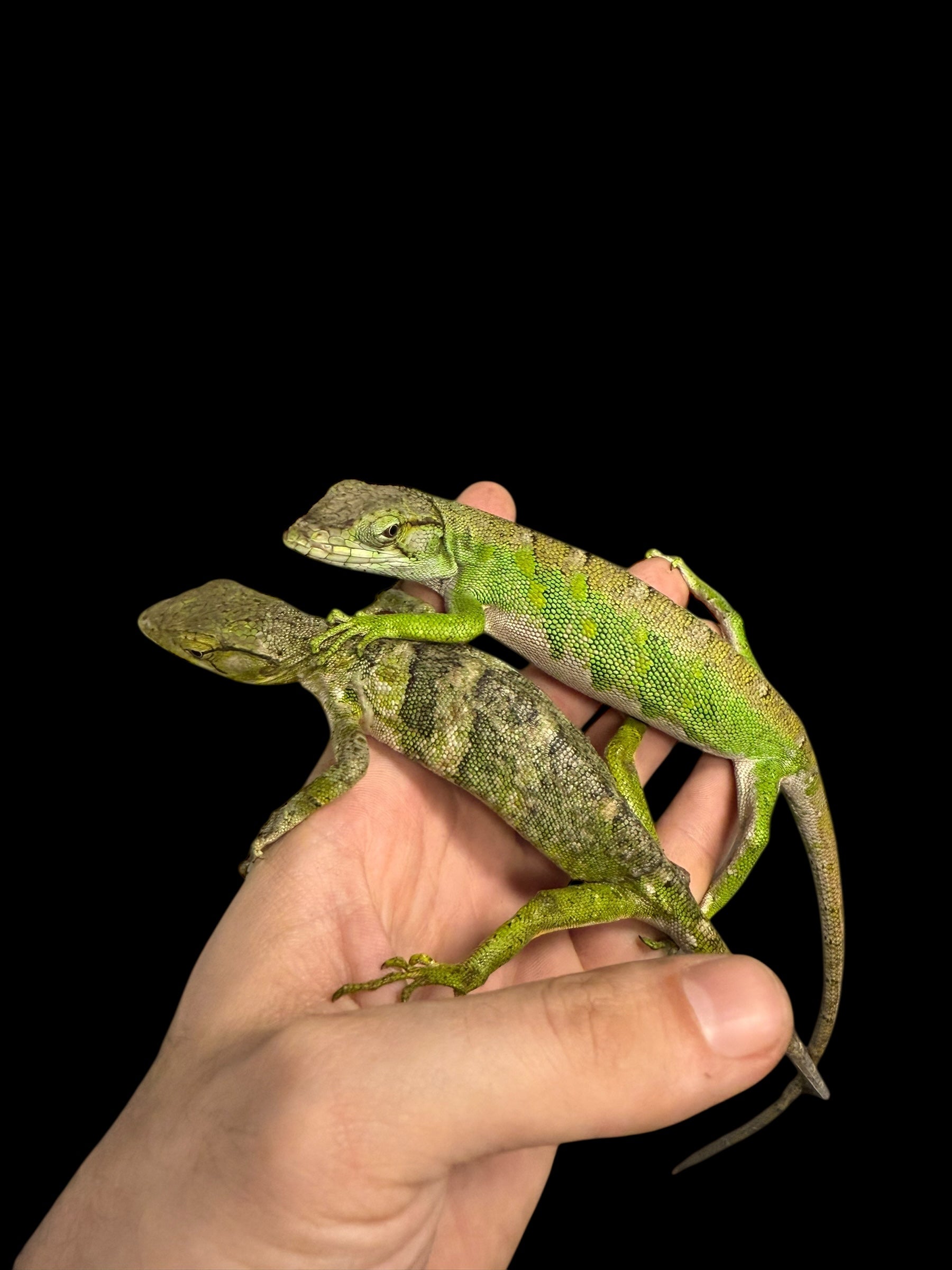
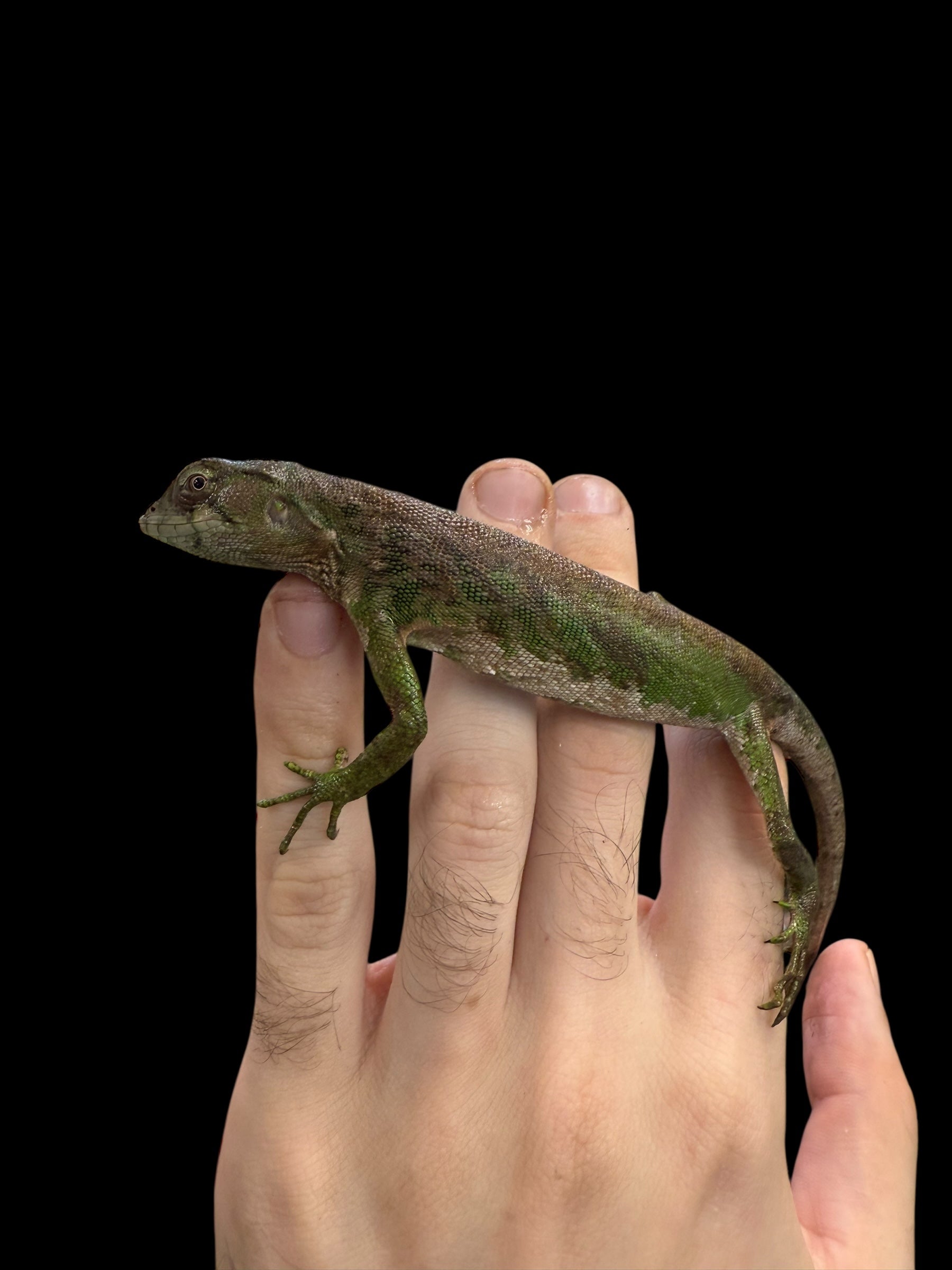
Monkey Anole (Polychrus marmoratus)
Scientific Name: Polychrus marmoratus
Common Name: Monkey Anole, Monkey Lizard, Many-coloured Tree Lizard
Species Overview
Size: Adults typically reach 10 to 14 inches (25 to 36 cm) in total length, with more than half of this being the slender, expressive tail.
Appearance: Monkey Anoles are elegant, slow-moving arboreal lizards with elongated bodies, narrow pointed heads, and large expressive eyes. Their colouration ranges from green to brown, grey, or pale yellow, often in a marbled or mottled pattern. They subtly shift shades depending on mood and environment. Their long toes and semi-prehensile tail allow for delicate, controlled climbing, giving them their “monkey-like” movement.
Distribution: Found throughout northern South America, including Venezuela, Colombia, Ecuador, Peru, Bolivia, the Guianas, and parts of Brazil.
Habitat: These lizards inhabit humid lowland forests, forest margins, secondary growth, and dense shrub layers. They prefer shaded or dappled light environments with abundant vertical vegetation.
Behaviour: Monkey Anoles are diurnal, arboreal, and slow-moving. Instead of fleeing, they often freeze and sway like leaves to avoid detection. Their diet consists mainly of insects and other small invertebrates, with some occasional plant matter. They are generally non-aggressive and rely heavily on camouflage.
Captive Care
Enclosure: Provide a vertically oriented enclosure at least 36 × 18 × 36 inches (90 × 45 × 90 cm) for an adult. This size supports their arboreal lifestyle and need for dense visual cover. Include abundant upright and diagonal branches, vines, cork pieces, and live or artificial plants. A larger option such as 4 × 2 × 2 feet (120 × 60 × 60 cm) is ideal for additional security and environmental stability.
Temperature and Humidity:
Basking area: 90 to 95°F (32 to 35°C)
Ambient daytime temperature: 75 to 82°F (24 to 28°C)
Night temperatures: 68 to 72°F (20 to 22°C)
Humidity should remain high at 70 to 90 percent with daily misting and strong plant cover.
Lighting: Provide moderate full-spectrum lighting with low to medium UVB (around 5 percent). They prefer diffuse, filtered lighting rather than strong, direct basking beams.
Diet: Feed a variety of insects such as crickets, roaches, black soldier fly larvae, houseflies, silkworms, and small hornworms. Juveniles may also take fruit flies. Offer occasional soft fruit or nectar blends. Supplement insects with calcium frequently and a multivitamin weekly.
Behaviour in Captivity: Monkey Anoles are delicate and stress-prone. They thrive in quiet rooms and densely planted enclosures. Handling should be avoided—they are best kept as display animals. When secure, they display natural swaying, controlled climbing, and patient ambush hunting behaviours.
Special Considerations:
• Very sensitive to dehydration—maintain high humidity.
• Require dense foliage for psychological security.
• Avoid excessive heat; this species prefers cooler microclimates.
• Perform minimal handling, as stress impacts their health significantly.
• Thrive in bioactive setups with stable humidity and live plants.
Taxonomy Note
Polychrus marmoratus belongs to the genus Polychrus, often called “false chameleons” or “monkey lizards” due to their slow, deliberate movements and exceptional camouflage abilities.
Genetics Note
No morphs are recognized for this species. Natural variation includes differences in marbling clarity, base shade intensity, and the green–brown transitions seen depending on locality and environmental conditions.