


Photo Disclaimer
Description
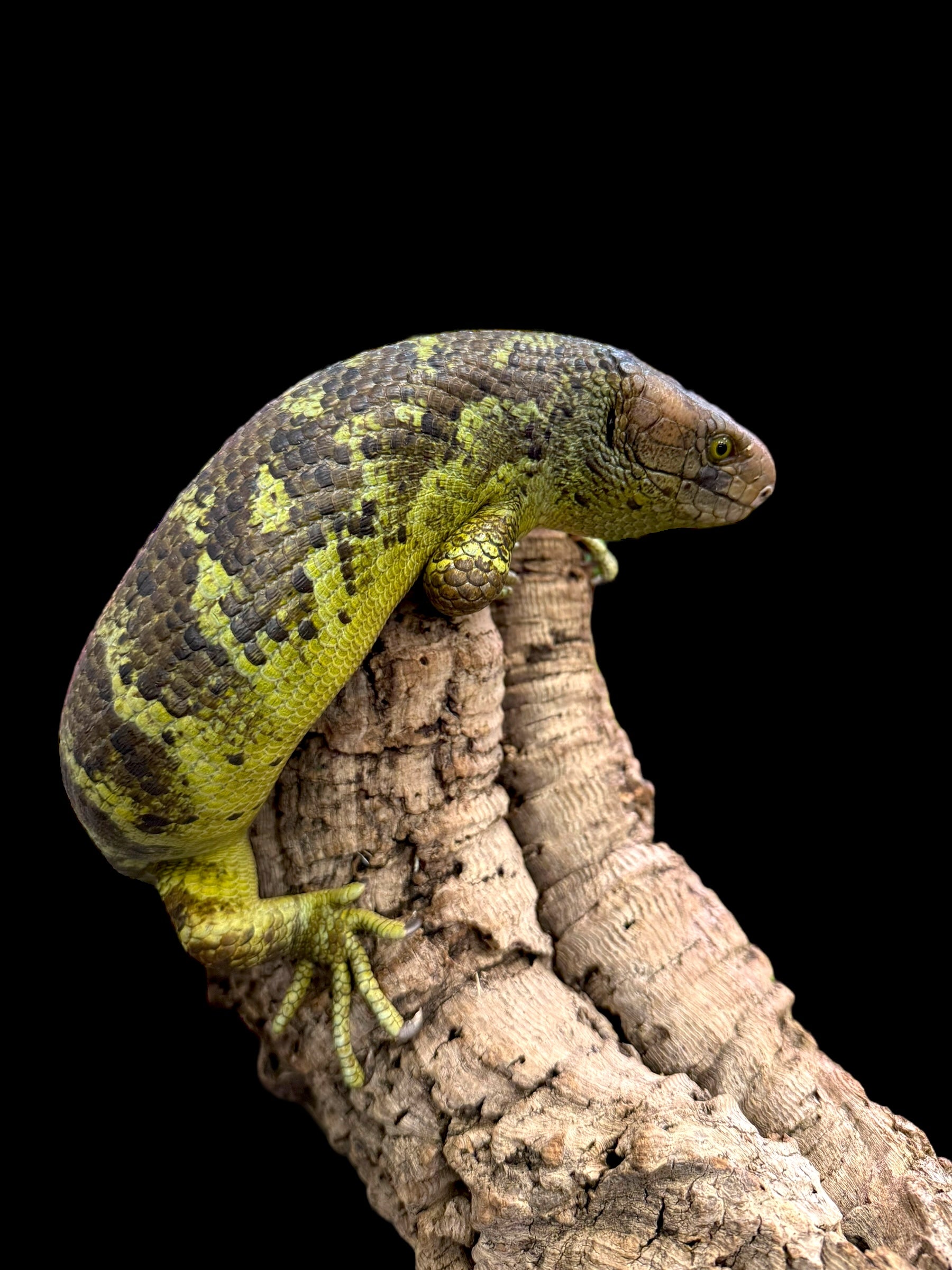
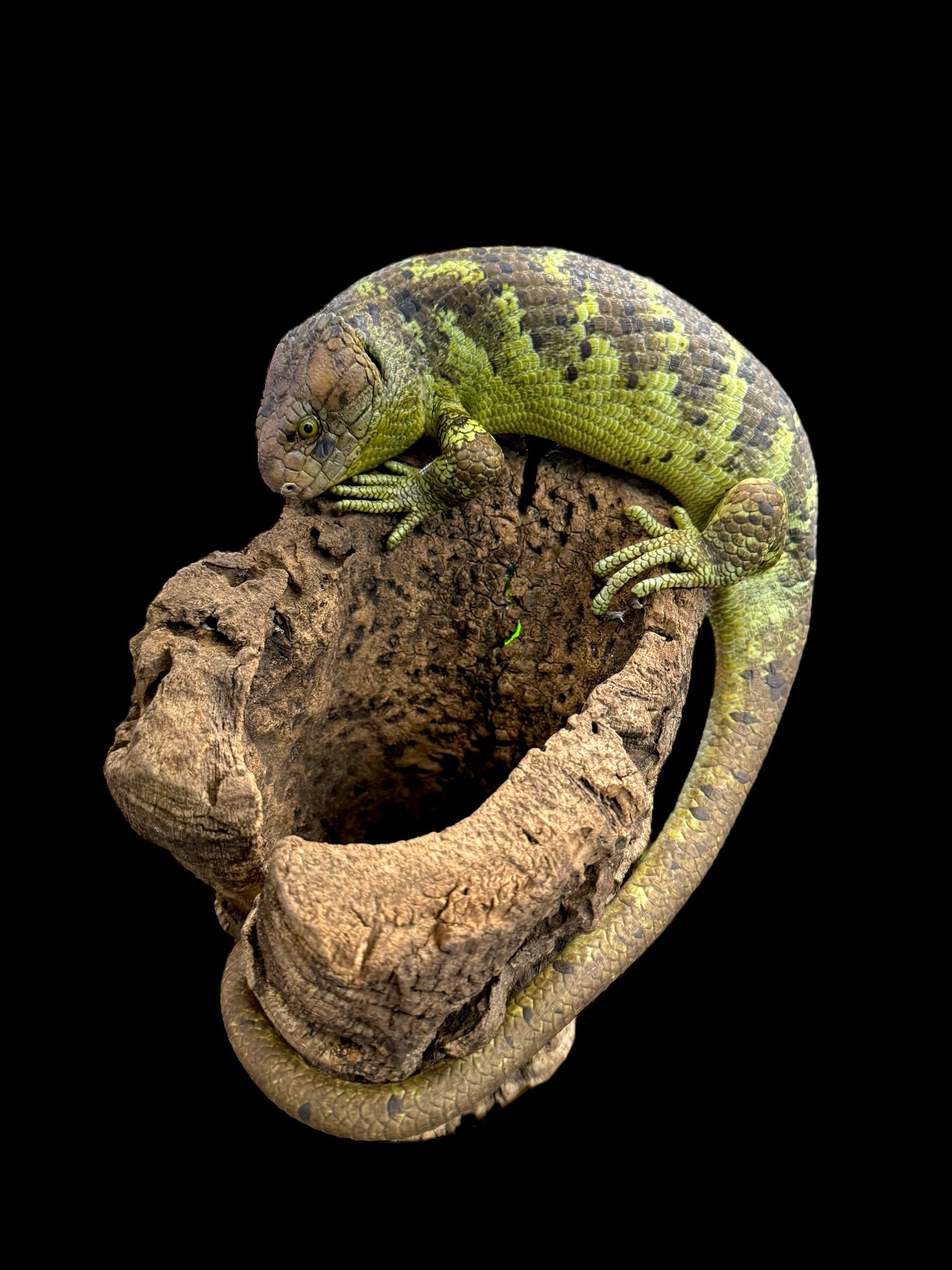
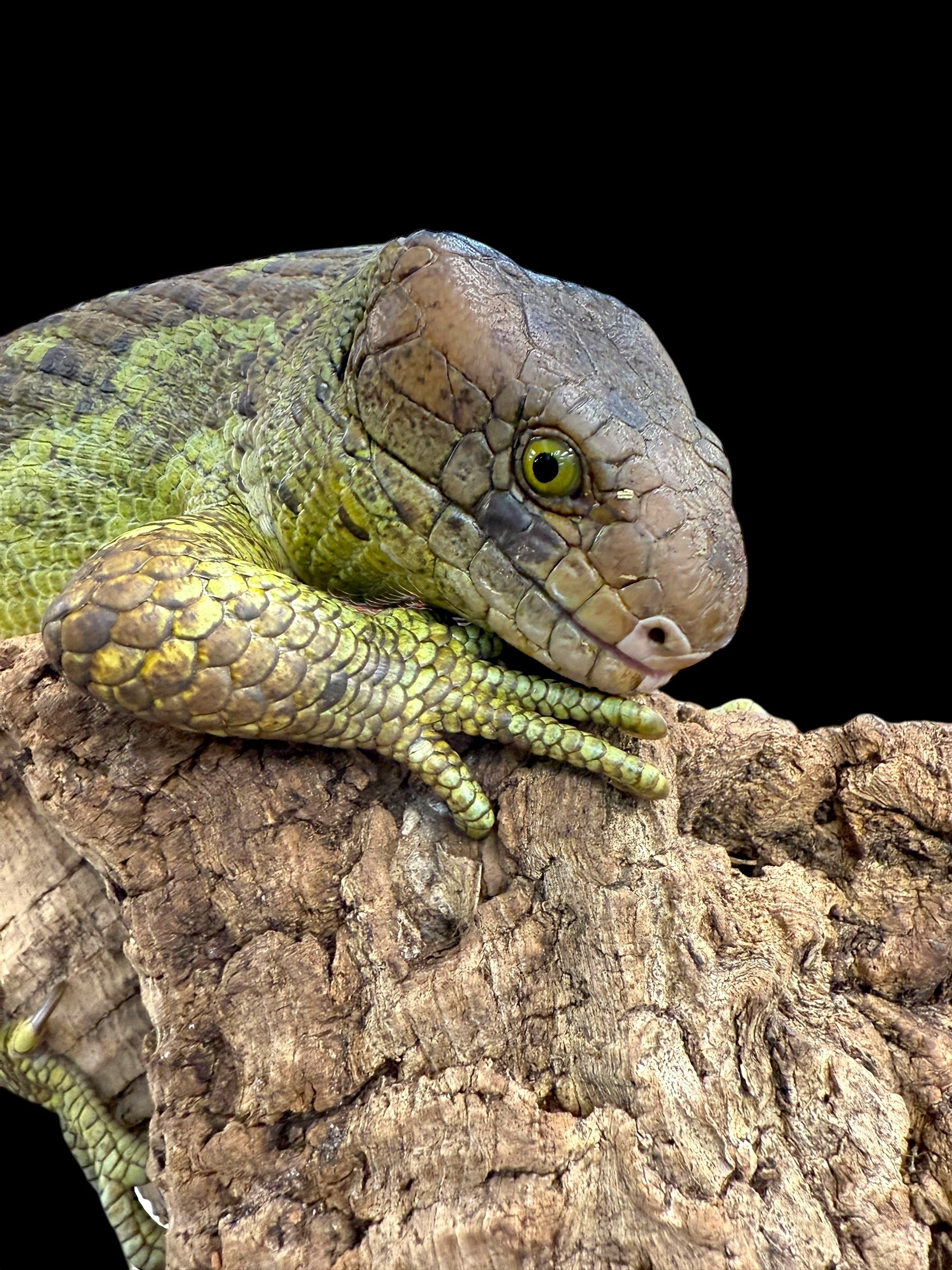
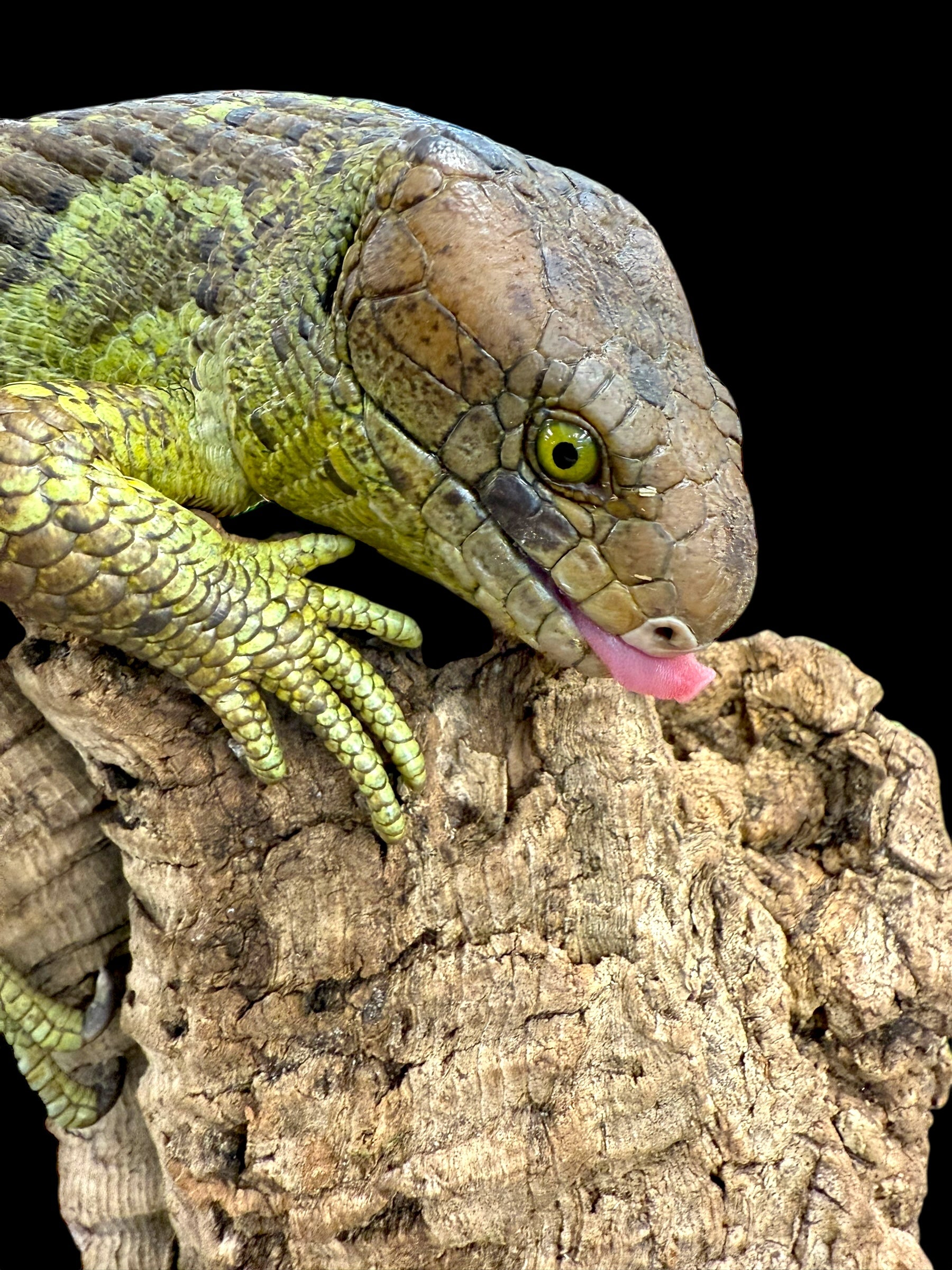
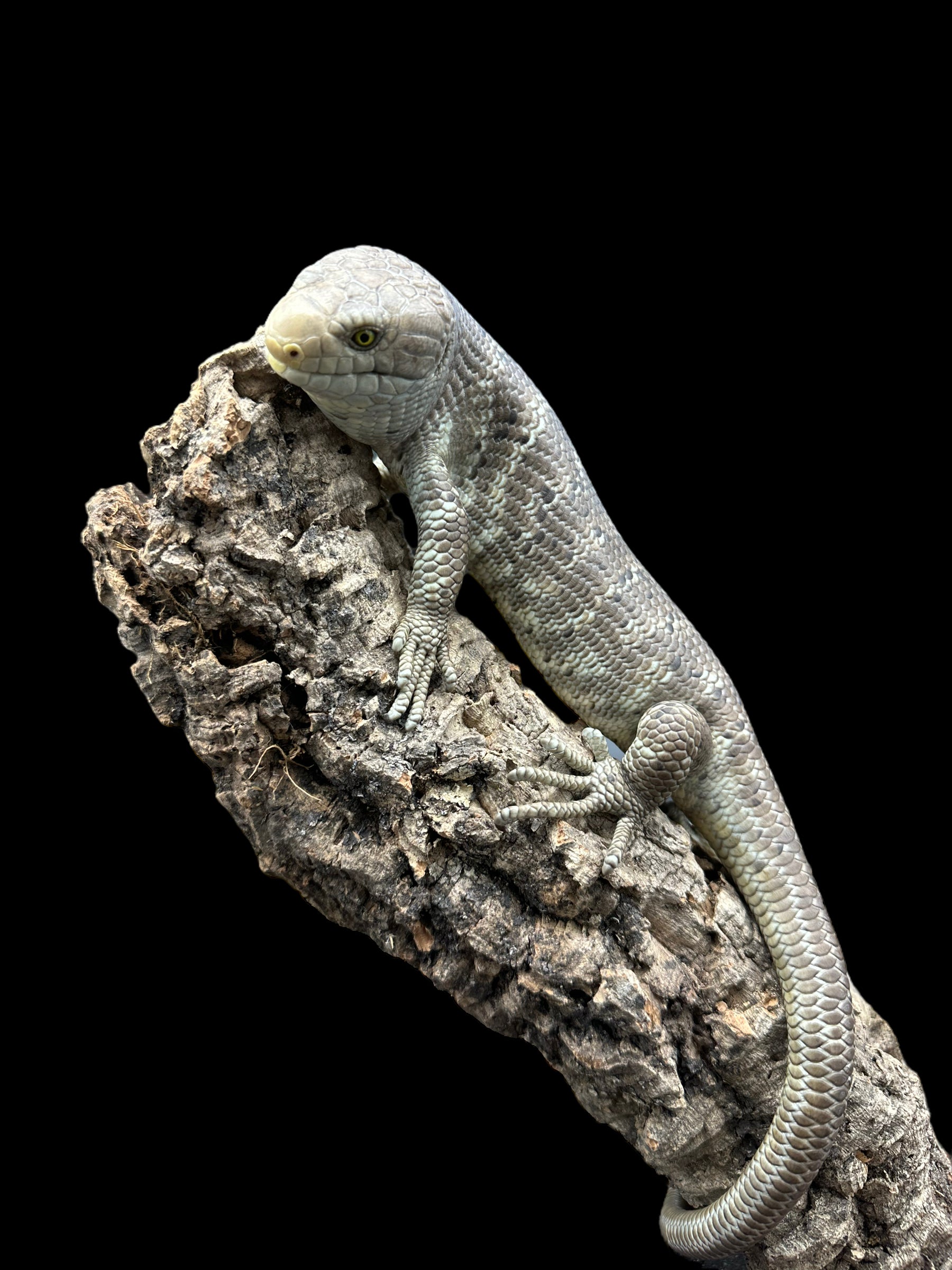
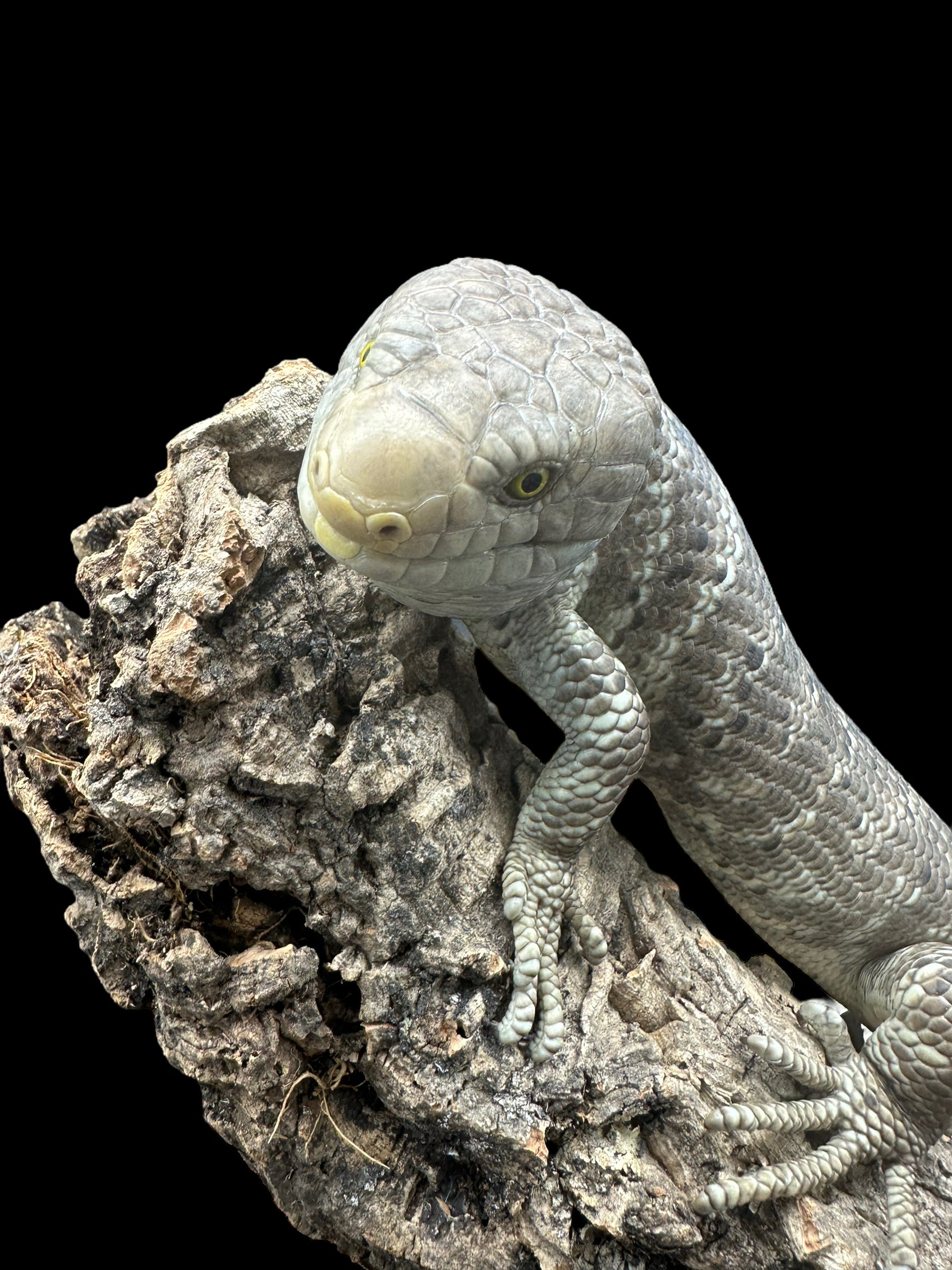
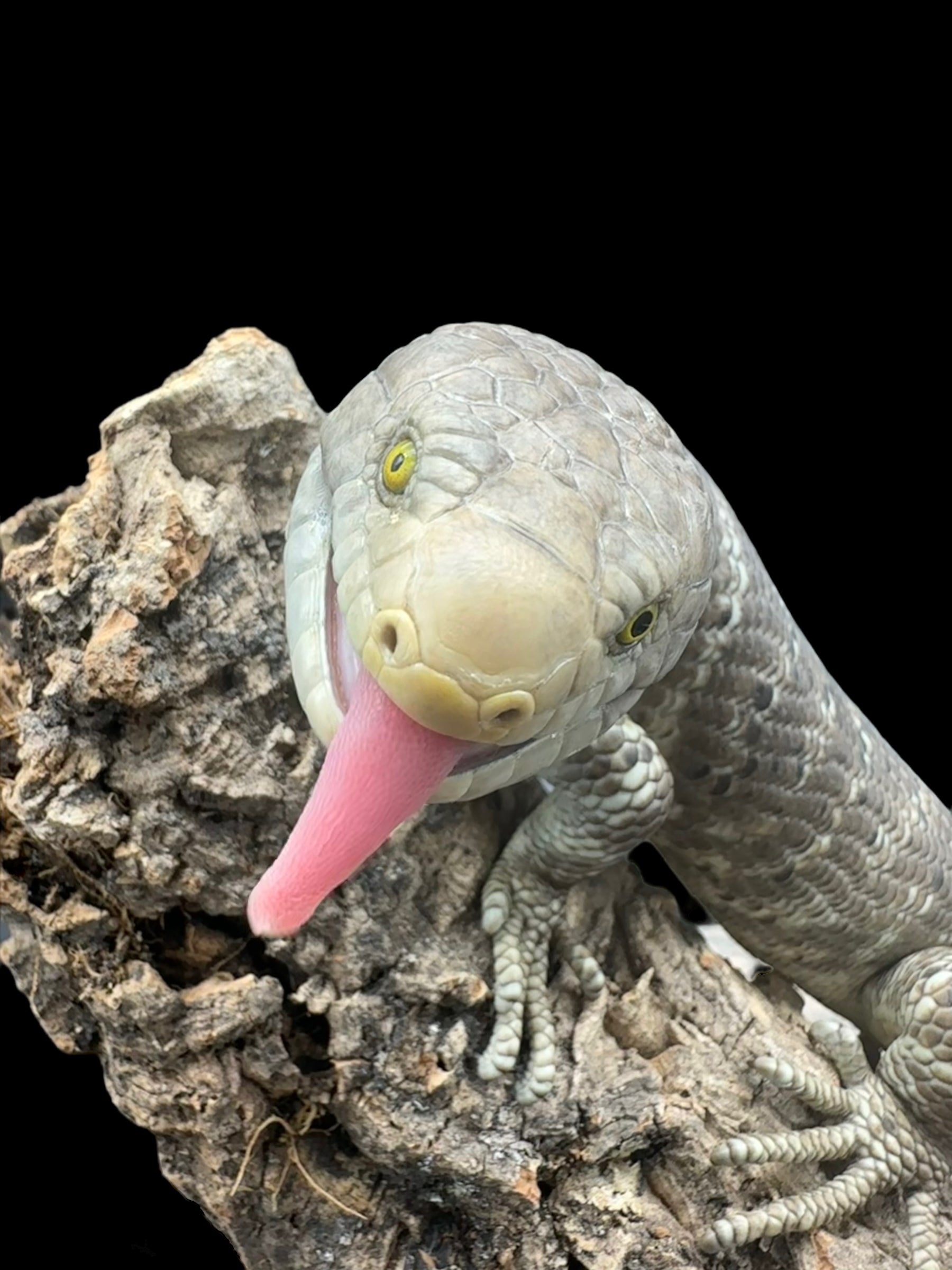
Monkey-tailed Skink
Scientific Name: Corucia zebrata
Common Name: Monkey-tailed Skink, Prehensile-tailed Skink, Solomon Islands Skink
Species Overview
Size: Adults typically reach 24 to 32 inches (60 to 81 cm) in total length, making them the largest known skink species. Their tail is long, muscular, and fully prehensile.
Appearance: Monkey-tailed Skinks are robust, slow-moving lizards with a heavy body, broad head, and strong limbs. Their colouration ranges from mossy green to olive, grey, or brown, often with darker mottling or banding. The scales are large and rough, giving a bark-like texture that aids camouflage. Their most defining feature is the prehensile tail, capable of gripping branches and supporting their arboreal lifestyle. Eyes are forward-facing, giving them a gentle, intelligent appearance.
Distribution: Native to the Solomon Islands of the South Pacific.
Habitat: These skinks inhabit humid tropical forests, living high in the canopy. They rely on dense foliage, thick branches, and vines for climbing, feeding, and shelter. They rarely come to the ground in the wild.
Behaviour: Monkey-tailed Skinks are diurnal or crepuscular and highly arboreal. They move slowly and deliberately, using their tail for balance and anchoring. Unlike many reptiles, they are social and may live in small groups called “circuli.” Their diet is primarily herbivorous, consisting of leaves, flowers, shoots, and some fruits. They may show defensive behaviour by hissing or biting when threatened, but they rely heavily on camouflage.
Captive Care
Enclosure: Provide a tall arboreal enclosure at least 4 × 2 × 4 feet (120 × 60 × 120 cm) for a single adult, with larger sizes strongly recommended for pairs or groups. A common suitable terrarium size is 36 × 18 × 36 inches (90 × 45 × 90 cm) for smaller individuals, though adults benefit greatly from increased height and climbing space. Include thick branches, cork rounds, vines, large live or artificial plants, and multiple elevated hides. Vertical complexity is essential.
Temperature and Humidity:
Basking area: 90 to 95°F (32 to 35°C)
Ambient daytime temperature: 78 to 85°F (26 to 29°C)
Night temperatures: 72 to 75°F (22 to 24°C)
Humidity should remain high, between 70 and 90 percent, maintained through misting, dense foliage, and large water surfaces.
Lighting: Provide full-spectrum lighting with moderate UVB (5 to 7 percent). Bright but diffuse lighting supports natural behaviour, though they do not require intense desert-style lighting.
Diet: Offer a herbivorous diet including dark leafy greens, hibiscus leaves and flowers, dandelion, collard greens, squash, green beans, carrot tops, and select fruits like papaya or mango in moderation. Commercial herbivore diets can be used as part of the feeding rotation. Supplement with calcium regularly and multivitamins weekly.
Behaviour in Captivity: Monkey-tailed Skinks are intelligent, observant reptiles that bond with their environment. They tolerate minimal, calm handling but are best kept as display animals. They thrive when housed in small compatible groups with ample climbing space. They enjoy exploring, basking among foliage, and resting in high, secure retreats.
Special Considerations:
• Social species—can be housed in groups if balanced and monitored.
• Require significant vertical space and dense climbing structure.
• Very sensitive to dehydration—maintain consistently high humidity.
• Avoid feeding excessive fruit to prevent digestive issues.
• Provide strong, secure branches and hides capable of supporting heavy-bodied climbers.
Taxonomy Note
The Monkey-tailed Skink is the sole species in the genus Corucia, representing a unique evolutionary lineage among skinks. Their prehensile tail, herbivory, and social structure set them apart from all other skinks.
Genetics Note
No recognized morphs exist for this species. Natural variation occurs in the degree of mottling, shade of green or brown, and pattern intensity across individuals and island populations.