


Photo Disclaimer
Description
Mophead Iguana (Uranoscodon superciliosus)
Scientific Name: Uranoscodon superciliosus
Common Name: Mophead Iguana, Swamp Iguana
Species Overview
Size: Adults typically reach 12 to 16 inches (30 to 40 cm) in total length, with a moderately long, laterally compressed tail.
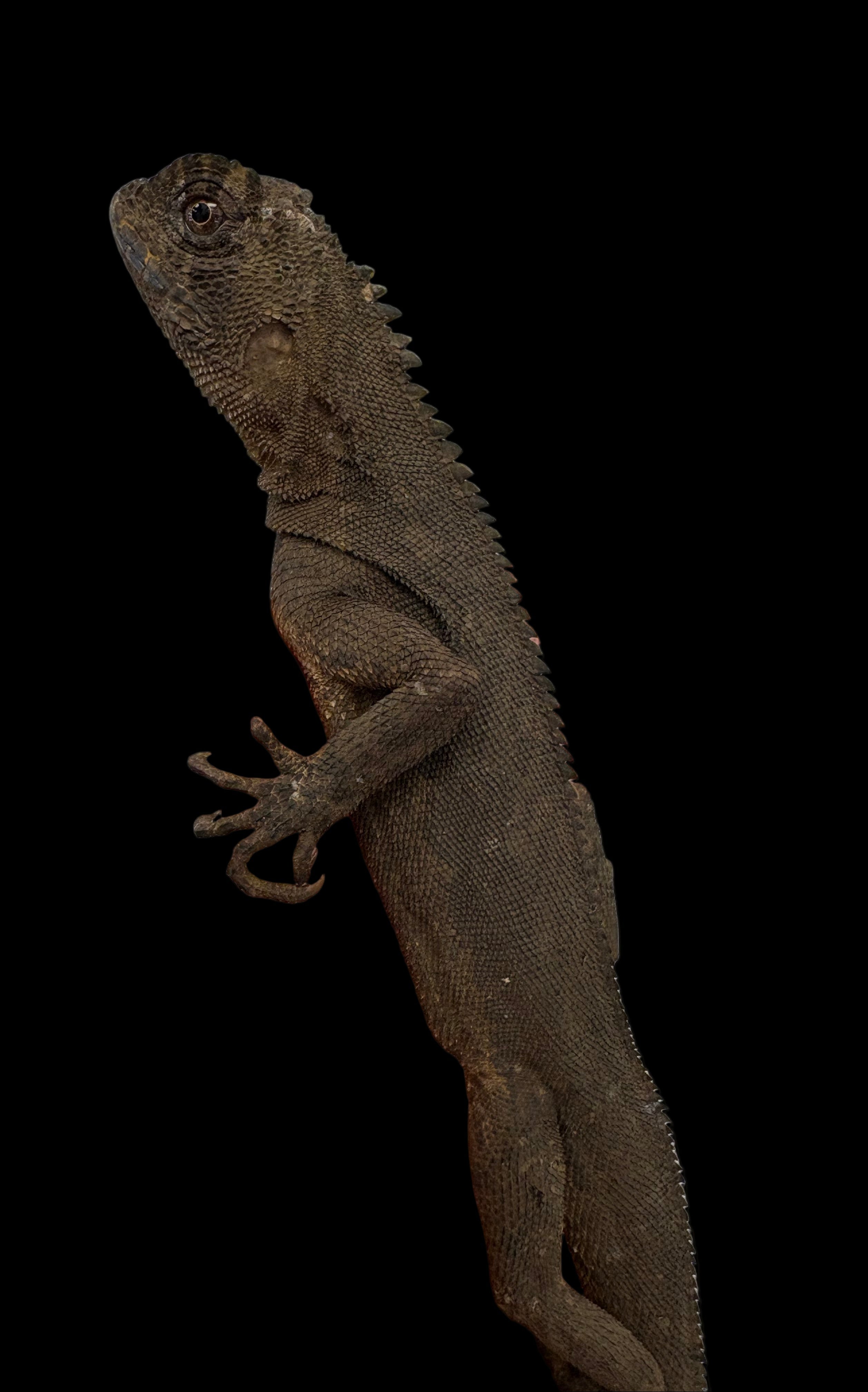
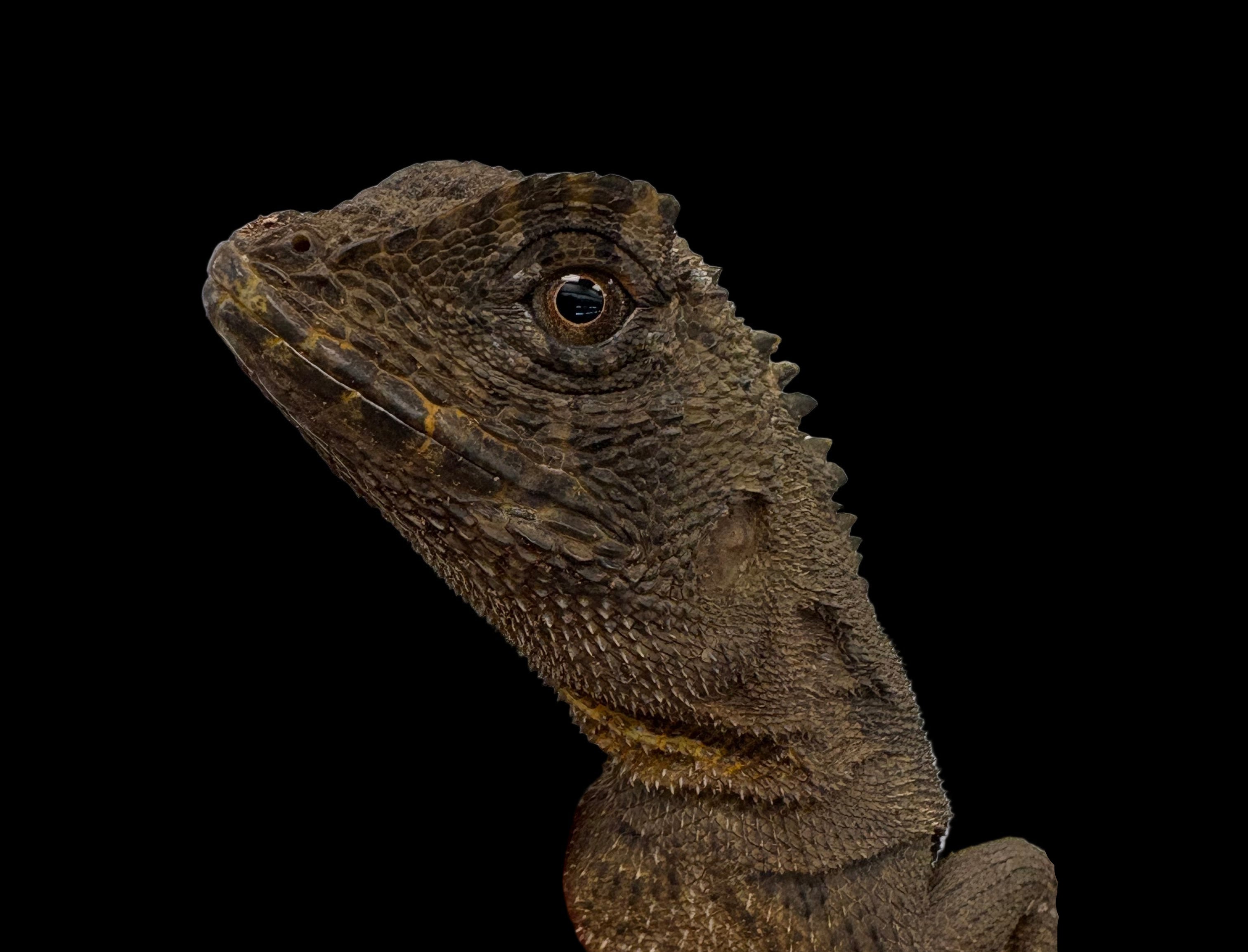
Appearance: The Mophead Iguana is a uniquely textured lizard with a rugged head, raised cranial ridges, and elongated eyebrow-like scales that give rise to its common name. Body colouration ranges from brown to grey, often mottled or barred for excellent camouflage in muddy, leaf-littered environments. The skin is rough and angular, and the body is somewhat flattened laterally. Their cryptic patterning and stillness allow them to blend seamlessly into swamp forest habitats.
Distribution: Found throughout northern South America, including Brazil, Suriname, Guyana, French Guiana, Venezuela, Colombia, and parts of Ecuador and Peru.
Habitat: Mophead Iguanas inhabit swamp forests, flooded woodlands, river edges, and humid lowland forests. They spend much of their time perched on logs, tree bases, or vegetation near water. They are highly moisture-dependent and thrive in saturated environments.
Behaviour: These lizards are semi-arboreal and diurnal, though they may become more crepuscular in hotter climates. They are ambush predators feeding on insects, spiders, aquatic invertebrates, and small vertebrates. When threatened, they may run short distances, flatten themselves against bark, or dive into water. They tolerate damp conditions remarkably well.
Captive Care
Enclosure: Provide a tall, humid enclosure at least 36 × 18 × 36 inches (90 × 45 × 90 cm) for an adult. The enclosure should include vertical cork slabs, branches, bark tubes, live or artificial plants, and a deep, moisture-retentive substrate. A substantial water basin or partially flooded area is strongly recommended, as this species prefers high humidity and occasional soaking. A larger option such as 4 × 2 × 2 feet (120 × 60 × 60 cm) works very well for adults.
Temperature and Humidity:
Basking area: 90 to 95°F (32 to 35°C)
Ambient daytime temperature: 78 to 85°F (26 to 29°C)
Night temperatures: 72 to 75°F (22 to 24°C)
Humidity must remain high—ideally 80 to 95 percent—with frequent misting, deep substrate, and strong plant cover.
Lighting: Provide moderate full-spectrum lighting and UVB (5 to 7 percent). They prefer diffused light rather than intense spotlight-style basking.
Diet: Offer a varied carnivorous and insectivorous diet: roaches, crickets, black soldier fly larvae, silkworms, earthworms, snails, and small fish. Occasional pinky mice may be offered but should not be a staple. Supplement with calcium frequently and multivitamins weekly.
Behaviour in Captivity: Mophead Iguanas are shy but captivating display animals. They thrive in densely planted, humid environments with abundant hides and vertical structure. Handling is not recommended—they stress easily—but when settled, they exhibit natural perching, ambush-feeding, and swamp-dwelling behaviours.
Special Considerations:
• Extremely humidity-dependent—low humidity leads to rapid decline.
• Provide a large water feature or flooded zone.
• Avoid excessive handling; this is a visual species.
• Ensure strong ventilation alongside humidity to prevent stagnation.
• Use solid, stable branches—they rely heavily on vertical structure.
Taxonomy Note
The Mophead Iguana belongs to the family Hoplocercidae, a group of South American lizards adapted to wet, forested, and often swampy habitats. Uranoscodon superciliosus is the sole species in its genus, making it an evolutionarily distinct reptile with no close relatives kept in captivity.
Genetics Note
There are no recognized morphs for this species. Natural variation includes differences in head crest height, mottling intensity, and overall shade, reflecting locality and environmental influences.