


Photo Disclaimer
Description
Mountain Horned Dragon
Scientific Name: Acanthosaura capra
Common Name: Mountain Horned Dragon, Horned Agamid, Pricklenape Lizard
Species Overview
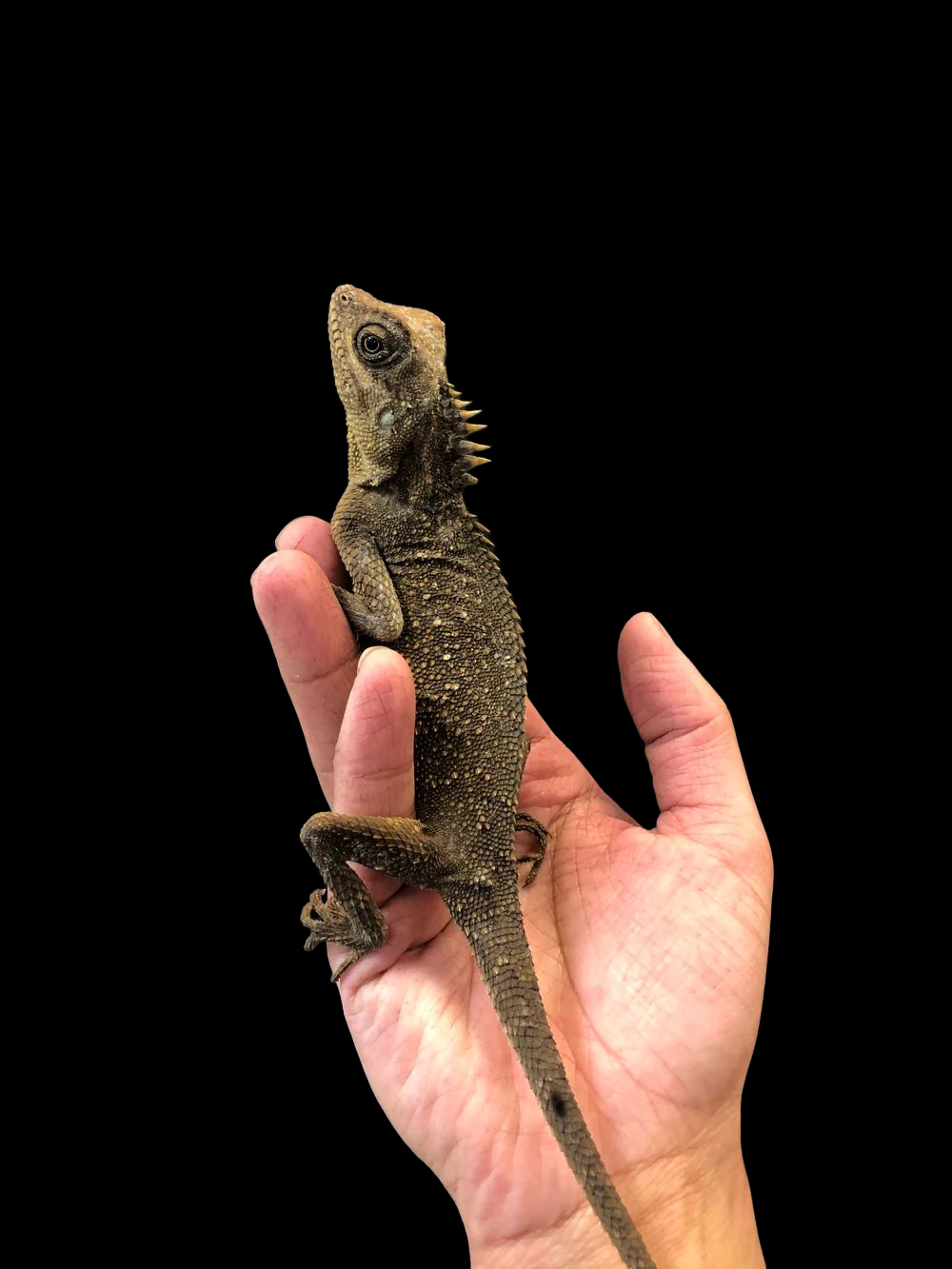
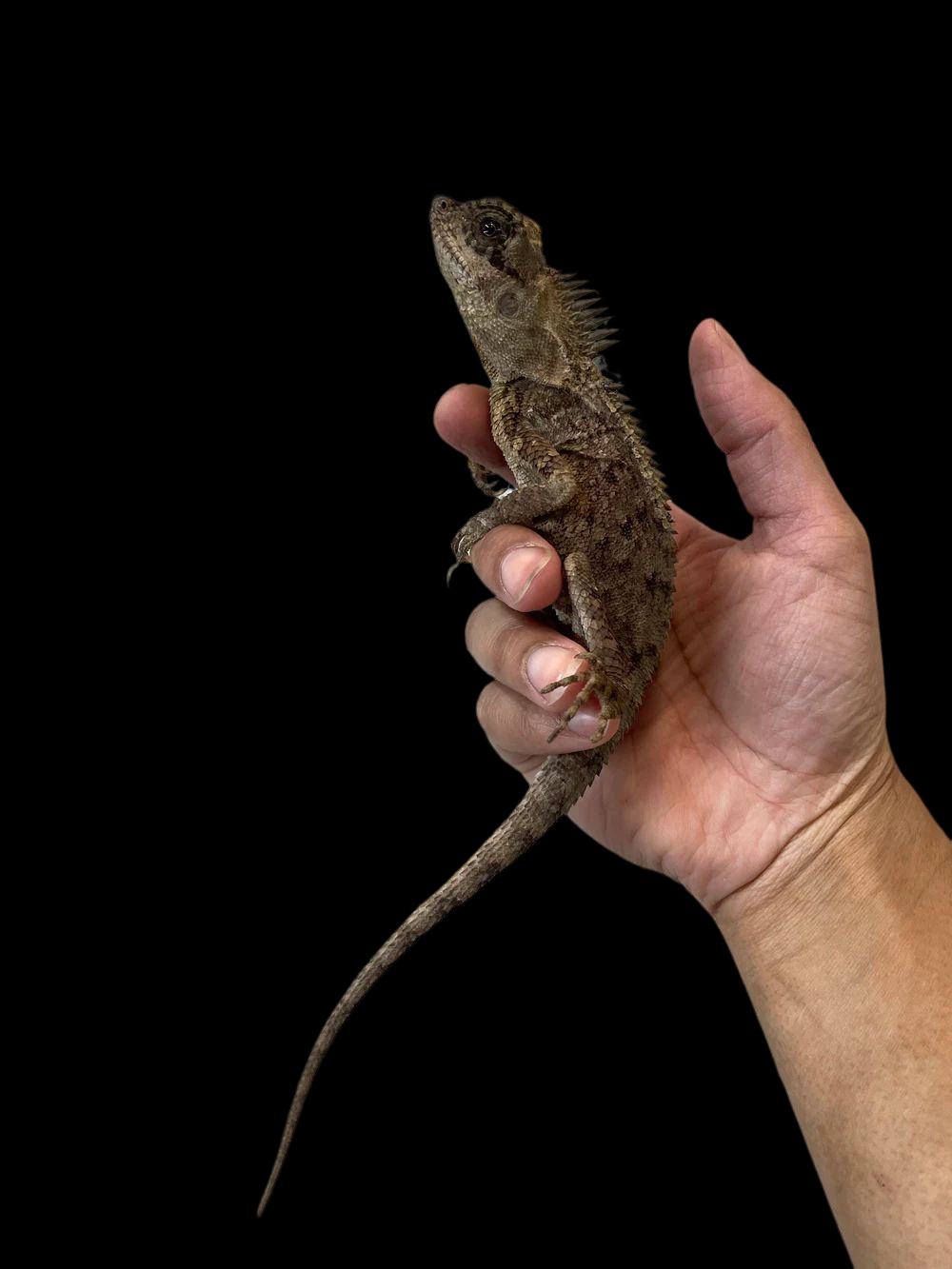
Size: Adults typically reach 12 to 14 inches (30 to 36 cm) in total length, with a slender body and a long expressive tail.
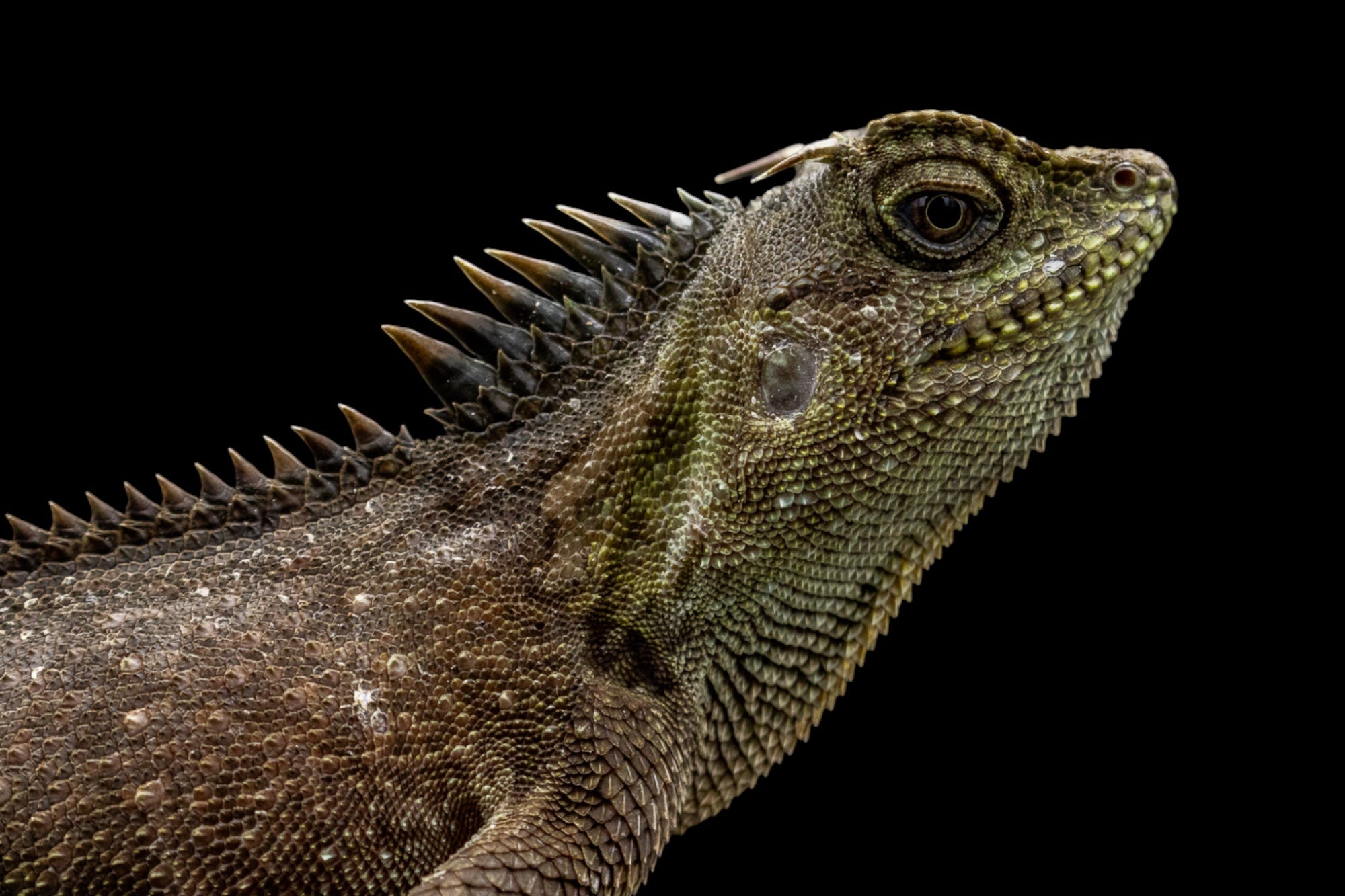
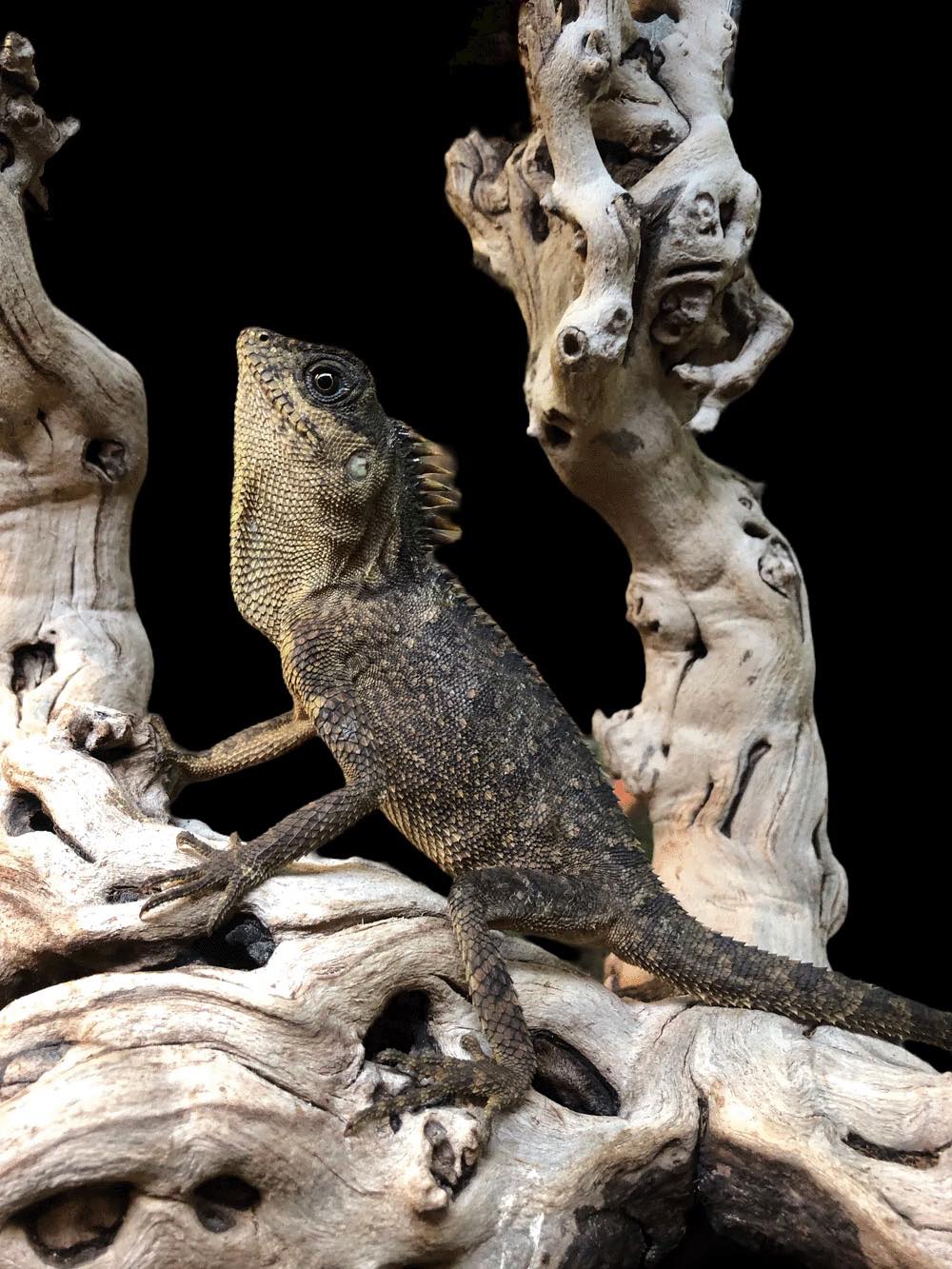
Appearance: Mountain Horned Dragons are visually striking lizards with a triangular head, a series of spines along the nape and back, and a prominent row of horn-like scales above the eyes. Their coloration ranges from earthy browns to greens, often mottled or barred, with subtle orange or blue highlights. Their textured scales and spiny silhouette provide excellent camouflage in forest environments. Males may display brighter colours and more pronounced spines.
Distribution: Native to Southeast Asia, including Vietnam, Cambodia, Thailand, Laos, and parts of southern China.
Habitat: These dragons inhabit cool, humid, forested mountains and foothills. They are typically found perched quietly on branches, logs, or vines above streams and forest floors.
Behaviour: Mountain Horned Dragons are diurnal, arboreal, and generally calm. They prefer to perch motionless, relying on camouflage rather than speed. They feed primarily on insects and other invertebrates. When threatened, they may puff their body, gape, or darken their colour, but they rarely show aggression. They tolerate cooler temperatures than many tropical lizards.
Captive Care
Enclosure: Provide a tall, forest-style enclosure at least 36 × 18 × 36 inches (90 × 45 × 90 cm) for an adult. Include numerous climbing branches, vines, cork pieces, and dense foliage to create shaded, layered perches. This species thrives in naturalistic, humid setups with visual barriers and gentle airflow.
Temperature and Humidity:
Basking area: 85 to 90°F (29 to 32°C)
Ambient daytime temperature: 72 to 80°F (22 to 27°C)
Night temperatures: 65 to 72°F (18 to 22°C)
Humidity should remain high, between 70 and 90 percent, with daily misting and dense plant cover.
Lighting: Provide full-spectrum lighting with moderate UVB (5 to 7 percent). Their preferred lighting is bright but filtered, similar to light conditions under a forest canopy.
Diet: Offer a varied insectivorous diet including crickets, roaches, black soldier fly larvae, silkworms, hornworms, snails, and occasional small fish or pinkies (rarely and not necessary for regular feeding). Supplement with calcium often and multivitamins weekly.
Behaviour in Captivity: Mountain Horned Dragons are gentle, calm display reptiles. They do well in quiet environments with minimal handling. When content, they perch confidently, display subtle colour shifts, and hunt insects actively. Poor humidity or overheated enclosures quickly cause stress.
Special Considerations:
• This species prefers cooler temperatures than many arboreal lizards.
• High humidity and abundant foliage are essential.
• Handling should be minimal—stress can weaken the immune system.
• Provide multiple perches at varying heights for thermoregulation.
• Ensure drainage or airflow to prevent stagnant moisture.
Taxonomy Note
Mountain Horned Dragons belong to the genus Acanthosaura, known for their distinctive head spines, dorsal crests, and cool-climate forest adaptations. Acanthosaura capra is one of the most commonly kept species in the genus.
Genetics Note
No recognized morphs exist for this species. Natural variation includes differences in crest height, mottling clarity, and colour tone, reflecting normal individual and locality-based variation across their Southeast Asian range.