

Photo Disclaimer
Description
Mourning Gecko (Yellow Belly)
Scientific Name: Lepidodactylus lugubris
Common Name: Mourning Gecko (Yellow Belly), Philippinean Mourning Gecko, Parthenogenetic Gecko
Species Overview
Size: Adult Mourning Geckos (Yellow Belly) typically reach 3.5–4 inches (9–10 cm) in total length, including the tail. They are small, slender, and agile arboreal geckos with smooth scales and a lightweight build.
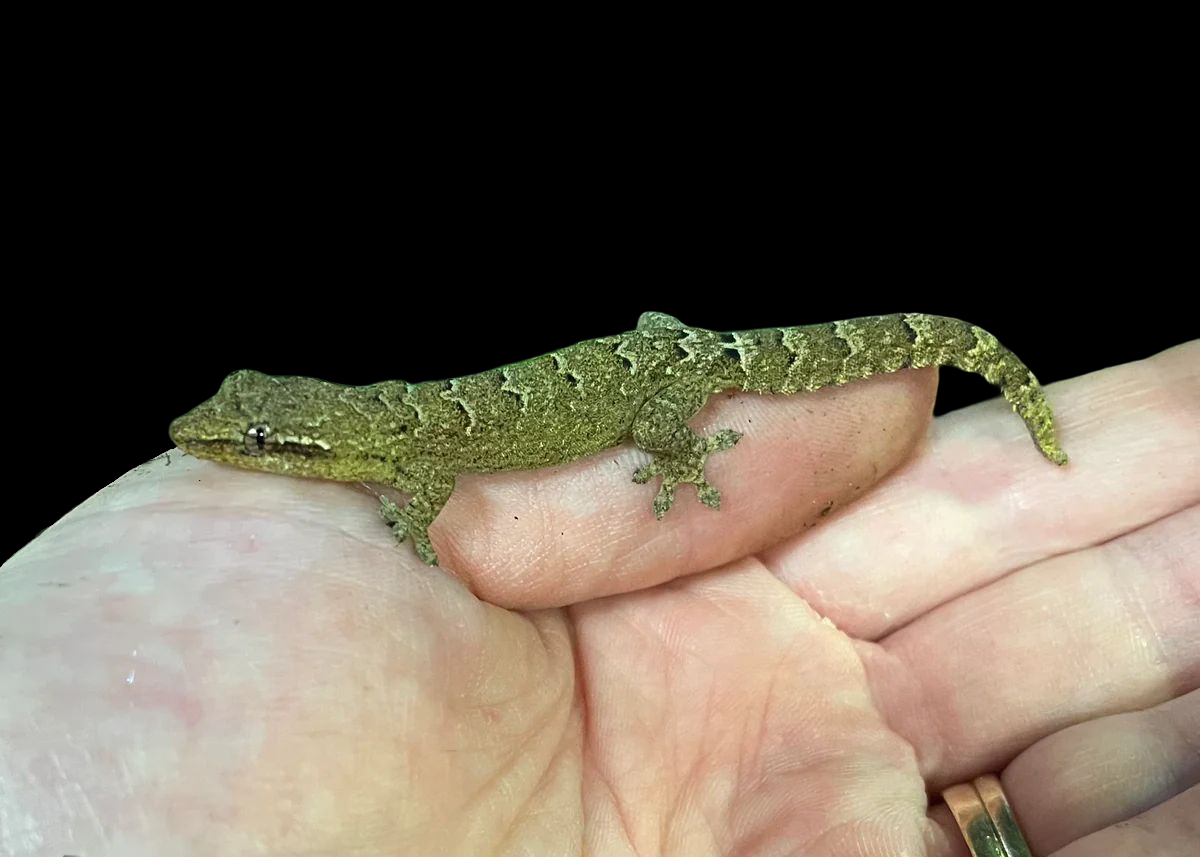
Appearance: The Yellow Belly form of Lepidodactylus lugubris is a visually distinct regional variation known for its bright yellow to golden underbelly, which contrasts beautifully with the light brown or grey upper body. The dorsal surface may display soft mottling or faint banding in darker brown shades, with the intensity varying between individuals. The tail is long and slender, and the eyes are large and silver-grey with vertical pupils. Their smooth skin and subtle patterning provide excellent camouflage among leaves and bark.
Distribution: Widely distributed throughout the tropical and coastal regions of the Pacific Islands, Southeast Asia, and Madagascar. The Yellow Belly variation is most frequently observed in coastal populations and some captive lines selectively maintained for their distinctive ventral coloration.
Habitat: In the wild, Mourning Geckos inhabit coastal forests, mangrove edges, and human dwellings, often near water sources. They are highly adaptable and thrive in warm, humid environments. In captivity, they do best in densely planted, vertically oriented enclosures with natural climbing structures.
Behaviour: Mourning Geckos are nocturnal to crepuscular, most active during dawn and dusk. They are social and may be kept in small groups, though occasional dominance displays can occur. All individuals are female and reproduce parthenogenetically, producing fertile eggs without the need for males. They are fast, delicate, and best appreciated as display animals rather than handled pets.
Captive Care
Enclosure: A vertically oriented terrarium measuring at least 12 inches × 12 inches × 18 inches (30 × 30 × 45 cm) is suitable for a small group. Include cork bark, bamboo tubes, vines, and live plants such as Pothos or Ficus to provide cover and climbing surfaces. A bioactive setup helps maintain humidity and stability.
Temperature & Humidity: Maintain daytime temperatures between 75–82°F (24–28°C) with nighttime drops to 70–74°F (21–23°C). Keep humidity between 60–80%, achieved through daily misting and live plants. Provide adequate airflow to prevent stagnant moisture.
Lighting: Although largely nocturnal, Mourning Geckos benefit from low to moderate UVB (2–5%) to support calcium metabolism and maintain healthy circadian rhythms. Use a 12-hour day/night light cycle with shaded retreats available.
Diet: Feed a combination of high-quality commercial gecko diets (CGD) and small live insects such as fruit flies, pinhead crickets, or small roaches. Offer CGD 2–3 times per week and insects 1–2 times per week. Dust all live prey with calcium and vitamin supplements to ensure balanced nutrition.
Behaviour in Captivity: The Yellow Belly Mourning Gecko is lively, vocal, and confident once established. They frequently chirp or click to communicate and are highly visible during feeding times. Their small size and agility make them excellent display animals for naturalistic or bioactive terrariums.
Special Considerations: All individuals are capable of self-reproduction. Eggs may appear regularly even in single-animal enclosures, often adhered to enclosure décor. Avoid handling, as they are fast and may drop their tails when stressed. Maintain consistent humidity and hydration to prevent shedding issues.
Taxonomy Note
The Mourning Gecko (Lepidodactylus lugubris) belongs to the family Gekkonidae and is globally renowned for its unique parthenogenetic reproduction. The Yellow Belly form represents a naturally occurring or selectively maintained variant distinguished by its golden ventral coloration rather than a formal subspecies or morph.
Genetics Note
Mourning Geckos reproduce parthenogenetically, meaning all individuals are female and produce genetically identical offspring without mating. The Yellow Belly variant is not a true morph but a stable colour form found in some regional and captive populations. Minor variation in brightness and tone occurs naturally due to environmental factors and genetic drift across generations.
Estimate shipping