


Photo Disclaimer
Description
Hourglass Tree Frog
Scientific Name: Dendrosophus ebraccatus
Common Name: Hourglass Tree Frog
Species Overview
Size: Adults typically reach 1 to 1.75 inches (2.5 to 4.5 cm), with females slightly larger.
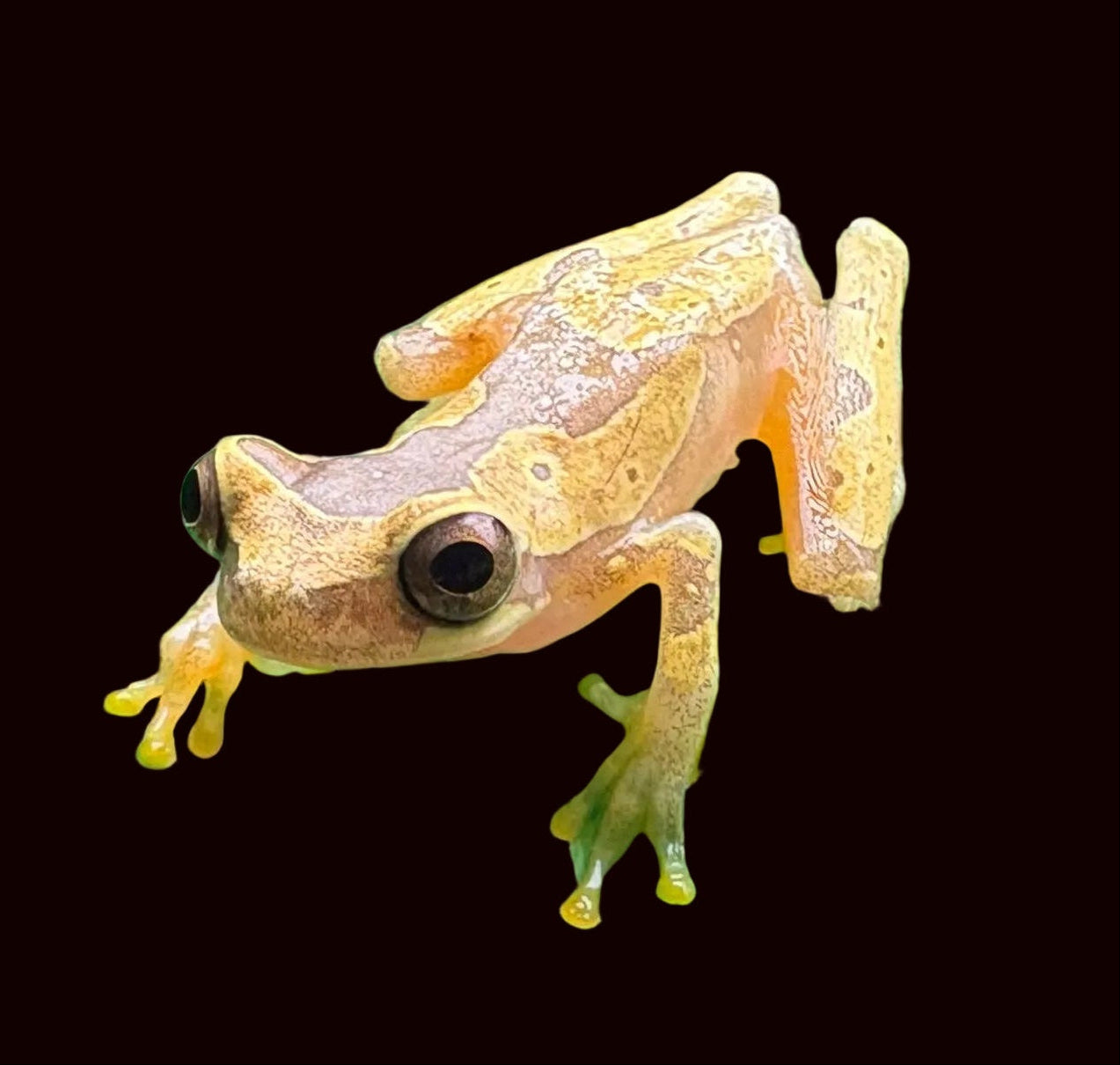
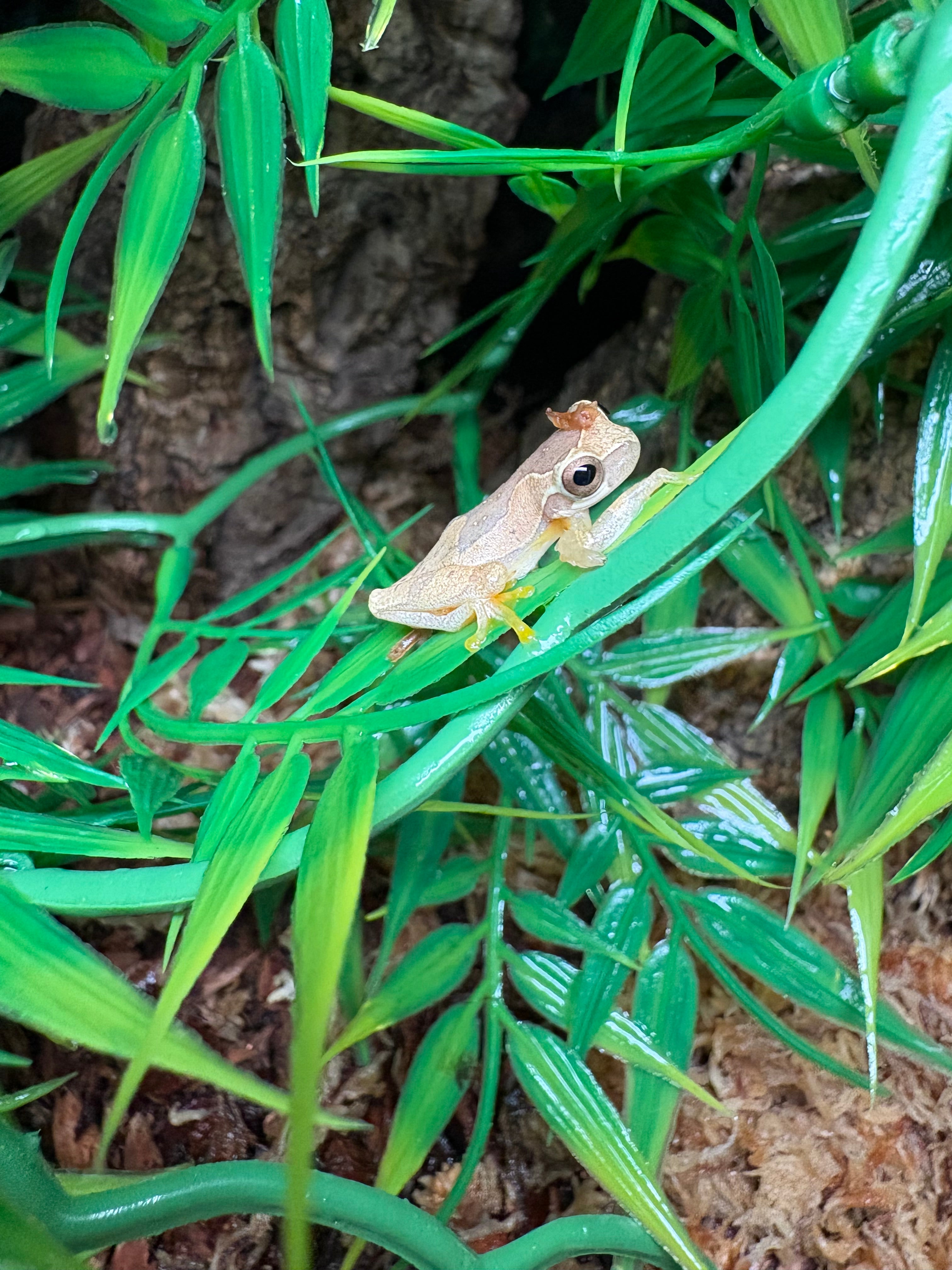
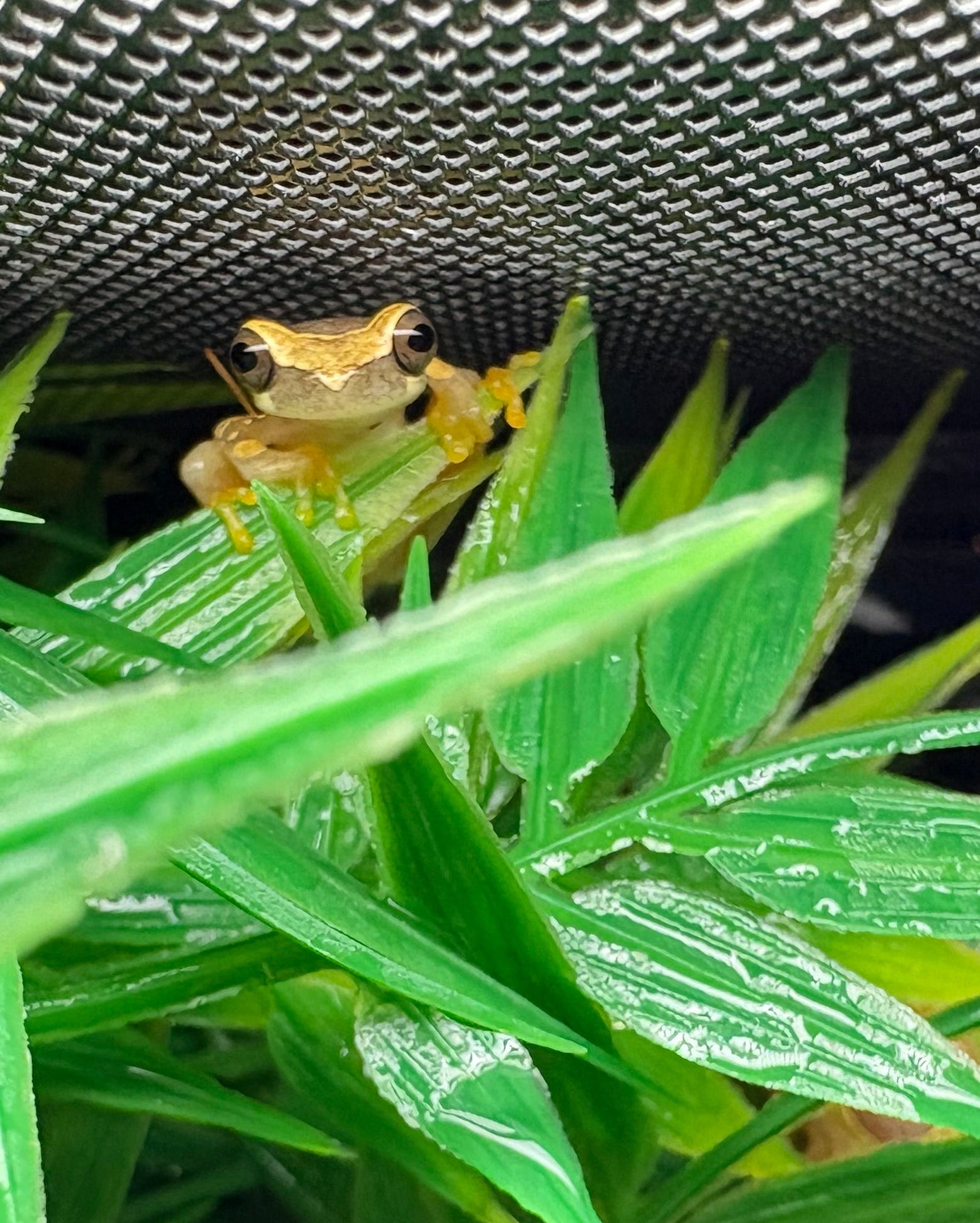
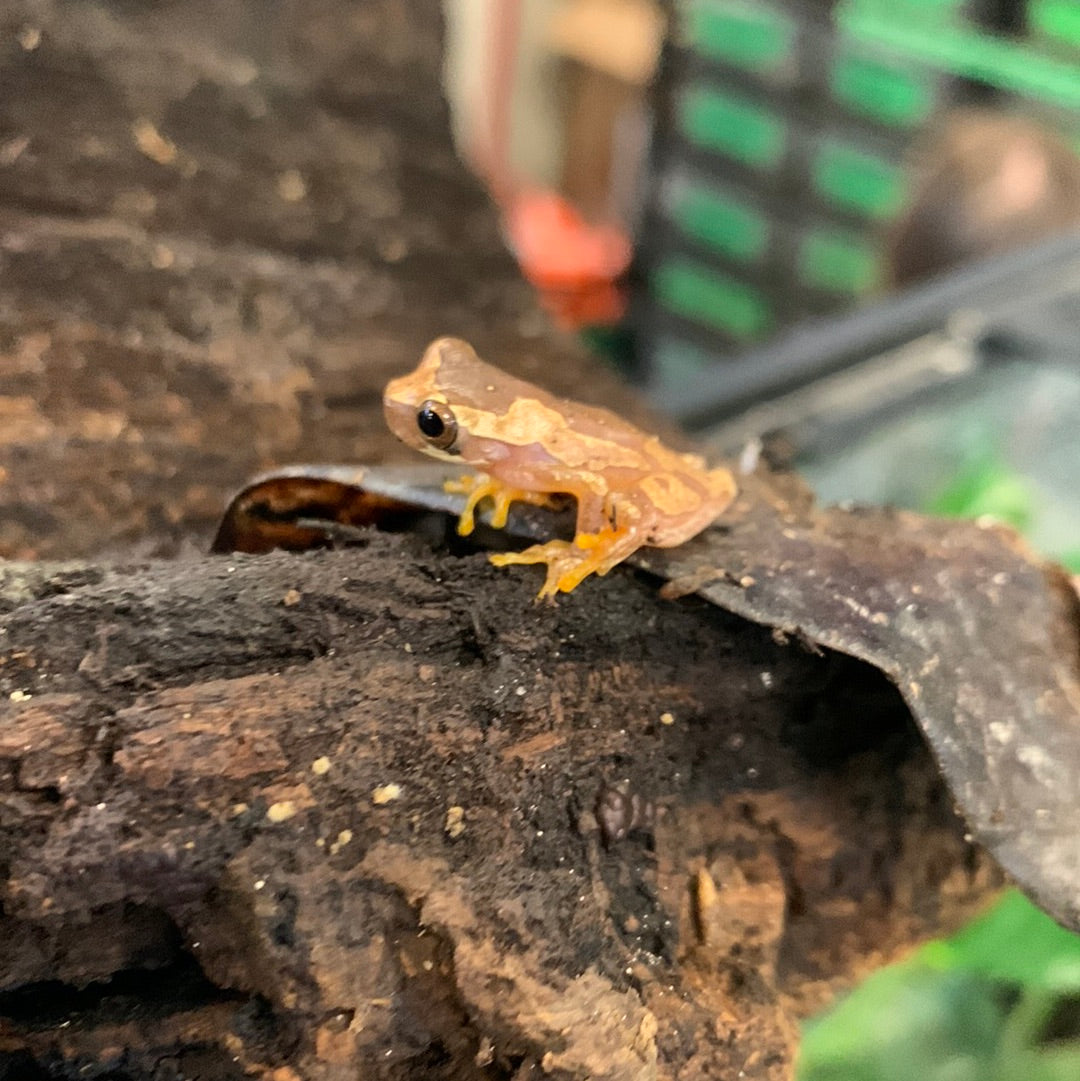
Appearance: The Hourglass Tree Frog is named for the distinctive hourglass-shaped marking commonly seen on its back. Base colour ranges from golden yellow to tan or light brown, overlaid with dark brown or black blotches that may form a sharp hourglass outline or more irregular shapes. Limbs often show subtle banding, and the underside is pale. Eyes are large with golden irises and horizontal pupils. Overall, the frog has a smooth, lightly built appearance well suited for arboreal life.
Distribution: Widespread in Central America, including Honduras, Nicaragua, Costa Rica, Panama, and extending into northern Colombia.
Habitat: Found in lowland rainforests, humid forest edges, secondary growth, and vegetation around ponds, marshes, and slow-moving streams. They often inhabit shrubs and grasses close to water used for breeding.
Behaviour: Primarily nocturnal and agile, Hourglass Tree Frogs perch on leaves and stems during the day and become active at night. They are vocal, with males calling from low vegetation near water. Their behaviour is adaptable, and they tolerate a range of humid tropical environments.
Captive Care
Enclosure: A single adult or small group thrives in an 18 × 18 × 24 inches (45 × 45 × 60 cm) enclosure, while larger groups benefit from a 24 × 18 × 24 inches (60 × 45 × 60 cm) setup. Provide ample foliage, thin branches, reeds, and climbing structure. Use a moisture-retentive substrate such as coco fibre, soil blends, or sphagnum mixes to help maintain humidity while allowing some drying cycles. Include a shallow water basin for hydration.
Temperature and Humidity:
Ambient temperature: 74 to 80°F (23 to 27°C)
Warm area: around 82°F (28°C)
Night temperature: 68 to 72°F (20 to 22°C)
Humidity: 70 to 90%, supported by frequent misting and good airflow.
Lighting: Provide low to moderate UVB (2 to 5%) with soft, diffused lighting.
Diet: Offer small insects such as fruit flies, small crickets, springtails, small roaches, and black soldier fly larvae. Supplement prey with calcium and multivitamins.
Behaviour in Captivity: Hourglass Tree Frogs adapt well to planted enclosures with abundant leaf cover and vertical perches. They are lively at night, often vocal, and display climbing and leaping behaviours. Handling should be avoided due to their delicate skin.
Special Considerations:
• If handling is necessary, use wet, powder-free gloves or a soft, damp net.
• Maintain strong ventilation to prevent stagnant humidity.
• Use only dechlorinated water for misting and drinking.
• Avoid oversaturated substrate; provide humidity without constant wetness.
• Ensure the enclosure is escape-proof—these frogs are agile and fast-moving.
Taxonomy Note
Dendrosophus ebraccatus belongs to the family Hylidae and is part of a diverse clade of small, arboreal tree frogs common throughout Central and South America. This species is noted for its distinctive dorsal patterning and adaptability across a range of forested and semi-open habitats.
Genetics Note
There are no recognised morphs for Dendrosophus ebraccatus. Natural variation occurs in the sharpness of the hourglass pattern, dorsal colour tone, and limb banding, but none represent defined genetic morphs.