



Photo Disclaimer
Description
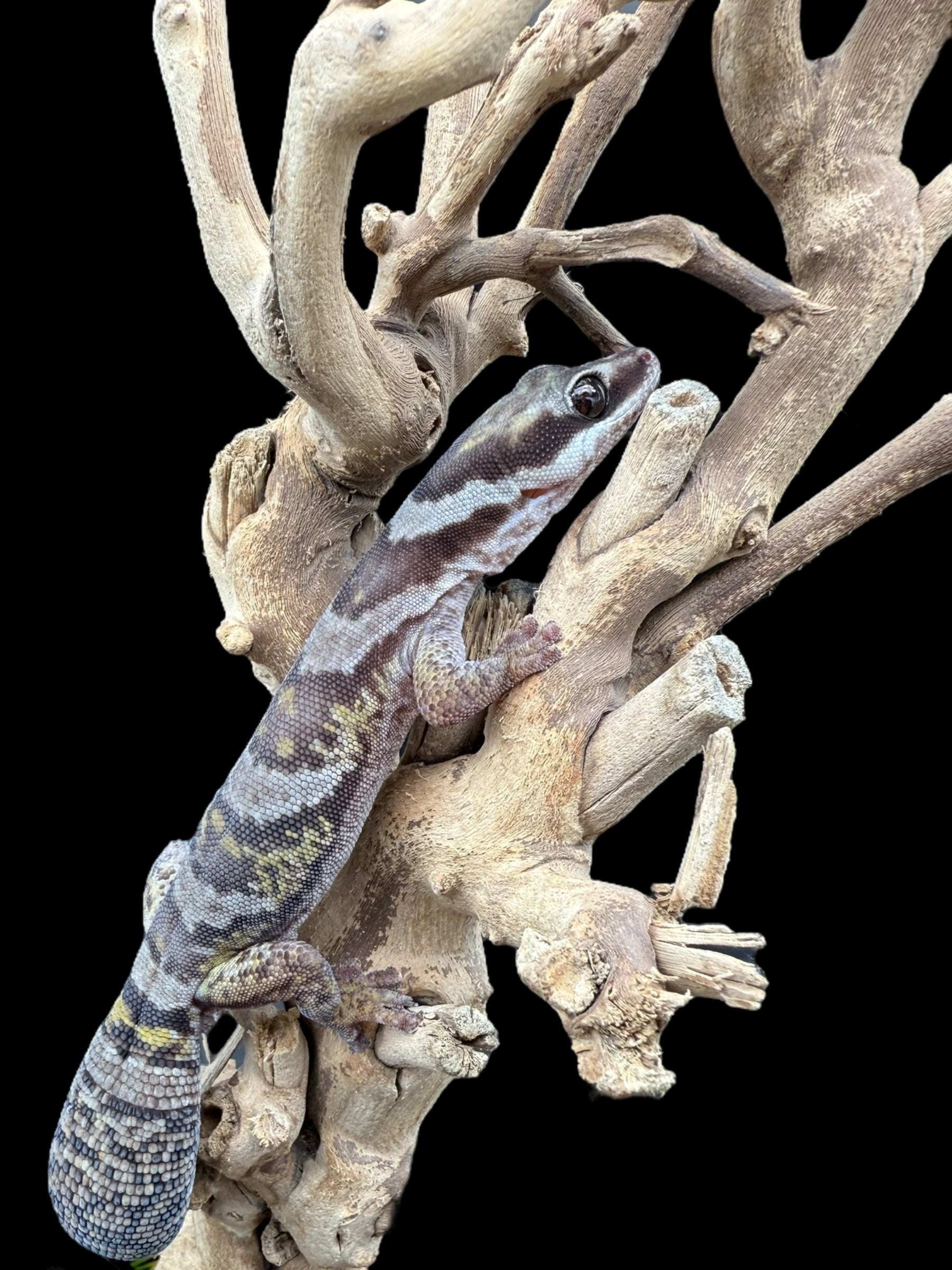
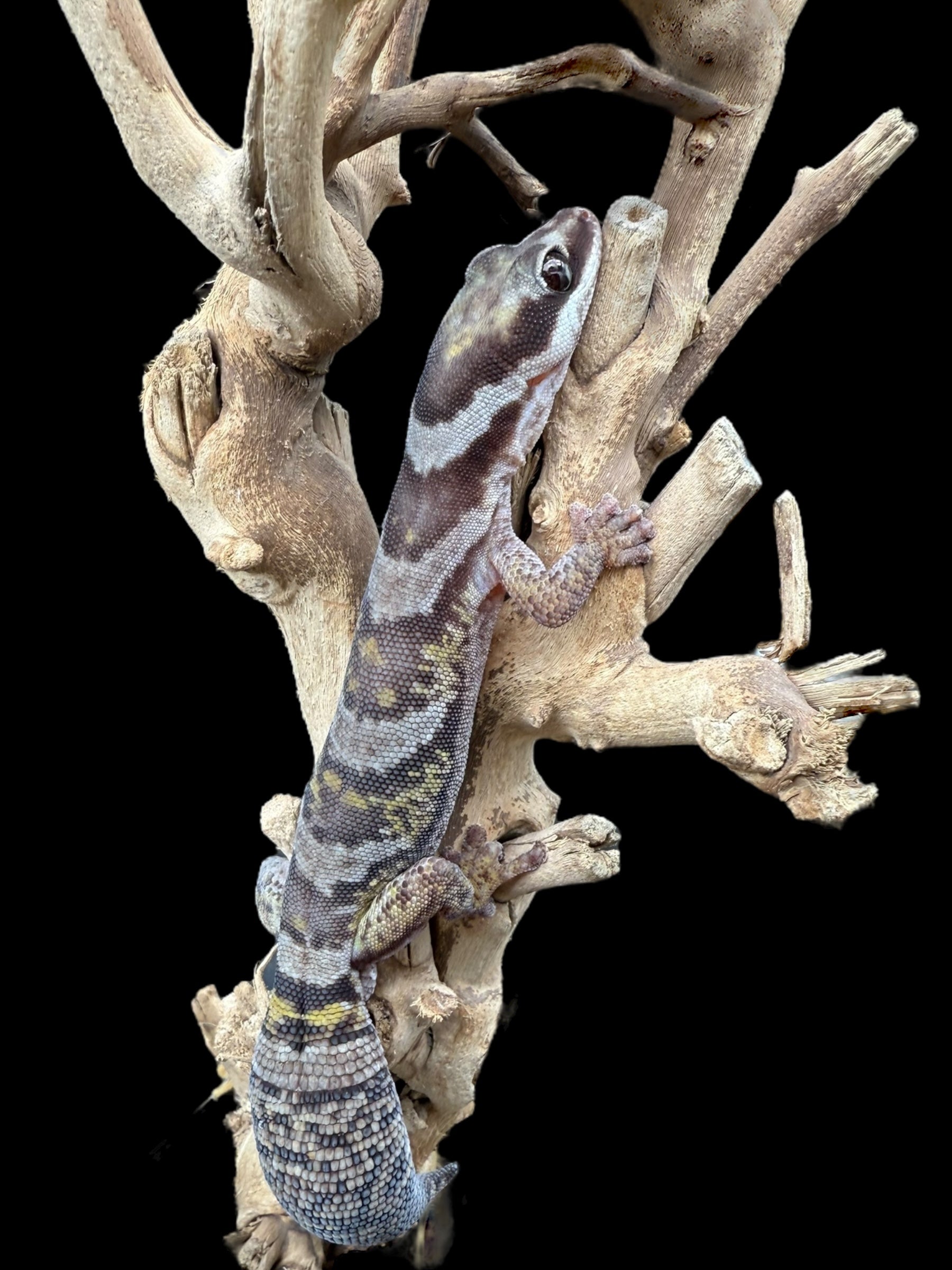
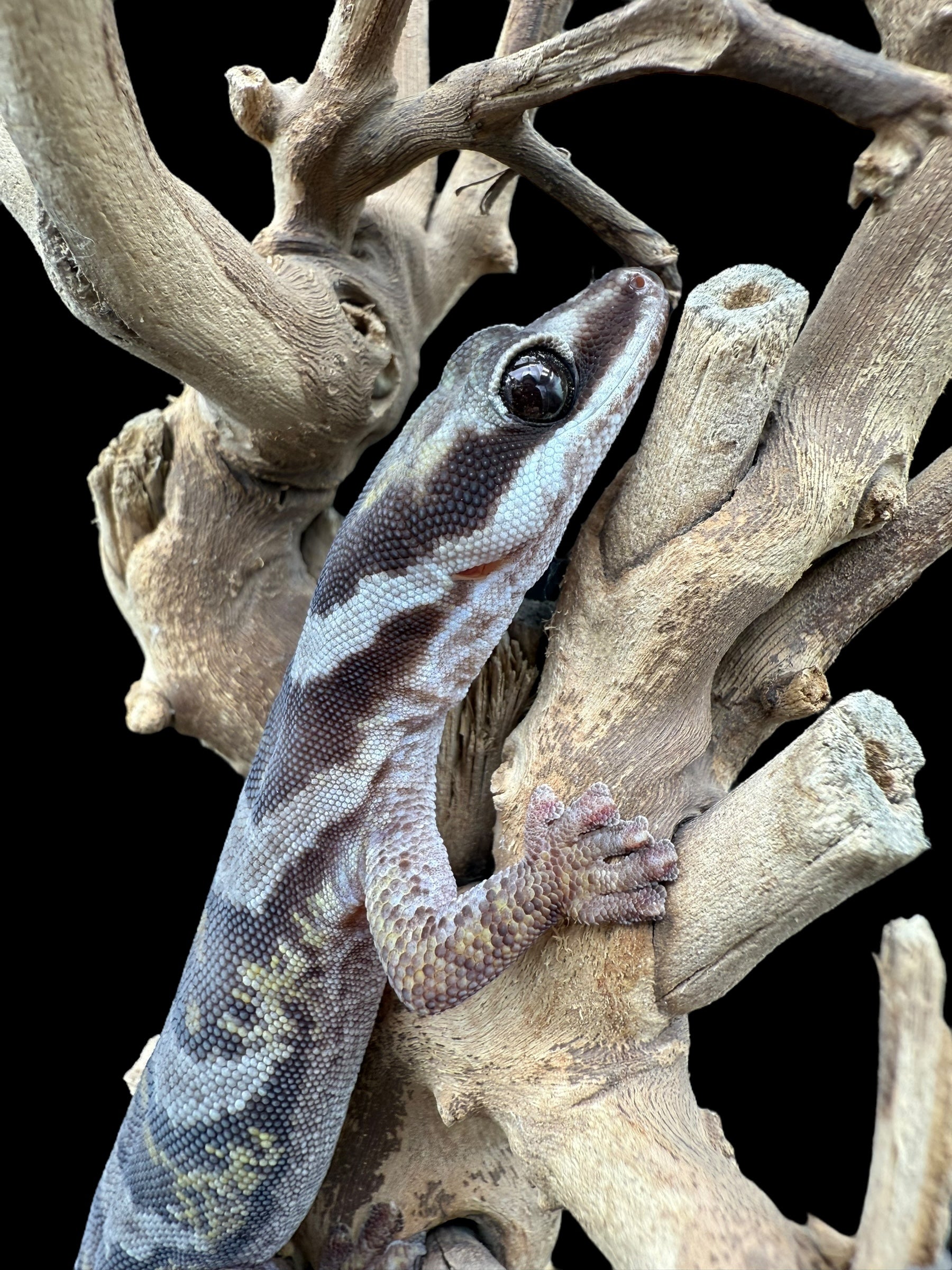
Northern Velvet Gecko (Oedura castelnaui)
Scientific Name: Oedura castelnaui
Common Name: Northern Velvet Gecko
Species Overview
Size: Adults typically reach 4–5.5 inches (10–14 cm) in total length, making them a moderately small, slender gecko with a soft, velvety skin texture.
Appearance: The Northern Velvet Gecko is known for its smooth, matte skin and elegant mottled patterning. Most individuals display a chocolate-brown to grey base colour with lighter cream or tan blotches along the back and sides. These markings often form loose banding or irregular patches. The tail is moderately thick and matches the body pattern. The gecko’s large eyes, usually amber or golden-brown, give it excellent nocturnal vision and contribute to its distinctive, gentle expression.
Distribution: Native to northern Queensland, Australia.
Habitat: In the wild, this species inhabits dry woodlands, rocky outcrops, and forest edges. They often shelter beneath bark, within rock crevices, or in hollow logs during the day. In captivity, they thrive in naturalistic enclosures that include vertical and horizontal surfaces for climbing, along with secure hiding areas.
Behaviour: Northern Velvet Geckos are nocturnal, alert, and active when settled. They are generally shy but become confident feeders with consistent care. They are best kept as display animals due to their speed and delicate skin.
Captive Care
Enclosure: Provide a vertical or mixed-orientation enclosure measuring at least 18 inches × 18 inches × 24 inches (45 × 45 × 60 cm) for an adult pair or single adult. Include cork bark, branches, and rockwork to encourage climbing and hiding. A naturalistic substrate such as soil, sand-soil blends, or leaf litter helps maintain suitable microclimates.
Temperature & Humidity: Maintain daytime temperatures between 78–85°F (25–29°C) with a slightly warmer basking area around 88–90°F (31–32°C). Night temperatures can drop to 70–74°F (21–23°C). Humidity should remain moderate, around 40–60%, with occasional light misting to create brief humidity spikes without saturating the environment.
Lighting: Provide low to moderate UVB (2–5%) on a 12-hour day/night cycle. Bright lighting is not required, but a gentle ambient light level helps regulate natural rhythms.
Diet: Offer small to medium insects such as crickets, roaches, silkworms, and mealworms. Feed juveniles daily and adults every 2–3 days. All prey should be gut-loaded and dusted with calcium and multivitamin supplements. Fresh water must always be available.
Behaviour in Captivity: Northern Velvet Geckos adapt well when provided with secure hiding places, consistent temperatures, and moderate humidity. They become confident nighttime hunters and display elegant climbing behaviours.
Special Considerations: These geckos have soft, delicate skin. Avoid overly rough décor and handle minimally to reduce stress.
Taxonomy Note
The Northern Velvet Gecko (Oedura castelnaui) is part of the Australian Oedura genus, a group known for their soft, velvety skin and affinity for rocky or arboreal habitats. This genus includes several visually similar species with overlapping distributions.
Genetics Note
There are no recognised morphs or selectively bred colour variations of the Northern Velvet Gecko. Naturally occurring variation within the species is limited to minor differences in pattern sharpness and colour tone among local populations.
Estimate shipping