


Photo Disclaimer
Description
Pancake Tortoise
Scientific Name: Malacochersus tornieri
Common Name: Pancake Tortoise
Species Overview
Size: Males typically reach 5 to 6 inches (13 to 15 cm), while females grow slightly larger at 6 to 7 inches (15 to 18 cm).
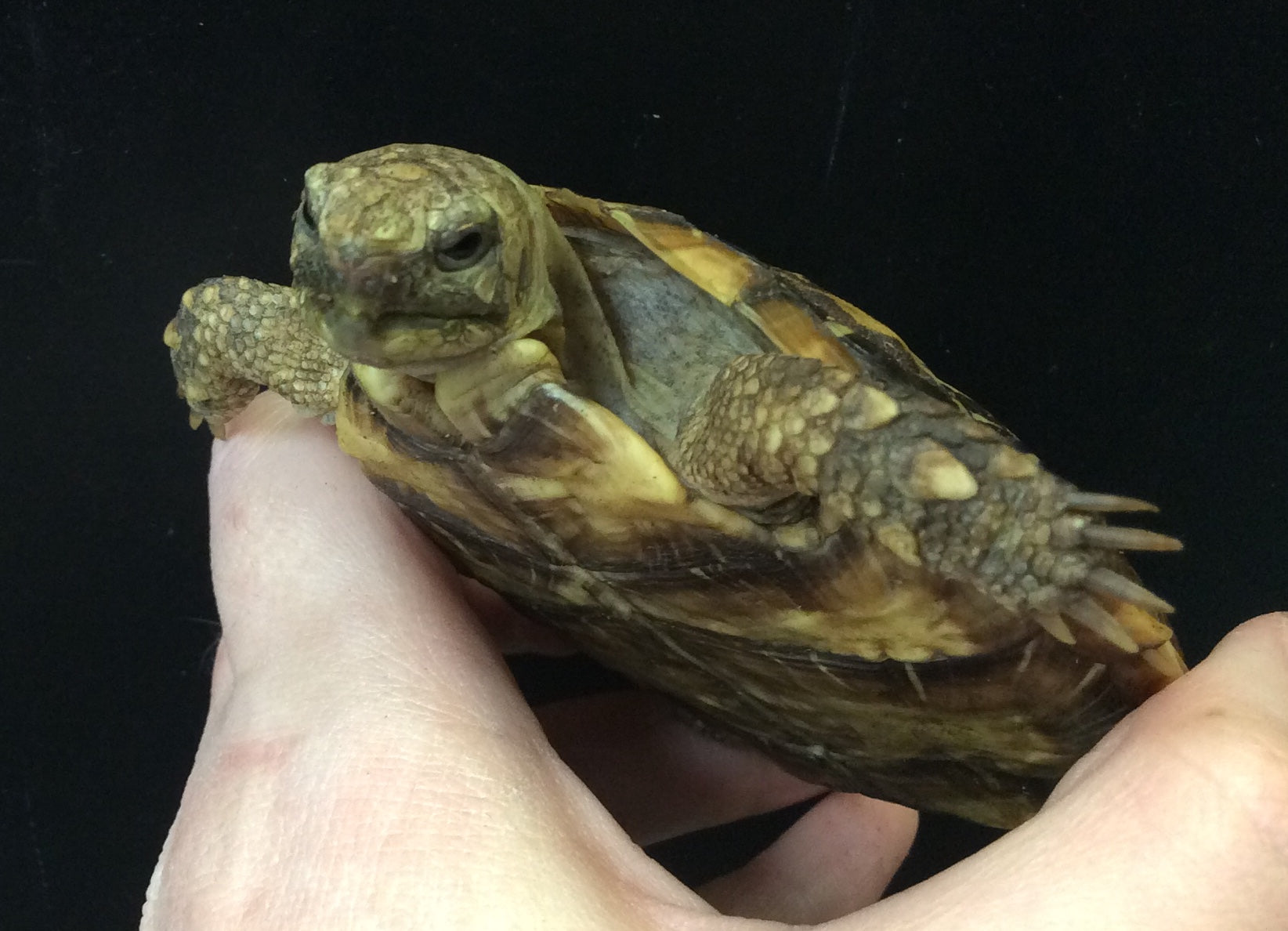
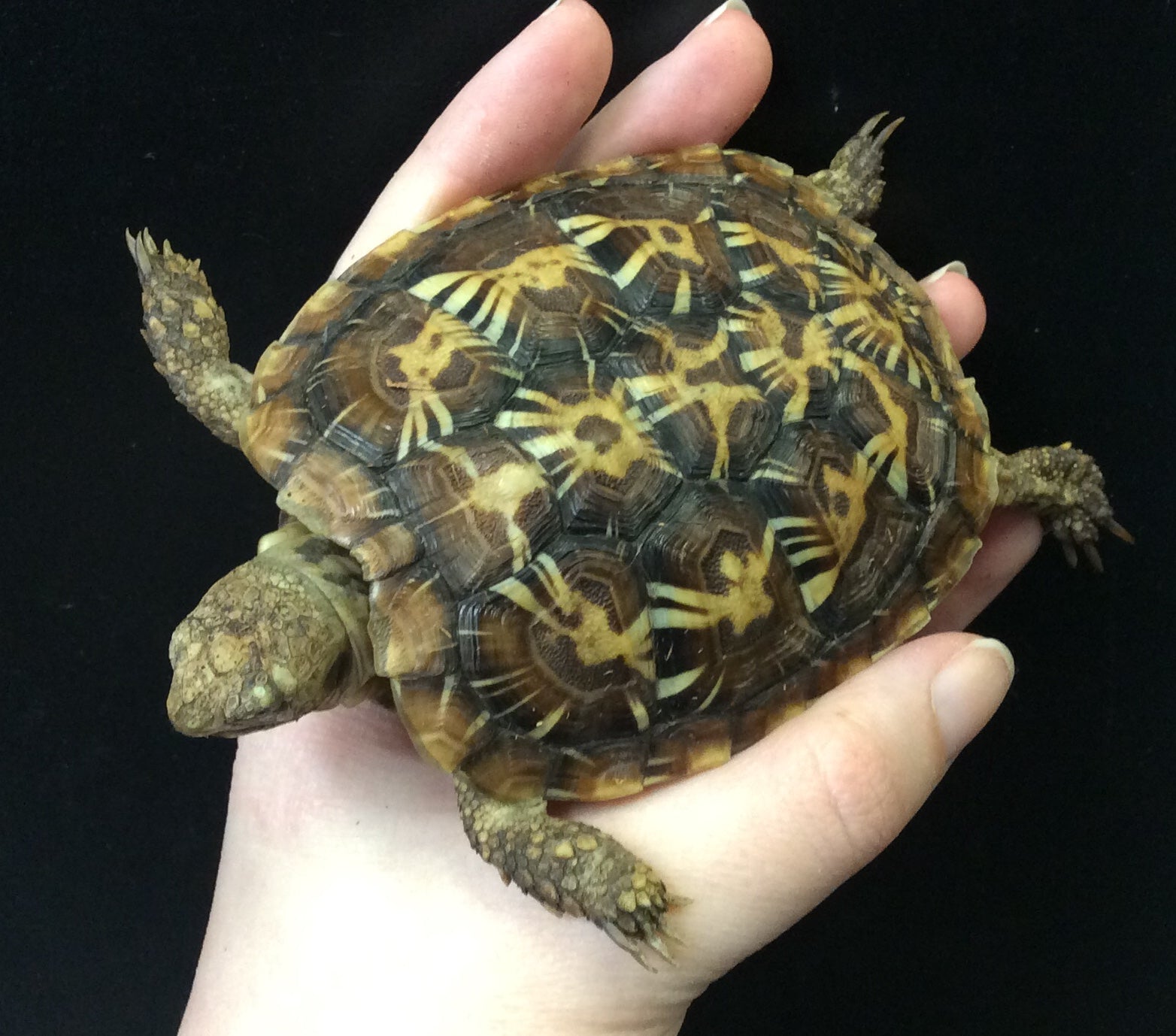
Appearance: The Pancake Tortoise is instantly recognisable for its exceptionally flat, flexible shell, which is lightweight and composed of thin, pliable bone plates that allow the tortoise to compress its body and wedge into crevices. The carapace is golden tan to light brown with darker radiating lines across each scute, giving a netted or marbled appearance. The plastron is pale with irregular dark smudging. Limbs are agile and adapted for rapid movement, making this one of the more nimble tortoise species. Females are broader-bodied, while males have longer tails.
Distribution: Native to Tanzania and Kenya, with a strong association to rocky outcrops throughout the East African savannah.
Habitat: In the wild, Pancake Tortoises inhabit arid savannah regions dominated by rocky kopjes, cliffs, and boulder fields. They rely on narrow crevices for protection rather than shell strength. Their environment is warm, dry, and well-ventilated with sparse vegetation. In captivity, they require a dry, warm enclosure with rock structures for climbing and hiding.
Behaviour: Pancake Tortoises are diurnal, alert, and unusually agile compared to other tortoises. They climb well, move quickly, and wedge themselves into cracks for security. They thrive in groups and display social tolerance, particularly when provided ample hides and visual barriers.
Captive Care
Enclosure: Provide a minimum indoor footprint of 4 × 2 feet (120 × 60 cm) for a pair or small group, with larger enclosures strongly preferred due to their active nature. Use a dry soil–sand substrate mix and incorporate numerous flat rocks, slate pieces, and vertical crevice-style hides that mimic natural rock shelters. They benefit from climbing opportunities and horizontal ledges but require secure footing to avoid injuries.
Temperature and Humidity:
Ambient daytime: 80 to 90°F (27 to 32°C)
Basking area: 95 to 100°F (35 to 38°C)
Night temperature: 70 to 75°F (21 to 24°C)
Humidity: Low overall, around 20 to 40%, with plenty of ventilation and dry substrate.
Lighting: Provide full-spectrum lighting with 10–12% UVB to support shell development and proper metabolism. Ensure a strong basking spot and multiple shaded areas for cooling.
Diet: Offer a high-fibre herbivorous diet consisting of grasses, edible weeds, succulents, flowers, and fibrous leafy greens. Avoid fruits and moisture-heavy vegetables. This species thrives on dry, fibrous plant material similar to Mediterranean tortoise diets.
Behaviour in Captivity: Pancake Tortoises are active, social, and curious. They enjoy climbing, exploring, and moving between rock structures. They are less shy than many tortoise species and become confident when housed in a naturalistic, enriched environment.
Special Considerations
• Provide abundant rock crevices and climbing structure—critical for security and enrichment.
• Avoid high humidity; this species requires a dry, well-ventilated setup.
• Highly agile—ensure enclosure walls are secure and tall enough.
• Best kept in small groups when space allows.
Taxonomy Note
The Pancake Tortoise is the sole species in the genus Malacochersus and is evolutionarily distinct due to its flexible, lightweight carapace. Wild populations are under pressure from habitat loss and collection, making captive breeding an important conservation effort.
Genetics Note
There are no recognised morphs for the Pancake Tortoise. Variations in shell patterning or colouration fall within normal individual and locality-based differences, not selective breeding.
Estimate shipping