


Photo Disclaimer
Description
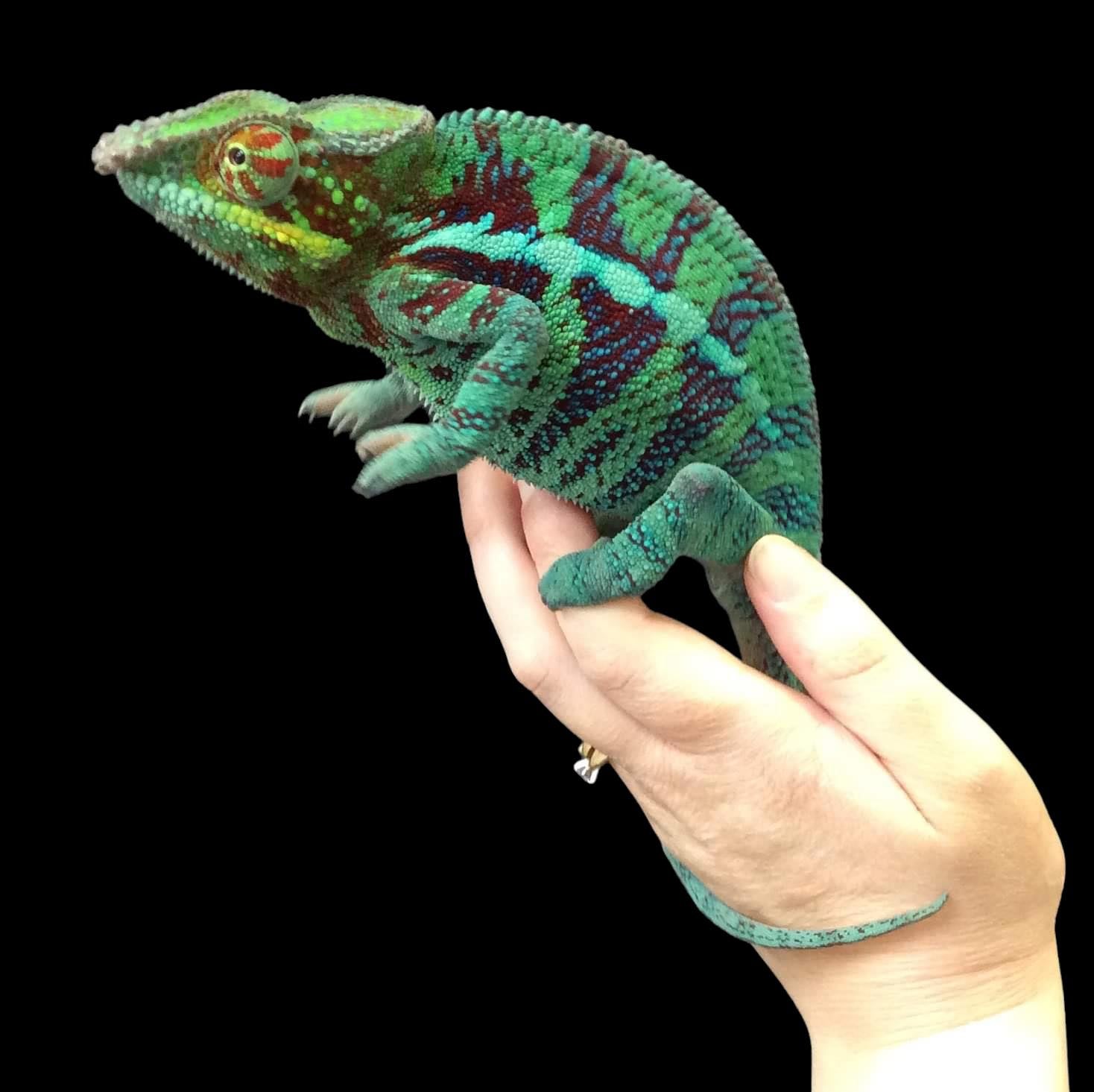
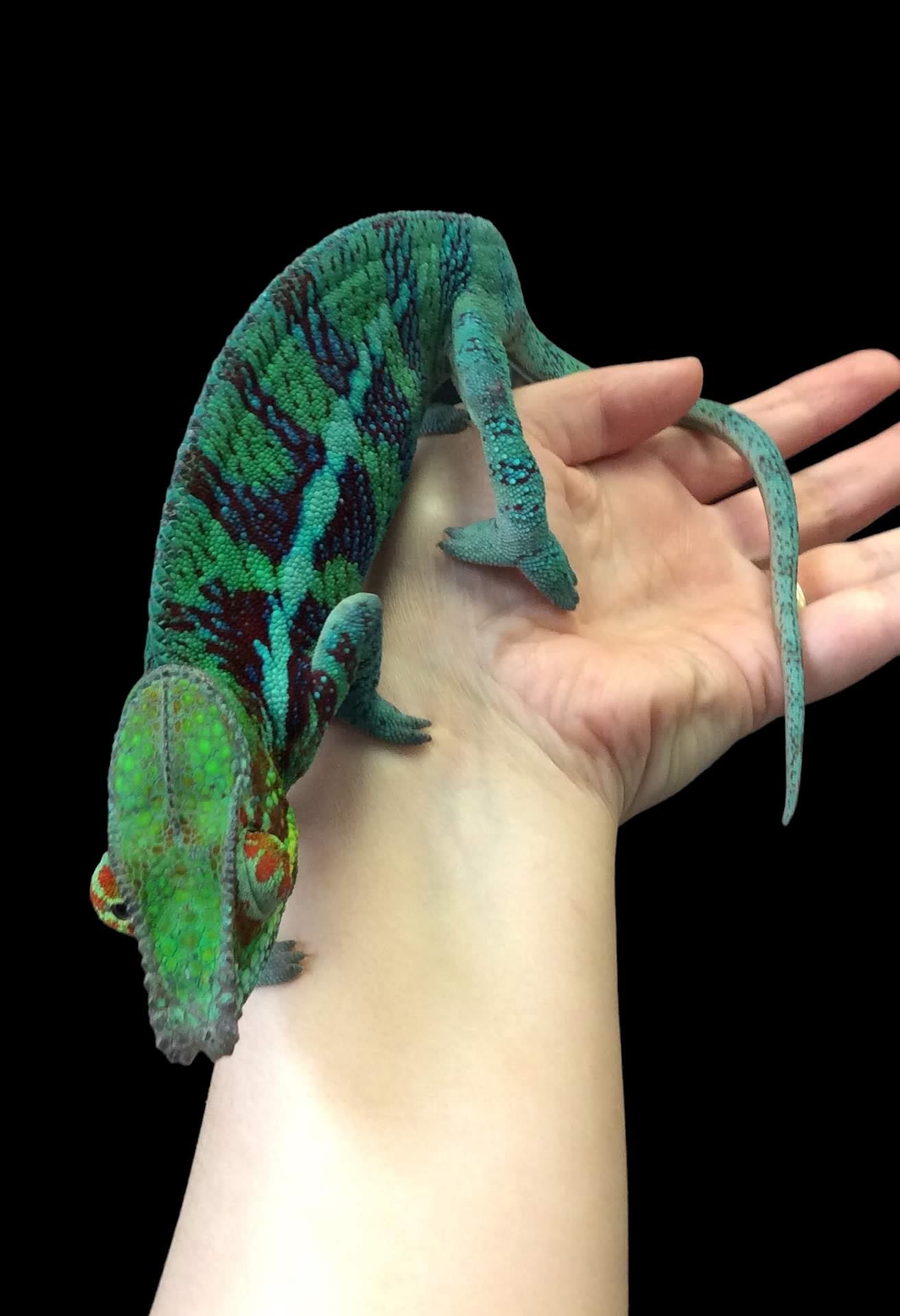
Panther Chameleon (Ambanja)
Scientific Name: Furcifer pardalis
Common Name: Ambanja Panther Chameleon
Species Overview
Size: Males typically reach 14 to 20 inches (36 to 51 cm), while females are smaller at 10 to 14 inches (25 to 36 cm).
Appearance: The Ambanja Panther Chameleon is known for its vivid blues, greens, and turquoise tones, often contrasted with dark vertical banding. Males show the brightest colours, displaying deep cobalt, teal, emerald, and occasional red along the face and lips. Females are more muted in peach, tan, or soft green. Like all Panther Chameleons, they possess independently moving eyes, a prehensile tail, and zygodactylous feet adapted for precise climbing.
Distribution: Found in the Ambanja region of northwest Madagascar.
Habitat: Panther Chameleons inhabit humid coastal forests, thick vegetation corridors, and canopy-rich environments. They commonly occupy forest edges and secondary growth areas where sunlight and humidity shift throughout the day.
Behaviour: These solitary, arboreal reptiles move with deliberate, rhythmic steps, using colour changes to communicate, blend in, or display dominance. Males exhibit intense colouration during territorial displays or courtship. They rely on visual acuity and rapid tongue projection to capture prey at a distance.
Captive Care
Enclosure: Provide a vertically oriented enclosure at least 36 × 18 × 36 inches (90 × 45 × 90 cm) for one adult, with a larger 48 × 24 × 48 inches (120 × 60 × 120 cm) habitat strongly recommended for improved stability, airflow, and climbing space. Screen or hybrid enclosures with excellent ventilation are ideal. Furnish the interior with dense live plants, sturdy branches, cork slabs, and secure horizontal perches placed at multiple heights to create a layered, natural canopy where the chameleon can hide, explore, and bask.
Temperature and Humidity:
Basking area: 85 to 90°F (29 to 32°C)
Ambient daytime: 75 to 82°F (24 to 28°C)
Night temperatures: 65 to 72°F (18 to 22°C)
Humidity: 50 to 70%, using misting cycles that allow humidity to rise and fall naturally.
Lighting: Provide strong full-spectrum lighting, including a T5 HO UVB fixture in the 5 to 6% range. Pair with bright plant lighting to support live foliage and create a dappled-light environment.
Diet: Offer a varied insect diet including crickets, roaches, silkworms, hornworms, black soldier fly larvae, and occasional mealworms or superworms. Gut-load all feeders and supplement with calcium routinely and multivitamins weekly.
Behaviour in Captivity: Panther Chameleons thrive when minimally handled and provided with visual security. They show their best colours and behaviour in a lush, display-style enclosure. Confident individuals exhibit vivid colouration and active hunting responses.
Special Considerations:
• Provide heavy foliage for hiding and comfort.
• Maintain natural humidity cycles rather than constant moisture.
• Avoid unnecessary handling.
• Ensure ventilation and drainage are strong.
Taxonomy Note
The Panther Chameleon belongs to the family Chamaeleonidae. The Ambanja locale is one of the most well-recognized regional variants, valued for its striking blue and green colouration.
Genetics Note
Ambanja is a naturally occurring locality form rather than a selective morph. Variation within this locale includes differences in blue and green saturation, band intensity, and facial highlight patterns. Breeding within the locale preserves these traits, while cross-locale pairings produce mixed colouration not tied to a specific region.