

Photo Disclaimer
Description
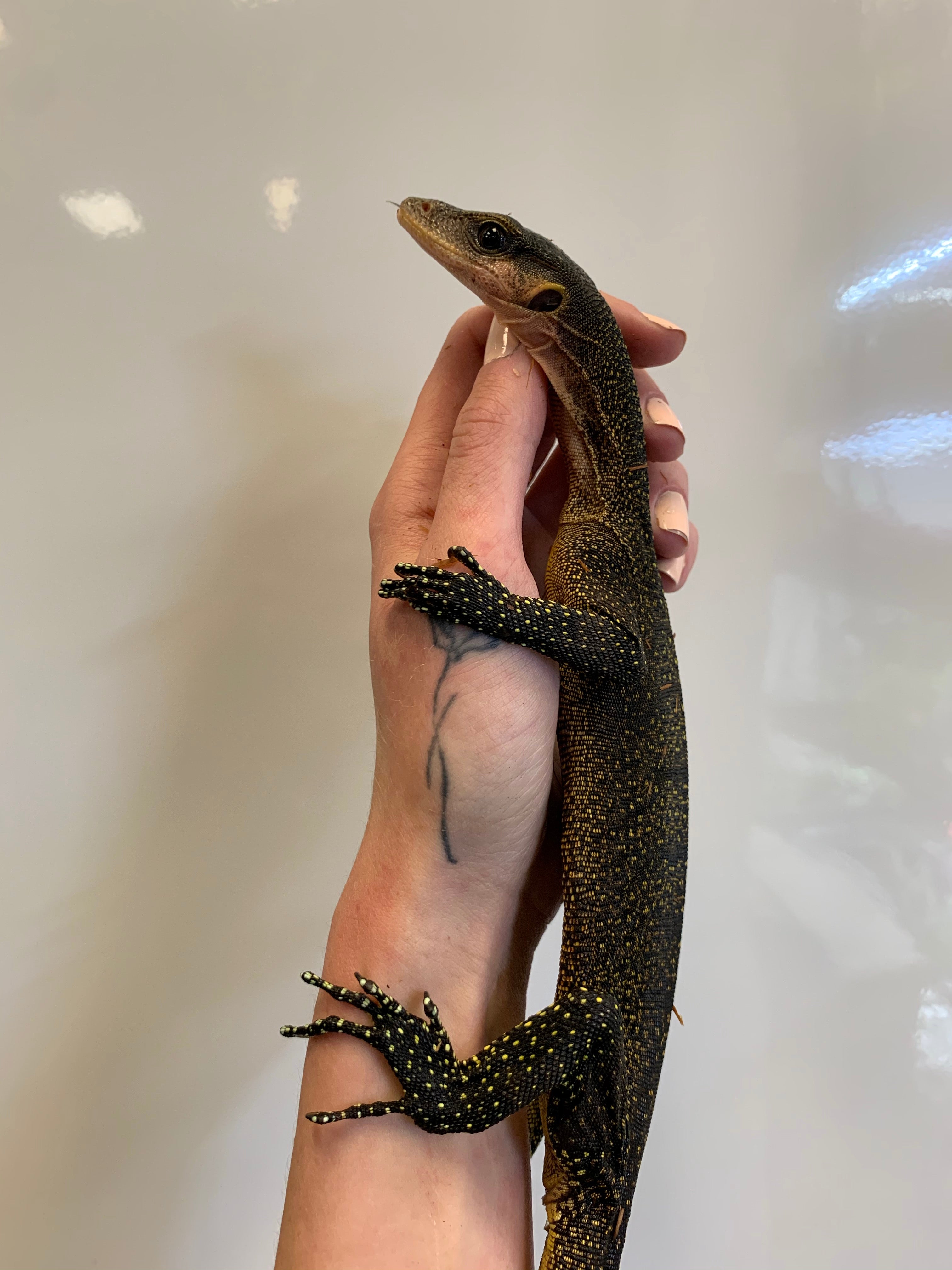
Peach-throated Monitor
Scientific Name: Varanus jobiensis
Common Name: Peach-throated Monitor, Jobi Monitor
Species Overview
Size: Adults typically reach 3 to 4 feet (91 to 122 cm) in total length, with long, agile bodies built for climbing.
Appearance: The Peach-throated Monitor is a slender, semi-arboreal species characterised by its warm peach, orange, or rusty-coloured throat, which becomes more pronounced in adulthood. The body displays fine dark spotting or reticulated patterns over shades of olive, brown, or grey. The head is narrow and expressive, and the tail is long, laterally compressed, and well-suited for climbing and swimming. Their appearance is elegant and streamlined compared to heavier-bodied monitors.
Distribution: Native to New Guinea, including Papua New Guinea and Western New Guinea (Indonesia).
Habitat: This species inhabits humid tropical forests, mangroves, and forest-edge environments. It frequently climbs trees, explores dense vegetation, and uses both arboreal and terrestrial microhabitats. High humidity, deep foliage, and moderate temperatures define its natural range.
Behaviour: Peach-throated Monitors are diurnal, fast-moving, and alert. They are excellent climbers and spend significant time on elevated branches or logs. They have a varied wild diet consisting of insects, small mammals, eggs, crustaceans, and other small animals. In captivity, individuals can become confident and curious with consistent care and enrichment.
Captive Care
Enclosure: Provide a large, vertically oriented enclosure at least 6 × 3 × 6 feet (180 × 90 × 180 cm), with larger custom habitats strongly recommended for adults. This species is highly active and requires both robust climbing structures and open floor space. Furnish with thick branches, logs, elevated platforms, live or artificial plants, and secure hiding areas placed both high and low. A deep soil–sand substrate mixture is recommended to support digging and humidity retention. Strong ventilation is essential to maintain airflow in a humid environment.
Temperature and Humidity:
Basking area: 120 to 135°F (49 to 57°C)
Ambient daytime: 82 to 90°F (28 to 32°C)
Cooler zones: 75 to 80°F (24 to 27°C)
Night temperatures: 72 to 78°F (22 to 26°C)
Humidity: 60 to 80%, maintained through daily misting and natural evaporation.
Lighting: Provide full-spectrum lighting and a strong UVB source appropriate for monitor species. Bright lighting encourages natural activity levels and proper thermoregulation.
Diet: Offer a varied diet including roaches, crickets, black soldier fly larvae, silkworms, hornworms, quail eggs, crustaceans, and occasional rodent meals. Avoid excessive fatty foods. Gut-load insects and supplement with calcium and multivitamins regularly, especially for growing animals.
Behaviour in Captivity: With proper space and enrichment, Peach-throated Monitors become engaging display animals. They explore vertically and horizontally, use elevated perches, and dig when provided with deep substrate. While they may tolerate light handling, they generally thrive best with minimal direct interaction.
Special Considerations:
• Provide deep substrate to allow natural digging behaviours.
• Ensure basking zones reach appropriate high temperatures safely.
• Secure the enclosure well; monitors are powerful and inquisitive.
• Offer enrichment through climbing structures, hides, scent trails, and environmental variation.
Taxonomy Note
The Peach-throated Monitor is part of the broader Varanus complex found throughout New Guinea. Although semi-arboreal and visually similar to some tree monitors, it is not a true member of the Varanus prasinus group and retains a more generalist forest-dwelling ecology.
Genetics Note
There are no recognised morphs for Varanus jobiensis. Natural variation occurs in throat colour intensity, pattern clarity, and body tone. These are normal individual and locality-based differences rather than selectively bred traits.