




Photo Disclaimer
Description
Perak Horned Toad
Scientific Name: Xenophrys aceras
Common Name: Perak Horned Toad
Species Overview
Size: Adults typically reach 2.5 to 3.5 inches (6.5 to 9 cm), with females generally larger and bulkier than males.
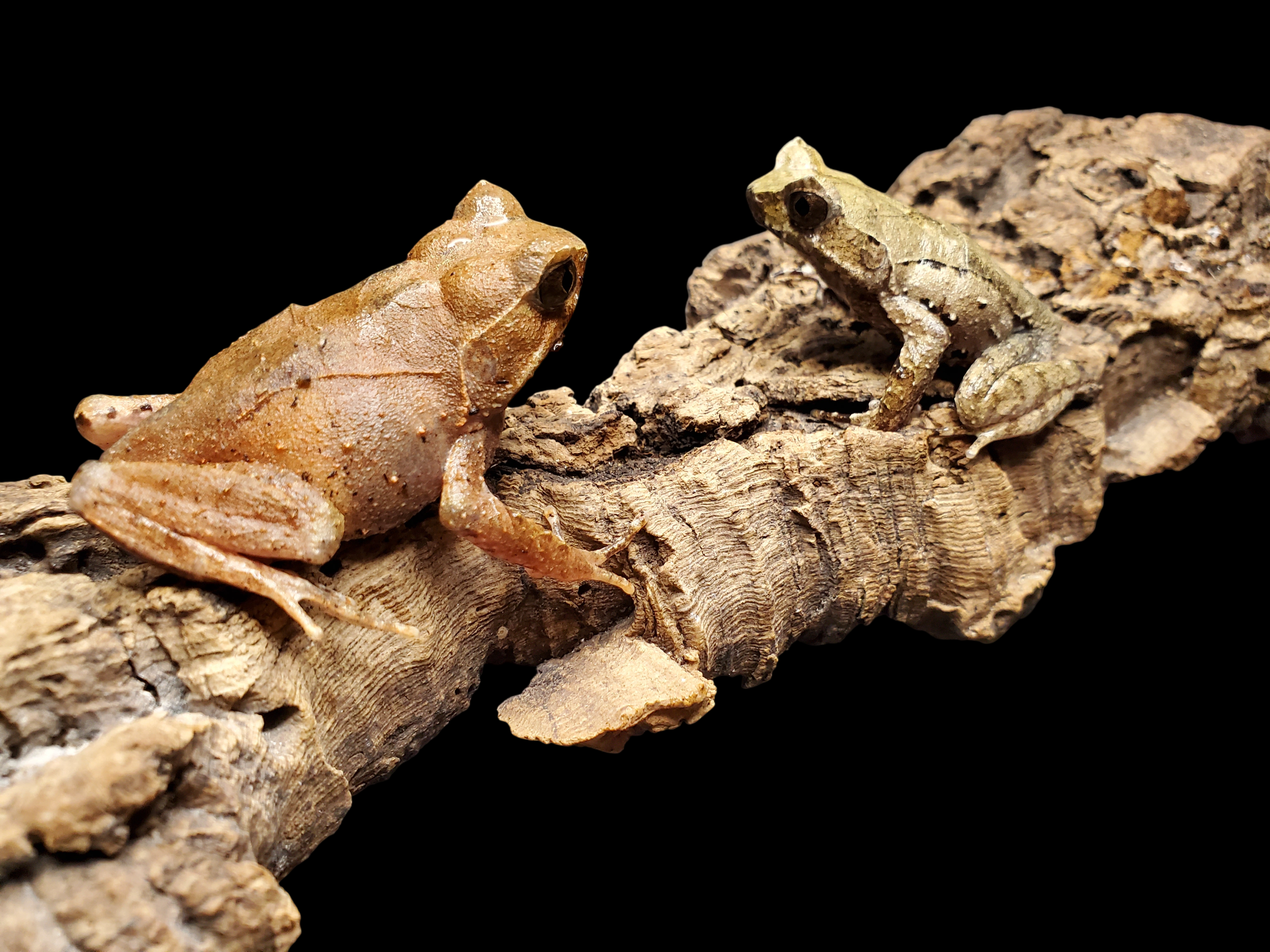
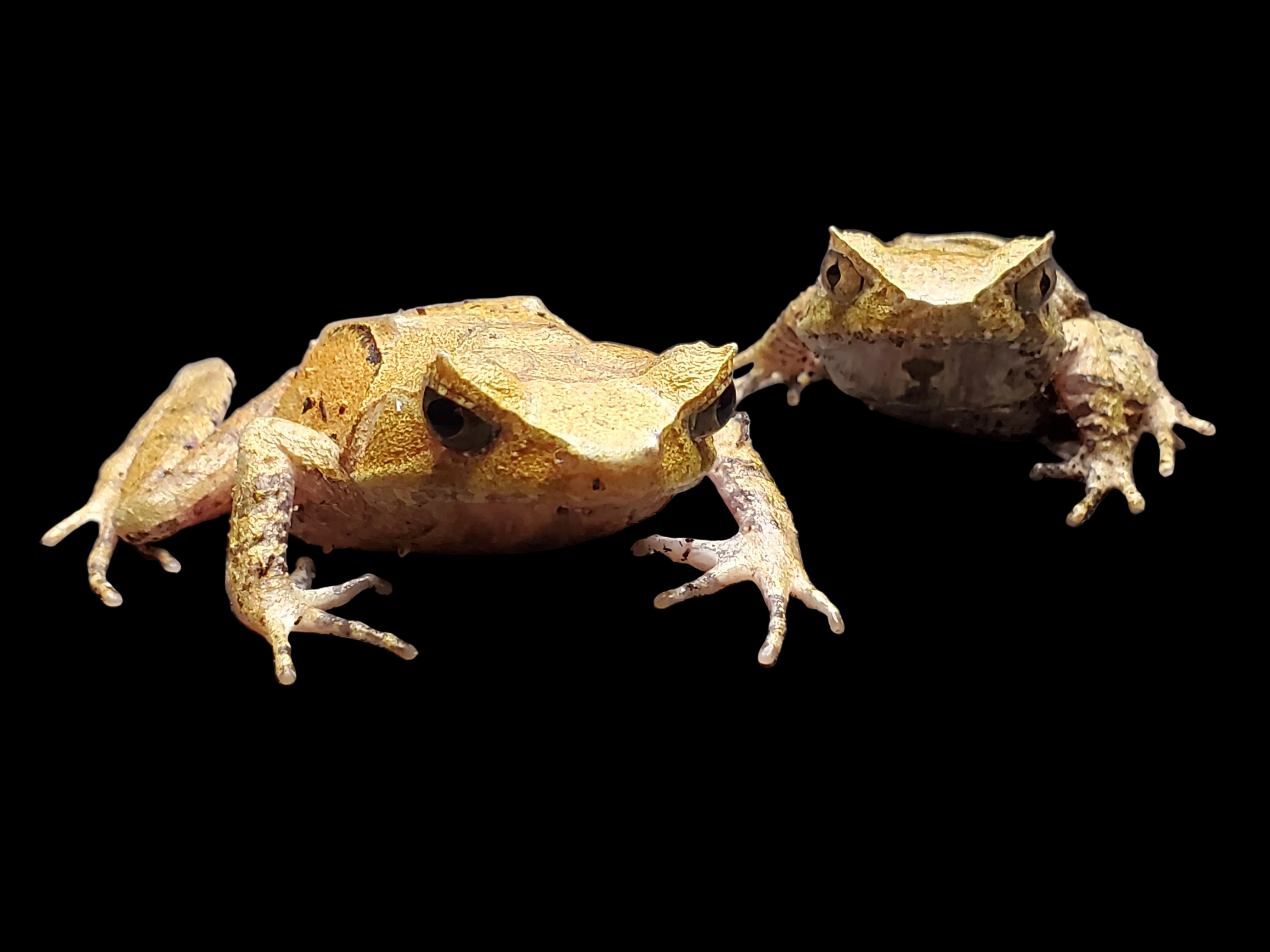
Appearance: The Perak Horned Toad is a cryptic, leaf-mimicking species with sharp angular features and a prominent triangular “horn” or pointed projection above each eye. The dorsum is highly textured, with ridges, bumps, and irregular edges that enhance its camouflage on the forest floor. Colouration ranges from rich brown and chestnut to olive or reddish tones, often with dark mottling or leaf-like patterning. The head is broad, and the snout appears elongated and angular. The underside is pale to lightly mottled. This species is among the most convincingly camouflaged members of the Megophryidae family.
Distribution: Native to Peninsular Malaysia, particularly Perak and surrounding regions, inhabiting mid-elevation and lowland rainforest.
Habitat: Wild individuals live on the forest floor of humid tropical rainforests, particularly near streams, seepages, and damp leaf litter. They rely heavily on camouflage and seldom climb. In captivity, they require a cool, humid forest-floor environment with deep leaf litter and stable moisture levels.
Behaviour: Primarily nocturnal and extremely cryptic, Perak Horned Toads spend much of the day buried or motionless beneath leaves. They are ambush predators, remaining still until prey approaches. They are solitary and can be territorial if space is insufficient. Movements are slow and deliberate, enhancing their leaf-like disguise.
Captive Care
Enclosure: A single adult can be housed in a 24 × 18 × 18 inches (60 × 45 × 45 cm) enclosure. Provide a deep, soft substrate of soil, sphagnum, and abundant leaf litter to mimic a rainforest floor. Add cork bark, branches, and rocks to create natural hiding areas. Ensure strong moisture retention without creating waterlogged conditions. For pairs or small groups, upgrading to 36 × 18 × 18 inches (90 × 45 × 45 cm) is recommended to reduce territorial stress.
Temperature and Humidity:
Ambient temperature: 68 to 74°F (20 to 23°C)
Warm area: 75 to 78°F (24 to 26°C)
Night temperature: 64 to 70°F (18 to 21°C)
Humidity: 70 to 90%, maintained through regular misting and high substrate moisture. Strong ventilation is essential to prevent stagnation.
Lighting: Low-level UVB (2 to 5%) is beneficial but should be diffused. Maintain a soft, natural day and night cycle. Avoid intense lighting, as this species naturally lives in shaded understory habitats.
Diet: Offer a varied diet of small crickets, roaches, earthworms, black soldier fly larvae, and other suitable invertebrates. Feed cautiously, as they are ambush predators and may ignore moving prey unless it passes directly in front of them. Supplement prey with calcium and multivitamins.
Behaviour in Captivity: Shy, motionless, and easily stressed by disturbance, these toads thrive when left undisturbed in naturalistic setups. They emerge more readily at night to feed. Handling should be completely avoided due to their delicate skin and stress sensitivity.
Genetics Note
There are no recognised morphs for the Perak Horned Toad. Natural variation occurs in dorsal texture, horn prominence, colour tone, and patterning, but these traits reflect individual and locality differences rather than defined genetic morphs.
Estimate shipping