

Photo Disclaimer
Description
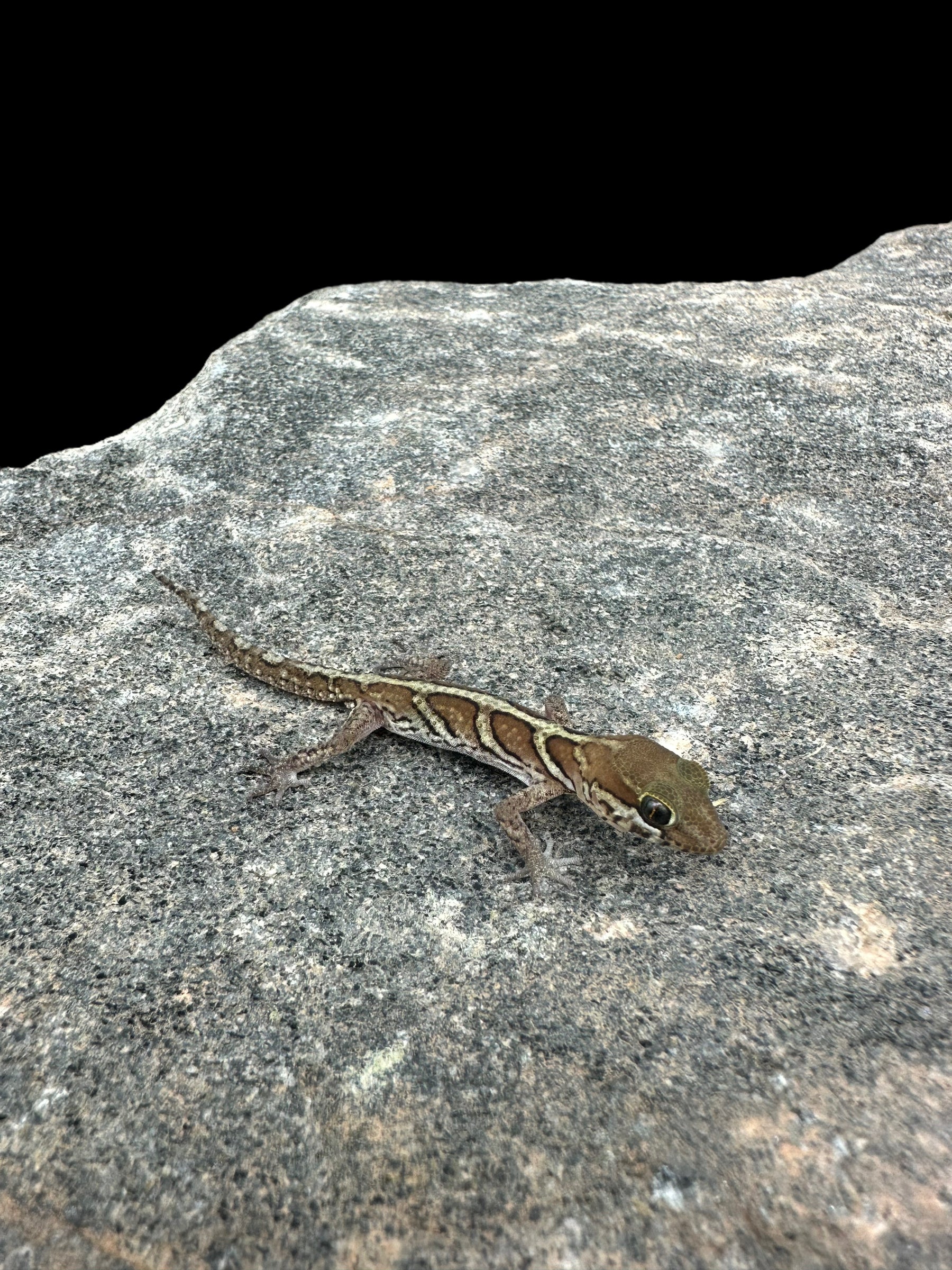
Pictus Gecko (het Amel)
Scientific Name: Paroedura pictus
Common Name: Madagascar Ground Gecko, Panther Gecko, Pictus Gecko (het Amel)
Species Overview
Size: Adult Pictus Geckos typically reach 4–6 inches (10–15 cm) in total length, including the tail. They are small, sturdy terrestrial geckos with a rounded body, short limbs, and large expressive eyes.
Appearance: The Pictus Gecko is a beautifully patterned species featuring a sandy tan, reddish-brown, or grey base colour with dark brown or black blotches and lighter banding across the body and tail. The “het Amel” (short for heterozygous Amelanistic) designation means this gecko carries one copy of the recessive gene responsible for amelanism (a genetic condition that removes dark pigmentation), though it does not visually express the trait. Amelanistic individuals lack black pigment and appear in lighter tones of pink, orange, and cream. The het Amel form looks normal but can produce Amelanistic offspring when paired with another het or visual Amel.
Distribution: Endemic to southern and southwestern Madagascar.
Habitat: In the wild, Pictus Geckos inhabit dry forests, rocky scrublands, and semi-arid regions, taking shelter under bark, rocks, and leaf litter during the day. In captivity, they thrive in warm, semi-arid setups that include plenty of hides and soft substrate for burrowing.
Behaviour: These geckos are nocturnal and terrestrial. They are quick, curious, and highly alert at night but calm and reclusive during the day. Once settled, they are hardy, active feeders and adapt well to captivity. Handling should be limited to reduce stress, as their tails are easily dropped if startled.
Captive Care
Enclosure: Provide a terrestrial enclosure measuring at least 18 inches × 18 inches × 12 inches (45 × 45 × 30 cm) for a single adult. A substrate blend of sand and soil 2–3 inches deep allows digging and moisture retention. Include multiple hides, cork flats, and stones to create natural shelter and temperature gradients.
Temperature & Humidity: Maintain a daytime gradient of 78–86°F (26–30°C) with a basking area near 90°F (32°C). Nighttime temperatures can safely drop to 70–74°F (21–23°C). Keep humidity between 50–70%, achieved through light evening misting and a small humid hide for shedding. Ensure adequate ventilation to prevent excess moisture buildup.
Lighting: Though nocturnal, Pictus Geckos benefit from low-level UVB (2–5%) to support calcium metabolism and establish a healthy circadian rhythm. Provide a 12-hour light/dark cycle.
Diet: Feed a varied diet of gut-loaded insects such as crickets, roaches, mealworms, and silkworms. Offer food 3–4 times per week and dust all prey with calcium and multivitamin supplements. Juveniles should be fed smaller prey daily.
Behaviour in Captivity: Pictus Geckos are hardy, adaptable, and excellent display reptiles for semi-arid enclosures. They exhibit active hunting and natural digging behaviour during nighttime hours and often become visible at dusk. With stable conditions and minimal disturbance, they thrive and may live 8–10 years in captivity.
Special Considerations: Avoid excessive humidity or cold temperatures, as these geckos prefer warm, moderately dry environments. Provide secure hides to prevent stress, and handle sparingly to avoid tail loss.
Taxonomy Note
The Pictus Gecko (Paroedura pictus) belongs to the family Gekkonidae and is one of Madagascar’s most commonly kept terrestrial geckos. It is closely related to Paroedura bastardi and Paroedura stumpffi. Known for its attractive banded pattern and calm disposition once established, P. pictus is a staple species in herpetoculture due to its hardiness and moderate size.
Genetics Note
Amelanism (Amel): A recessive genetic trait that removes black pigment, resulting in light orange, cream, and pink coloration.
Het Amel: Short for heterozygous Amelanistic, meaning the gecko carries one copy of the Amel gene but appears normal. When bred to another het or visual Amel, there is a chance to produce visually Amelanistic offspring.
The Amelanistic trait is one of the few selectively bred morphs established in Paroedura pictus. No other confirmed morphs exist, though minor natural variation occurs in pattern and band thickness between individuals.