

Photo Disclaimer
Description
Pink-tongued Skink
Scientific Name: Cyclodomorphus gerrardii
Common Name: Pink-tongued Skink
Species Overview
Size: Adults typically reach 16 to 18 inches (41 to 46 cm) in total length, with long, slender bodies and semi-prehensile tails.
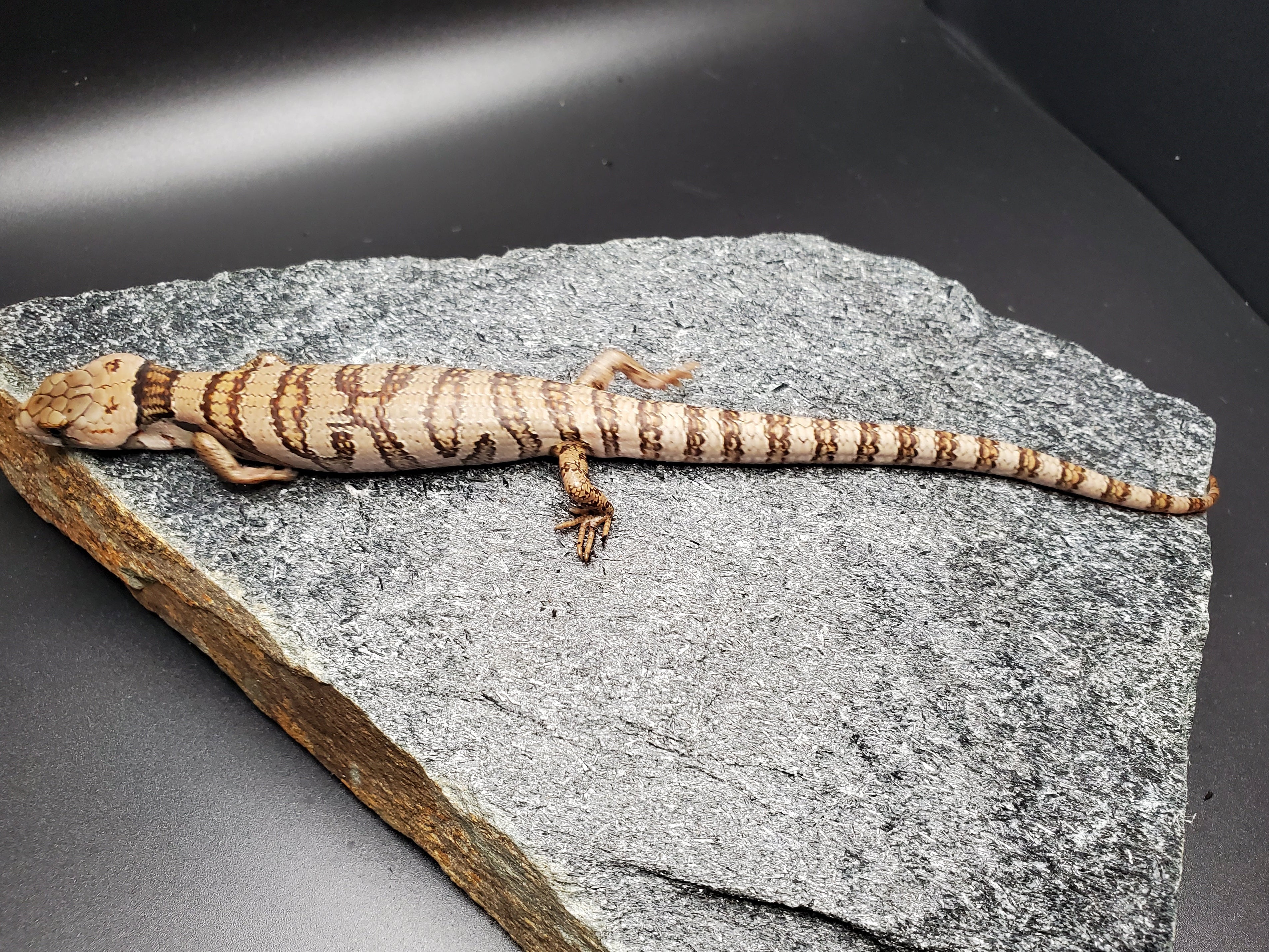
Appearance: The Pink-tongued Skink is a sleek, semi-arboreal species known for its smooth scales, narrow head, and distinctive pink tongue. Body colour varies from grey to olive or brown, often with subtle banding or mottling along the flanks and back. The eyes are large and expressive, and the tail is lengthy and flexible, aiding in climbing. Compared to blue-tongued skinks, they are more slender and agile.
Distribution: Found in eastern Australia, primarily in New South Wales and southeastern Queensland.
Habitat: This species inhabits moist forests, woodland edges, and areas near creeks and wetlands. They rely on dense vegetation, climbing branches, and humid microclimates. Their natural environment often includes leaf litter, fallen logs, shrubs, and low tree trunks.
Behaviour: Pink-tongued Skinks are primarily nocturnal to crepuscular and highly active. They are excellent climbers and may spend time off the ground in shrubs or low trees. In the wild, they feed on snails, slugs, insects, and soft fruits. They are generally shy but can become steady and calm in captivity with consistent care.
Captive Care
Enclosure: Provide a spacious enclosure measuring at least 4 × 2 × 2 feet (120 × 60 × 60 cm) for one adult, offering both ground room and climbing opportunities. Furnish with cork rounds, branches, elevated hides, dense foliage, and secure shelters. Use a soil-based or bioactive substrate designed for humid forest species to support natural digging and humidity. Strong ventilation is essential while still maintaining moisture levels.
Temperature and Humidity:
Basking area: 90 to 95°F (32 to 35°C)
Warm side: 82 to 85°F (28 to 29°C)
Cool side: 72 to 75°F (22 to 24°C)
Night temperatures: 68 to 72°F (20 to 22°C)
Humidity: 60 to 80%, maintained through regular misting and dense vegetation.
Lighting: Provide full-spectrum lighting with a moderate UVB source (approximately 5%). Although partially nocturnal, this species benefits from UV exposure for overall health and calcium metabolism.
Diet: Offer a varied diet including snails, slugs, insects (roaches, crickets, black soldier fly larvae), canned escargot, earthworms, and soft fruits. Commercial snail substitutes can also be used. Dust insects with calcium frequently and provide multivitamins weekly.
Behaviour in Captivity: Pink-tongued Skinks are active, inquisitive, and excellent climbers. They thrive in enclosures with vertical complexity and humid conditions. While generally docile, they prefer limited handling. Once settled, they are hardy and rewarding display animals.
Special Considerations:
• Provide multiple hides at different heights for security.
• Ensure humidity remains stable but avoid overly wet substrate.
• Climbing structures are essential—this species is semi-arboreal.
• Snail availability is important; they strongly prefer gastropods in their diet.
Taxonomy Note
The Pink-tongued Skink belongs to the genus Cyclodomorphus, closely related to blue-tongued skinks but more slender, arboreal, and humidity-adapted. Their unique pink tongue distinguishes them from many other Australian skinks.
Genetics Note
There are no recognised morphs for Cyclodomorphus gerrardii. Natural variation occurs in body tone, banding clarity, and the intensity of pink tongue colouration. These differences are normal and not selectively bred traits.
Estimate shipping