

Photo Disclaimer
Description
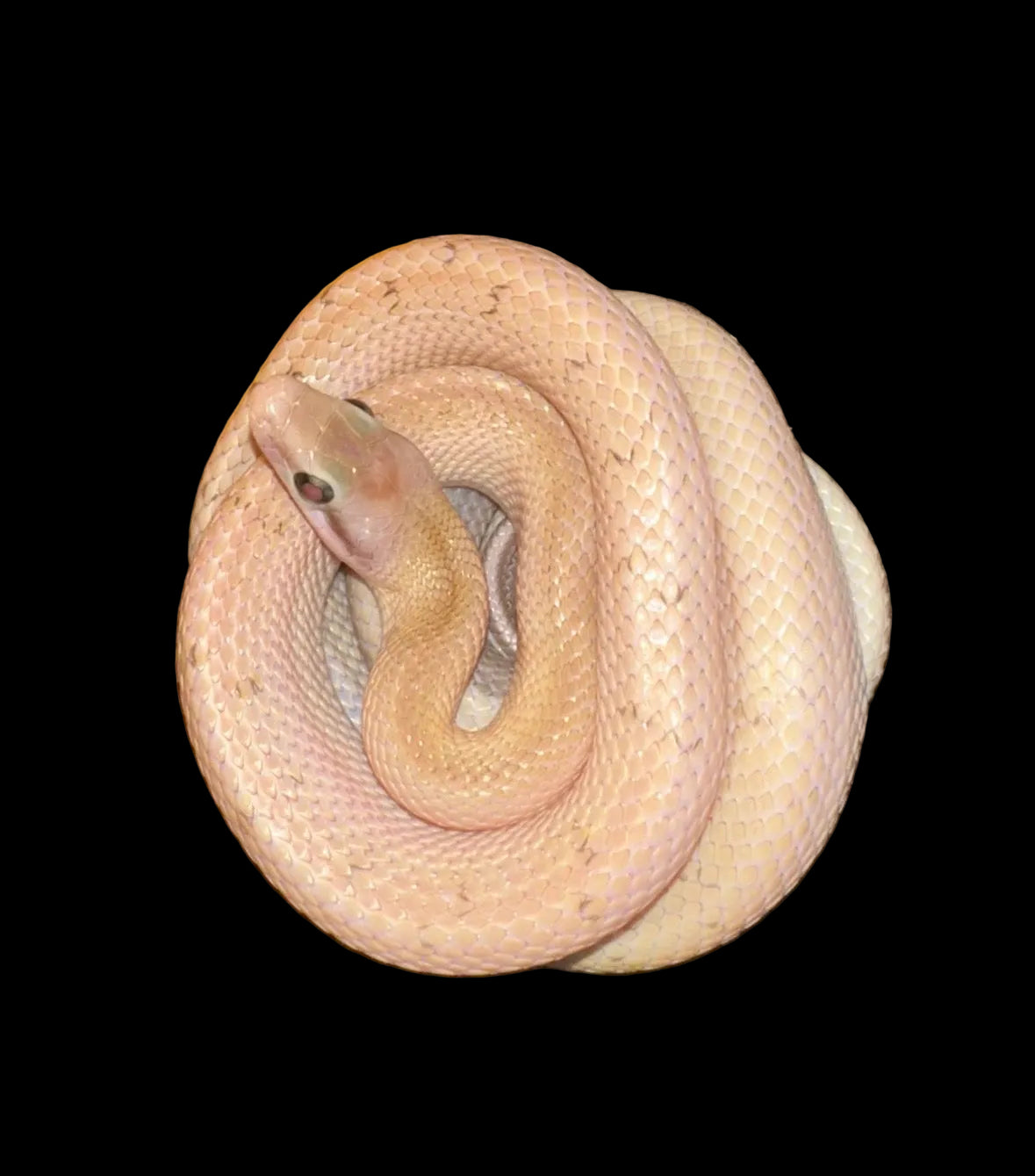
Chinese Beauty Rat Snake Platinum Het. Calico
Scientific Name: Orthriophis taeniurus taeniurus
Common Name: Chinese Beauty Rat Snake
Species Overview
Size: Adults typically reach 5-7 feet in length, with a long, muscular body and semi-prehensile tail.
Appearance: The Chinese Beauty Rat Snake is visually striking with blue eyes and it is almost completely void of the typical Chinese beauty markings. Subtle undertones of the typical stripes with grey and silver scales are what is most prominent.
Distribution: Found throughout China and Laos, often in humid lowland forests and agricultural regions.
Habitat: Chinese Beauty Rat Snakes inhabit tropical forests, forest margins, and agricultural zones across Southeast Asia. In captivity, they thrive in naturalistic terrariums with soft substrate, climbing branches, and secure hiding areas.
Behaviour: This species is diurnal, semi-arboreal but will remain on the ground more often than not they are extremely active. They are intelligent and alert, often tracking movement outside their enclosure. While defensive when young, they typically calm with consistent care and minimal stress. Their quick, graceful movements and awareness make them both fascinating and challenging captives.
Captive Care
Enclosure: Adults require spacious, vertically oriented enclosures of at least 5 feet × 2.5 feet × 3 feet. Provide climbing branches, hides at various levels, and visual barriers to reduce stress. The enclosure should allow both height for climbing and ground space for exploration.
Temperature & Humidity: Maintain a daytime temperature gradient of 78–86°F (26–30°C) with a basking area near 90°F (32°C). Allow nighttime drops to 72–75°F (22–24°C). Maintain humidity between 60–75%, providing consistent airflow and regular misting.
Diet: Offer frozen-thawed rodents of appropriate size every 7–10 days for juveniles and every 10–14 days for adults. Some individuals may accept small birds as enrichment prey items.
Behaviour in Captivity: Chinese Beauties are highly intelligent and visually responsive. They often observe their surroundings and are quick to explore. They require patient, confident handling but generally become manageable adults when consistently worked with.
Special Considerations: Due to their size, activity level, and humidity needs, this species is best suited for intermediate or advanced keepers. Ensure secure enclosures with good ventilation, as they are strong and agile climbers.