


Photo Disclaimer
Description
Quince Monitor
Scientific Name: Varanus melinus
Common Name: Quince Monitor, Yellow Monitor
Species Overview
Size: Adults typically reach 3.5 to 4.5 feet (107 to 137 cm) in total length, with long tails and slender, athletic bodies.
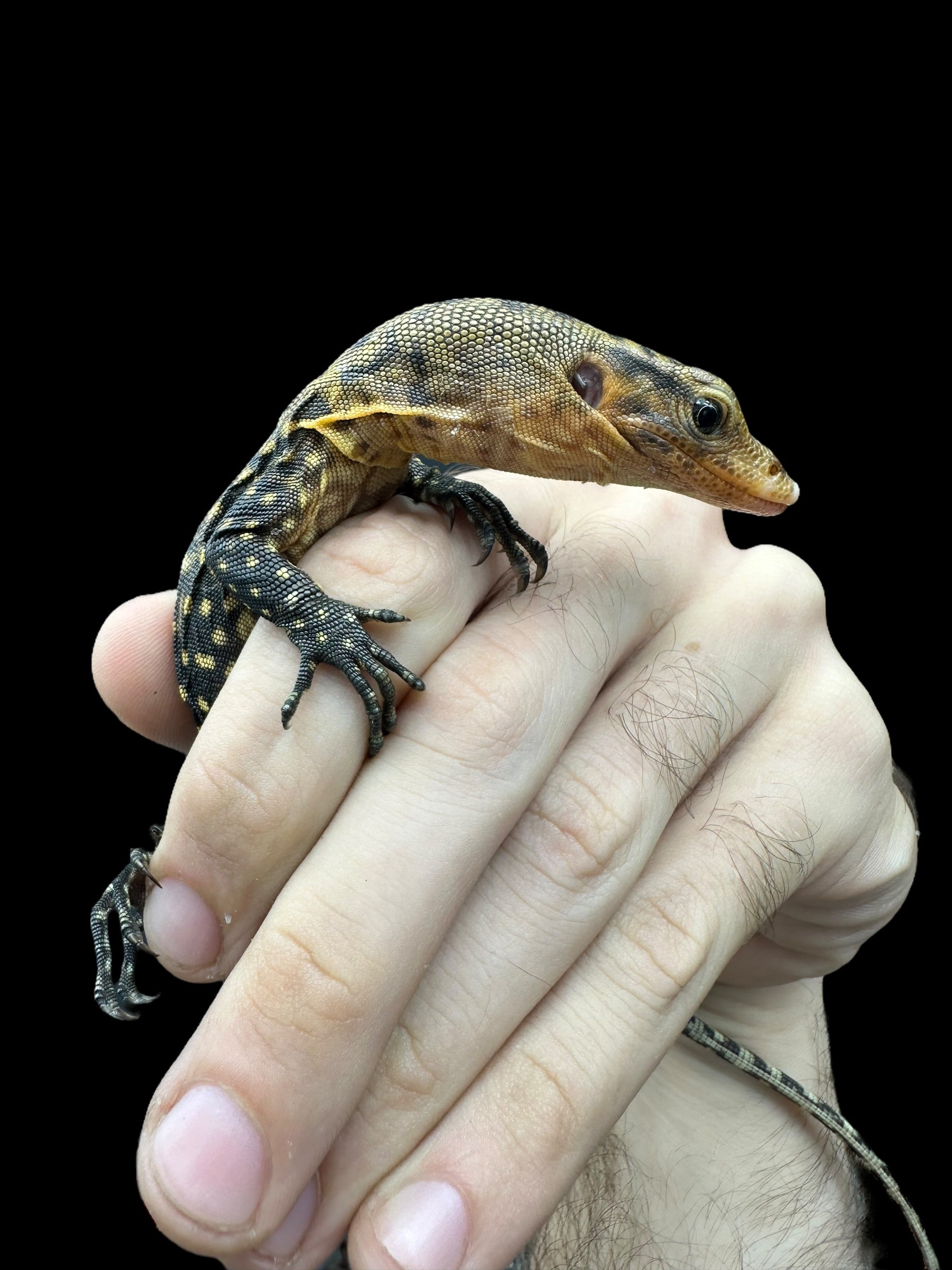
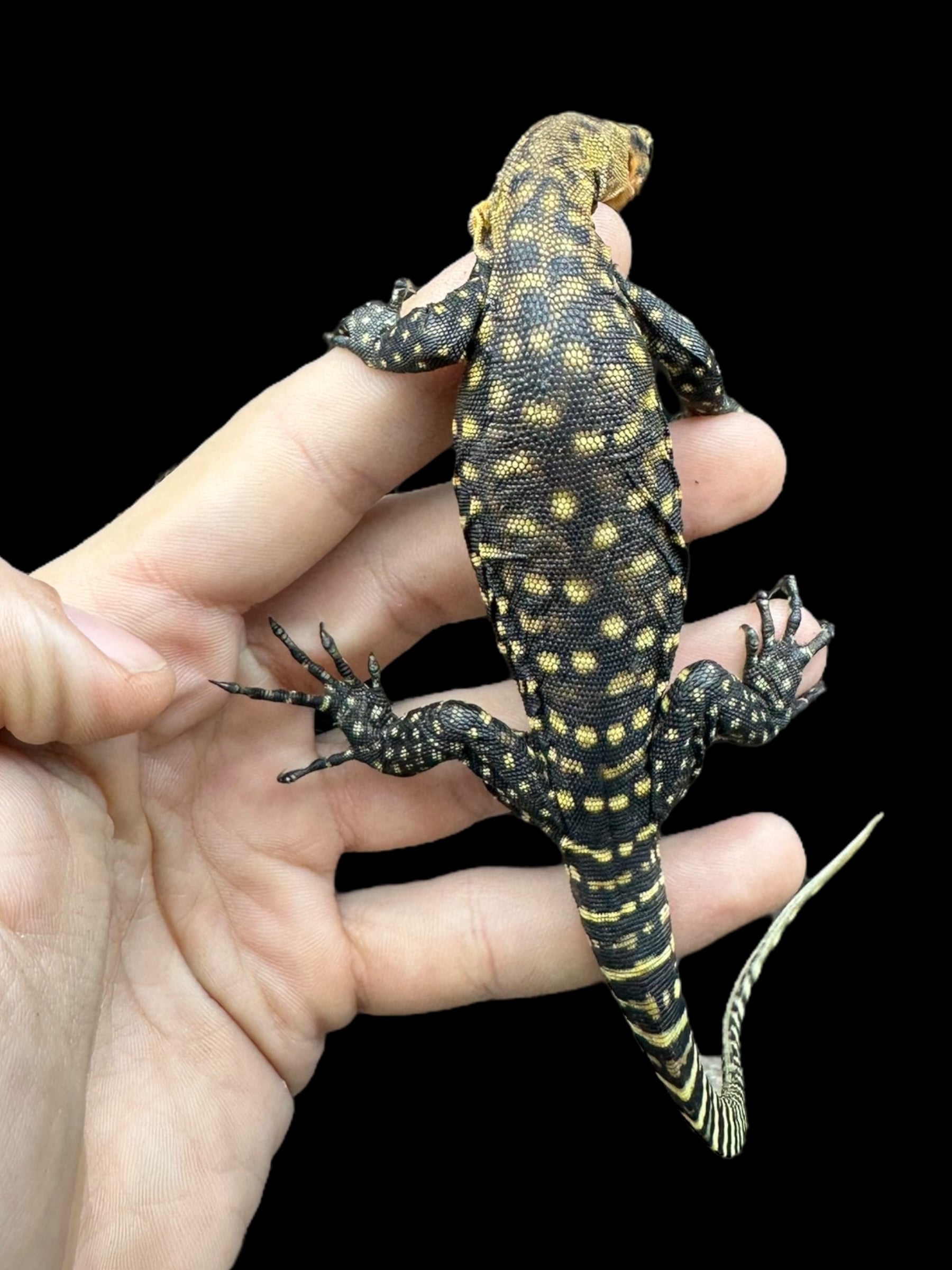
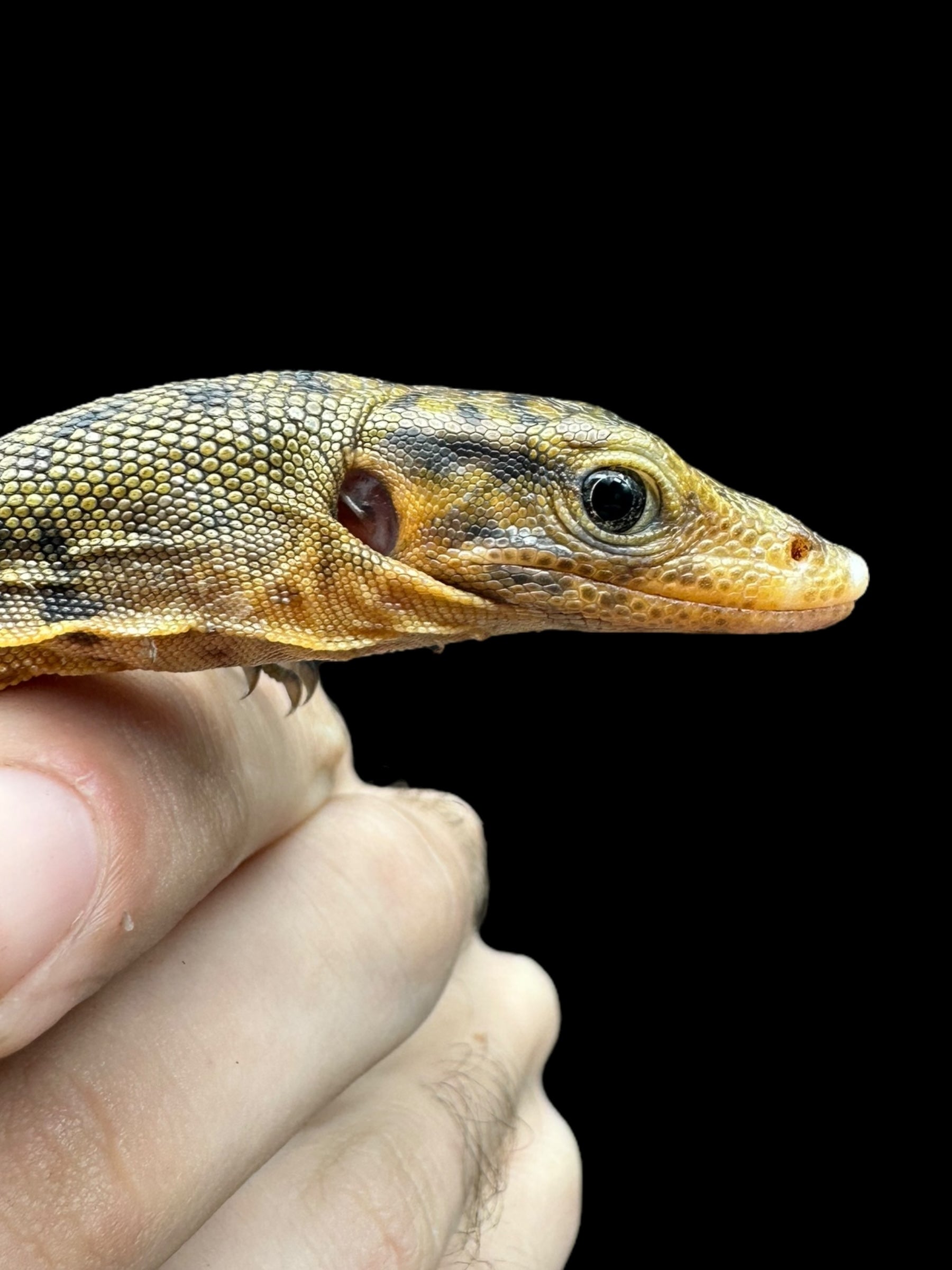
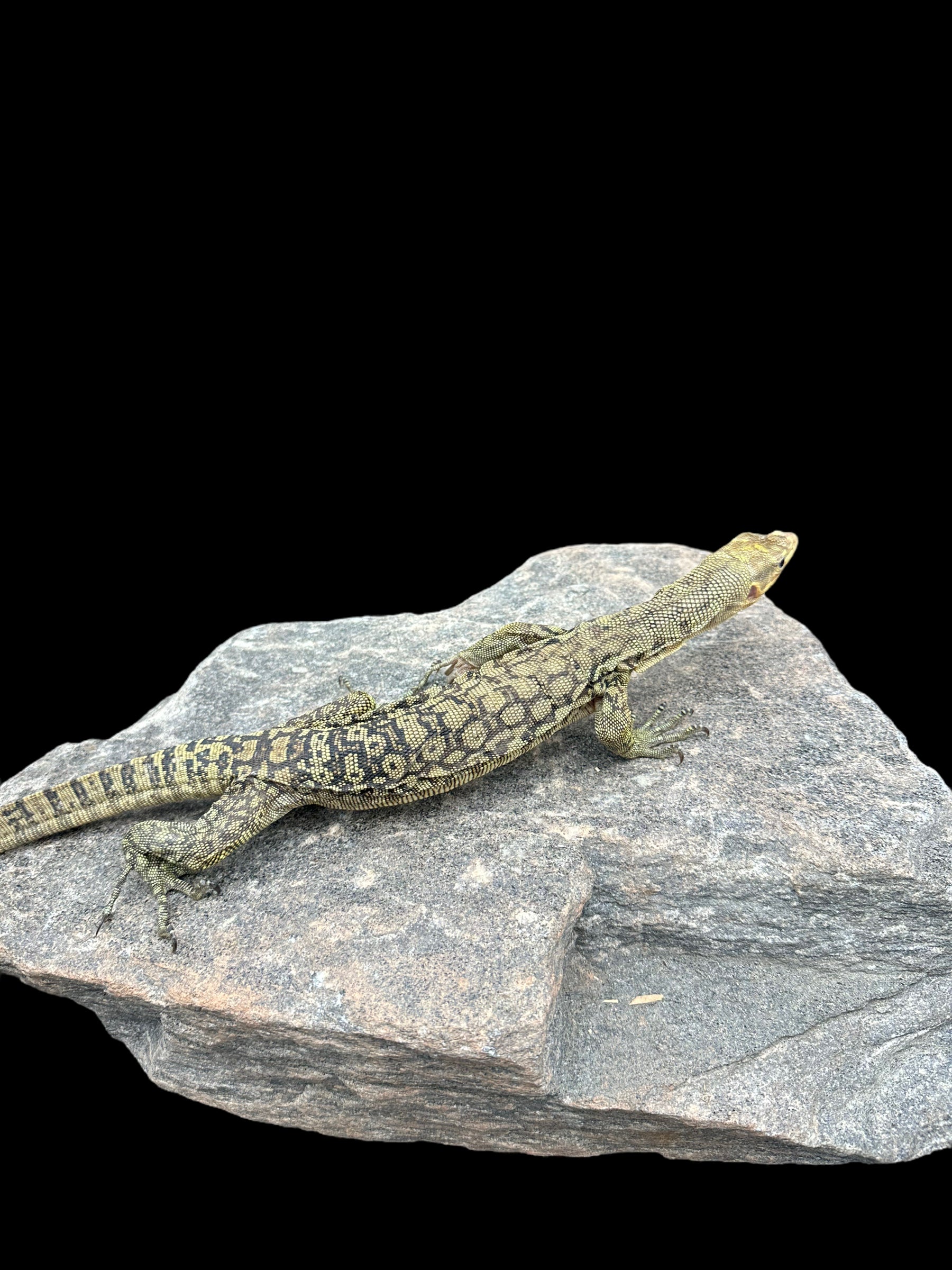
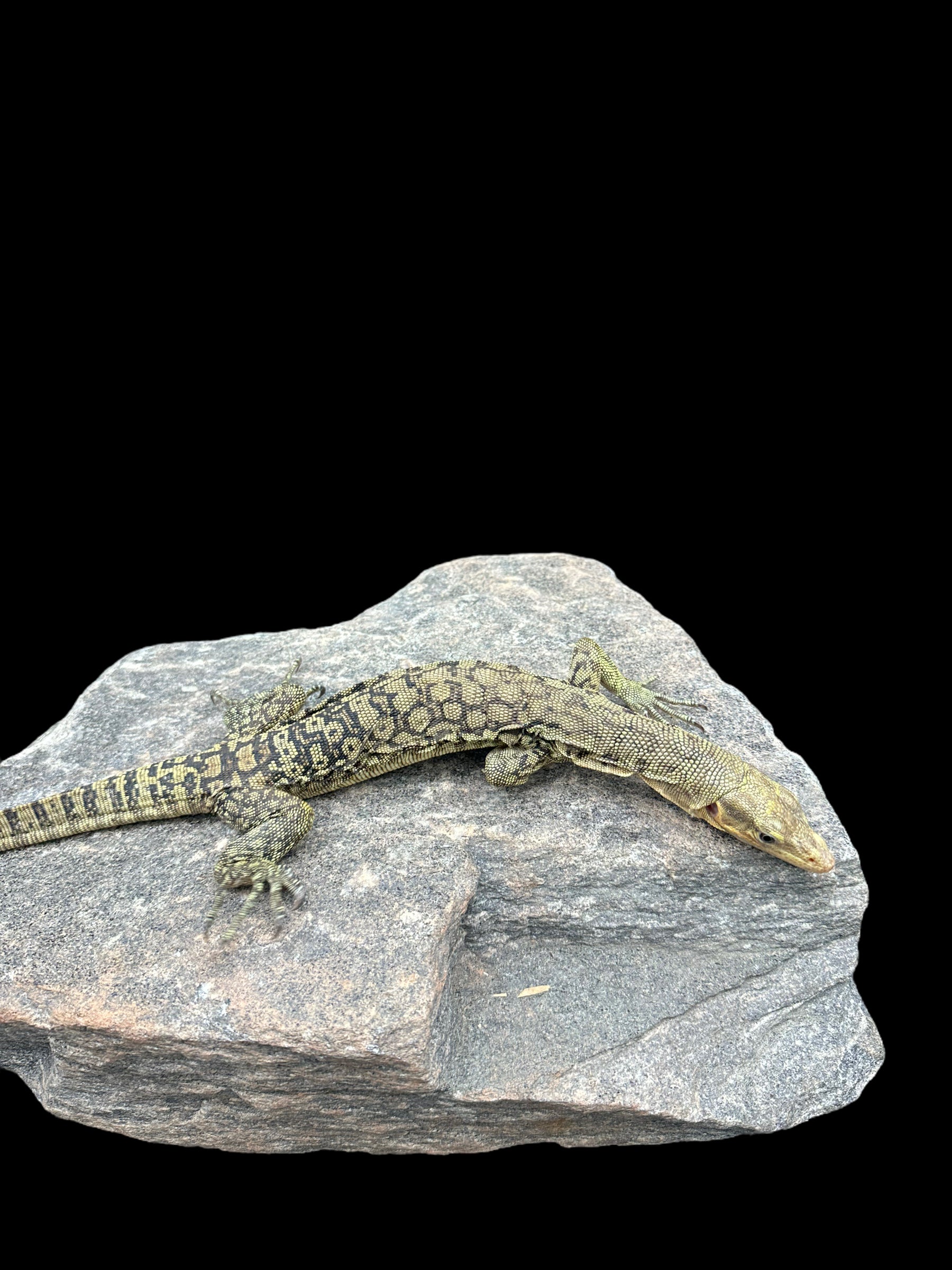
Appearance: The Quince Monitor is one of the most visually striking members of the Varanus genus. Its body is bright golden yellow to lemon or chartreuse, contrasted by darker reticulated patterns or spotting along the limbs, back, and tail. The head is narrow with a pointed snout, and the tail is extremely long—often twice the length of the body—marked with alternating light and dark bands. Their colours intensify with maturity and proper husbandry, making them highly valued display monitors.
Distribution: Endemic to Indonesia, including islands of the Sula Archipelago and nearby regions.
Habitat: This species inhabits humid tropical forests, mangroves, river edges, and swampy lowlands. They rely on dense vegetation, fallen logs, and forest canopy structure for climbing. High humidity, warm temperatures, and abundant water sources define their native environment.
Behaviour: Quince Monitors are diurnal, intelligent, and highly arboreal. They climb exceptionally well, often choosing elevated perches to bask or observe their surroundings. They are alert and fast, capable of both vertical and horizontal bursts of speed. In the wild, their diet includes insects, crustaceans, frogs, eggs, small mammals, and aquatic prey. In captivity, they become bold and interactive when housed correctly, though handling should remain minimal due to their speed and sensitivity.
Captive Care
Enclosure: Provide a single adult with an enclosure at least 6 × 3 × 6 feet (180 × 90 × 180 cm). This species is strongly arboreal and requires substantial height. Furnish the enclosure with thick climbing branches, cork tubes, elevated basking platforms, stable logs, and dense foliage. Offer a deep soil-based or soil–sand substrate (not dry on top—this is a tropical species) to support humidity and digging. Include a large water basin deep enough for soaking, as Quince Monitors are semi-aquatic.
Temperature and Humidity:
Basking area: 120 to 130°F (49 to 54°C)
Ambient daytime: 82 to 90°F (28 to 32°C)
Cool side: 75 to 80°F (24 to 27°C)
Night temperatures: 72 to 75°F (22 to 24°C)
Humidity: 70 to 90%, maintained with misting, substrate depth, and access to open water.
Lighting: Provide bright full-spectrum lighting with strong UVB (10 to 12%). High-intensity plant or daylight LEDs help create a natural canopy effect. Elevated lighting allows for realistic basking gradients and thermoregulation.
Diet: Offer a diverse omnivorous–carnivorous diet including roaches, crickets, black soldier fly larvae, fish, snails, crustaceans, quail eggs, rodents (sparingly), and lean meats. Varying food types encourages natural foraging responses. Supplement insects with calcium frequently and multivitamins weekly.
Behaviour in Captivity: Quince Monitors are intelligent, active, and benefit immensely from enrichment. They climb constantly, swim given the opportunity, and investigate new objects. They can become very engaging display animals but are typically too quick for frequent handling. With consistent care, they display vibrant colouration and bold behaviour.
Special Considerations:
• Provide large vertical climbing structures—height is essential.
• Include a sizeable water area for soaking and swimming.
• Maintain stable humidity; this species declines quickly in dry conditions.
• Avoid cohabitation—Quince Monitors should always be housed alone.
• Offer frequent enrichment such as scent trails, puzzle feeding, and new climbing branches.
Taxonomy Note
The Quince Monitor belongs to the subgenus Euprepiosaurus, which includes members of the Varanus indicus complex. These monitors are known for their semi-aquatic tendencies, complex behaviour, and vibrant colouration. Varanus melinus is distinguished by its yellow base colour and banded tail.
Genetics Note
There are no recognised morphs for Varanus melinus. Natural variation exists in the intensity of yellow colouration, band clarity, and the degree of reticulation. These variations reflect individual and locality differences rather than selective breeding traits.