
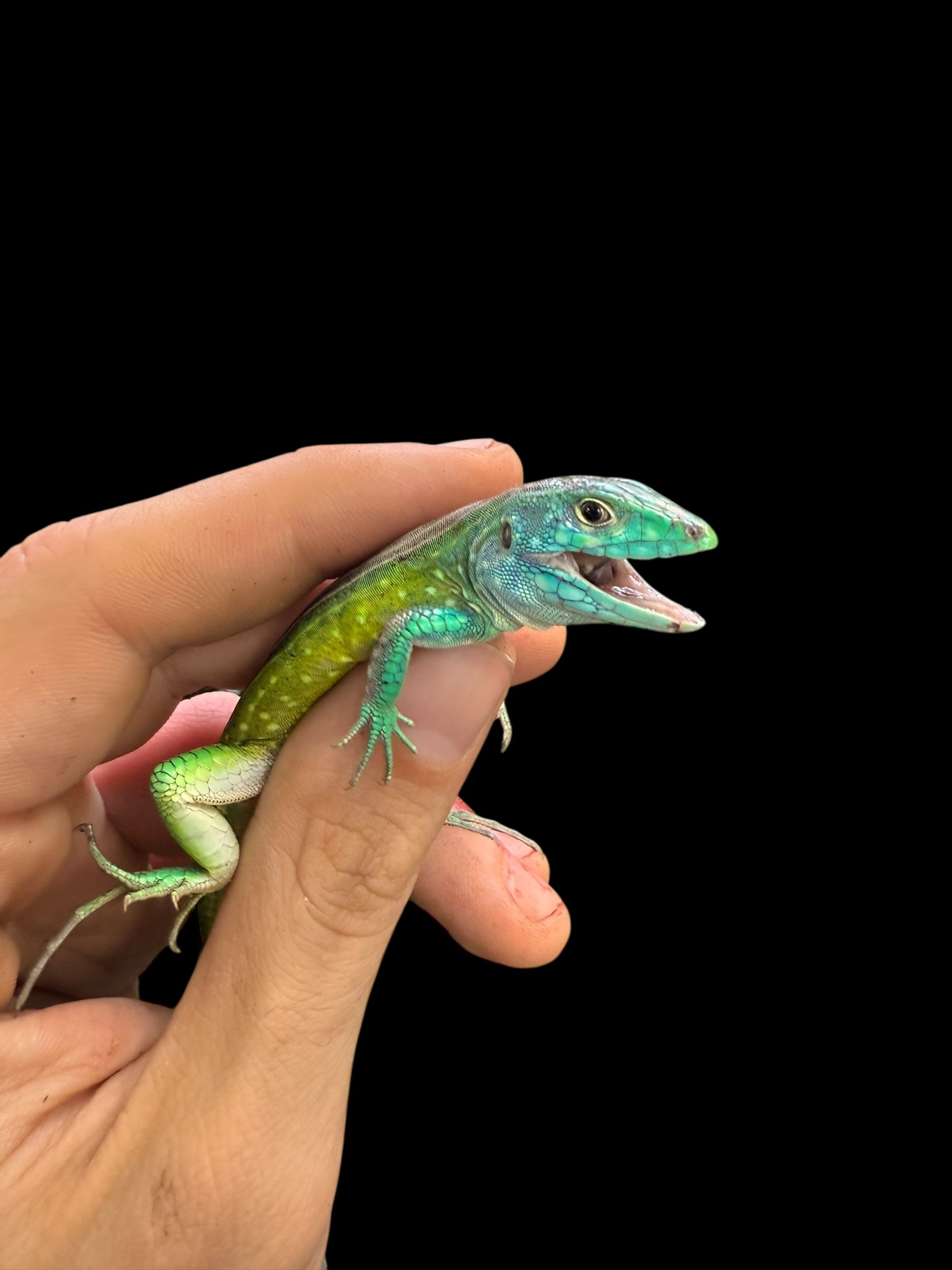
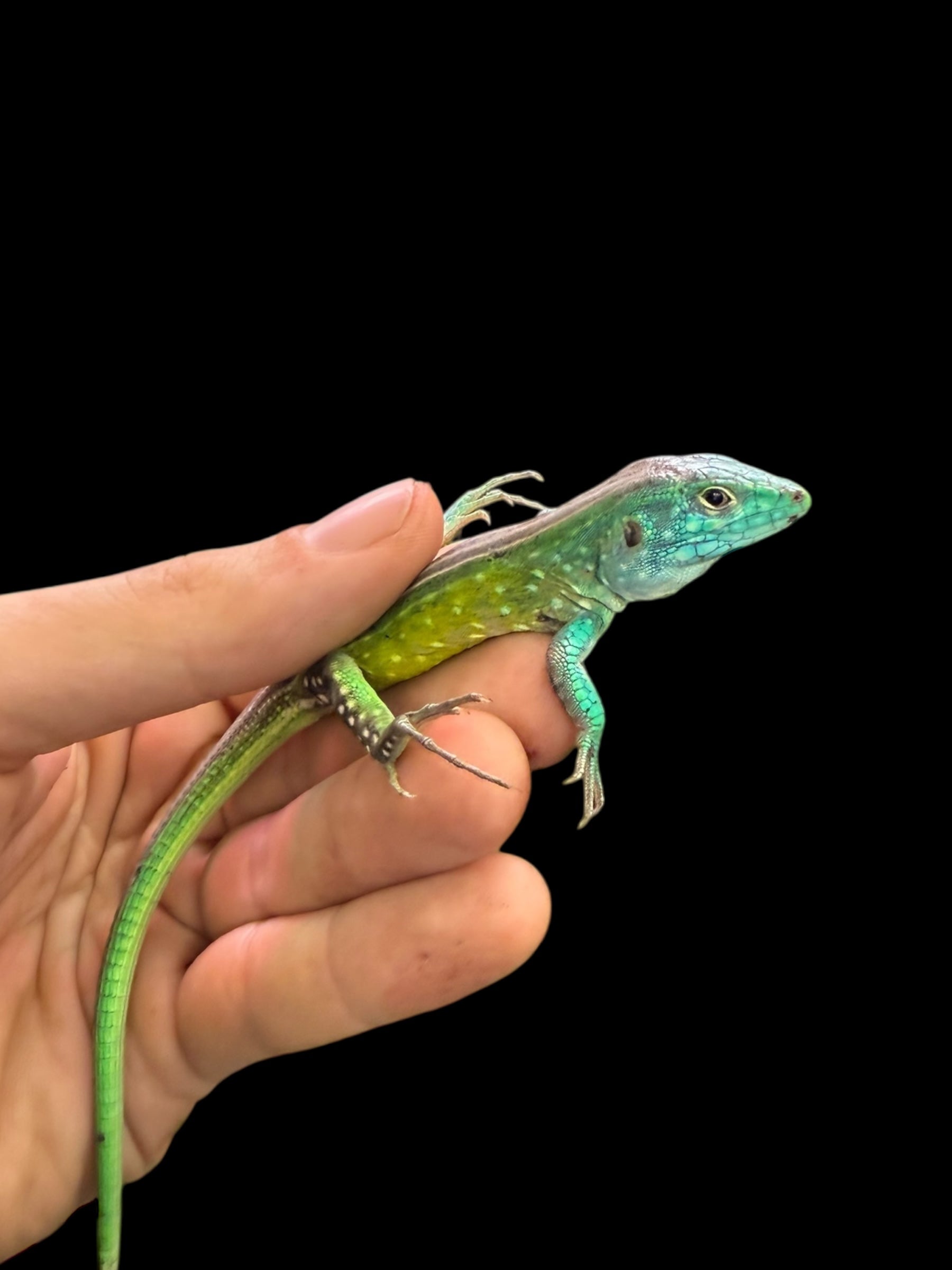
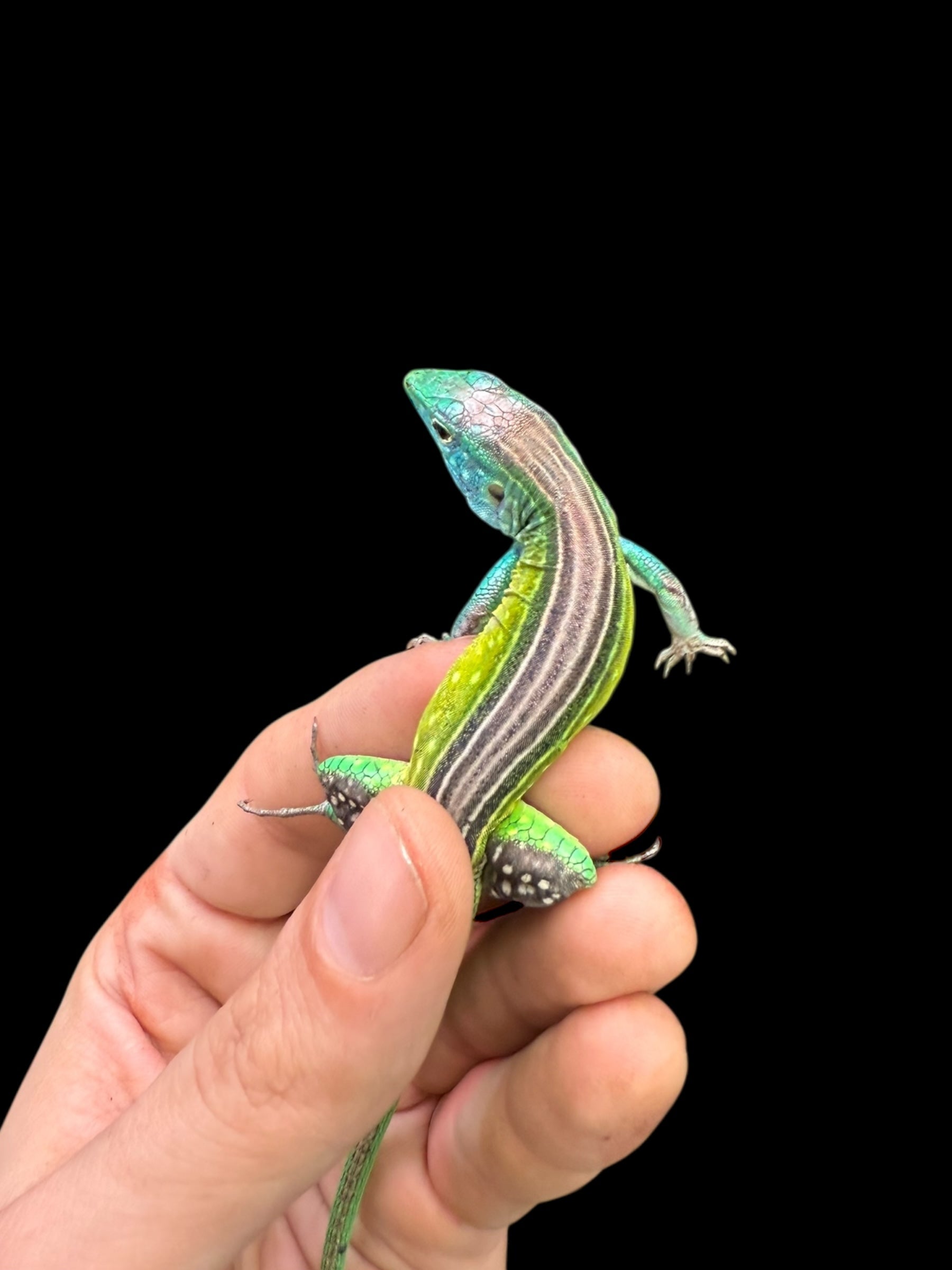
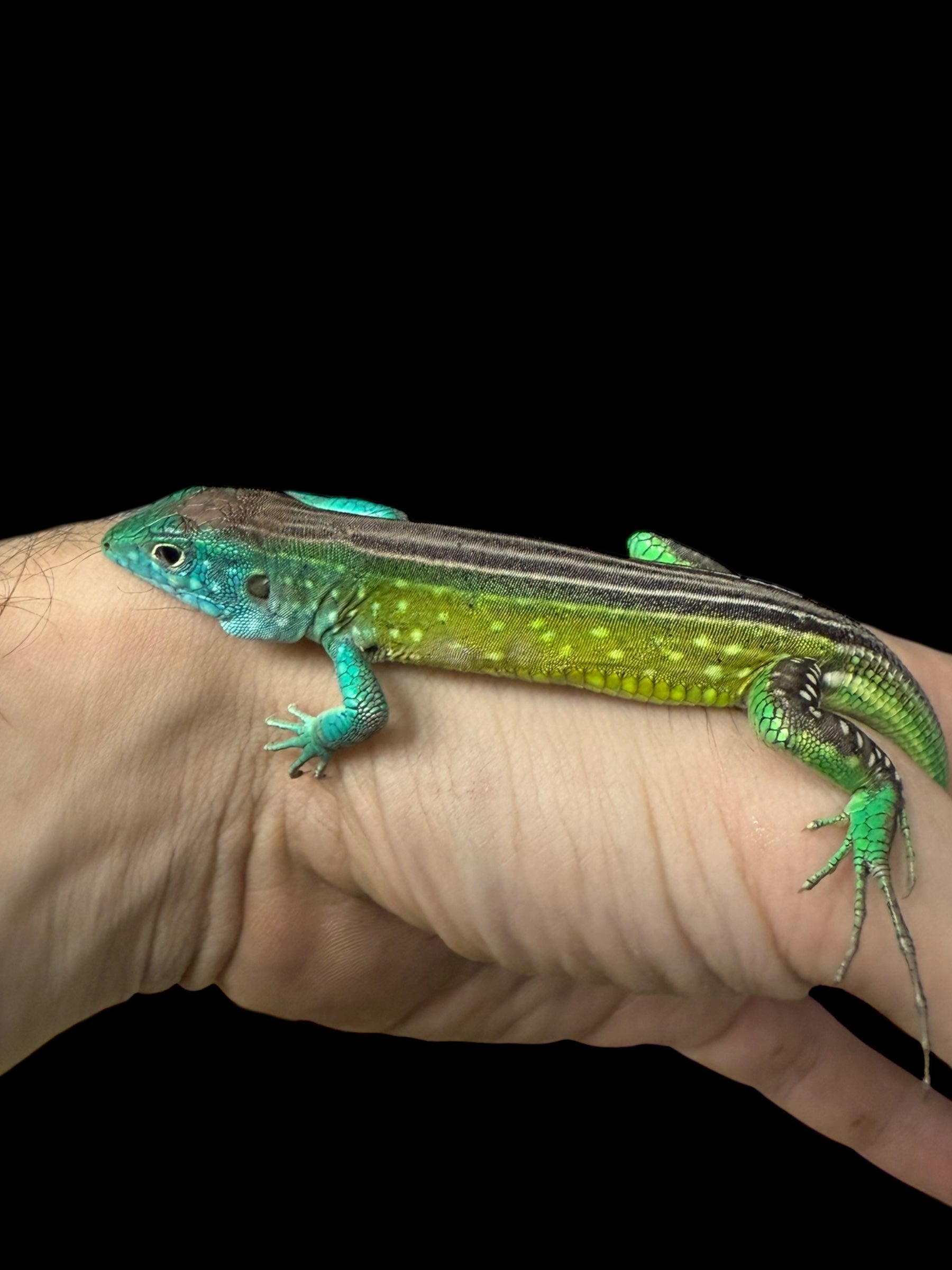


Photo Disclaimer
Description
Rainbow Whiptail
Scientific Name: Cnemidophorus lemniscatus
Common Name: Rainbow Whiptail, Striped Whiptail
Species Overview
Size: Adults typically reach 10 to 12 inches (25 to 30 cm) in total length, with more than half their length composed of a very long, whip-like tail.
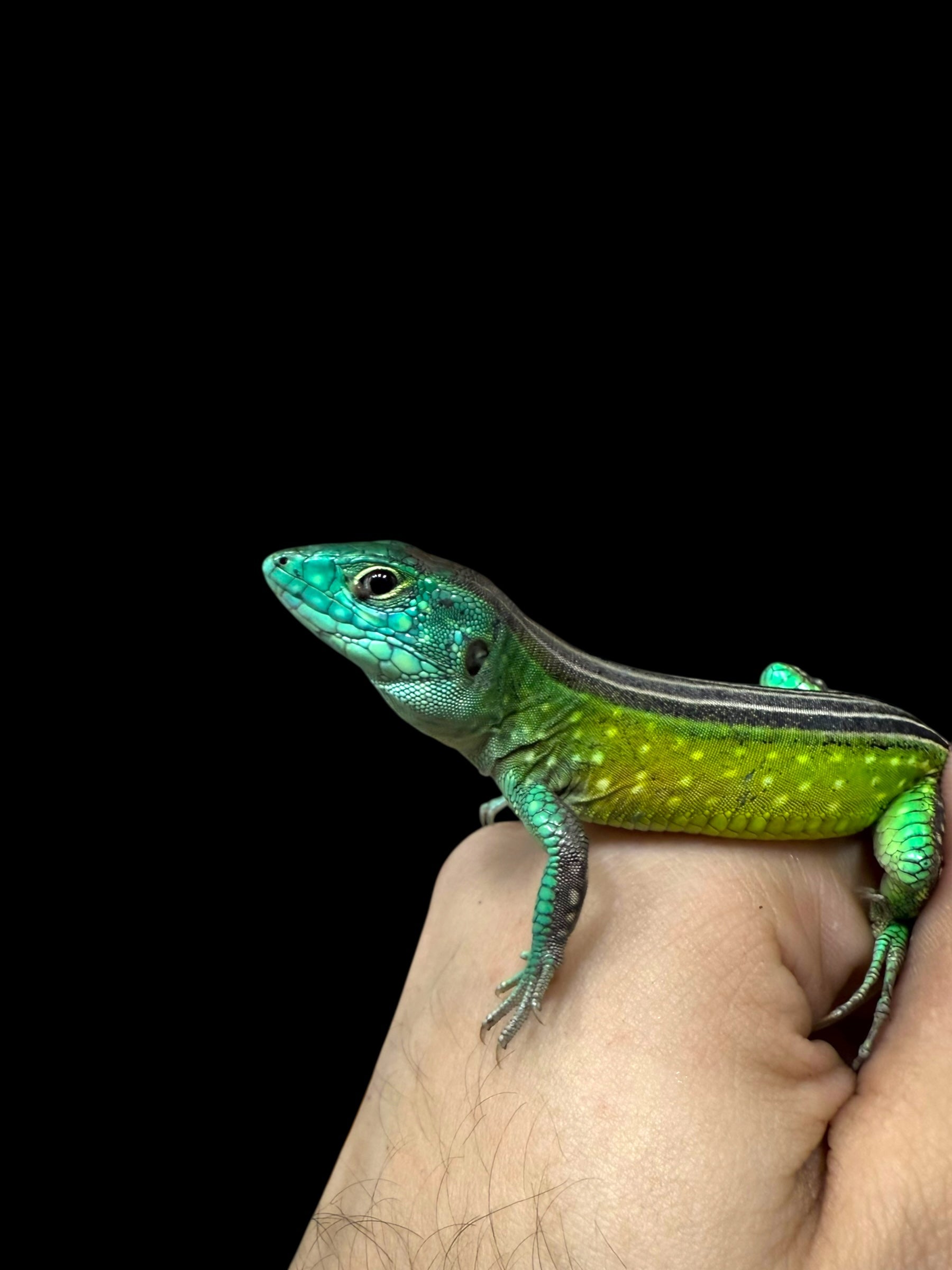
Appearance: The Rainbow Whiptail is a slender, athletic lizard known for its vivid striping and iridescent coloration. Body tones may include blues, greens, yellows, and bronzes, with males generally showing brighter hues. Most individuals have bold lateral stripes or wave-like lines along the body and tail. The head is narrow, the limbs are long and agile, and the tail is extremely thin and flexible—ideal for rapid movement.
Distribution: Native to northern South America, Central America, and parts of the Caribbean, including regions of Colombia, Venezuela, Suriname, Trinidad, and Tobago.
Habitat: This species inhabits open, sunny environments such as grasslands, sandy clearings, riverbanks, savannas, and forest edges. They prefer locations with loose soil and scattered vegetation where they can dart quickly between hiding places.
Behaviour: Rainbow Whiptails are diurnal, extremely fast, and constantly active. They rely on speed for defence and are opportunistic foragers that hunt insects and small invertebrates throughout the day. They are alert, nervous, and tend to avoid handling, making them best suited as display animals.
Captive Care
Enclosure: Provide at least 36 × 18 × 18 inches (90 × 45 × 45 cm) for one adult, though a 4 × 2 × 2 feet (120 × 60 × 60 cm) enclosure is strongly recommended to accommodate their speed. Furnish with a sandy soil substrate, dry leaf litter, bark, low grasses, and flat stones. Ensure plenty of open running space and multiple small hides for security. Good ventilation is important.
Temperature and Humidity:
Basking area: 100 to 110°F (38 to 43°C)
Warm side: 85 to 90°F (29 to 32°C)
Cool side: 75 to 80°F (24 to 27°C)
Night temperatures: 70 to 75°F (21 to 24°C)
Humidity: 50 to 70%, maintained with occasional misting while keeping the substrate well-drained.
Lighting: Provide bright full-spectrum lighting with moderate to strong UVB (around 10%). Strong lighting encourages active basking and supports their vibrant colour expression.
Diet: Offer roaches, crickets, black soldier fly larvae, silkworms, mealworms, superworms, and occasional waxworms. Soft fruits such as mango, banana, and berries may be provided sparingly. Gut-load all insects and supplement with calcium frequently, adding multivitamins weekly.
Behaviour in Captivity: Rainbow Whiptails are extremely quick and do not tolerate handling well. They thrive in large, open enclosures with secure hiding places and bright lighting. When comfortable, they exhibit energetic foraging, basking, and natural sprinting behaviour.
Special Considerations:
• Provide abundant open floor space—this species is built for speed.
• Ensure the enclosure is escape-proof; they can bolt instantly.
• Avoid excessive handling; they stress easily.
• Maintain moderate humidity without allowing the substrate to become waterlogged.
Taxonomy Note
The Rainbow Whiptail belongs to the genus Cnemidophorus, a diverse group of fast-running, ground-dwelling lizards found throughout the Americas. C. lemniscatus is one of the most colourful and widely distributed species.
Genetics Note
There are no recognised morphs for Cnemidophorus lemniscatus. Natural variations occur in colour brightness, pattern strength, and iridescence, influenced by locality and individual genetics.