


Photo Disclaimer
Description
Red-cheeked Mud Turtle
Scientific Name: Kinosternon scorpioides cruentatum
Common Name: Red-cheeked Mud Turtle, Crimson Mud Turtle
Species Overview
Size: Males typically reach 6 to 7 inches (15 to 18 cm), while females grow larger at 7 to 8 inches (18 to 20 cm).
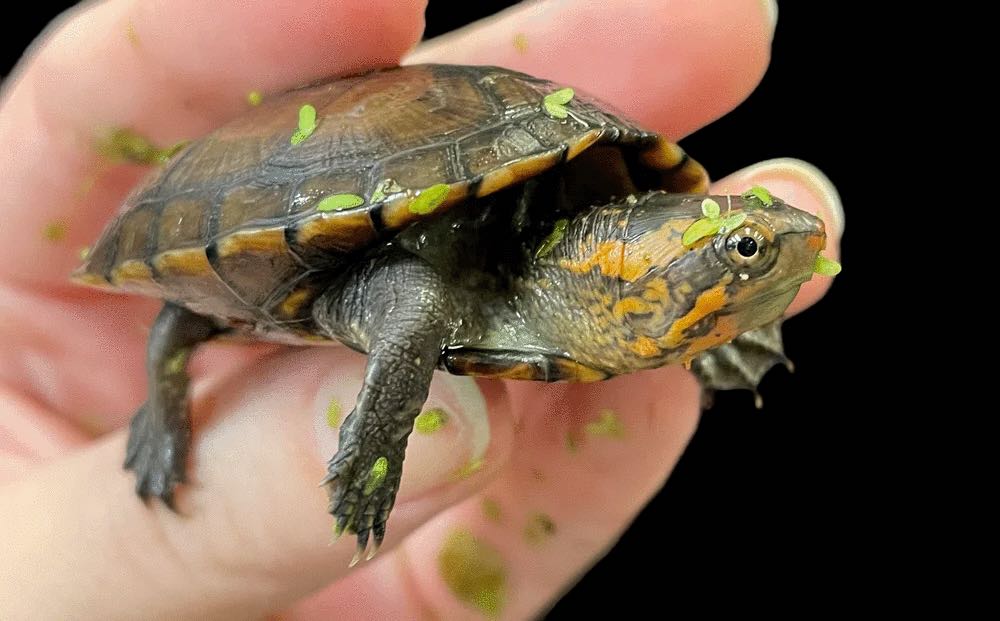
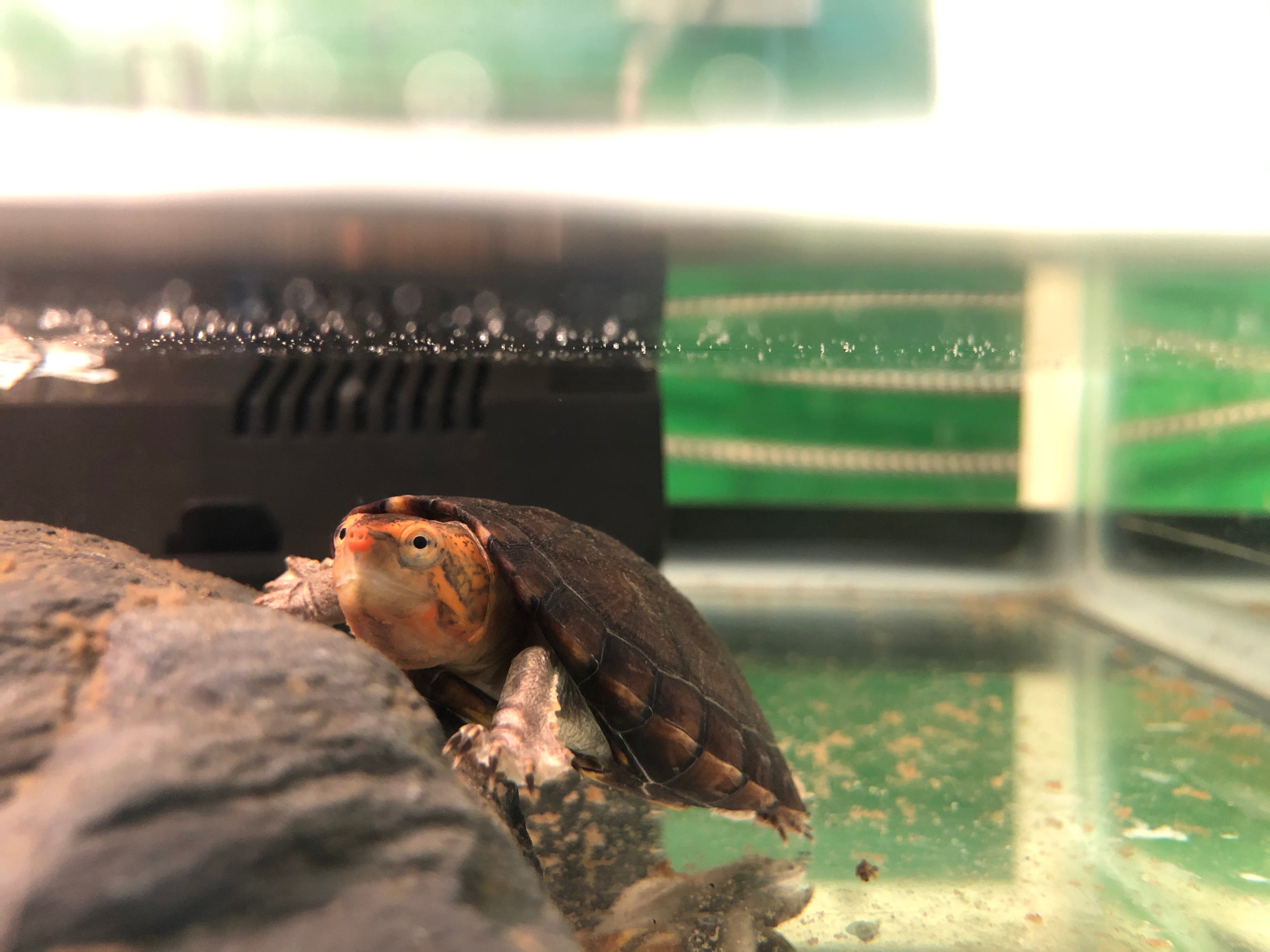
Appearance: The Red-cheeked Mud Turtle is recognized for its vivid red or orange cheek patches, set against a deep brown or nearly black head. The carapace is smooth, oval, and slightly domed, ranging from matte brown to charcoal with subtle growth rings that become more visible over time. The plastron is pale yellow or tan with darker seams and features functional hinges that allow partial closure. Limbs are robust with earthy tones. Males possess longer tails and slightly larger heads, while females are broader and heavier-bodied.
Distribution: Native to Central America and northern South America, including Mexico, Guatemala, Belize, Honduras, Nicaragua, Costa Rica, Colombia, and Venezuela.
Habitat: In the wild, this species inhabits calm, shallow waters such as marshes, ponds, ditches, swamps, and seasonal wetlands. These areas often have muddy bottoms and dense vegetation. In captivity, they require a shallow-to-moderate-depth aquatic setup with both submerged and surface-level hiding options.
Behaviour: Red-cheeked Mud Turtles are bottom-walkers rather than free-swimmers, preferring to explore substrate, vegetation, and debris. They bask intermittently, especially in warmer seasons, and become bold feeders once established. They make frequent use of buried or low-cover hiding spots.
Captive Care
Enclosure: Provide an aquatic enclosure with a minimum footprint of 36 × 18 inches (90 × 45 cm) for one adult. Include moderate water depth, submerged hides, driftwood, rocks, and soft substrate areas. Offer a dry basking platform and a small land section for resting. Use strong but gentle filtration to maintain water quality without excessive flow.
Temperature and Humidity:
Water temperature: 75 to 80°F (24 to 27°C)
Basking area: 88 to 92°F (31 to 33°C)
Ambient air temperature: 78 to 84°F (26 to 29°C)
Lighting: Provide full-spectrum lighting with 10–12% UVB to support healthy shell development and metabolism. Ensure the basking zone is stable, fully dry, and accessible.
Diet: Offer a varied omnivorous diet including insects, worms, snails, small fish, aquatic invertebrates, high-quality turtle pellets, leafy greens, and aquatic vegetation. Juveniles need a higher protein ratio, while adults thrive on a balanced mix with more plant matter.
Behaviour in Captivity: These turtles are hardy, curious, and adaptable. They explore actively, sift through substrate, and utilise hides frequently. They thrive in well-structured, moderately shallow habitats and often become responsive to feeding schedules.
Special Considerations
• Avoid deep water without resting zones—this is a bottom-walking species.
• Provide multiple underwater and surface hides.
• Filtration must be strong but low-flow.
• Juveniles require higher protein levels.
Taxonomy Note
The “cruentatum” form of Kinosternon scorpioides is distinguished by its bright cheek patching and more aquatic tendencies compared to some other mud turtle populations.
Genetics Note
There are no recognised morphs for the Red-cheeked Mud Turtle. Differences in cheek coloration, shell shade, and plastron patterns reflect natural individual and locality variation.
Estimate shipping