


Photo Disclaimer
Description
Red-foot Tortoise
Scientific Name: Chelonoidis carbonarius
Common Name: Red-foot Tortoise
Species Overview
Size: Males typically reach 10 to 12 inches (25 to 30 cm), while females grow larger at 12 to 14 inches (30 to 36 cm), with some exceptional females exceeding this range.
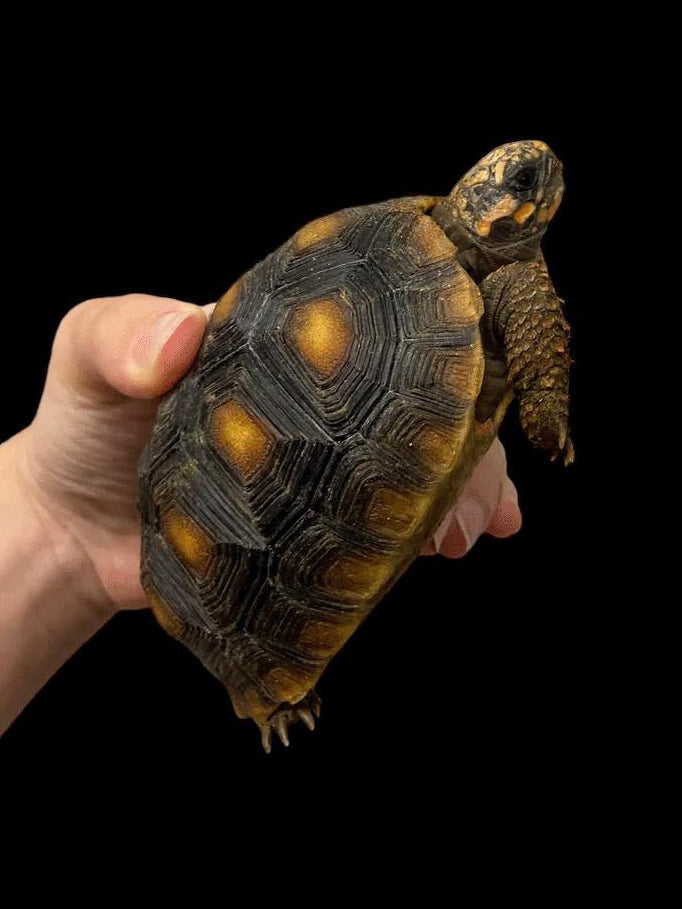
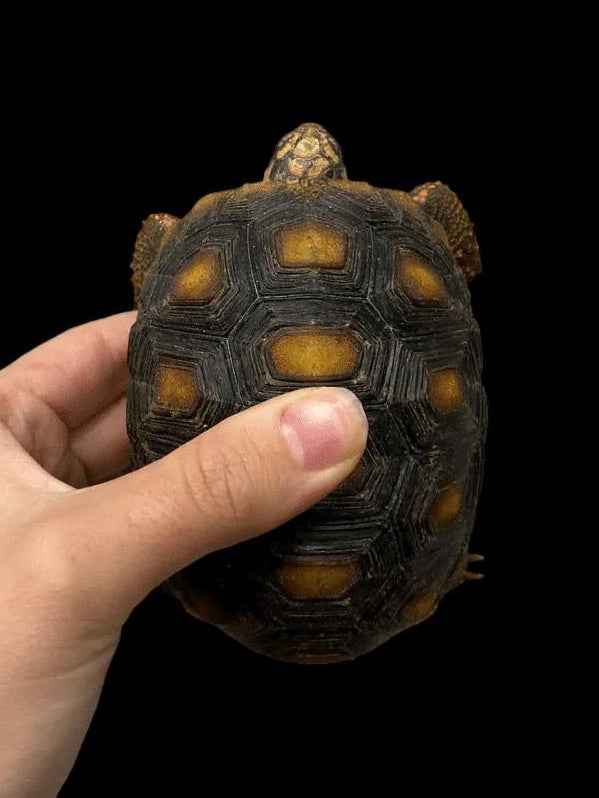
Appearance: The Red-foot Tortoise is known for its dark brown to black carapace with lighter tan centres on each scute, giving a slightly domed, smooth appearance. Limbs display vibrant red, orange, or yellow scales depending on locality. The head often features yellow or orange facial markings, and the plastron ranges from tan to dark brown with irregular mottling. Males tend to have a more pronounced waist and longer tails, while females are rounder and broader.
Distribution: Native to northern and central South America, including Brazil, Venezuela, Guyana, Colombia, and surrounding regions. Various locality forms exist, each showing subtle differences in colouration.
Habitat: Red-foot Tortoises inhabit tropical forests, forest edges, savannas, and humid grasslands. They experience warm temperatures, high humidity, and access to shaded retreats. In captivity, they require a warm, humid environment with a mix of open space, deep substrate, and dense plant cover.
Behaviour: These tortoises are diurnal, inquisitive, and highly food-motivated. They are more active than many other tortoise species and tolerate humidity well. When provided with stable warmth and moisture, they become confident, social, and steady foragers.
Captive Care
Enclosure: Provide a minimum indoor footprint of 6 × 3 feet (180 × 90 cm) for one adult, with larger being strongly preferred. Use a deep, moisture-retentive substrate such as soil, coconut fibre, or a soil-based mix. Include logs, plants, mossy hides, and shaded retreats. Red-foots benefit from both open walking areas and dense vegetation. Outdoor housing is excellent in warm, humid climates.
Temperature and Humidity:
Ambient daytime: 80 to 86°F (27 to 30°C)
Basking area: 92 to 95°F (33 to 35°C)
Night temperature: 72 to 76°F (22 to 24°C)
Humidity: 70 to 90%, with moist hides and regular misting.
Lighting: Provide full-spectrum lighting with 10–12% UVB to support healthy shell growth and proper metabolism. Include both strong basking zones and shaded, humid microclimates.
Diet: Offer a varied omnivorous diet consisting of leafy greens, vegetables, edible weeds, flowers, fungi, and moderate amounts of fruits. Protein should be limited but may include occasional invertebrates or low-fat sources, as Red-foots naturally consume small amounts of carrion or insects. Commercial tortoise diets can be included sparingly.
Behaviour in Captivity: Red-foot Tortoises thrive in warm, humid, naturalistic enclosures. They enjoy exploring, grazing, and interacting with enrichment. They are generally outgoing and adapt well to routine care.
Special Considerations
• High humidity is essential—avoid dry environments.
• Provide multiple humid hides and deep substrate.
• Outdoor housing improves activity and overall health.
• Avoid overfeeding protein; keep it occasional.
Taxonomy Note
Chelonoidis carbonarius is closely related to the Yellow-foot Tortoise and has several regional variants, including northern, southern, and cherry-head forms, which differ mainly in colour intensity and size.
Genetics Note
There are no recognised morphs for the Red-foot Tortoise. Colour variations between individuals reflect natural locality differences rather than selective breeding.
Estimate shipping