

Photo Disclaimer
Description
Sulcata Tortoise
Scientific Name: Centrochelys sulcata
Common Name: Sulcata Tortoise, African Spurred Tortoise
Species Overview
Size: Males typically reach 28 to 32 inches (71 to 81 cm) and 80 to 120 pounds (36 to 54 kg), while females grow slightly smaller at 24 to 28 inches (61 to 71 cm) and 70 to 90 pounds (32 to 41 kg). Exceptional individuals can exceed these ranges.
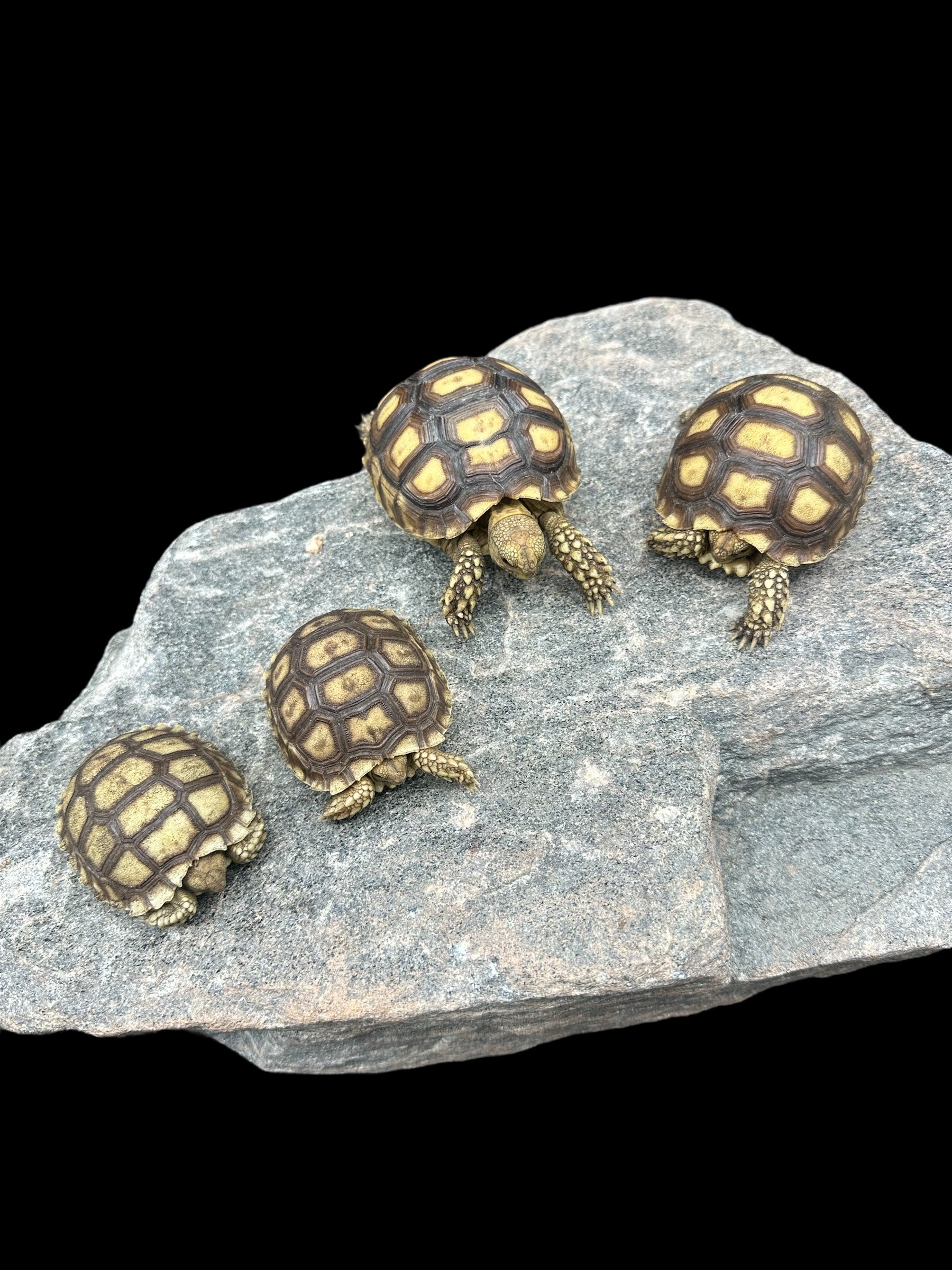
Appearance: The Sulcata Tortoise is a large, heavy-bodied species characterised by its sandy to golden-brown carapace with thick, well-defined growth rings on each scute. The shell is domed and rugged, while the plastron is pale and sturdy. The limbs are broad, muscular, and covered with large scales, including the distinctive spur-like projections on the rear legs that give the species its name. Skin is thick and adapted to desert conditions, ranging from tan to light brown. Males often have longer tails and a more pronounced gular scute extension.
Distribution: Native to the southern edge of the Sahara Desert, including countries such as Chad, Sudan, Ethiopia, Mali, and Mauritania.
Habitat: In the wild, Sulcatas inhabit semi-arid scrublands, dry savannas, and desert margins. They rely heavily on large burrows to escape harsh daytime heat, often digging tunnels several metres long. In captivity, they require a warm, spacious, arid environment with access to deep substrate or dedicated burrowing areas.
Behaviour: Sulcata Tortoises are diurnal, extremely strong, and highly active grazers. They are powerful diggers and can move surprisingly quickly when motivated. When properly warmed, they become curious, alert, and interactive. Due to their size and strength, they require secure enclosures and consistent care throughout their long life span.
Captive Care
Enclosure: Provide a minimum indoor footprint of 8 × 4 feet (240 × 120 cm) for juveniles and subadults, increasing substantially as the tortoise grows. Adults require large outdoor enclosures whenever climate permits. Use a dry soil–sand mixture with deep digging areas, sturdy hides, and durable barriers, as Sulcatas can push through weak structures. Outdoor setups should include shaded retreats, burrowing opportunities, and safe fencing that they cannot see through to prevent pacing.
Temperature and Humidity:
Ambient daytime: 85 to 95°F (29 to 35°C)
Basking area: 100 to 105°F (38 to 41°C)
Night temperature: 70 to 75°F (21 to 24°C), never below 65°F (18°C)
Humidity: Low to moderate (30 to 50%), with juveniles benefiting from slightly higher humidity pockets to prevent pyramiding.
Lighting: Provide full-spectrum lighting with 10–12% UVB to support strong shell development, healthy metabolism, and proper calcium processing. Outdoor natural sunlight is ideal when possible. Ensure bright basking zones and shaded areas for cooling.
Diet: Offer a high-fibre, low-protein herbivorous diet consisting primarily of grasses, hays, edible weeds, and fibrous leafy greens. Supplement with occasional cactus pads, succulents, and flowers. Avoid fruits, high-moisture vegetables, and protein-rich foods. Sulcatas thrive on dry, fibrous plant material that mimics their natural grazing diet.
Behaviour in Captivity: Sulcatas are active, determined, and often quite social toward keepers. They explore constantly, graze heavily, and attempt to dig or push objects. They thrive in large, naturalistic, warm environments and can become restless or destructive in enclosures that are too small or too humid.
Special Considerations
• Extremely large and long-lived—requires significant space and long-term planning.
• Powerful diggers and pushers—enclosures must be secure and reinforced.
• Outdoor housing is strongly encouraged for adults when climate allows.
• Juveniles need humidity-controlled environments to reduce shell pyramiding.
• Avoid feeding fruits and moist vegetables; they disrupt proper digestion.
Taxonomy Note
Centrochelys sulcata is the third-largest tortoise species in the world, surpassed only by the Galápagos and Aldabra tortoises. It is the largest mainland tortoise and has evolved specialised desert adaptations, including extensive burrowing behaviour.
Genetics Note
There are no recognised morphs for the Sulcata Tortoise. Differences in shell colouration, growth ring prominence, and overall appearance result from natural variation and environmental factors rather than selective breeding.
Estimate shipping