

Photo Disclaimer
Description
Reeves Turtle
Scientific Name: Mauremys reevesi
Common Name: Reeves Turtle, Chinese Pond Turtle
Species Overview
Size: Males typically reach 5 to 6 inches (13 to 15 cm), while females grow larger at 7 to 9 inches (18 to 23 cm).
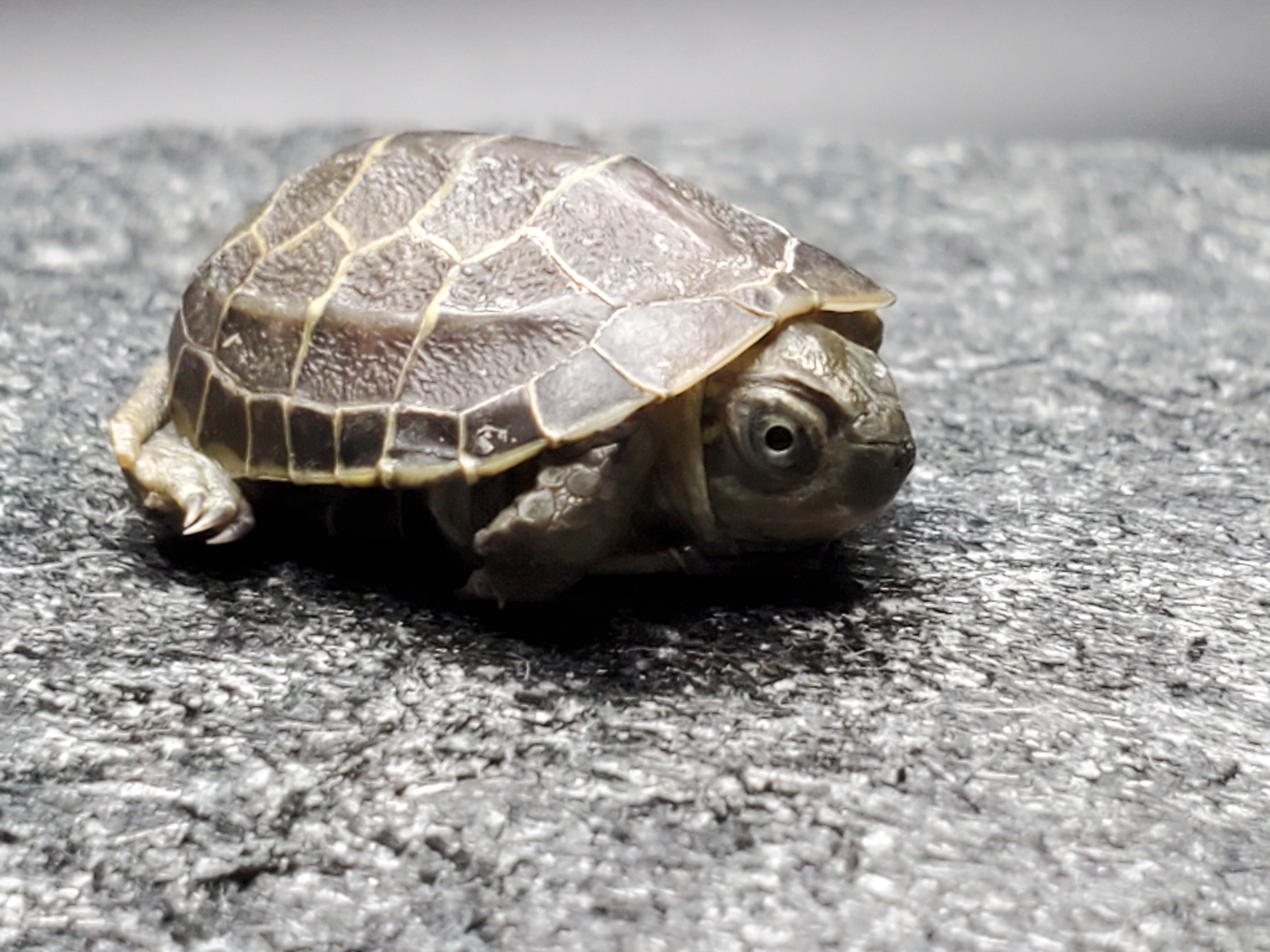
Appearance: The Reeves Turtle has a rectangular to oval carapace that is moderately domed and usually dark brown, charcoal, or olive with lighter growth rings. Three subtle keels often run along the shell in juveniles and may remain faintly visible in adults. The head is grey to dark brown with thin cream or yellow striping, and the plastron ranges from tan to dark brown with variable blotching. Females are broader and larger, while males have longer tails and slightly slimmer bodies.
Distribution: Native to China, Taiwan, Korea, and parts of Japan, with introduced populations in other regions.
Habitat: In the wild, Reeves Turtles inhabit ponds, lakes, rice paddies, marshes, and slow-moving waters with abundant vegetation and shallow basking sites. They favour calm, warm environments. In captivity, they require a shallow-to-moderate-depth aquatic setup with easy basking access and plenty of structure.
Behaviour: Reeves Turtles are diurnal, alert, and active. They spend time basking, swimming, and walking along the bottom. They may be shy initially but generally become bold feeders and interactive with consistent care. They are less aquatic than many turtle species and appreciate land access or shallow resting zones.
Captive Care
Enclosure: Provide an aquatic enclosure with a minimum footprint of 36 × 18 inches (90 × 45 cm) for one adult. Offer shallow to moderate water depth, submerged branches, resting ledges, floating platforms, and dense plant cover. A fully dry, secure basking area is essential. Filtration should be strong but not overly turbulent, as the species prefers calmer water.
Temperature and Humidity:
Water temperature: 74 to 78°F (23 to 26°C)
Basking area: 88 to 92°F (31 to 33°C)
Ambient air temperature: 78 to 84°F (26 to 29°C)
Lighting: Provide full-spectrum lighting with 10–12% UVB to support strong shell development and healthy metabolism. Ensure the basking platform remains fully dry and easily accessed.
Diet: Offer a varied omnivorous diet including insects, worms, snails, crustaceans, high-quality aquatic turtle pellets, leafy greens, aquatic plants, vegetables, and occasional fruits. Juveniles require more protein, while adults benefit from an increased amount of plant matter.
Behaviour in Captivity: Reeves Turtles adapt well to well-structured enclosures and quickly develop confident feeding behaviour. They enjoy climbing on structure, basking frequently, and making use of both shallow and deeper water zones.
Special Considerations
• Sensitive to poor water quality—filtration and frequent water changes are important.
• Provide shallow resting zones and strong basking platforms.
• Individuals may become stressed in very deep water without access to ledges.
• Juveniles require higher protein intake.
Taxonomy Note
Mauremys reevesi is part of the Geoemydidae family and is closely related to other Asian pond turtles. It has long been kept in captivity and is one of the most recognisable Asian turtle species.
Genetics Note
There are no recognised morphs for the Reeves Turtle. Differences in shell shade, growth ring visibility, and head striping represent natural variation across individuals and populations.