


Photo Disclaimer
Description
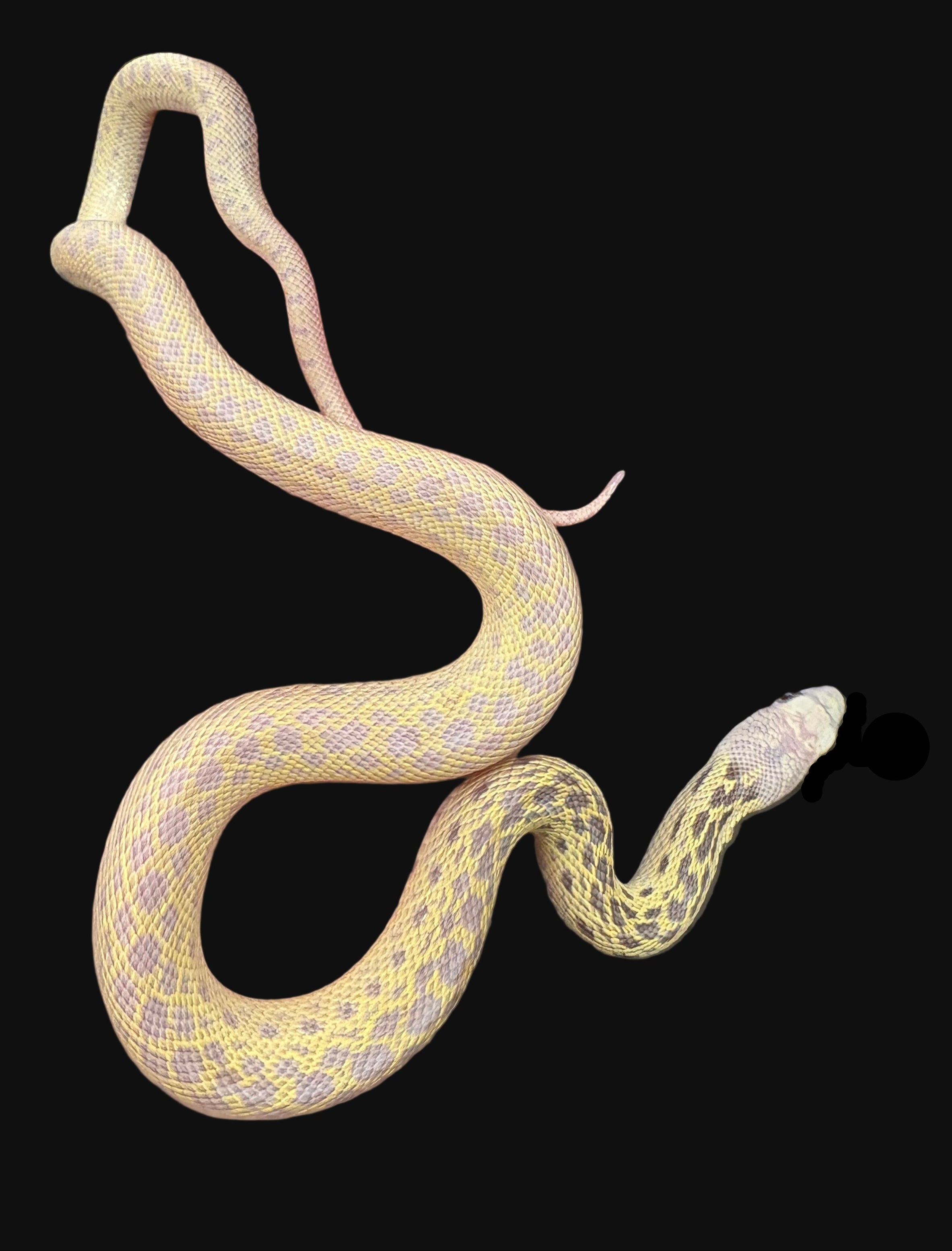
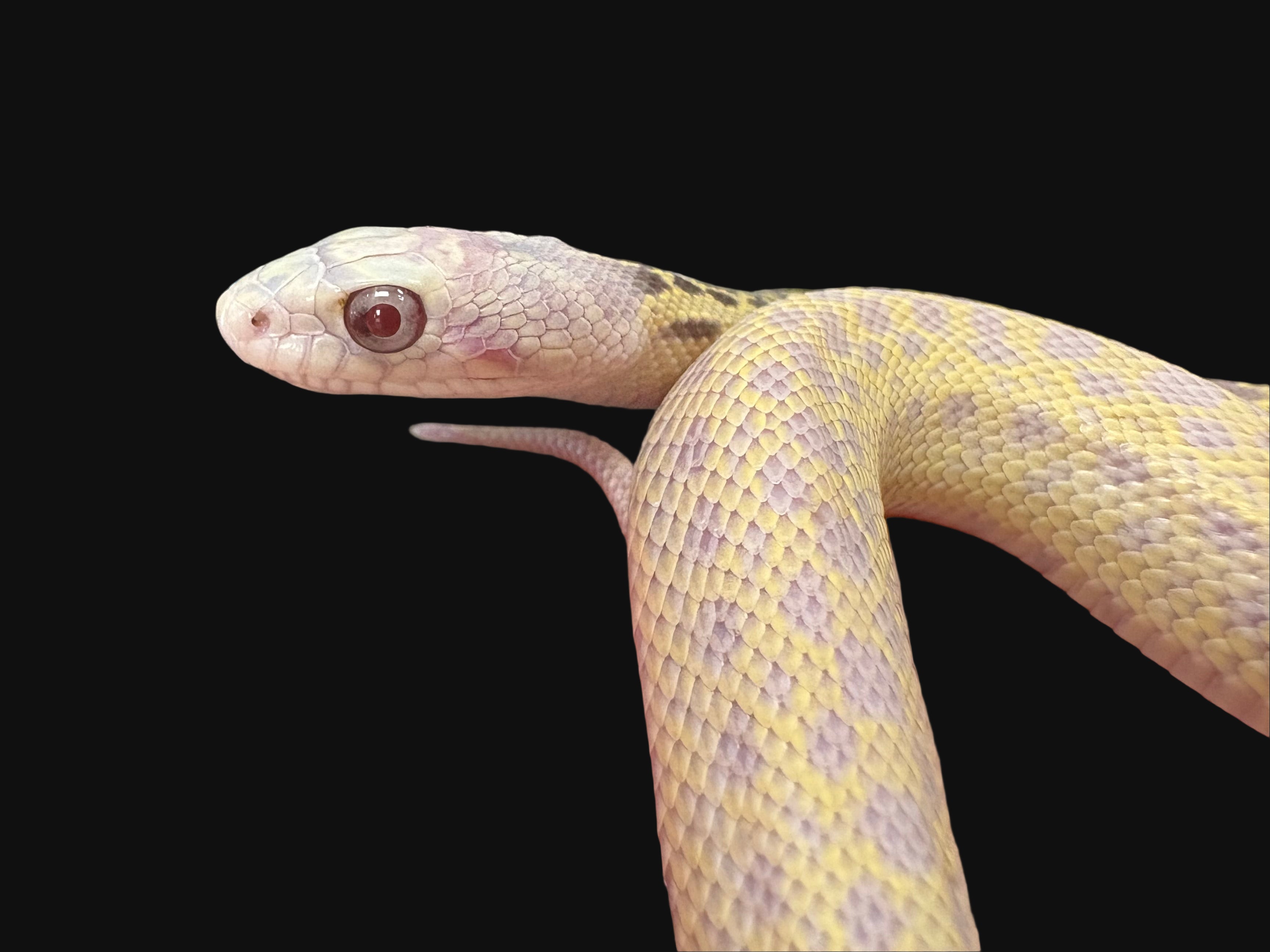
San Diego Gopher Snake (Snow)
Scientific Name: Pituophis catenifer annectens
Common Name: San Diego Gopher Snake
Species Overview
Size: Adult San Diego Gopher Snakes typically reach 4–6 feet (1.2–1.8 m) in length; in rare cases, they may approach 7 feet (2.1 m). They are medium-to-large constrictors with a lean yet muscular build, keeled scales, and a pointed snout designed for digging and burrowing.
Appearance: The Snow San Diego Gopher Snake is a visually stunning double-recessive morph that combines the Albino and Axanthic genes. The Albino gene removes dark pigmentation, while Axanthic removes all warm pigments, resulting in a clean, pure white or soft ivory snake with pink eyes and faint silver undertones. Hatchlings often appear brilliant white, gradually developing a delicate frost-like sheen as they mature. The Snow morph eliminates the typical desert yellows and browns of the San Diego Gopher Snake, replacing them with a ghostly, pristine appearance. It remains one of the rarest and most visually striking morphs in the Pituophis complex.
Distribution: Native to Southern California, primarily within San Diego, Riverside, Orange, and southwestern San Bernardino counties. This subspecies inhabits dry chaparral, open scrub, and desert margins.
Habitat: In the wild, San Diego Gopher Snakes occupy arid regions with sandy or rocky soil, where they use burrows for protection from heat and predators. In captivity, the Snow morph thrives in a spacious, terrestrial enclosure with loose, dry substrate for burrowing and bright lighting that allows their pale colouration to stand out.
Behaviour: San Diego Gopher Snakes are intelligent, diurnal constrictors that exhibit high activity levels and strong feeding instincts. While defensive posturing is common in the wild, captive-bred individuals are calm, alert, and interactive when handled regularly. Their curious and engaging nature makes them rewarding snakes to keep and observe.
Captive Care
Enclosure: Provide an enclosure measuring at least 4 feet × 2 feet × 2 feet for adults, with secure ventilation and locking lids. Use dry, loose substrate such as aspen, sand-soil blend, or coconut chip mix to allow for burrowing. Include multiple hides, basking platforms, and climbing structures for enrichment.
Temperature & Humidity: Maintain a daytime gradient of 78–86°F (25–30°C) with a basking area near 90°F (32°C). Allow nighttime drops to 68–72°F (20–22°C). Keep humidity low to moderate, between 30–45%, increasing slightly during shedding.
Diet: Offer thawed rodents proportional to the snake’s girth—juveniles every 5–7 days and adults every 10–14 days. San Diego Gopher Snakes are strong feeders with reliable feeding responses.
Behaviour in Captivity: Active and inquisitive, Snow San Diego Gopher Snakes are engaging display animals that thrive on environmental stimulation. They quickly adapt to handling and regular care routines.
Special Considerations: As a large and powerful colubrid, this species requires secure, escape-proof enclosures. The Snow morph’s pale coloration makes it sensitive to overly bright light—provide shaded areas to prevent stress.
Genetics Note
Albino (Recessive): Removes black pigmentation, revealing bright yellows, reds, and oranges when expressed individually.
Axanthic (Recessive): Removes warm pigments such as yellow and red, leaving only grayscale tones.
Snow (Double Recessive Combination): The combination of Albino and Axanthic results in a pure white or ivory snake with pink eyes and faint silver tones.
Genetic Combination Summary
The San Diego Gopher Snake (Snow) expresses two recessive traits:
-
Albino (Recessive): Eliminates dark pigmentation for a bright, warm base.
-
Axanthic (Recessive): Removes warm pigments, producing a cool grayscale tone.
Together, these genes create the Snow morph—a white, pink-eyed snake with subtle silvery accents and unmatched visual purity. Highly sought after by collectors and breeders, the Snow San Diego Gopher Snake combines the beauty of contrast-free simplicity with the bold structure of the Pituophis genus, making it one of the most elegant and desirable morphs available.