

Photo Disclaimer
Description
Sandfish Skink
Scientific Name: Scincus scincus
Common Name: Sandfish Skink, Common Sandfish
Species Overview
Size: Adults typically reach 6 to 8 inches (15 to 20 cm) in total length.
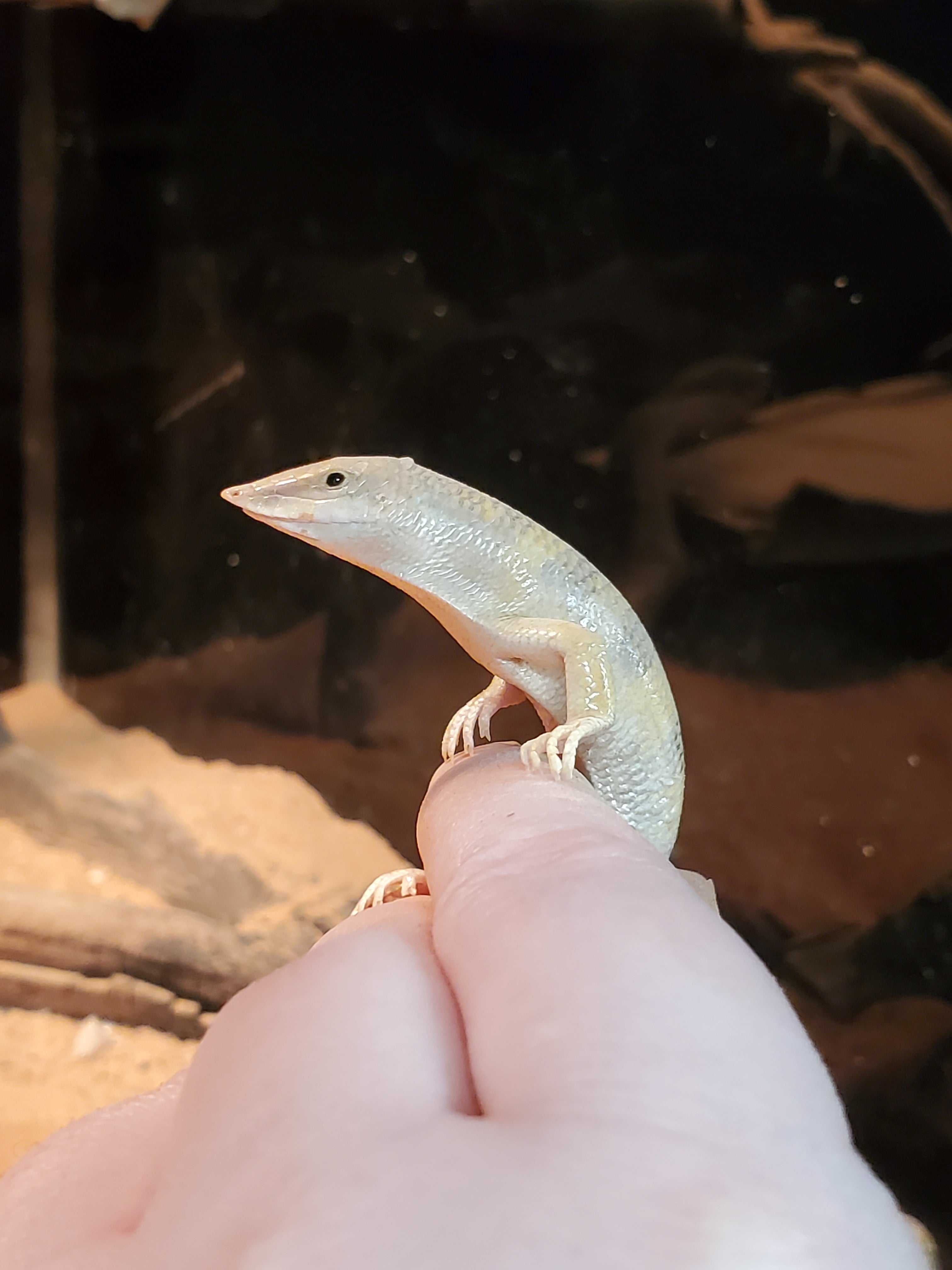
Appearance: The Sandfish Skink is a compact, smooth-scaled desert lizard known for its streamlined, hydrodynamic body shape that allows it to “swim” through loose sand. Its colouring usually consists of warm yellow, beige, or sandy tones with distinctive dark brown or orange crossbands along the back. The legs are short and strong, the head is wedge-shaped for efficient sand-burrowing, and the eyes are set high and protected by robust scales. The tail is short and conical, aiding in sand movement.
Distribution: Native to arid regions of North Africa and the Middle East, including Egypt, Libya, Algeria, and parts of the Arabian Peninsula.
Habitat: Sandfish Skinks inhabit extremely dry deserts with deep, fine, loose sand. They spend most of their lives beneath the surface where temperatures are more stable. They emerge to feed or thermoregulate close to the surface but retreat quickly when disturbed.
Behaviour: This species is diurnal and highly secretive. Its unique adaptation allows it to dive and “swim” through sand to escape danger or regulate temperature. They are gentle but shy, relying on burrowing instead of climbing or running. In captivity, they show natural sand-diving behaviour when provided with appropriate substrate depth and texture.
Captive Care
Enclosure: Provide an enclosure measuring 36 × 18 × 18 inches (90 × 45 × 45 cm) for one adult. Deep, fine, clean sand is essential—at least 6 to 8 inches (15 to 20 cm) of depth to allow proper burrowing and sand-swimming. The habitat should mimic an arid desert with sturdy basking rocks, shallow hides, and minimal décor. Strong ventilation is necessary to maintain low humidity.
Temperature and Humidity:
Basking area: 105 to 115°F (40 to 46°C)
Warm side: 90 to 95°F (32 to 35°C)
Cool side: 75 to 82°F (24 to 28°C)
Night temperatures: 65 to 72°F (18 to 22°C)
Humidity: 10 to 20%, reflecting their extremely arid natural habitat.
Lighting: Provide strong full-spectrum lighting with moderate to strong UVB (approximately 10%). High-intensity lighting helps maintain natural activity and supports bone and overall health.
Diet: Offer a variety of insects such as crickets, roaches, mealworms, superworms, black soldier fly larvae, and the occasional waxworm. All feeders should be gut-loaded, with calcium supplementation given frequently and multivitamins weekly.
Behaviour in Captivity: Sandfish Skinks are shy but fascinating to observe when their enclosure is set up correctly. They rarely tolerate handling and prefer to remain beneath the substrate. When secure, they exhibit natural sand-diving behaviour and emerge for feeding and basking.
Special Considerations:
• Deep, loose sand is essential—the species cannot thrive without it.
• Avoid moisture buildup; the environment must remain very dry.
• Secure all décor so it cannot collapse into the substrate.
• Handling should be minimal, as they stress easily and rely on burrowing for safety.
• Surface activity will vary with season and temperature—this is normal.
Taxonomy Note
Scincus scincus is the most well-known member of the genus Scincus, a small group of desert-adapted skinks famed for their ability to "swim" beneath sand. Their unique physiology and behaviour have made them a subject of scientific study for biomechanics and desert adaptation.
Genetics Note
There are no recognised morphs for Scincus scincus. Natural variation includes slight differences in colour saturation and band clarity, typically linked to locality and individual genetics. These variations are not the result of selective breeding.