

Photo Disclaimer
Description
Satpura Leopard Gecko (Eublepharis satpuraensis)
Scientific Name: Eublepharis satpuraensis
Common Name: Satpura Leopard Gecko
Species Overview
Size: Adults typically reach 7 to 9 inches (18 to 23 cm) in total length. They are medium to large within the Eublepharis genus, with a sturdy body and proportionate tail.
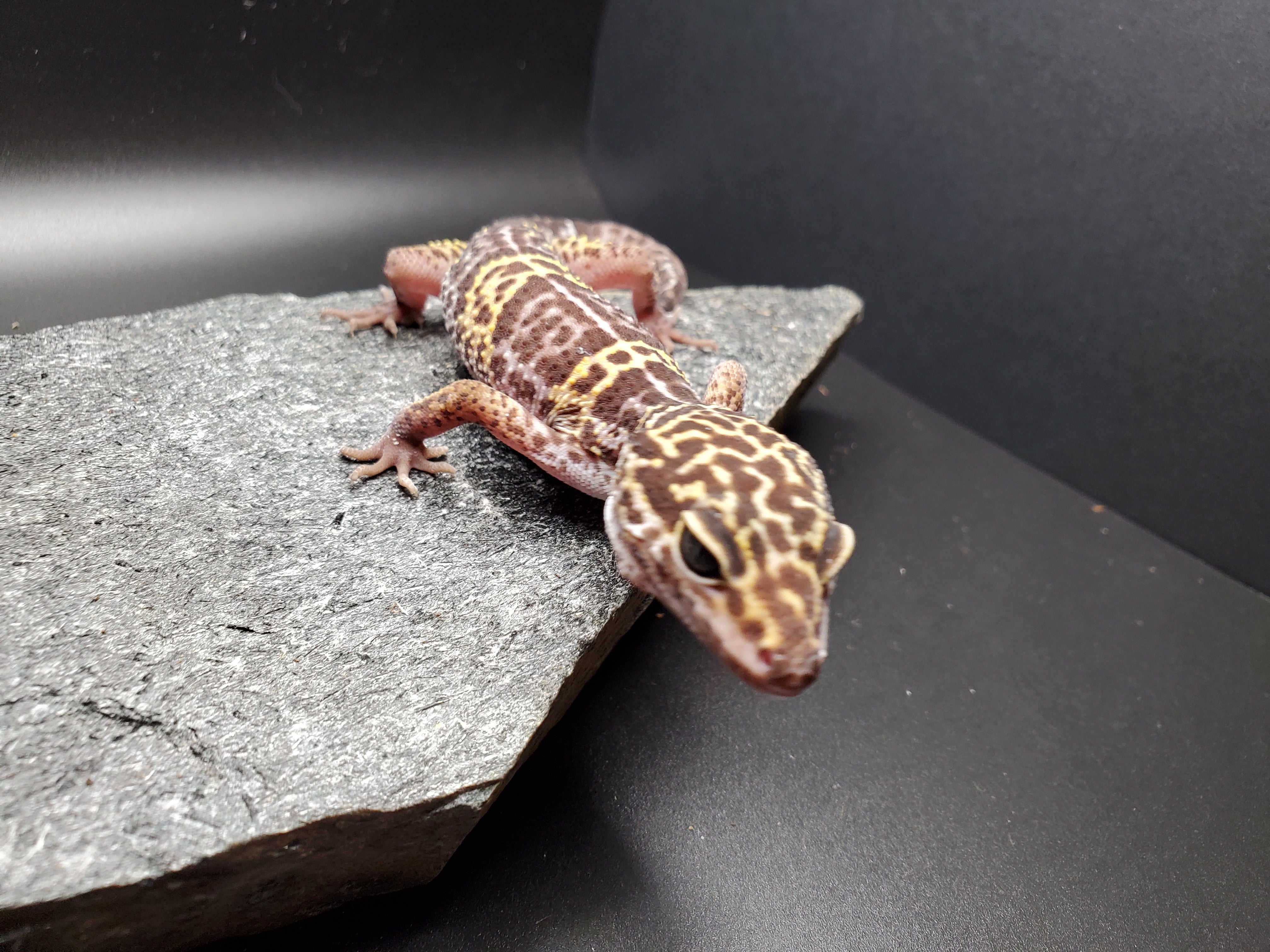
Appearance: The Satpura Leopard Gecko features bold patterning with a series of alternating dark and pale bands across the body and tail. Colouration commonly ranges from sandy yellows to warm browns, with contrasting charcoal or black markings. The head is broad with expressive, moveable eyelids, a defining trait of all Eublepharis. Their skin texture is coarse and beaded, offering excellent durability in arid habitats.
Distribution: Native to the Satpura Range of central India, where it occupies rocky and semi-arid environments.
Habitat: In the wild, this species inhabits rocky outcrops, scrublands, and dry forests. They shelter under stones, within crevices, or in natural burrows during the day. In captivity, they thrive in terrestrial setups with secure hiding areas, textured surfaces, and a warm, dry environment.
Behaviour: Satpura Leopard Geckos are nocturnal, shy by day, and active hunters at night. Once acclimated, they can be steady feeders and display curious behaviour. They are less commonly kept than the domesticated Leopard Gecko (E. macularius) and are better suited for keepers interested in naturalistic displays or species-level breeding projects.
Captive Care
Enclosure: A terrestrial enclosure measuring at least 24 inches × 18 inches × 12 inches (60 × 45 × 30 cm) is recommended for a single adult. Provide rock structures, slate pieces, cork flats, and multiple hide areas including a humid hide. A soil–sand mixture or compacted clay–sand substrate supports natural digging behaviour.
Temperature & Humidity: Maintain a warm side around 88 to 92°F (31 to 33°C) with a cooler side of 75 to 80°F (24 to 27°C). Nighttime temperatures can fall to 70 to 74°F (21 to 23°C). Humidity should remain low at 30 to 40%, with a dedicated humid hide to support shedding.
Lighting: Low-level UVB (2 to 5%) on a 12-hour cycle is recommended. While nocturnal, they benefit from gentle UV exposure for calcium metabolism and overall health.
Diet: Offer a varied insect diet including crickets, roaches, mealworms, silkworms, and occasional waxworms or hornworms as treats. Juveniles should be fed daily, while adults can be fed every 2 to 3 days. All prey should be gut-loaded and lightly dusted with calcium and multivitamin supplements. A shallow water dish should be available at all times.
Behaviour in Captivity: Satpura Leopard Geckos adapt well when provided with secure shelters and stable temperatures. They are active, alert nighttime foragers and can exhibit natural digging and climbing behaviours in well-structured enclosures.
Special Considerations: As a wild-type species, they may be more sensitive to handling compared to domesticated Leopard Geckos. Their enclosure should replicate natural microhabitats, with stable rock stacks and secure hiding spaces.
Taxonomy Note
The Satpura Leopard Gecko belongs to the genus Eublepharis, which includes several species of eyelid geckos native to Pakistan, India, Nepal, and surrounding regions. Unlike the common domesticated Leopard Gecko (E. macularius), the Satpura species remains rare in captivity and is valued by keepers who prioritise species conservation and locality-true breeding.
Genetics Note
There are no recognised morphs or selectively bred variants of the Satpura Leopard Gecko. Individuals display natural pattern and colour variation typical of wild locality animals, and breeding efforts focus on maintaining genetic purity rather than producing morphs.
Estimate shipping