


Photo Disclaimer
Description
Mali Uromastyx (Uromastyx dispar maliensis)
Scientific Name: Uromastyx dispar maliensis
Common Name: Mali Uromastyx
Species Overview
Size: Adults typically reach 12 to 16 inches (30 to 40 cm) in total length, with a thick, muscular body and a characteristic spiny tail used for defence.
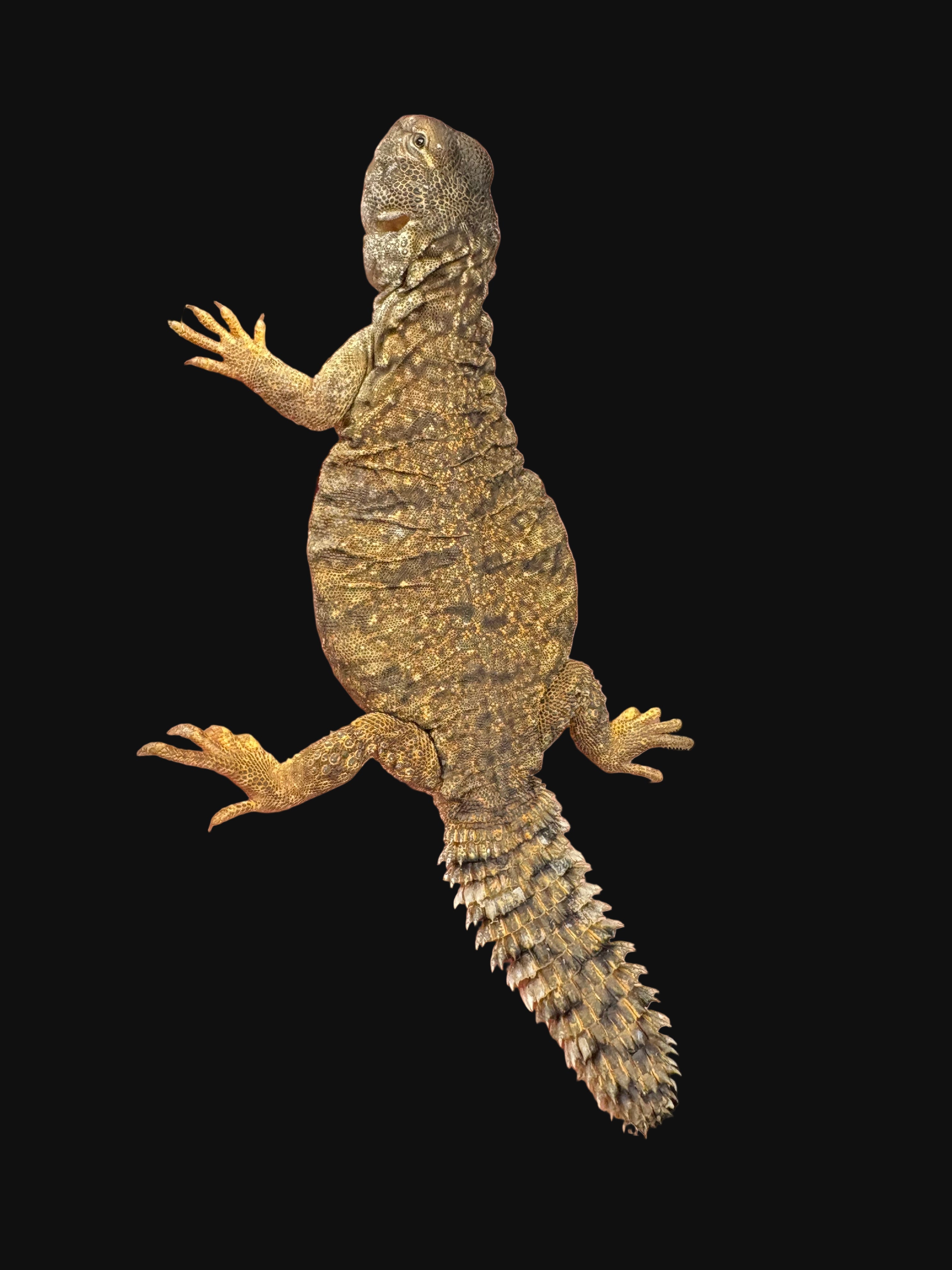
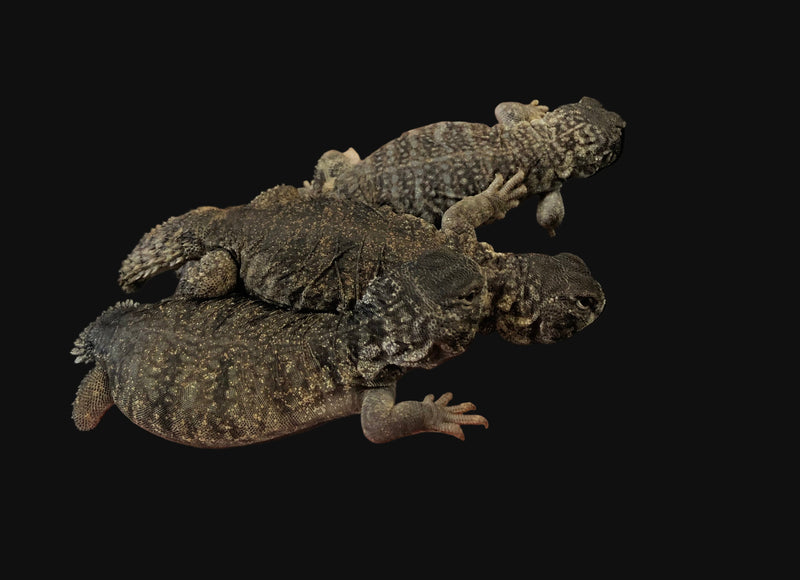
Appearance: The Mali Uromastyx is known for its bold contrast and vibrant colouration. Males often display bright yellow, gold, or mustard tones over a black or charcoal background, while females and juveniles are typically darker with more muted yellows or greys. Patterning varies by individual, ranging from speckled to banded. The tail is heavily armored with ringed spines, and the body is robust with a broad head and strong limbs adapted for digging.
Distribution: This subspecies occurs in the central Sahara region, particularly in Mali and neighbouring arid countries.
Habitat: Mali Uromastyx inhabit rocky deserts, arid plateaus, dry wadis, and open scrublands. They shelter in deep burrows they dig themselves, using these retreats to regulate temperature and humidity.
Behaviour: These lizards are diurnal, heat-loving, and primarily herbivorous. They spend much of the day basking, grazing on vegetation, and maintaining burrows. When threatened, they retreat into a burrow and block the entrance with their spiny tail. Males may exhibit territorial displays including head-bobbing, lateral flattening, and short chases.
Captive Care
Enclosure: Provide a terrestrial enclosure at least 48 inches × 24 inches × 24 inches (120 × 60 × 60 cm) for an adult. Use deep, compactable substrate for burrowing, along with stacked rocks, ledges, and secure hides. Offer open basking areas as well as shaded zones.
Temperature and Humidity:
Basking area: 120 to 130°F (49 to 54°C)
Warm side: 95 to 105°F (35 to 40°C)
Cool side: 75 to 85°F (24 to 29°C)
Night temperatures: 68 to 75°F (20 to 24°C)
Humidity should remain low, generally 10 to 30 percent, with dry airflow.
Lighting: Provide intense full-spectrum lighting and high-output UVB (10 to 12 percent). Long daylight cycles and bright conditions replicate desert sunlight and support strong metabolic health.
Diet: Offer a strictly herbivorous diet: leafy greens, weeds, flowers, lentils, beans, chopped vegetables, and occasional seeds. Avoid high-oxalate vegetables and fruits. Provide calcium supplements regularly.
Behaviour in Captivity: Mali Uromastyx are bold, hardy, and active when housed correctly. They thrive in bright, hot enclosures with low humidity. While they may tolerate gentle handling, they generally thrive best when allowed to bask, dig, and graze naturally. Their colouration often intensifies under proper lighting and temperatures.
Special Considerations:
• Provide deep substrate—burrowing is essential for thermoregulation and security.
• Keep humidity very low to avoid respiratory issues and skin problems.
• Ensure basking temperatures are sufficiently high for digestion and activity.
• Avoid feeding insects—this species is herbivorous and prone to health issues when fed animal protein.
Taxonomy Note
The Mali Uromastyx belongs to the genus Uromastyx, a group of spiny-tailed, herbivorous desert lizards adapted to extreme heat and arid conditions. Uromastyx dispar maliensis is one of several regional variants of the dispar complex, each with distinct coloration and geography.
Genetics Note
No recognized morphs exist for the Mali Uromastyx. Natural variation includes differences in the intensity of yellow coloration in males and the degree of banding or speckling. These features represent normal individual and locality-based variation within the subspecies.