


Photo Disclaimer
Description
Tokay Gecko (Normal)
Scientific Name: Gekko gecko
Common Name: Tokay Gecko (Normal)
Species Overview
Size: Adults typically reach 10 to 14 inches (25 to 36 cm) in total length. Males are generally larger, with broader heads and more robust bodies.
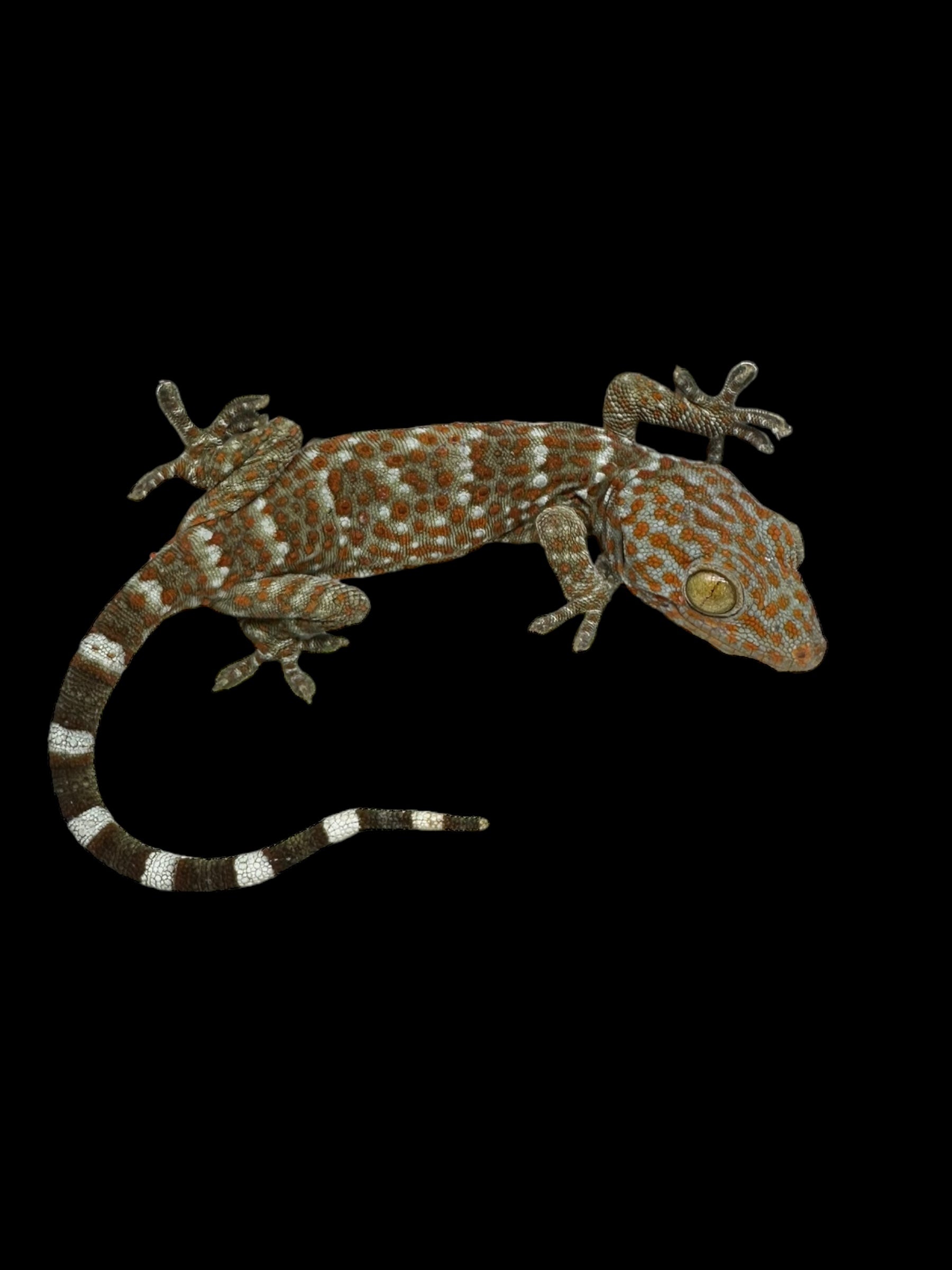
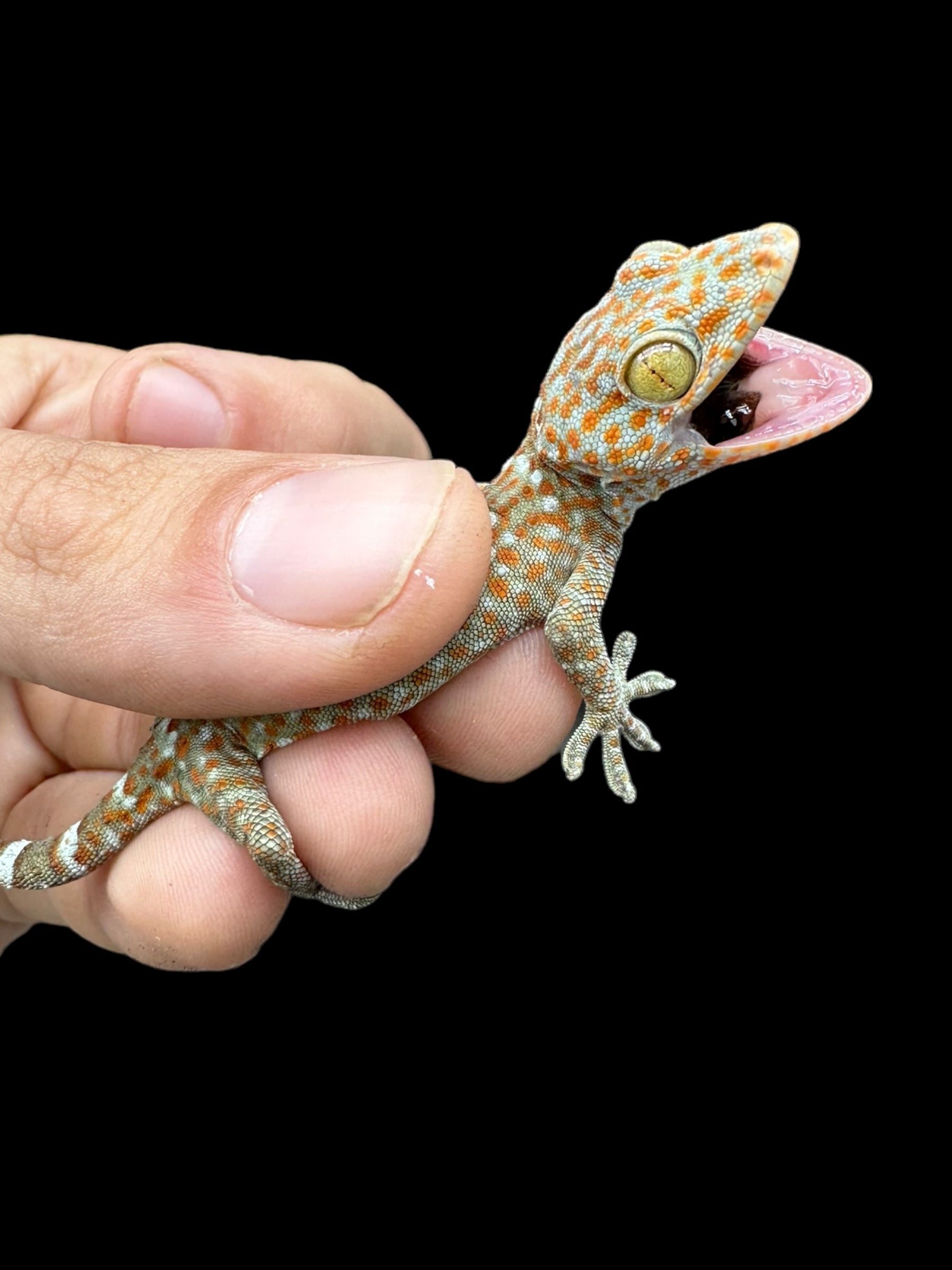
Appearance: The Normal Tokay Gecko represents the classic wild-type form of the species. The body is typically blue-grey to slate with vibrant orange or rust-coloured spotting, arranged in irregular rounded patches along the body and tail. Some individuals show more muted blues or denser spotting, while others have sharper contrast or larger blotches. Eyes are gold to copper with vertical pupils. The coarse granular skin texture and powerful musculature are defining features of the species.
Distribution: Tokay Geckos are found widely across Southeast Asia, including Indonesia, Thailand, Vietnam, the Philippines, Myanmar, and parts of India.
Habitat: In the wild, Tokays inhabit humid forests, rocky outcroppings, caves, and human structures such as homes and temples. In captivity, they thrive in tall, naturalistic enclosures that offer ample climbing structure and secure hiding spaces.
Behaviour: Tokay Geckos are nocturnal, territorial, and highly vocal. They display bold behaviour and strong defensive responses, including biting and vocalising when threatened. They are best suited as display animals, and handling should be minimal. Behaviour is consistent across all morphs and colour lines.
Captive Care
Enclosure: A vertically oriented enclosure measuring 24 inches × 18 inches × 24 inches (60 × 45 × 60 cm) is recommended for an adult. Provide cork tubes, branches, vines, and dense foliage to allow climbing and hiding. A soil-based or bioactive substrate supports humidity levels.
Temperature & Humidity: Maintain daytime temperatures of 80 to 88°F (27 to 31°C) with a basking point around 90°F (32°C). Night temperatures may drop to 72 to 75°F (22 to 24°C). Humidity should remain 60 to 80%, achieved through regular misting with proper airflow.
Lighting: Provide moderate to high UVB (5 to 7%) for 12 hours daily. Tokays benefit from UV exposure despite their nocturnal tendencies.
Diet: Offer a varied insect-based diet including crickets, roaches, silkworms, hornworms, mealworms, and moths. Large adults may occasionally accept a pinkie mouse. Juveniles require daily feeding; adults every 2–3 days. All feeders should be gut-loaded and dusted with supplements. Fresh water should be provided daily.
Behaviour in Captivity: Tokays are strong climbers and active nighttime hunters. They thrive in complex enclosures that provide room to climb, hide, and express natural behaviours.
Special Considerations: Tokays have powerful jaws and will defend territory strongly. Handling should be minimal. Enclosures must be fully secure.
Taxonomy Note
The Tokay Gecko belongs to the genus Gekko, a group of large arboreal geckos native to Southeast Asia. Known for their striking coloration and loud vocalisations, Tokays are one of the most recognisable reptiles in the world.
Genetics Note
The Normal Tokay Gecko represents the wild-type appearance from which captive morphs and line-bred traits originate. Natural variation occurs in:
-
Spot size and density
-
Base colour intensity (blue-grey vs slate)
-
Orange vs rust-red spotting
-
Overall contrast
These variations are not classified as morphs but reflect the species’ range-wide diversity.
Modern breeding projects have introduced numerous morphs and line-bred colour traits — such as Granite, Melanistic, High Red, Powder Blue, and Patternless — all of which originate from the natural genetic foundation of normal Tokays.