

Photo Disclaimer
Description
Vieillard’s Chameleon Gecko
Scientific Name: Eurydactylodes vieillardi
Common Name: Vieillard’s Chameleon Gecko, Vieillard’s Gecko
Species Overview
Size: Adult Vieillard’s Chameleon Geckos typically reach 4–5.5 inches (10–14 cm) in total length, including the tail. They are small, delicate arboreal geckos with slender bodies and prehensile tails used for gripping branches and foliage.
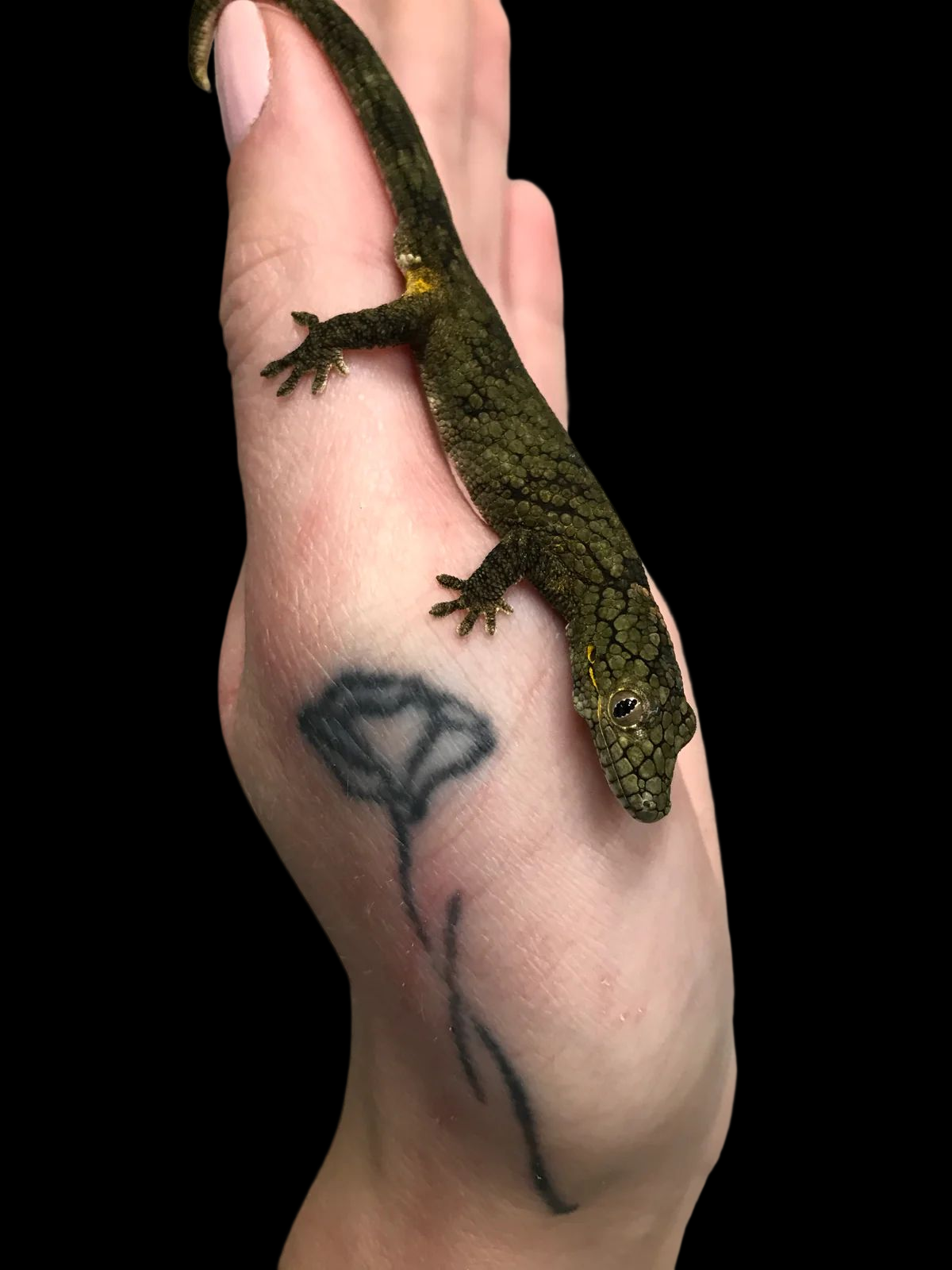
Appearance: This species is beautifully adapted for camouflage, with a body patterned in shades of olive, brown, and green, often flecked with pale cream or light blue speckling. Their skin has a matte, almost mossy texture that blends perfectly with lichen-covered branches. The head is broad with small, lidless eyes and a slightly pointed snout. Like other Eurydactylodes, they possess a thin, laterally compressed tail used for balance and climbing, as well as small granular scales that give a chameleon-like appearance. Their colour can subtly shift with mood, light, and humidity.
Distribution: Endemic to the southern regions of Grande Terre, New Caledonia.
Habitat: In the wild, Vieillard’s Chameleon Geckos inhabit humid lowland and montane forests, often found on shrubs and small trees. They prefer shaded, moist environments with plenty of cover. In captivity, they thrive in tall, planted enclosures that replicate their arboreal habitat with abundant climbing surfaces, moderate humidity, and gentle airflow.
Behaviour: These geckos are diurnal to crepuscular, most active in the early morning and late afternoon. They are calm and slow-moving, often relying on camouflage and stillness rather than flight. When threatened, they may open their mouths or secrete a mild defensive substance from their tails. They are best appreciated as display animals and do not tolerate heavy handling.
Captive Care
Enclosure: Provide a vertically oriented enclosure measuring at least 18 inches × 18 inches × 24 inches (45 × 45 × 60 cm) for one or a pair. Include fine branches, vines, and dense live plants such as Pothos or Ficus for climbing and cover. These geckos prefer gentle ventilation and stable humidity rather than excessive misting or drying cycles.
Temperature & Humidity: Maintain daytime temperatures between 74–80°F (23–27°C) with a gentle basking area no warmer than 84°F (29°C). Nighttime temperatures can safely drop to 68–72°F (20–22°C). Humidity should remain around 60–80%, with light misting once or twice daily to provide hydration and aid shedding.
Lighting: Vieillard’s Chameleon Geckos are diurnal and benefit from a full-spectrum UVB source (5–7%) on a 12-hour day/night cycle. UVB exposure supports calcium metabolism and overall health. Provide shaded areas and plants to allow self-regulation.
Diet: Offer small, gut-loaded insects such as crickets, small roaches, and black soldier fly larvae. Supplement insect prey with calcium and multivitamins at least twice weekly. Adults may also accept small amounts of fruit purée or nectar blends on occasion, though their diet should remain insect-based. Feed 3–4 times per week.
Behaviour in Captivity: With stable conditions and minimal disturbance, Vieillard’s Chameleon Geckos become confident, visible during daylight hours, and exhibit natural climbing and feeding behaviours. They are peaceful and do well as visual display animals in bioactive setups.
Special Considerations: Avoid excessive handling, as their delicate tails and skin can be easily damaged. Keep temperatures moderate and avoid prolonged dryness or stagnant humidity. Always provide a fine misting for hydration and use natural décor to reduce stress.
Taxonomy Note
The Vieillard’s Chameleon Gecko (Eurydactylodes vieillardi) belongs to the family Diplodactylidae, endemic to New Caledonia. It is one of four species within the genus Eurydactylodes, all known for their prehensile tails and chameleon-like appearance. E. vieillardi is distinguished from E. agricolae by its smaller size, narrower head, and slightly smoother scales.
Genetics Note
There are currently no recognized morphs or selectively bred variations of Eurydactylodes vieillardi. Natural variation exists in base colour and pattern intensity among individuals, often influenced by locality and environmental factors rather than genetics.
Estimate shipping