

Photo Disclaimer
Description
Vietnam Bird Poop Frog
Scientific Name: Theloderma asperum
Common Name: Vietnam Bird Poop Frog, Asian Bird Poop Frog
Species Overview
Size: Adults typically reach 1 to 1.25 inches (2.5 to 3 cm), with females slightly larger.
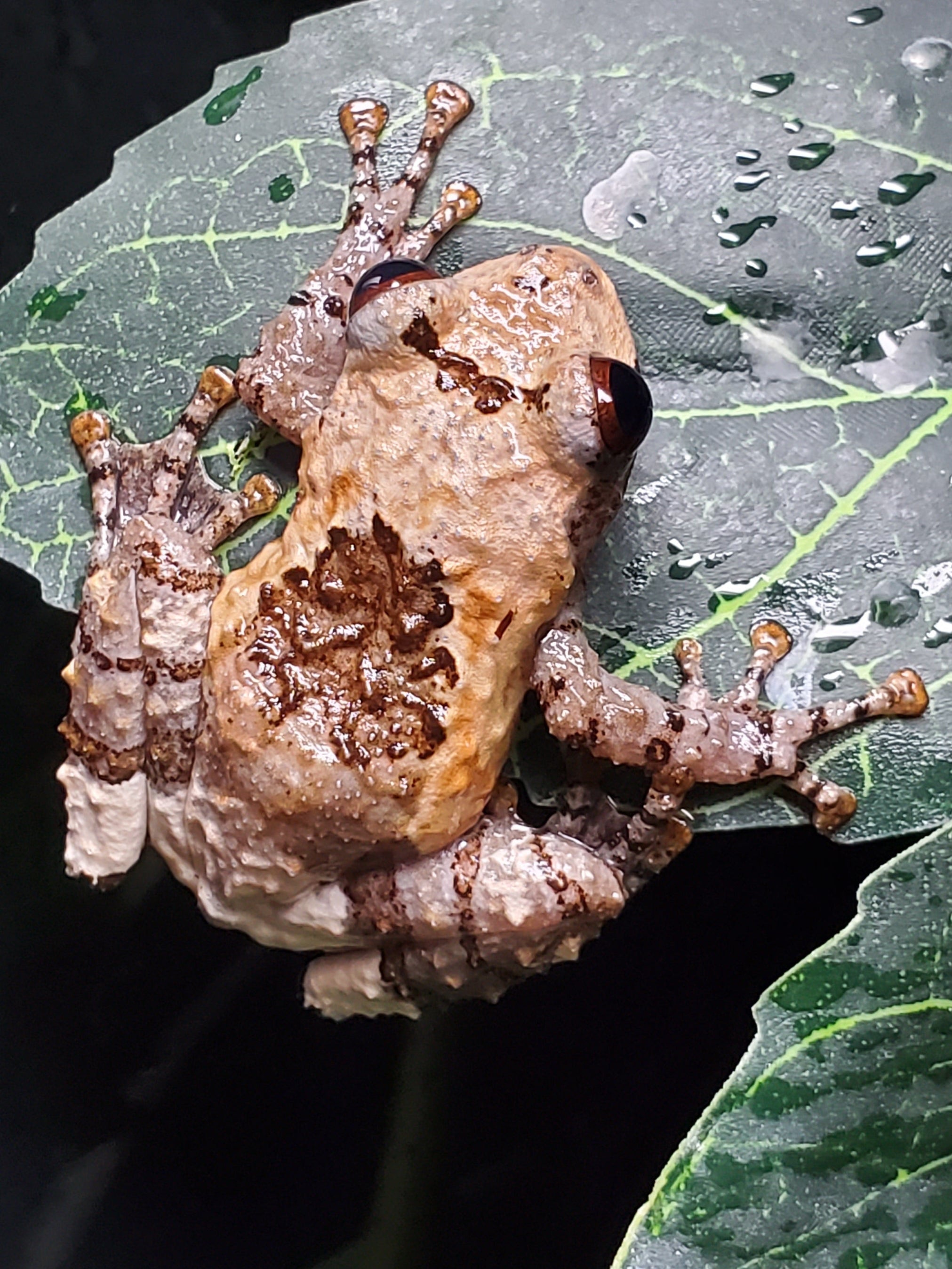
Appearance: The Vietnam Bird Poop Frog is a master of camouflage, mimicking bird droppings with remarkable accuracy. The dorsum is mottled in shades of white, grey, brown, and black, often with irregular blotches that create a splattered appearance. The skin is rough and tuberculate, enhancing the illusion. The belly is pale, and the limbs are slender with small toe pads. Eyes are large and dark with horizontal pupils. These frogs frequently rest motionless on leaves or bark, relying entirely on their deceptive coloration.
Distribution: Native to Vietnam, Laos, Thailand, and possibly parts of Cambodia.
Habitat: Wild individuals inhabit moist forested areas, often near slow-moving streams, seepages, and moss-covered rock faces. They shelter in tree hollows, bark crevices, leaf axils, and other protected microhabitats with stable moisture.
Behaviour: Nocturnal and secretive, Bird Poop Frogs rely on stillness and camouflage during the day. They become active at night to forage, moving carefully through leaf litter and low vegetation. They prefer cool, humid environments and are sensitive to environmental fluctuations.
Captive Care
Enclosure: A single adult or small group thrives in a 12 × 12 × 18 inches (30 × 30 × 45 cm) enclosure, while larger groups benefit from an 18 × 18 × 24 inches (45 × 45 × 60 cm) setup. The most effective setup for Theloderma species uses a filtered water reservoir as the base, created with a false bottom or drainage layer. Install a small internal or sponge filter to keep the water clean and oxygenated. Above this, arrange elevated cork rounds, moss-covered bark slabs, ledges, and textured vertical surfaces where the frogs can perch without sitting in open water. Add pockets of sphagnum or leaf litter on perches rather than on the floor. Maintain constant dripping or trickling moisture using a drip wall, rain bar, or seepage-style feature to replicate their natural environment.
Temperature and Humidity:
Ambient temperature: 68 to 75°F (20 to 24°C)
Warm area: up to 76°F (24.5°C)
Night temperature: 60 to 68°F (15 to 20°C)
Humidity: 80 to 100%, supported by frequent misting and moisture-retentive décor.
Lighting: Provide low UVB (around 2%) with dim, diffused lighting; this species prefers low-light environments.
Diet: Offer very small insects such as fruit flies, springtails, pinhead crickets, isopods, and tiny roaches. Supplement prey with calcium and multivitamins.
Behaviour in Captivity: Bird Poop Frogs thrive in cool, humid, heavily structured enclosures with plenty of shaded, camouflaged resting spots. They remain inactive during the day and become more exploratory at night. Handling should be avoided due to their sensitive skin and stress response.
Special Considerations:
• If handling is unavoidable, use wet, powder-free gloves or a soft, damp net—they are tiny and delicate.
• Maintain consistently cool temperatures; overheating is a major risk.
• Provide ample textured surfaces for resting and camouflage.
• Maintain high humidity with strong ventilation to prevent stagnant air.
• Use only dechlorinated or RO water for misting and hydration.
• Ensure all enclosure gaps are sealed—this species is very small and can escape easily.
Taxonomy Note
Theloderma asperum belongs to the family Rhacophoridae and is part of a group of mossy and camouflaged frogs adapted to hide in bark, moss, and debris. It is one of the smallest and most cryptic members of the genus, easily identified by its bird-dropping mimicry.
Genetics Note
There are no recognised morphs for Theloderma asperum. Natural variation appears in dorsal blotch patterns, colour tone, and tubercle density, but none represent defined genetic morphs.