


Photo Disclaimer
Description
Vietnamese Bug-Eyed Mossy Frog
Scientific Name: Theloderma vietnamense
Common Name: Vietnamese Bug-Eyed Mossy Frog
Species Overview
Size: Adults typically reach 2 to 2.5 inches (5 to 6.5 cm), with females slightly larger.
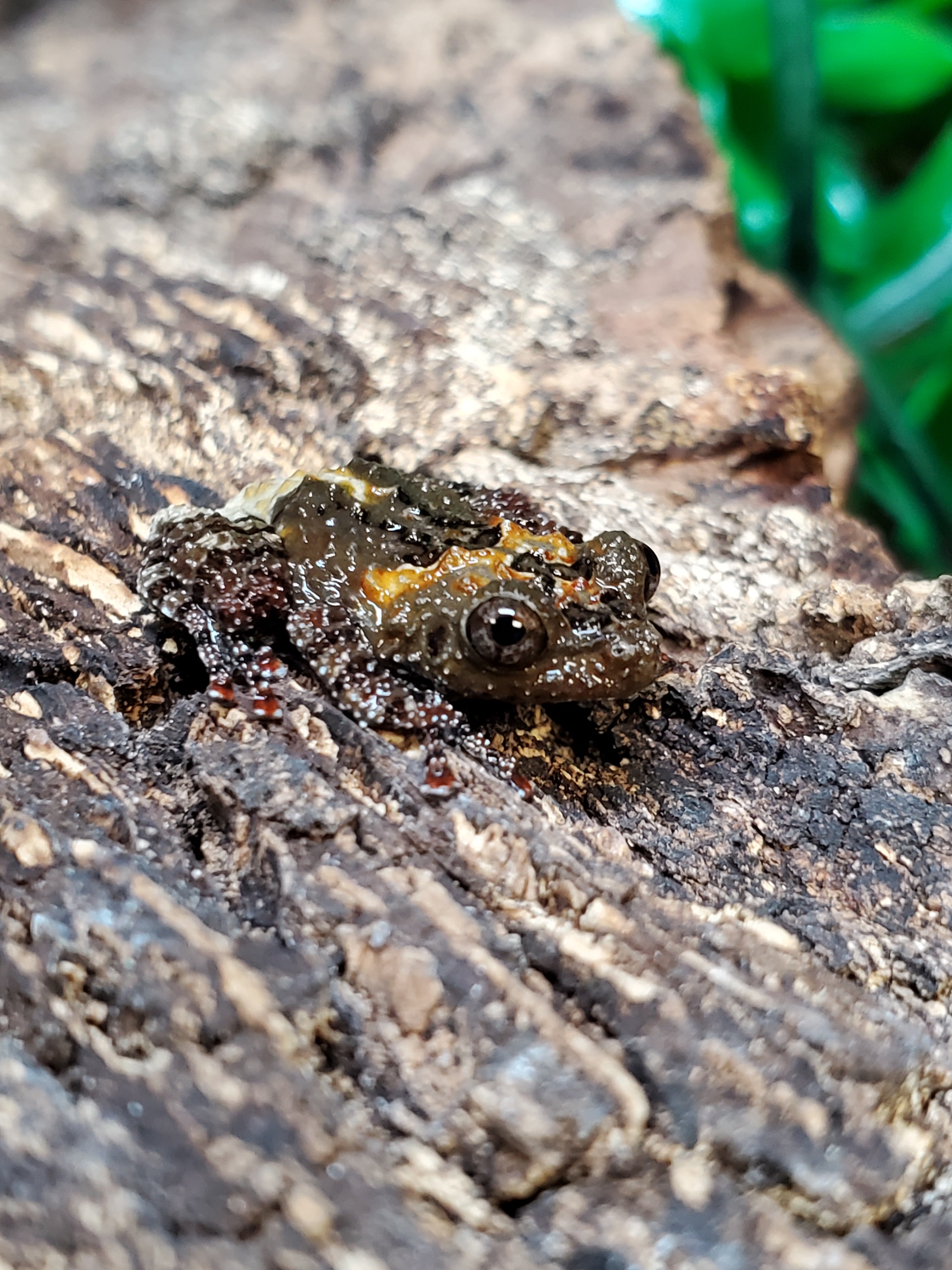
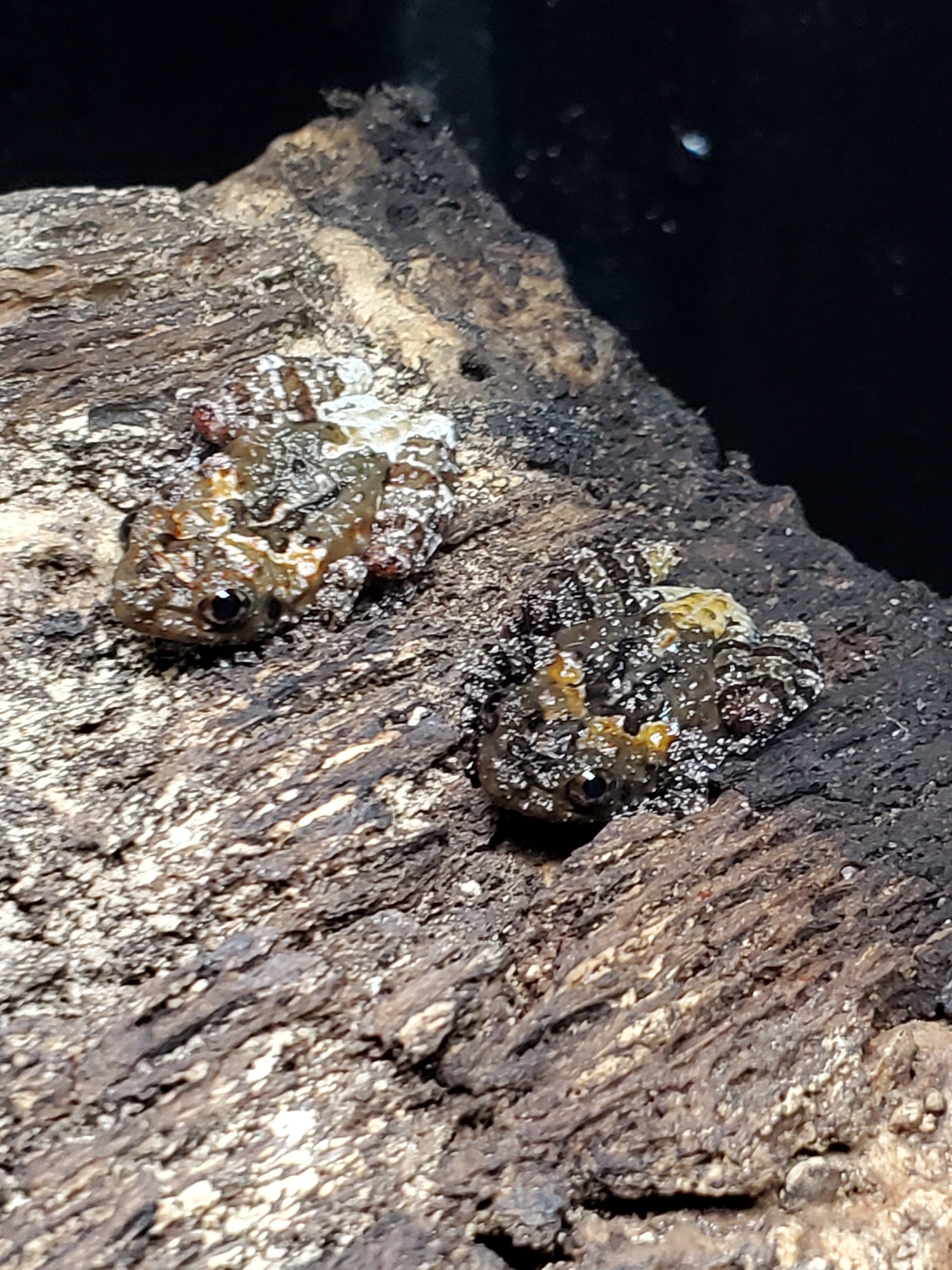
Appearance: The Vietnamese Bug-Eyed Mossy Frog is a heavily textured species characterized by deep green, brown, and black mottling that mimics moss-covered bark. Its back and limbs are covered in raised tubercles and irregular patches, enhancing its camouflage. The eyes are conspicuously large, rounded, and often bright golden or copper-toned—hence the “bug-eyed” name. The underside is lighter with scattered darker markings. Limbs are strong with small toe pads adapted for gripping uneven surfaces.
Distribution: Endemic to northern Vietnam, particularly montane forest regions with cool, humid microclimates.
Habitat: Found near dripping rock faces, forested seepages, mossy logs, and saturated microhabitats surrounding slow-flowing water. This species is tightly associated with moist, shaded environments featuring clean, oxygen-rich water.
Behaviour: Nocturnal and cryptic, this frog spends the day motionless, blending flawlessly into moss or bark. At night it becomes more active, exploring textured surfaces and feeding. Like many Theloderma, it prefers cool temperatures and stable humidity. Alarmed individuals may flatten and freeze to intensify their camouflage.
Captive Care
Enclosure: A single adult or small group thrives in an 18 × 18 × 24 inches (45 × 45 × 60 cm) enclosure, while larger groups benefit from a 24 × 18 × 24 inches (60 × 45 × 60 cm) setup. This species is best kept using a filtered-water-base system: create a false bottom or drainage layer with a water reservoir below and install a small internal or sponge filter to keep the water clean and oxygenated. Above the water line, provide elevated platforms of cork bark, moss-covered rounds, rock-like ledges, and textured vertical surfaces. Add pockets of sphagnum or leaf litter only on raised surfaces. Incorporate drip walls, rain bars, or seepage panels to mimic natural dripping moisture, as this species relies on constant cool, moving water rather than stagnant pools.
Temperature and Humidity:
Ambient temperature: 68 to 75°F (20 to 24°C)
Warm area: up to 76°F (24.5°C)
Night temperature: 60 to 68°F (15 to 20°C)
Humidity: 80 to 100%, with frequent misting and strong moisture retention combined with good airflow.
Lighting: Provide low UVB (around 2%) and dim to moderate lighting. Avoid intense illumination; they thrive in shaded, cool environments.
Diet: Offer small insects such as crickets, small roaches, fruit flies, isopods, black soldier fly larvae, and springtails. Supplement prey with calcium and multivitamins.
Behaviour in Captivity: Vietnamese Bug-Eyed Mossy Frogs thrive in cool, heavily structured enclosures with abundant dripping moisture. They remain still for long periods, relying on camouflage, and become more active at night. They tolerate observation well but do not tolerate excessive handling.
Special Considerations:
• Handle only with wet, powder-free gloves or a soft, damp net—their skin is highly sensitive and they are slippery when stressed.
• Maintain cool temperatures; overheating can quickly cause decline.
• Use filtered, oxygenated water to prevent bacterial buildup.
• Provide multiple elevated, textured surfaces for resting and camouflage.
• Ensure strong ventilation alongside high humidity to prevent stagnant air.
• Seal all gaps in the enclosure—this species is surprisingly athletic and can squeeze through small openings.
Taxonomy Note
Theloderma vietnamense belongs to the family Rhacophoridae and the mossy frog group known for extreme camouflage, textured skin, and reliance on dripping, saturated environments. It is closely related to Theloderma corticale but is smaller, more slender, and distinguished by its notably large eyes.
Genetics Note
There are no recognised morphs for Theloderma vietnamense. Natural variation occurs in dorsal texture, moss-like pattern density, and eye brightness, but none represent defined genetic morphs.
Estimate shipping