

Photo Disclaimer
Description
Viper Gecko (Hemidactylus imbricatus)
Scientific Name: Hemidactylus imbricatus
Common Name: Viper Gecko
Species Overview
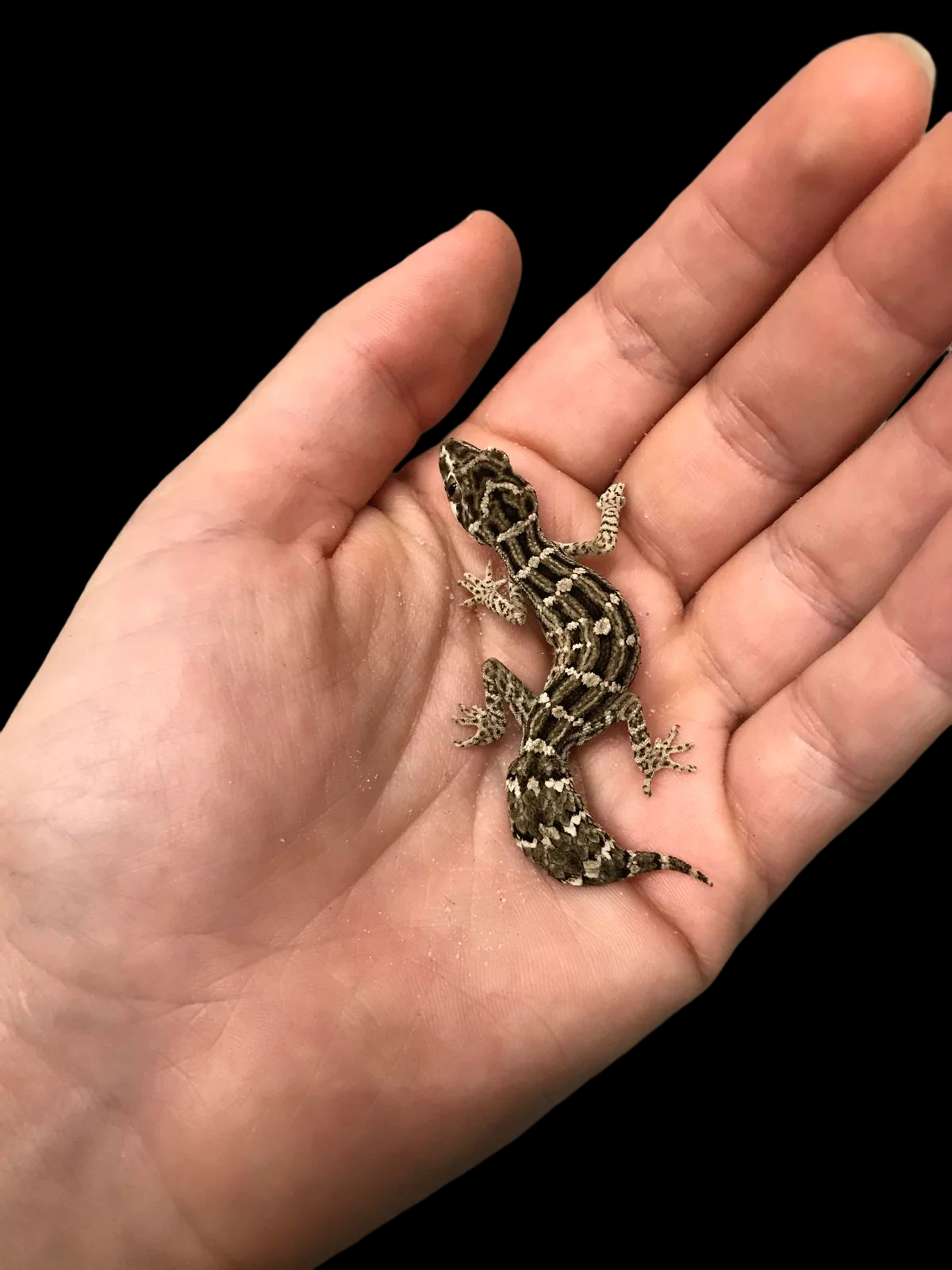
Size: Adults typically reach 3 to 4 inches (7.5 to 10 cm) in total length, making them a small, compact member of the Hemidactylus genus.
Appearance: The Viper Gecko is named for its distinctive, overlapping, keeled scales that give a viper-like texture to its skin. Colouration ranges from sandy tan to warm brown with darker banding or mottled speckling across the body and tail. The tail is plump and textured, with alternating light and dark bands that enhance their serpentine appearance. Their large eyes, short snout, and raised scale patterning give them a unique and rugged look compared to smoother-skinned geckos.
Distribution: Native to arid regions of Pakistan, India, and southwestern Asia.
Habitat: In the wild, this species inhabits rocky deserts, gravel plains, and sandy scrublands. They shelter beneath stones, within cracks, or shallow burrows during the day. In captivity, they thrive in small arid setups with warm temperatures, secure hides, and loose, dry substrate.
Behaviour: Viper Geckos are nocturnal, alert, and surprisingly bold once settled. Though small, they are active hunters and display a curious, investigative nature. They are quick and delicate, making them better suited as display animals.
Captive Care
Enclosure: A terrestrial enclosure measuring at least 18 inches × 12 inches × 12 inches (45 × 30 × 30 cm) is suitable for a pair or small group. Provide loose sand or a sand–soil mix, stacked rocks, half-buried hides, and low branches or debris for climbing and cover.
Temperature & Humidity: Maintain a warm side of 88 to 92°F (31 to 33°C) with a cooler area around 75 to 80°F (24 to 27°C). Night temperatures may drop to 70 to 74°F (21 to 23°C). Humidity should remain low at 20 to 35% to reflect their natural desert environment.
Lighting: Provide a bright day-night cycle with low UVB (2 to 5%) for 10 to 12 hours daily. Although nocturnal, they benefit from defined lighting structure and mild UV exposure.
Diet: Offer small insects such as crickets, mini roaches, fruit flies, micro mealworms, and small silkworms. Juveniles should be fed daily, while adults can be fed every 1 to 2 days. All prey must be gut-loaded and dusted with calcium and multivitamins. A shallow water dish can be provided for hydration.
Behaviour in Captivity: Once acclimated, Viper Geckos become lively and engaging nighttime hunters. They explore their enclosure thoroughly and appreciate abundant hiding places and warm basking zones.
Special Considerations: Their small size and delicate structure mean handling should be minimal. Ensure rocks are securely stacked to prevent collapse. Avoid excess humidity, as this species is highly adapted to dry climates.
Taxonomy Note
The Viper Gecko belongs to the genus Hemidactylus, a widespread group of geckos found across Africa, Asia, and the Middle East. Unlike many smooth-skinned Hemidactylus, H. imbricatus is notable for its keeled, overlapping scales and desert-adapted behaviour.
Genetics Note
There are no recognised morphs or selectively bred variants of the Viper Gecko. Natural variation appears in band thickness, body tone, and scale contrast, but no formal morphs exist within the pet trade.