


Photo Disclaimer
Description
Waxy Monkey Frog
Scientific Name: Phyllomedusa sauvagii
Common Name: Waxy Monkey Frog
Species Overview
Size: Adults typically reach 3 to 4 inches (7 to 10 cm), with females sometimes exceeding this range.
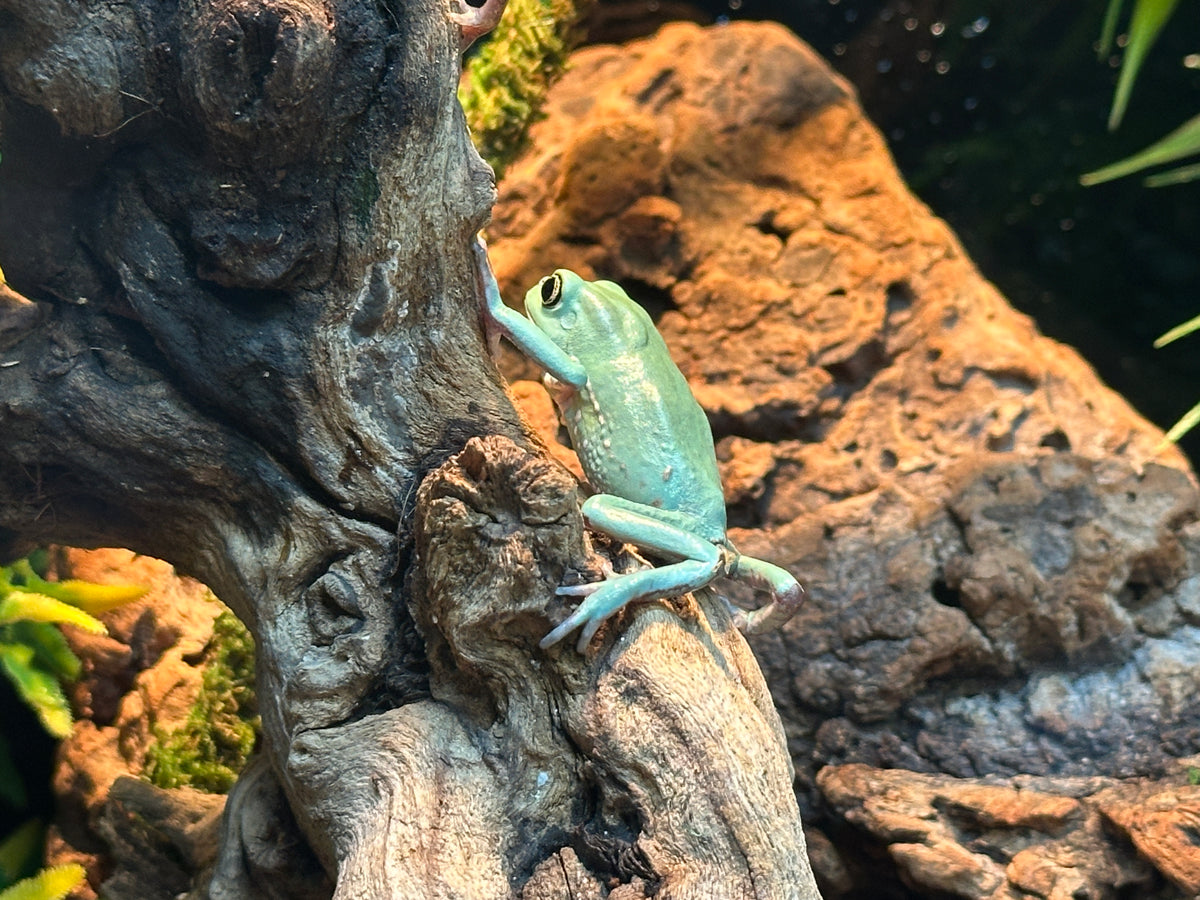
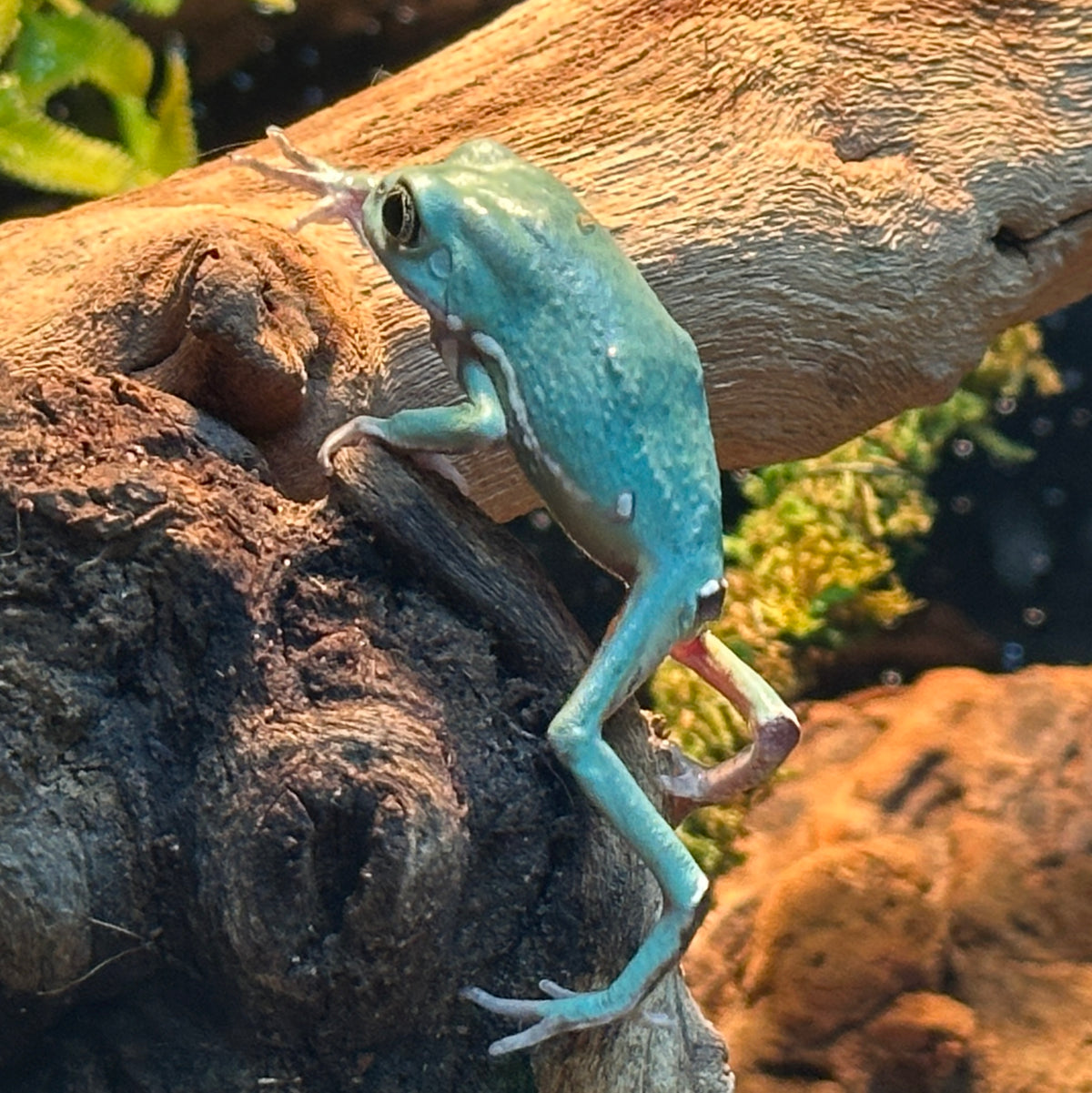
Appearance: The Waxy Monkey Frog is a large, robust, and iconic leaf frog with a smooth, waxy-looking green dorsum and a pale cream to yellow underside. The flanks often show bold white spots outlined in black. Eyes are large with horizontal pupils, and the limbs are powerful with strong grasping hands and feet adapted for climbing. Their skin secretes waxy lipids that they spread across their bodies, helping them resist dehydration in the warm, dry forest canopy.
Distribution: Widely distributed throughout the Amazon Basin, including Brazil, Peru, Colombia, Venezuela, and Bolivia.
Habitat: Wild individuals inhabit warm, seasonally dry rainforest canopies, spending the day perched motionless on branches and descending only at night. They breed near temporary pools, streams, or forest edges, folding leaves into nests above water for egg deposition.
Behaviour: Primarily nocturnal and slow-moving, these frogs use a deliberate, “monkey-like” climbing style. They bask during the day, secreting and spreading wax to prevent dehydration. Highly territorial males produce deep, resonant calls during breeding. They are hardy but sensitive to improper humidity or ventilation.
Captive Care
Enclosure: A single adult or small group thrives in an 18 × 18 × 24 inches (45 × 45 × 60 cm) enclosure, though many keepers prefer 24 × 18 × 24 inches (60 × 45 × 60 cm) for added space due to their size. Larger groups benefit from equivalent or larger setups. Provide sturdy vertical branches, thick cork rounds, and broad leaves for perching. Use a lightly moist, well-drained substrate such as coco fibre, soil blends, or sphagnum mixes. Because this species tolerates slightly drier air than many tree frogs, ensure both humidity pockets and dry resting areas. Include a large shallow water basin.
Temperature and Humidity:
Ambient temperature: 75 to 82°F (24 to 28°C)
Warm area: 84 to 86°F (29 to 30°C)
Night temperature: 70 to 74°F (21 to 23°C)
Humidity: 50 to 70% generally, with occasional spikes to 80% during misting. They tolerate short drying periods well.
Lighting: Provide low to moderate UVB (2 to 5%) with bright, diffused lighting for daytime basking. Avoid high heat output directly over resting perches.
Diet: Offer medium to large insects such as crickets, roaches, silkworms, hornworms, black soldier fly larvae, and occasional waxworms. Supplement all prey with calcium and multivitamins.
Behaviour in Captivity: Waxy Monkey Frogs are calm, deliberate climbers that spend much of the day basking motionlessly. They become active at night and feed readily. Their unique wax-spreading behaviour may be observed under appropriate temperature and humidity conditions. Handling should be avoided due to their sensitive skin and secretion patterns.
Special Considerations:
• If handling is necessary, use wet, powder-free gloves to avoid disrupting skin secretions.
• Maintain good ventilation—stagnant humidity can lead to respiratory issues despite their tolerance for lower moisture.
• Provide warm basking perches and slightly drier microhabitats.
• Use only dechlorinated water for misting and soaking.
• Ensure sturdy branches—this species is large and places significant weight on climbing surfaces.
• Avoid oversaturated substrate; they prefer moderate humidity rather than constantly wet conditions.
Taxonomy Note
Phyllomedusa sauvagii belongs to the family Phyllomedusidae, the leaf or monkey frogs. Members of this group are known for their slow, deliberate movements, wax-producing glands, and specialised breeding behaviours involving leaf nests above water. This species is one of the largest and most recognisable members of the family.
Genetics Note
There are no recognised morphs for Phyllomedusa sauvagii. Natural variation occurs in spot size, flank patterning, and slight shifts in dorsal hue, but none represent defined genetic morphs.
Estimate shipping