


Photo Disclaimer
Description
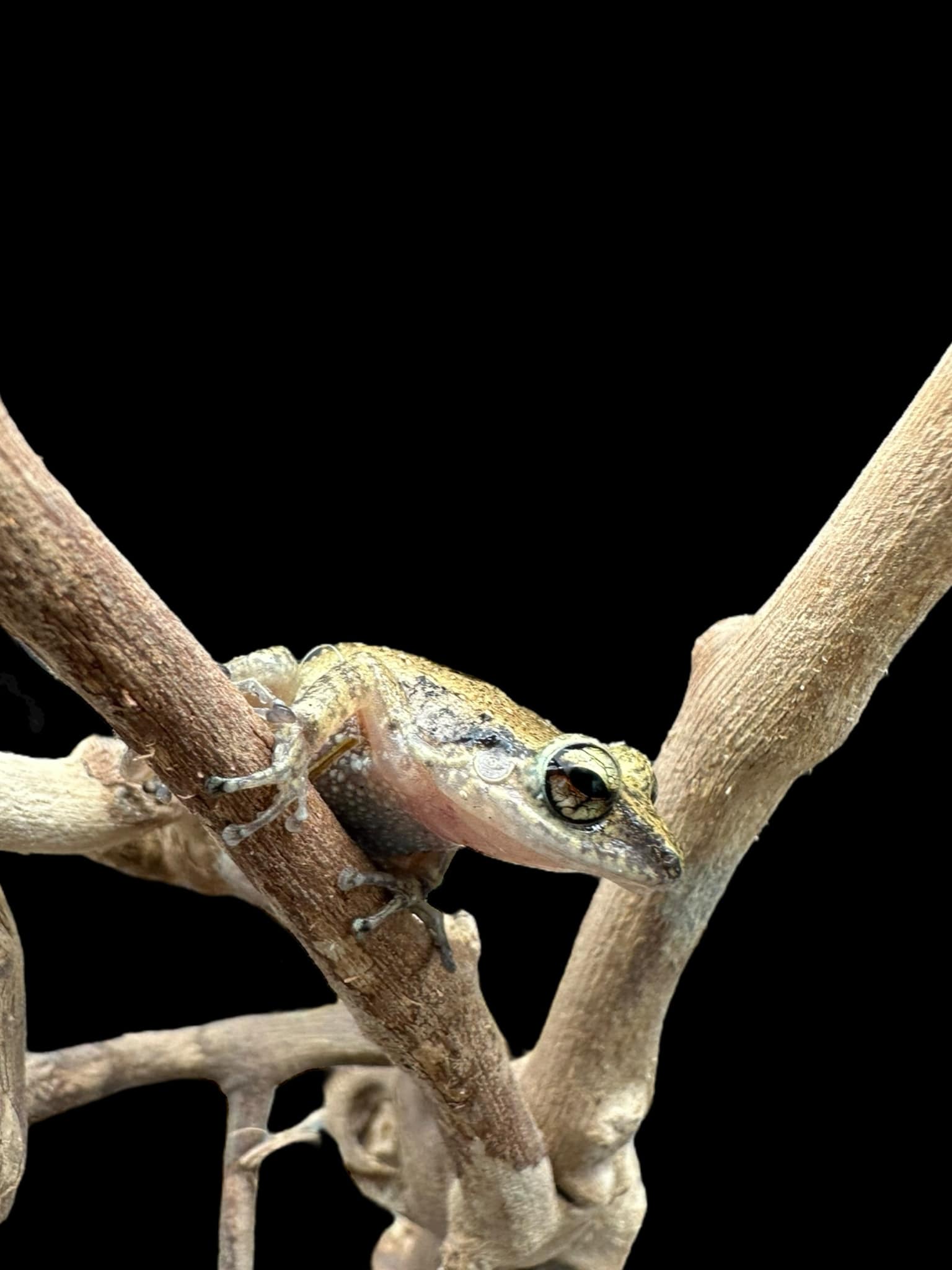
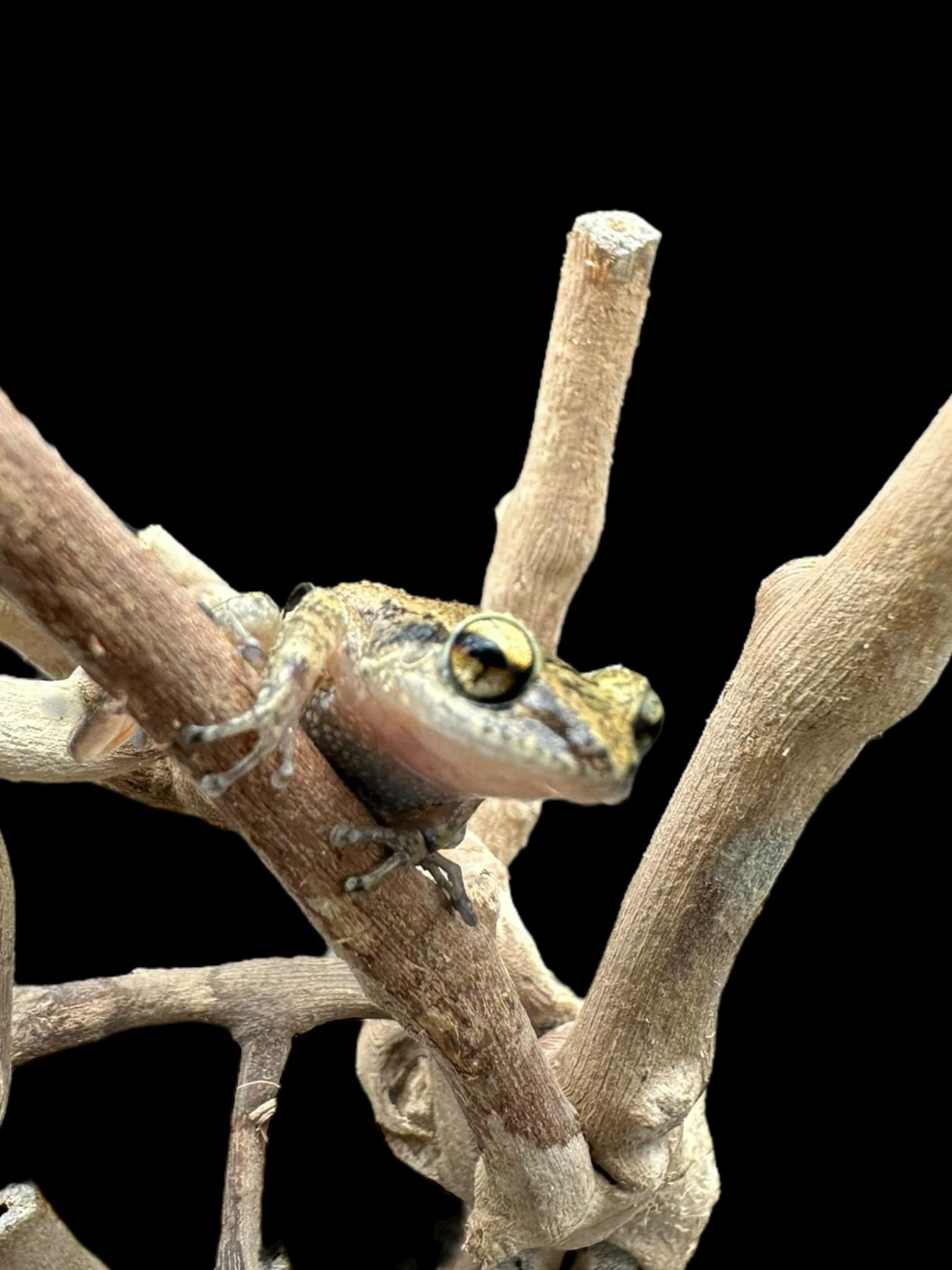
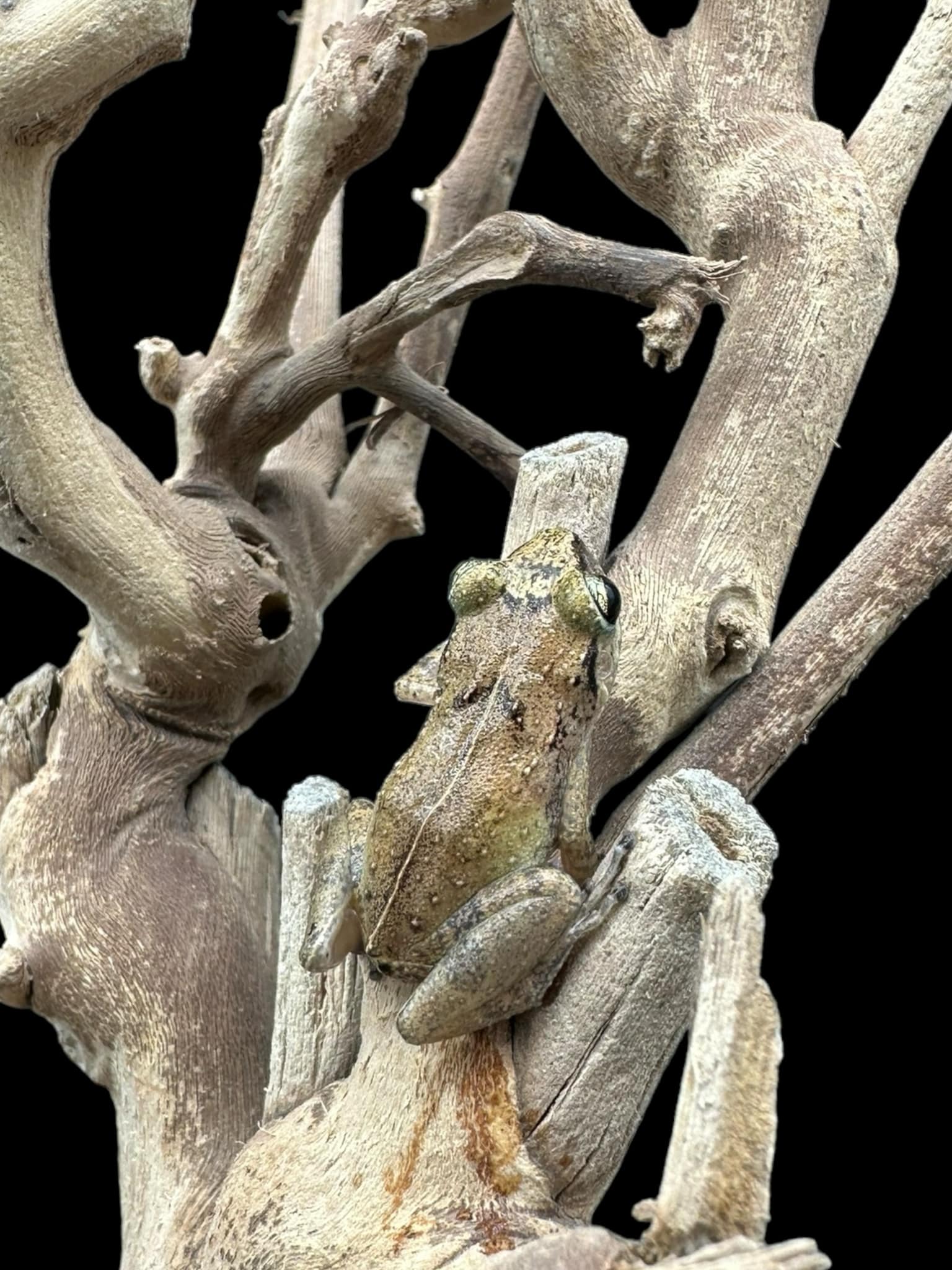
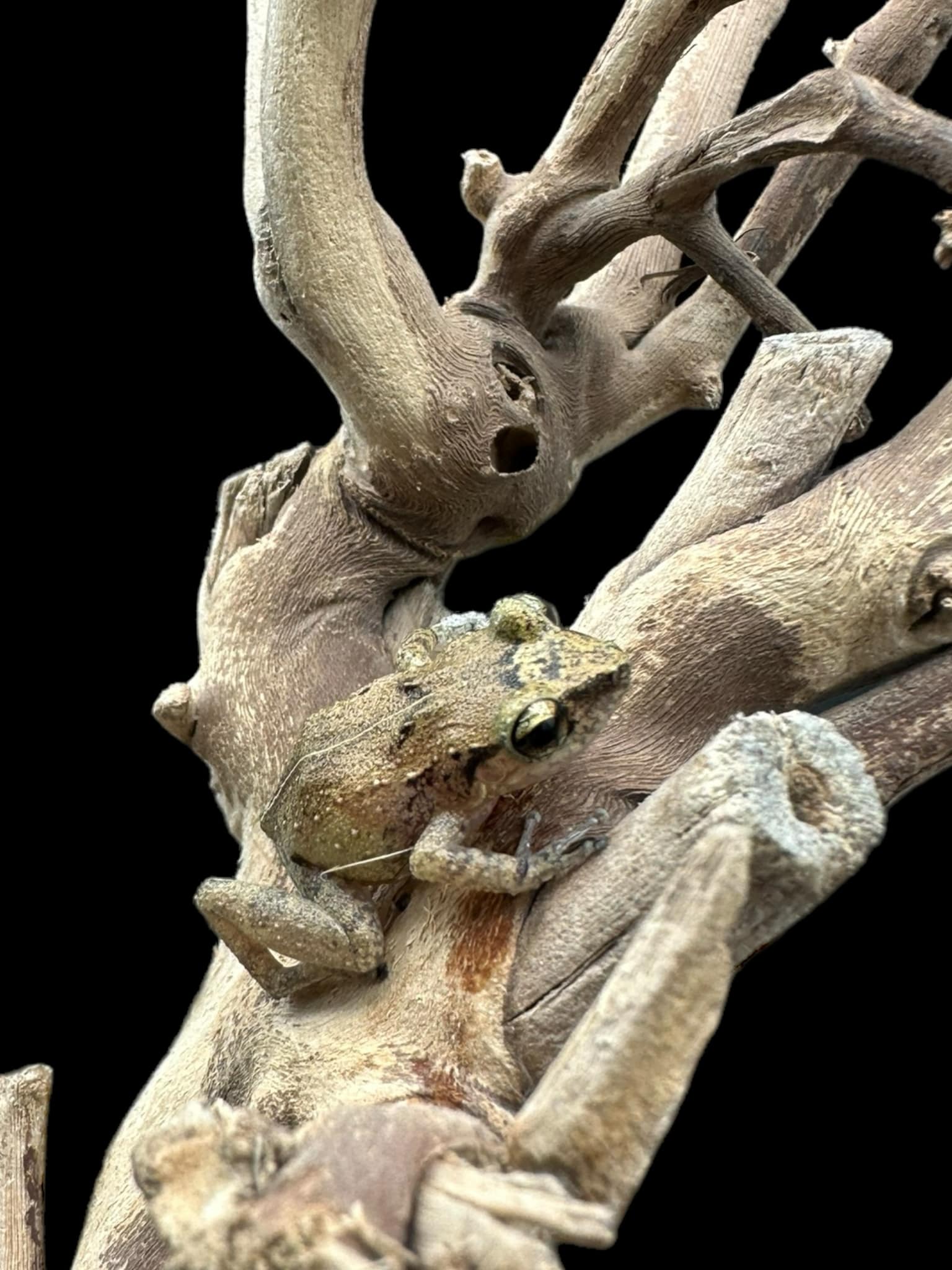
Lesser Antillean Whistling Frog
Scientific Name: Eleutherodactylus johnstonei
Common Name: Lesser Antillean Whistling Frog
Species Overview
Size: Adults typically reach 1 to 1.25 inches (2.5 to 3 cm), with females slightly larger.
Appearance: The Lesser Antillean Whistling Frog is a small, smooth-skinned species with variable coloration ranging from tan, brown, or grey to yellowish tones. Many individuals display faint dorsal mottling, stripes, or small spots, though some appear nearly uniform. The belly is pale, and the limbs are slender with small toe pads suited for climbing low vegetation. Eyes are golden to bronze with round pupils. Their simple appearance and small size make their loud, clear whistling call all the more distinctive.
Distribution: Native to the Lesser Antilles, including islands such as Barbados, Grenada, St. Lucia, and others. It has been introduced to parts of South America and some additional Caribbean islands.
Habitat: Found in a broad range of habitats including gardens, forest edges, shrublands, plantations, grassy slopes, and human-dominated areas. They are highly adaptable and can thrive in both moist and moderately dry environments.
Behaviour: Primarily nocturnal and very vocal, males produce a piercing whistle used in territorial and courtship displays. Unlike many frogs, this species lays eggs on land, where they undergo direct development (hatching as miniature frogs rather than tadpoles). These frogs are fast, agile, and difficult to handle due to their quick, darting movements.
Captive Care
Enclosure: A single adult or small group thrives in a 12 × 12 × 18 inches (30 × 30 × 45 cm) enclosure, while larger groups benefit from an 18 × 18 × 24 inches (45 × 45 × 60 cm) setup. Provide leaf litter, fine branches, vines, and dense ground or low-level foliage. Use a moisture-retentive substrate such as coco fibre, soil blends, or sphagnum mixes to maintain moderate to high humidity. Include a shallow water dish, even though this species does not rely on standing water for breeding.
Temperature and Humidity:
Ambient temperature: 74 to 80°F (23 to 27°C)
Warm area: around 82°F (28°C)
Night temperature: 68 to 72°F (20 to 22°C)
Humidity: 60 to 90%, with light daily misting and good ventilation.
Lighting: Provide low UVB (2 to 5%) with soft, diffused lighting. This species does not require bright light.
Diet: Offer very small insects such as fruit flies, pinhead crickets, springtails, small roaches, and isopods. Supplement prey with calcium and multivitamins.
Behaviour in Captivity: Lesser Antillean Whistling Frogs are active, bold callers that thrive in planted terrariums with both ground cover and low climbing options. They are extremely quick and should not be handled unless absolutely necessary.
Special Considerations:
• Handle only with wet, powder-free gloves or a soft, damp net—they are fast and prone to sudden leaps.
• Provide dense ground-level cover, which mirrors their natural microhabitats.
• Maintain steady humidity while avoiding constant oversaturation.
• Use only dechlorinated water for misting and drinking.
• Secure enclosure gaps—this species is extremely small and agile.
• Expect loud calling behavior, especially from males during nighttime hours.
Taxonomy Note
Eleutherodactylus johnstonei belongs to the family Eleutherodactylidae, a group known for direct-developing frogs that bypass the tadpole stage. This adaptation has allowed them to colonize a wide range of environments. The species is closely related to other Caribbean whistling frogs and is known for its remarkable adaptability.
Genetics Note
There are no recognised morphs for Eleutherodactylus johnstonei. Natural variation appears in dorsal patterning, body tone, and spotting intensity, but none constitute defined genetic morphs.