

Photo Disclaimer
Description
White Eye Crocodile Skink
Scientific Name: Tribolonotus novaeguineae
Common Name: White Eye Crocodile Skink
Species Overview
Size: Adults typically reach 7 to 9 inches (18 to 23 cm) in total length, with a stout body and short tail.
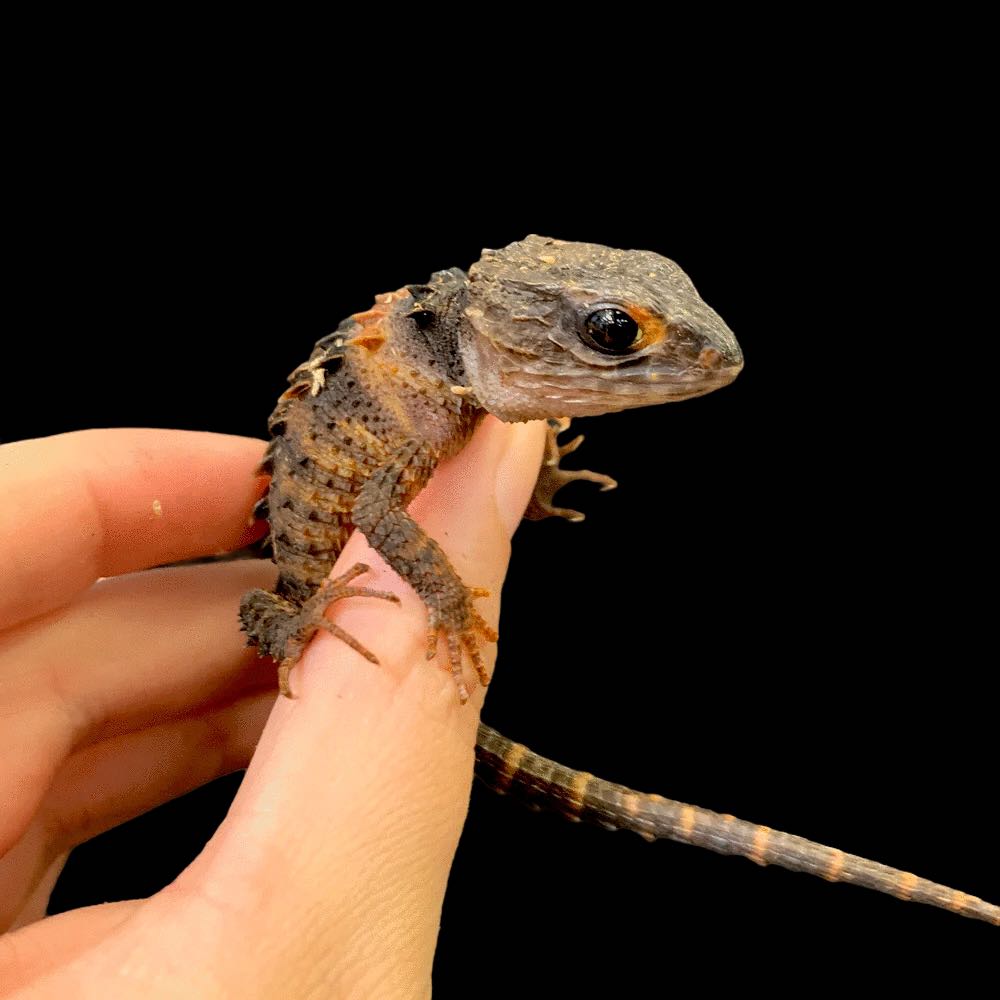
Appearance: The White Eye Crocodile Skink is a distinctive, armour-plated lizard with pronounced dorsal keels and a rugged, crocodile-like appearance. Unlike the more common Red Eye Crocodile Skink, this species lacks the red orbital ring, instead having pale or white skin surrounding the eyes. Their base colour is dark brown to black with lighter brown flanks. The head is angular, and the scales are heavily textured, contributing to their prehistoric look.
Distribution: Native to Papua New Guinea and surrounding regions.
Habitat: This species inhabits humid forests, leaf-litter beds, mossy logs, and shaded riverbanks. They favour cool, damp microhabitats with deep cover and consistent moisture.
Behaviour: White Eye Crocodile Skinks are primarily crepuscular to nocturnal, shy, and secretive. They rely on dense cover for security and are known to vocalise softly when stressed or handled. They are not strong climbers and remain close to the forest floor. When threatened, they may freeze or curl their bodies defensively.
Captive Care
Enclosure: Provide an enclosure measuring 36 × 18 × 18 inches (90 × 45 × 45 cm) for a single adult or a carefully supervised pair, ensuring ample hiding spaces. Furnish with a deep tropical soil substrate covered by leaf litter, moss, cork flats, bark tunnels, and low foliage. Visual barriers are essential for reducing stress. Cohabitation can be attempted with caution, ideally one male with one or more females, but only if the enclosure provides abundant space and hiding opportunities.
Temperature and Humidity:
Ambient daytime: 72 to 78°F (22 to 26°C)
Warm spot (gentle): 80 to 82°F (27 to 28°C)
Night temperatures: 68 to 72°F (20 to 22°C)
Humidity: 70 to 90%, maintained with misting, deep substrate, and dense cover. Avoid stagnant, poorly ventilated humidity.
Lighting: Provide low to moderate full-spectrum lighting with low-intensity UVB (5%). They prefer dim conditions similar to shaded forest floors, so heavy plant cover or hides are important.
Diet: Offer a varied insectivorous diet including roaches, crickets, black soldier fly larvae, mealworms (sparingly), silkworms, earthworms, and isopods. All prey should be size-appropriate, gut-loaded, and dusted with calcium frequently, with multivitamins offered weekly.
Behaviour in Captivity: This species is shy and should be considered a display animal rather than handled. They thrive in quiet environments with dense hiding structure. When secure, they exhibit slow, cautious movement and natural foraging behaviour. Sudden disturbances may cause them to freeze or retreat quickly.
Special Considerations:
• Avoid frequent handling—stress levels are high in this species.
• Provide deep, moist substrate and abundant low hides.
• Maintain high humidity with adequate airflow.
• Monitor cohabiting individuals carefully—stress can occur if hides are insufficient.
Taxonomy Note
Tribolonotus novaeguineae is part of the unique New Guinea crocodile skink group, known for its heavily armoured appearance, vocalisations, and secretive behaviour. The “white eye” form is distinguished by the pale orbital area, setting it apart visually from the red-eyed species.
Genetics Note
There are no recognised morphs for this species. Natural variation includes differences in body tone, scale texture, and eye-ring brightness, all of which represent typical individual variation rather than selective breeding.