


Photo Disclaimer
Description
White Worm Lizard
Scientific Name: Amphisbaena alba
Common Name: White Worm Lizard, Giant Amphisbaena
Species Overview
Size: Adults typically reach 12 to 18 inches (30 to 45 cm) in total length, though some can approach 24 inches in the wild. Their bodies are cylindrical and uniform, giving a worm-like appearance.
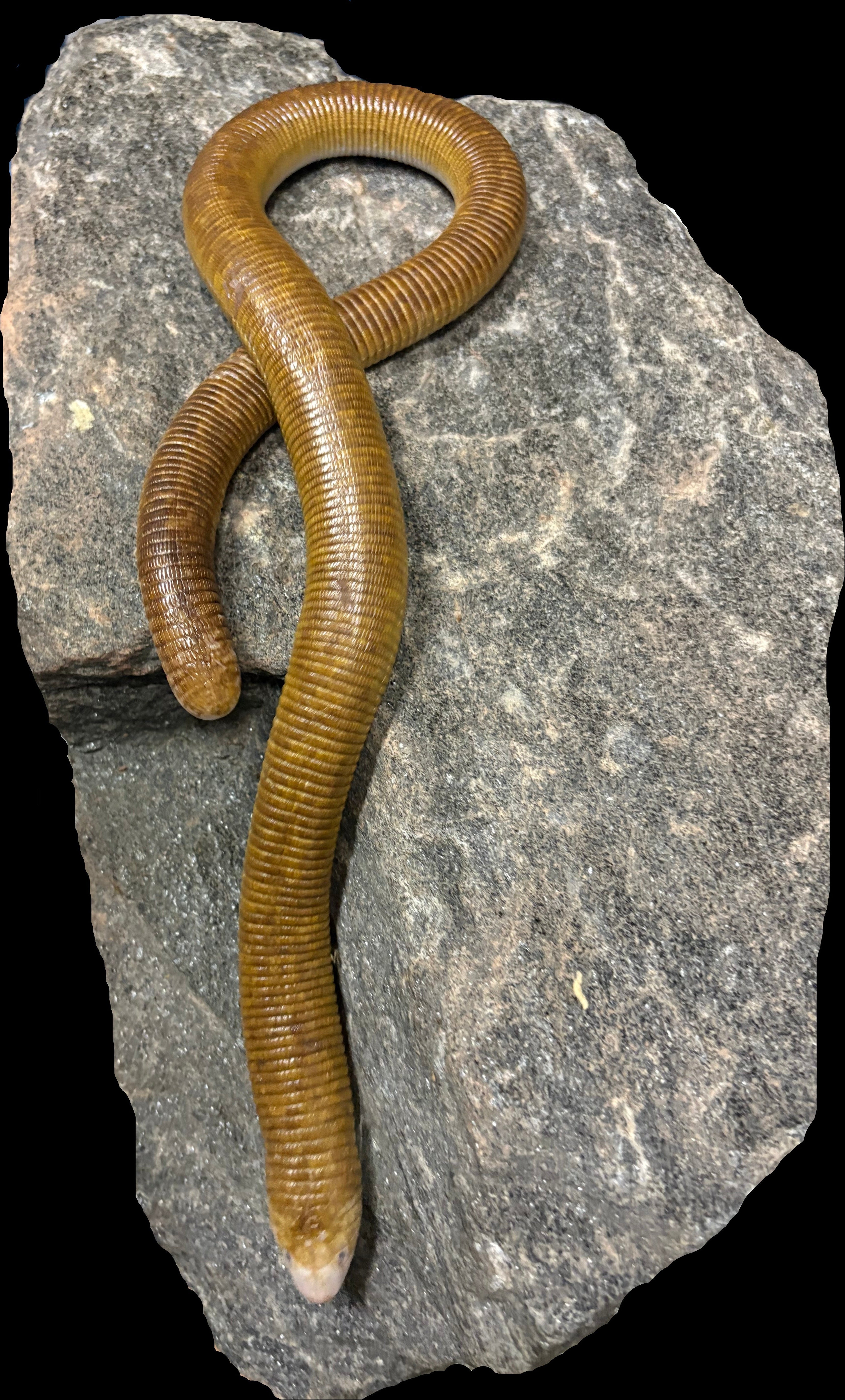
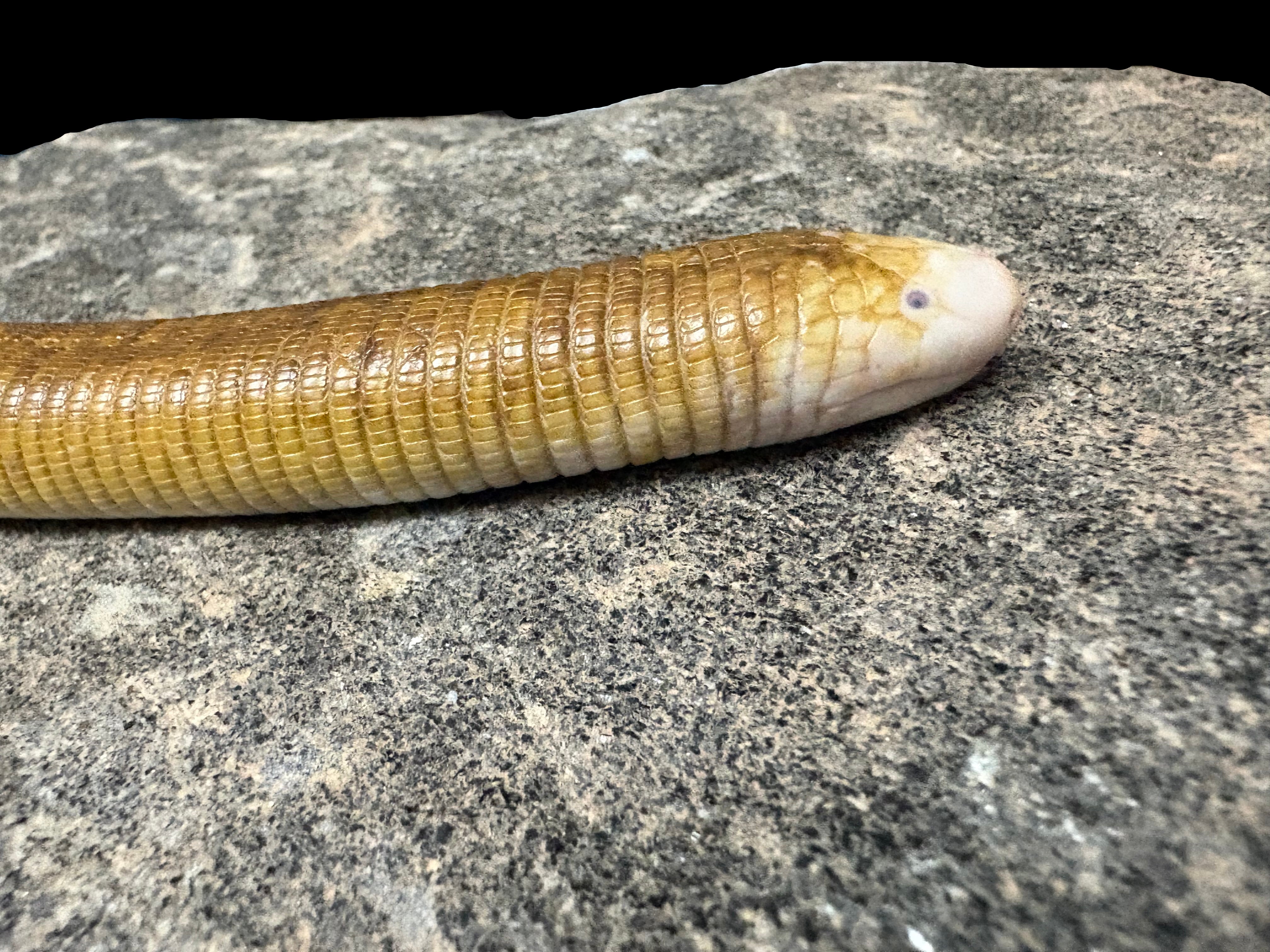
Appearance: The White Worm Lizard is a legless, highly specialised reptile adapted for a subterranean lifestyle. Its body is segmented visually by ring-like annuli, creating a bead-like texture along its length. Colouration is pale white to cream or pinkish, sometimes appearing slightly translucent. The head is blunt and shovel-shaped for digging, while the tail is short and rounded, often making it difficult to distinguish head from tail at a glance. Small, recessed eyes reflect its reliance on tactile and chemical cues rather than vision.
Distribution: Widely distributed across South America, including Brazil, Bolivia, Paraguay, and northern Argentina.
Habitat: This species inhabits moist tropical and subtropical environments with loose, workable soil—such as forest floors, savannah margins, agricultural zones, and areas rich in leaf litter. They spend nearly their entire lives underground, emerging only after heavy rains or during mating periods.
Behaviour: White Worm Lizards are fossorial, reclusive, and slow-moving. They navigate underground through tunnels of their own construction or those of other animals. They are solitary and communicate through chemical cues. In captivity they rarely surface unless food or conditions require it. They defend themselves by coiling, thrashing, or pressing their blunt head against perceived threats.
Captive Care
Enclosure: Provide an enclosure measuring 36 × 18 × 18 inches (90 × 45 × 45 cm) for one adult. Depth is more important than height—fill the enclosure with 6 to 8 inches (15 to 20 cm) of moisture-retentive tropical soil substrate mixed with leaf litter and fine bark. Include multiple microhabitats such as rotting wood pieces, shallow hides, and moist zones. Because this species spends most of its time underground, a secure, escape-proof enclosure is essential.
Temperature and Humidity:
Ambient daytime: 75 to 82°F (24 to 28°C)
Warm end (subsurface): 85 to 88°F (29 to 31°C)
Night temperatures: 70 to 74°F (21 to 23°C)
Humidity: 60 to 80%, with moist deeper layers but a lightly humid surface. Avoid waterlogging, which can cause skin and respiratory issues.
Lighting: No special lighting is required beyond a natural day–night cycle. Low ambient light is sufficient, and UVB is not necessary for this species. However, indirect lighting is useful for plant growth if a planted enclosure is used.
Diet: Offer a diet of soft-bodied invertebrates such as earthworms, nightcrawlers, isopods, mealworms, black soldier fly larvae, and small roaches. Larger individuals may accept pinky mice occasionally, though this should be rare. Feeders should be offered directly on the substrate or lightly buried to encourage natural foraging. Supplement insects with calcium as needed.
Behaviour in Captivity: This species will remain hidden for long periods and is best kept as a display-through-behaviour animal rather than a visual display species. They rarely tolerate handling and are easily stressed when removed from substrate. When enclosure conditions are appropriate, they will create complex burrow networks and surface occasionally to explore or feed.
Special Considerations:
• Handling should be avoided; this species is delicate and stress-prone.
• Provide deep, moist substrate for natural burrowing behaviour.
• Ensure the enclosure is escape-proof; they exploit small gaps easily.
• Avoid overly bright lighting or exposed environments.
• Maintain clean substrate with regular spot-cleaning to prevent mould.
Taxonomy Note
Amphisbaena alba belongs to the Amphisbaenians—a unique group of fossorial reptiles distinct from snakes and lizards, despite sharing features with both. Their highly specialised digging morphology and underground lifestyle make them ecologically unique.
Genetics Note
There are no recognised morphs for this species. Minor individual variation may occur in body tone or annulus definition, but no selectively bred traits exist in captivity.