

Photo Disclaimer
Description
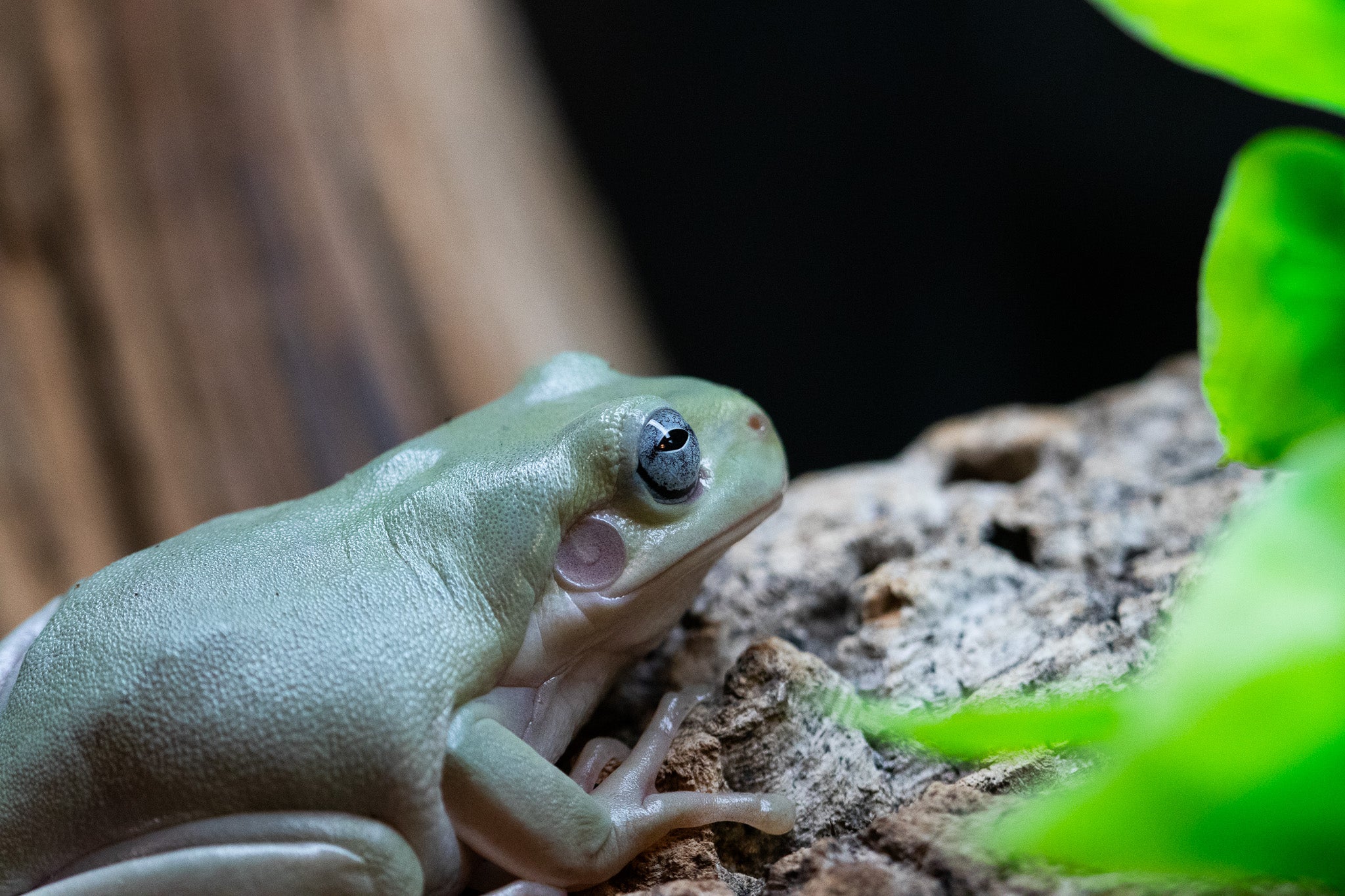
White’s Tree Frog (Blue Eyed)
Scientific Name: Pelodryas caerulea
Common Name: White’s Tree Frog, Blue-Eyed White’s Tree Frog
Species Overview
Size: Adults typically reach 3 to 4.5 inches (7.5 to 11.5 cm), with females slightly larger.
Appearance: The Blue-Eyed White’s Tree Frog is a selectively bred visual form of the classic White’s Tree Frog, distinguished by its vivid blue or icy turquoise eye coloration instead of the typical gold or copper tones. The body colour may range from standard green to teal, blue-green, or slightly greyish hues, depending on the individual. Skin is thick, smooth, and moderately waxy, helping the frog retain moisture. The cheeks and flanks often show soft cream or pale blue highlights. The frog’s rounded, heavy-set build and adhesive toe pads remain characteristic of Litoria caerulea.
Distribution: The wild species is native to Australia, Indonesia, and Papua New Guinea. The Blue-Eyed form is an exclusively captive-bred variant, not naturally occurring in the wild.
Habitat: In nature, White’s Tree Frogs inhabit forests, woodlands, river corridors, scrublands, and even urban environments. They seek out sheltered daytime retreats such as tree hollows, leaf axils, and shaded vegetation.
Behaviour: These frogs are calm, hardy, and often quite tolerant of observation. Primarily nocturnal, they become active at night, climbing and exploring their surroundings. They are strong perchers that enjoy elevated resting places and are known for their expressive faces and occasional vocalisations.
Captive Care
Enclosure: A single adult or small group thrives in an 18 × 18 × 24 inches (45 × 45 × 60 cm) enclosure, while larger groups benefit from a 24 × 18 × 24 inches (60 × 45 × 60 cm) setup. Furnish with sturdy branches, cork rounds, vines, and broad artificial or live plants for climbing and hiding. Use a moisture-retentive but well-drained substrate such as coco fibre, soil mixes, or sphagnum blends to maintain moderate humidity. Provide a large, shallow water basin, as this species frequently soaks.
Temperature and Humidity:
Ambient temperature: 75 to 82°F (24 to 28°C)
Warm area: 84 to 86°F (29 to 30°C)
Night temperature: 70 to 74°F (21 to 23°C)
Humidity: 50 to 80%, with regular misting and good ventilation.
Lighting: Provide low to moderate UVB (2 to 5%) with bright, diffused lighting. Blue eye coloration is often most striking under naturalistic full-spectrum lighting.
Diet: Offer medium to large insects such as crickets, roaches, black soldier fly larvae, hornworms, silkworms, and occasional waxworms. Supplement insects with calcium and multivitamins.
Behaviour in Captivity: Blue-Eyed White’s Tree Frogs adapt well to captive life and thrive in planted or semi-planted enclosures. They are active at night, often perching in visible areas. Though more tolerant of handling than many frogs, direct contact should remain limited.
Special Considerations:
• Handle only with wet, powder-free gloves to protect the frog’s sensitive skin.
• Ensure strong ventilation—this species is prone to respiratory issues if kept in stagnant conditions.
• Avoid overly saturated substrates; moderate humidity with drying cycles is ideal.
• Provide sturdy climbing surfaces, as adults are heavy-bodied.
• Use only dechlorinated or RO water for misting and soaking.
• Monitor weight, as this species is prone to obesity.
Taxonomy Note
Pelodryas caerulea belongs to the family Pelodryadidae and is closely related to other Australasian tree frogs. The species is known for its adaptability, docile nature, and distinctive thick skin.
Genetics Note
Blue-Eyed (line-bred trait):
This selectively developed visual trait enhances the natural blue pigmentation of the iris, producing eyes that range from pale turquoise to deep sapphire. The body colour may vary independently of the eye colour. This trait is not tied to a single identified gene and is produced through multigenerational selective breeding for intensified blue iris pigmentation.