


Photo Disclaimer
Description
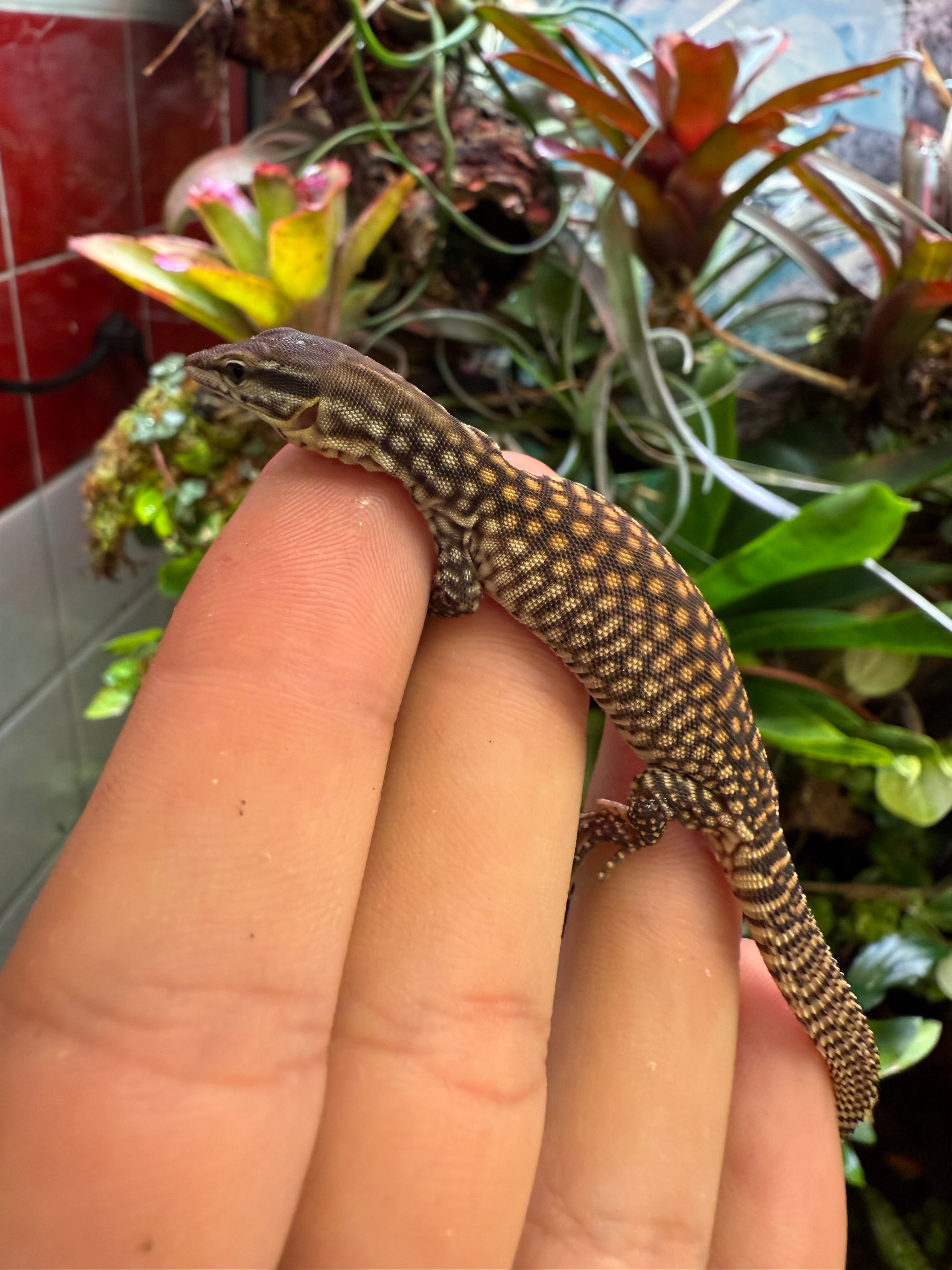
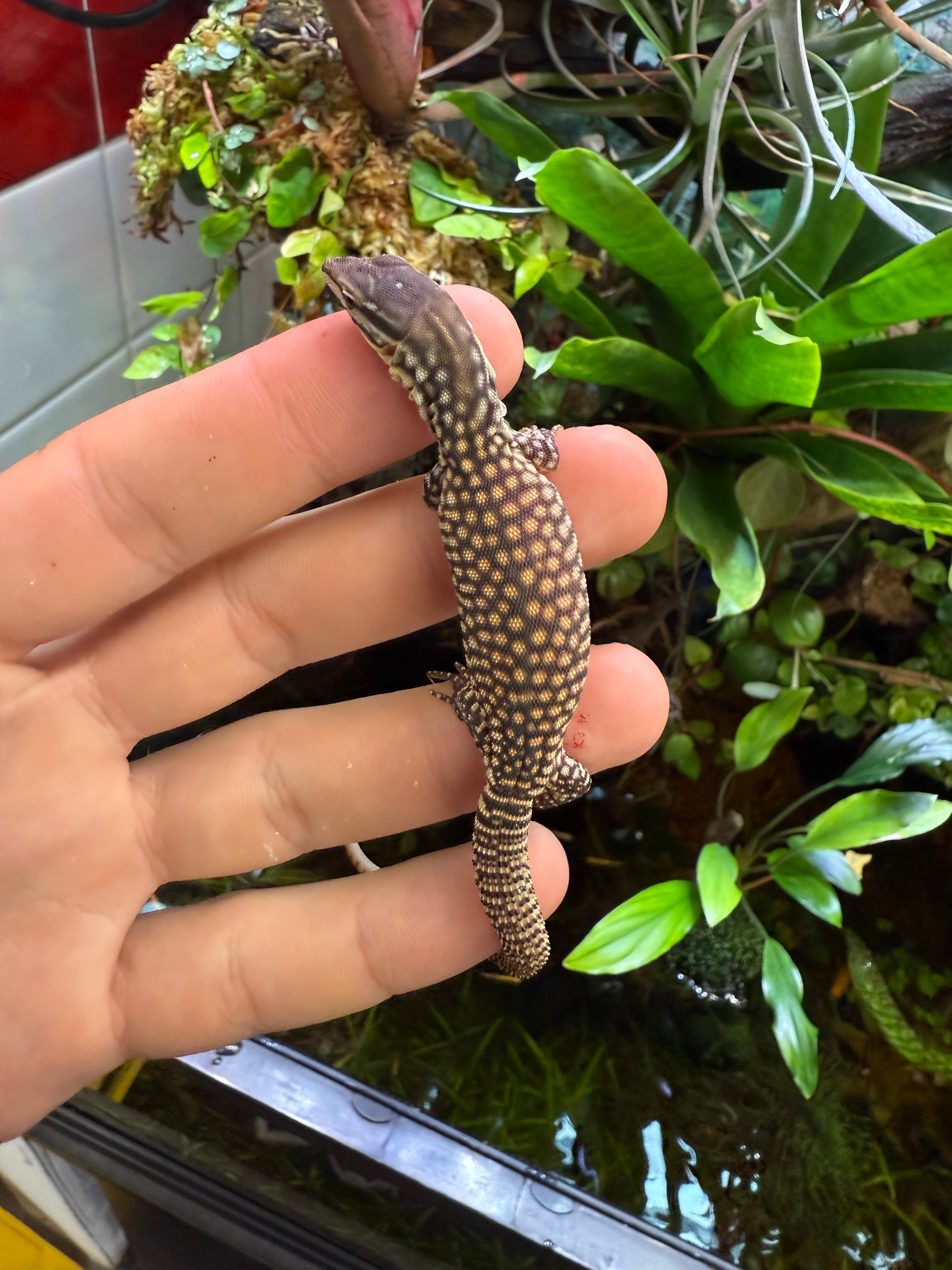
Yellow Ackie Monitor
Scientific Name: Varanus acanthurus
Common Name: Yellow Ackie Monitor, Spiny-Tailed Monitor (Yellow Form)
Species Overview
Size: Adults typically reach 20 to 28 inches (50 to 71 cm) in total length, with a heavy portion of that length made up by the long, spiny tail.
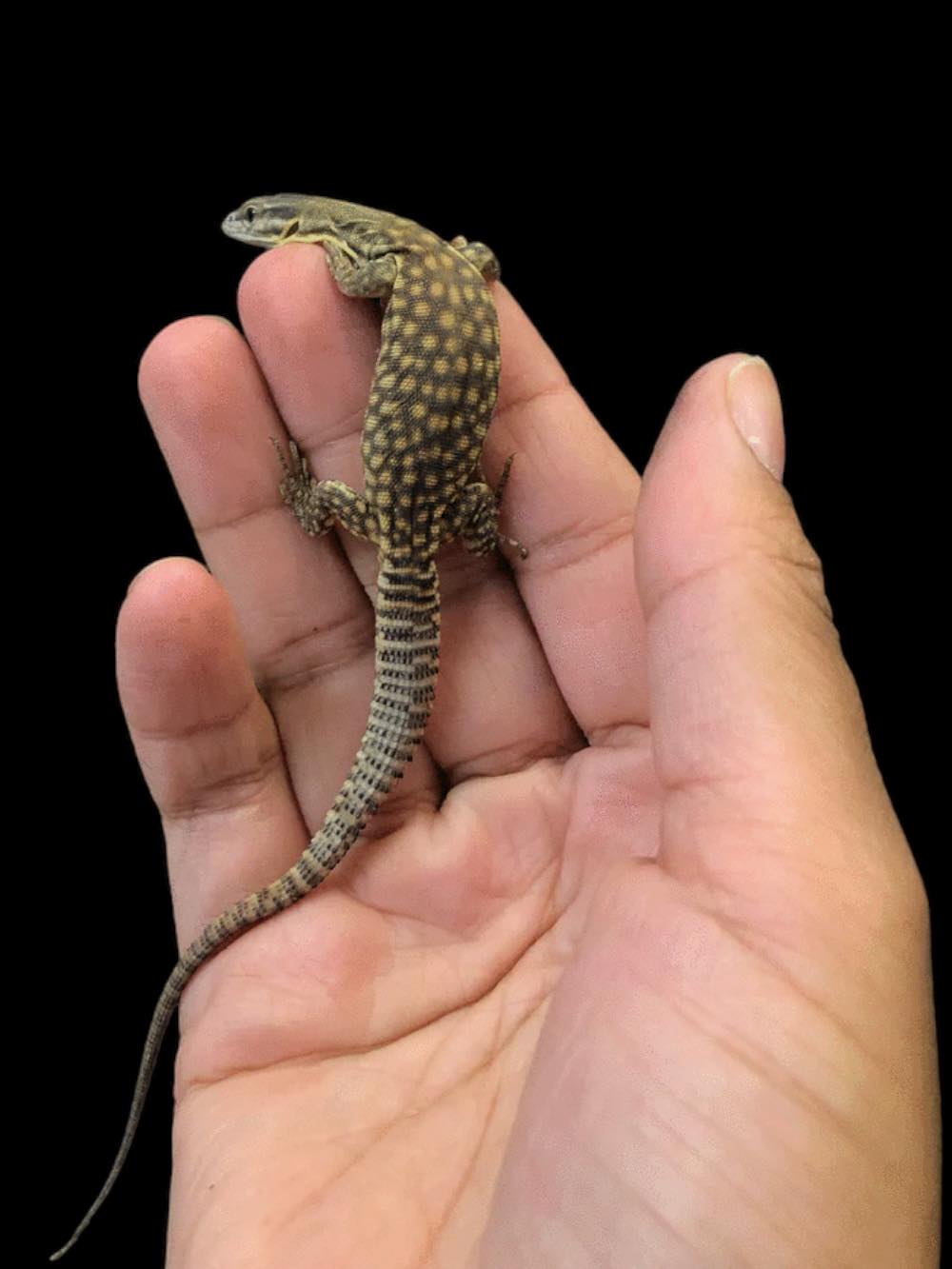
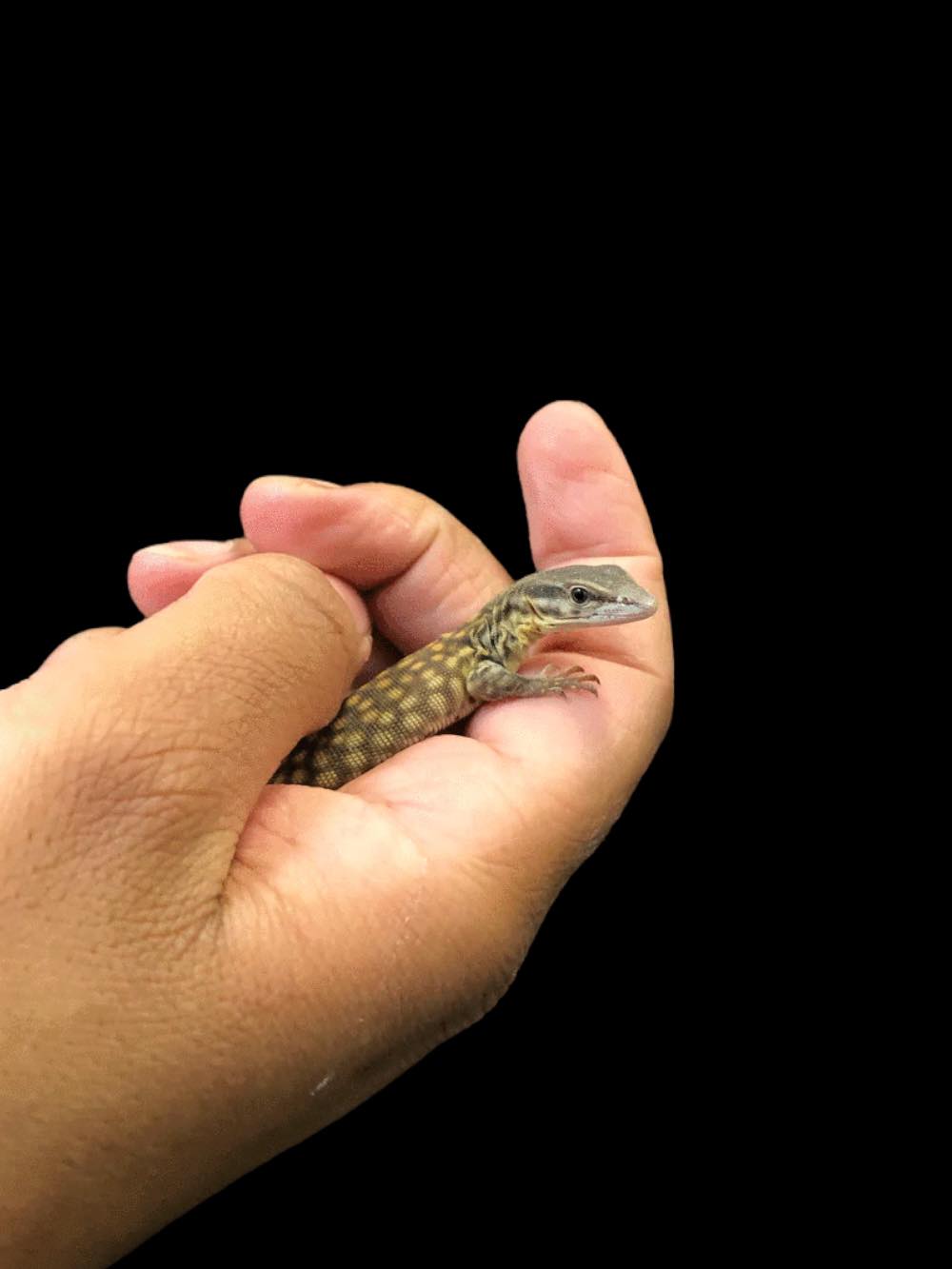
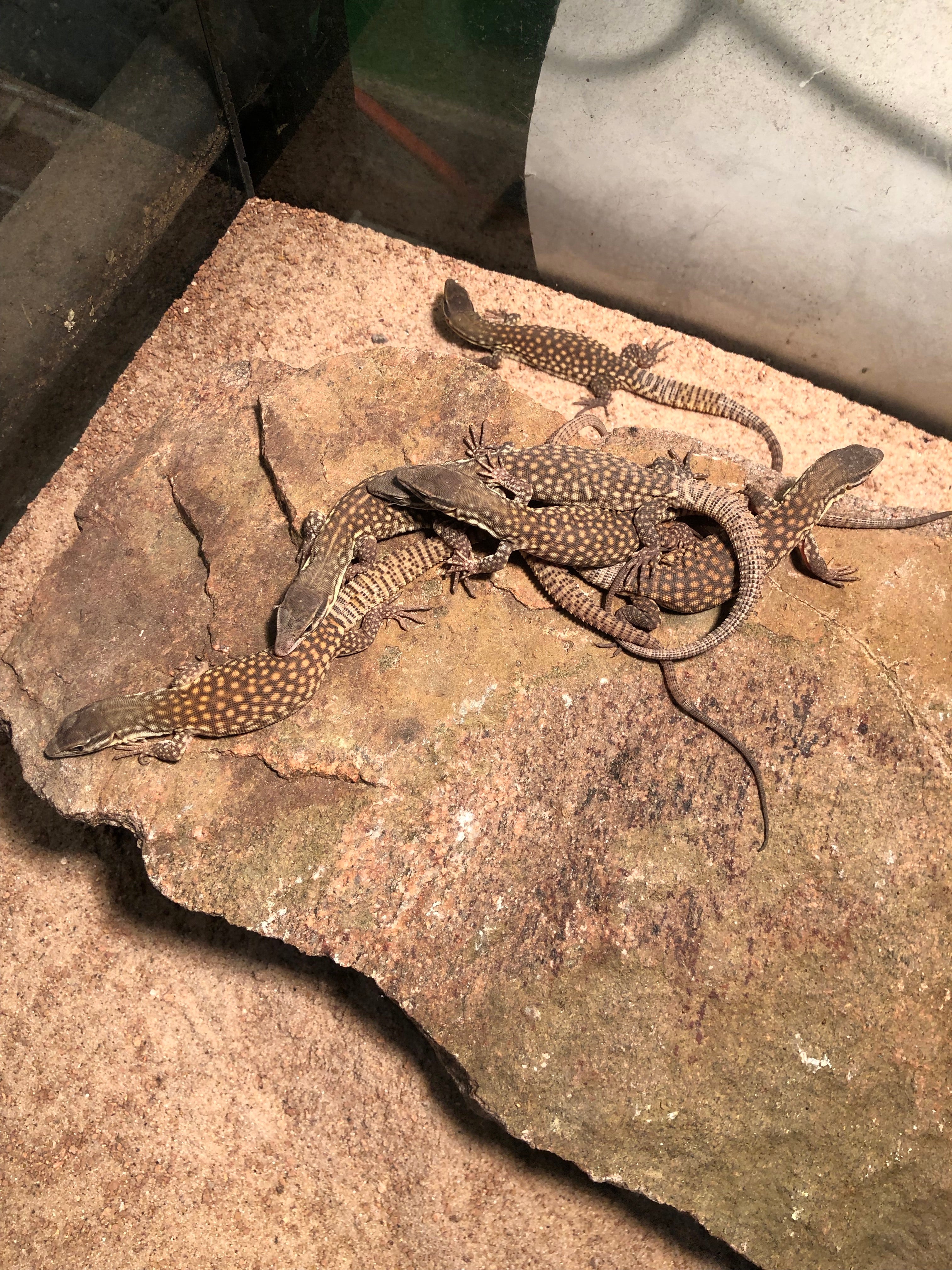
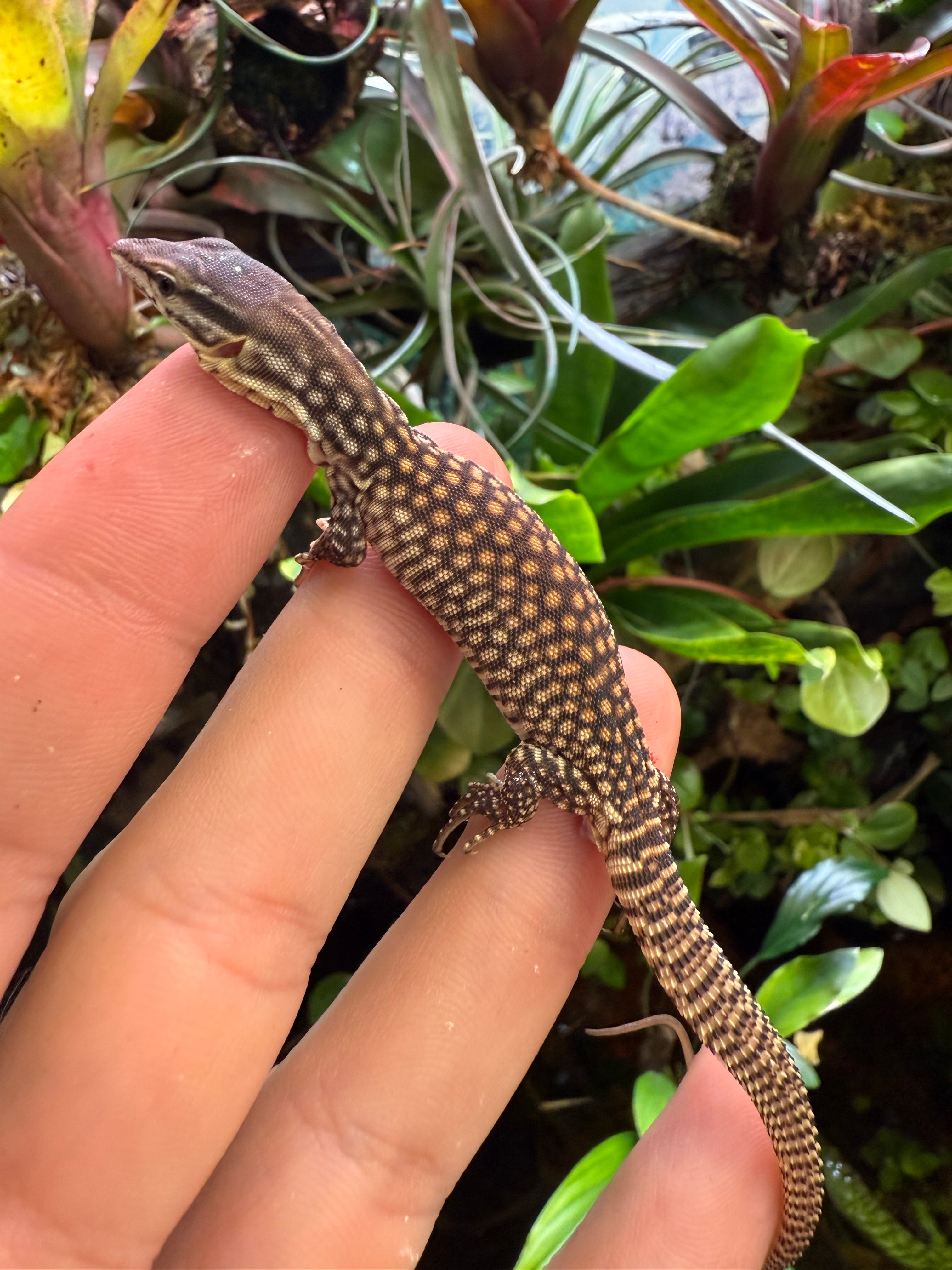
Appearance: The Yellow Ackie Monitor is the brighter colour form of Varanus acanthurus, characterised by warm golden, yellow, or tan spotting across a brown to reddish-brown background. The patterning forms rows of clean, high-contrast spots or ocelli along the back and flanks. Their tail is long, ringed with sharp spines used for defense and balance. The head is wedge-shaped with expressive eyes, and the body is compact and muscular—adapted for digging and navigating rocky terrain. Compared to the Red form, Yellow Ackies display lighter tones and more defined yellow patterning.
Distribution: Native to northwestern and central Australia, inhabiting arid and semi-arid regions.
Habitat: This species occupies rocky deserts, scrubland, spinifex grasslands, and dry woodland edges. They spend significant time basking on rocks, hunting small prey, and retreating into deep burrows or crevices for temperature regulation and safety.
Behaviour: Yellow Ackies are diurnal, highly active, intelligent, and known for their generally bold nature. They are strong diggers and climbers and are one of the more manageable monitor species in captivity due to their smaller size and curious temperament. They thrive when allowed to dig, explore, and maintain complex burrow systems.
Captive Care
Enclosure: Provide an enclosure at least 4 × 2 × 2 feet (1.22 × 0.61 × 0.61 m) for one adult, though larger (especially with increased floor space) is always preferred. Use a deep soil-based or soil–sand substrate appropriate for arid species, offering 8 to 12 inches (20 to 30 cm) of depth for burrowing. Furnish with rock piles, cork bark tunnels, sturdy branches, basking shelves, and secure hides. All rock structures must be firmly stabilized to prevent collapse on burrowing animals.
Temperature and Humidity:
Basking area: 130 to 150°F (54 to 66°C)
Warm side: 95 to 105°F (35 to 40°C)
Cool side: 75 to 82°F (24 to 28°C)
Night temperatures: 70 to 75°F (21 to 24°C)
Humidity: 20 to 40% overall, with higher humidity retained in the deeper substrate layers, allowing for proper shedding and burrow microclimates.
Lighting: Provide intense full-spectrum lighting with strong UVB (10 to 12%). High-output LEDs or metal halide bulbs help create bright, desert-like conditions that stimulate natural behaviour.
Diet: Offer a varied carnivorous diet including roaches, crickets, black soldier fly larvae, silkworms, hornworms, and occasional eggs. Pinky mice may be offered sparingly. Frequent insect variety is essential—rotate feeder types for optimal nutrition. Supplement calcium often and provide multivitamins weekly.
Behaviour in Captivity: Yellow Ackies are active, inquisitive, and thrive with heavy environmental enrichment. They burrow extensively, bask openly, and may become quite interactive with consistent care. They are far more tolerant of handling than most monitors, though still best treated as active display animals rather than pets that require frequent restraint.
Special Considerations:
• Deep substrate is essential—burrowing is critical to their health.
• Provide extremely hot basking temperatures to support metabolism.
• Avoid rodent-heavy diets to prevent obesity.
• Ensure the enclosure is escape-proof; monitors are skilled diggers and climbers.
• Never house adult monitors together—territorial disputes may occur.
Taxonomy Note
Varanus acanthurus includes multiple geographic and colour forms, with the Yellow Ackie representing populations with lighter, more golden spotting. Despite regional variations, all forms share similar husbandry requirements and behavioural tendencies.
Genetics Note
There are no recognised morphs for Yellow Ackie Monitors. Colour intensity and spot clarity vary naturally across individuals and wild populations, representing locality-based variation rather than selective genetic morphs.
Estimate shipping