


Avis de non-responsabilité concernant les photos
Description
African Reed Frog (Hyperoliinae spp.)
Scientific Name: Hyperoliinae spp.
Common Name: African Reed Frog
Species Overview
Size: Adults typically reach 1 to 2 inches (2.5 to 5 cm), with females generally larger than males.
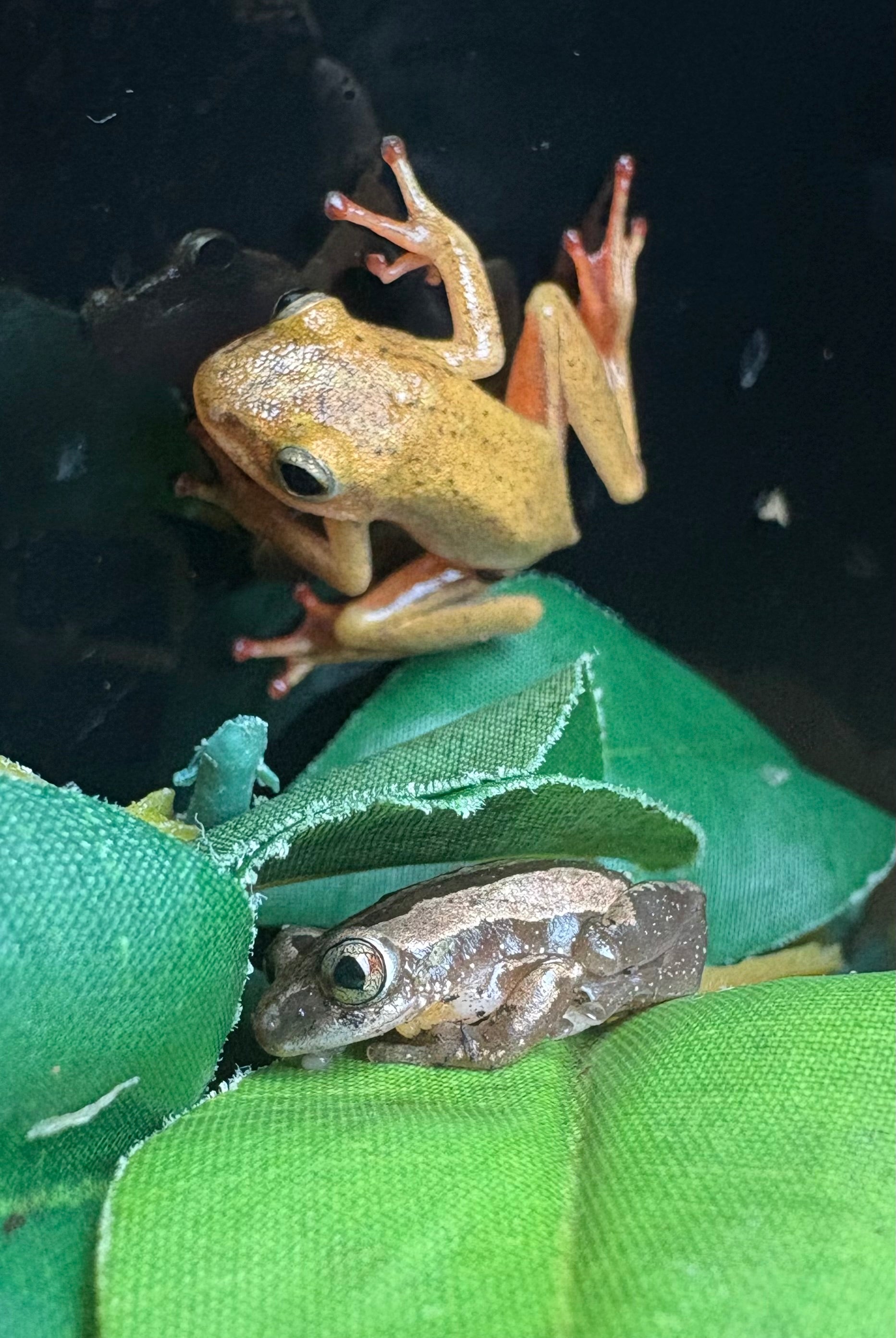
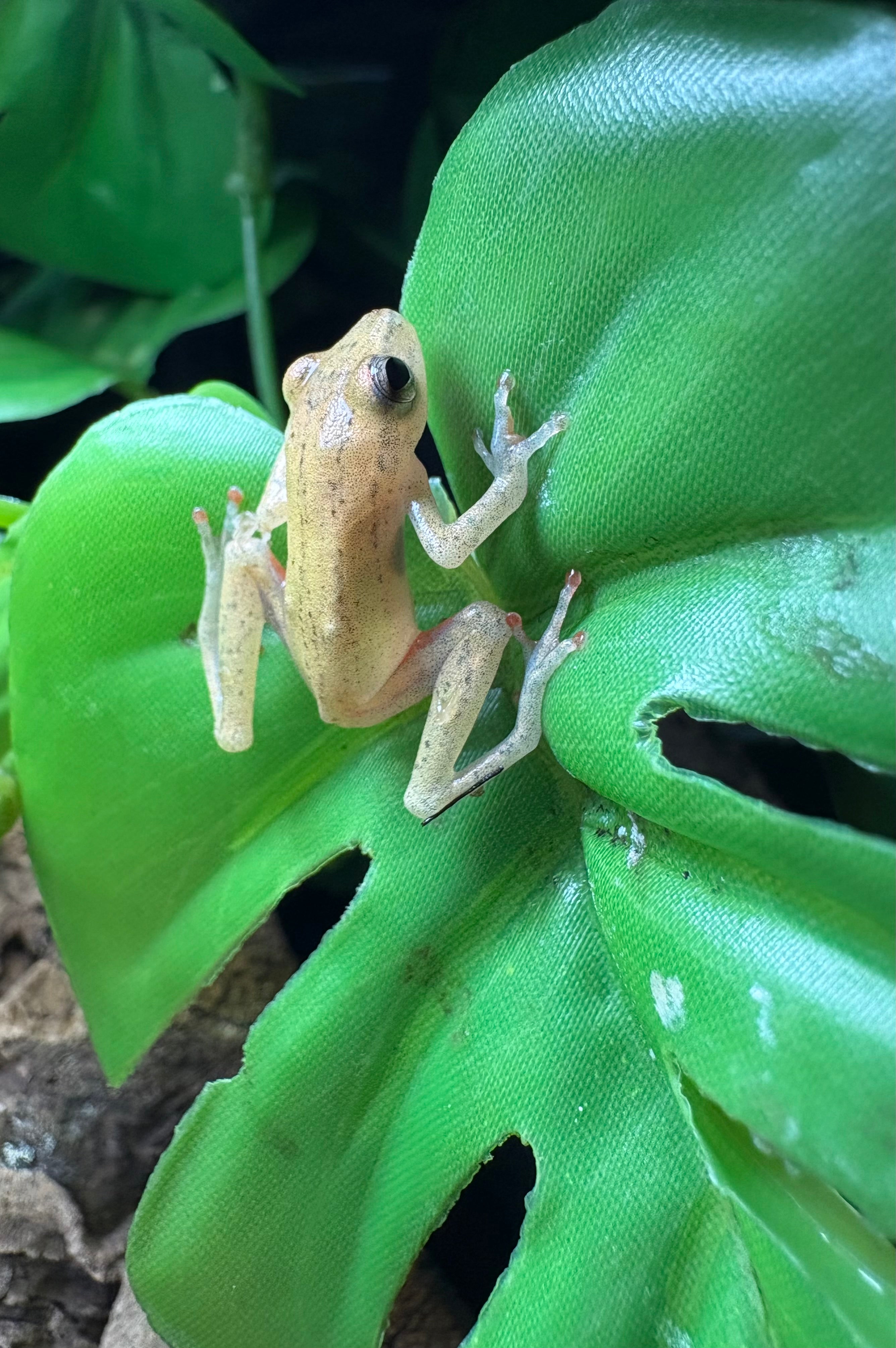
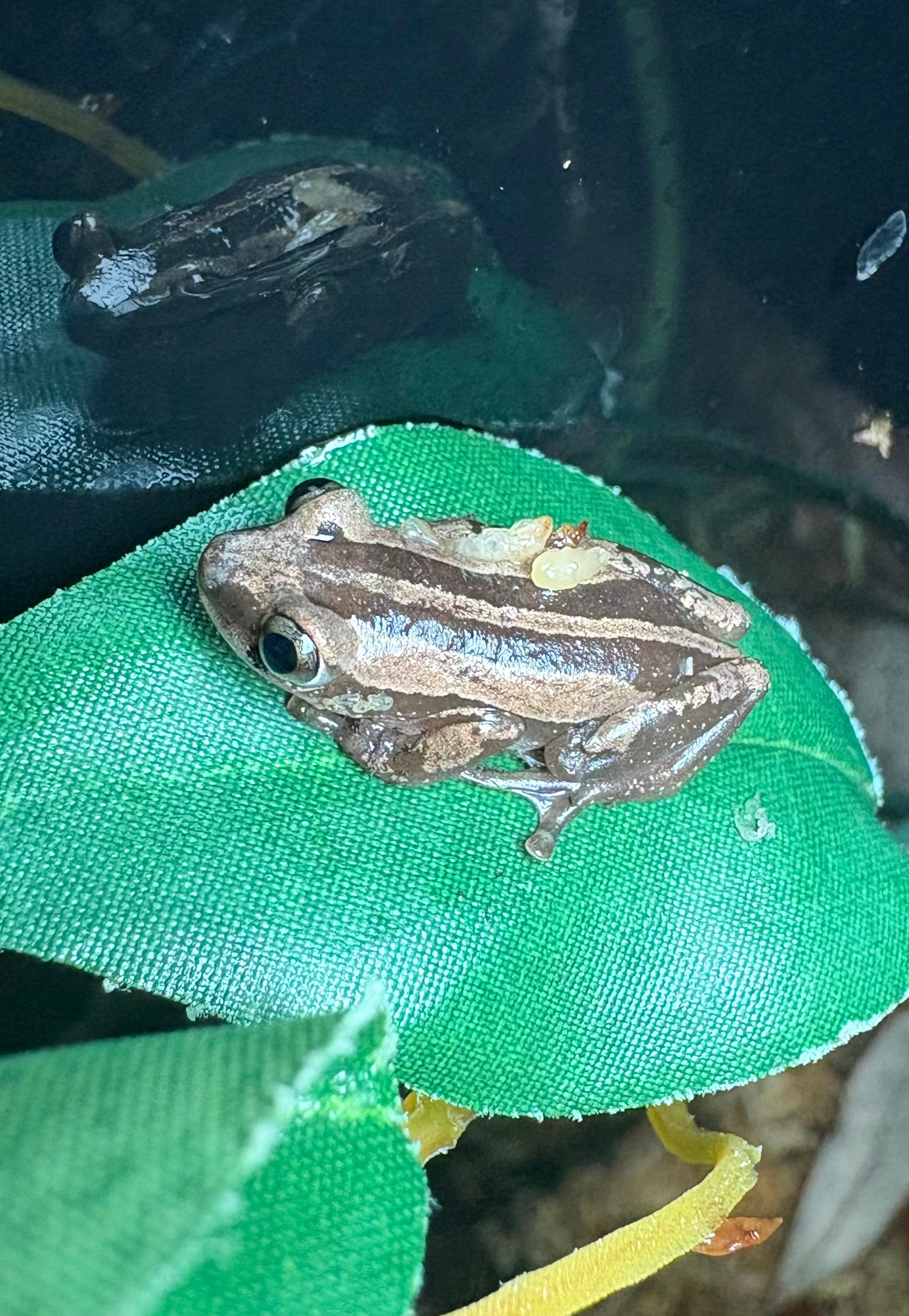
Appearance: African Reed Frogs are small, delicate amphibians with smooth skin and highly variable colouration. Depending on species, individuals may display greens, yellows, oranges, browns, or intricate patterns including stripes, spots, or mottling. Many species undergo ontogenetic colour changes, shifting hues as they mature. Toe pads are broad and adhesive, enabling excellent climbing ability. The underside is pale, often cream or yellowish.
Distribution: Found across sub-Saharan Africa, with species ranging widely through Central, West, East, and southern regions.
Habitat: Wild individuals inhabit wetlands, marshes, reed beds, flooded grasslands, and forest edges. They perch on reeds and vegetation near water sources and depend on humid, well-ventilated environments.
Behaviour: Primarily nocturnal, African Reed Frogs become active at dusk to forage, climb, and vocalise. They hide in foliage during the day and may shift colour depending on temperature or mood. They are agile, social within their species, and delicate in temperament.
Captive Care
Enclosure: A single adult or small group thrives in an 18 × 18 × 24 inches (45 × 45 × 60 cm) enclosure, while larger groups benefit from a 24 × 18 × 24 inches (60 × 45 × 60 cm) setup. Provide abundant vertical climbing structure with branches, cork flats, vines, and dense foliage. Use a moisture-retentive, naturalistic substrate such as coco fibre, soil blends, or sphagnum mixes to maintain humidity while allowing proper drainage. Include a shallow water basin for hydration.
Temperature and Humidity:
Ambient temperature: 74 to 82°F (23 to 28°C)
Warm area: around 84°F (29°C)
Night temperature: 68 to 72°F (20 to 22°C)
Humidity: 60 to 90%, maintained with regular misting and strong airflow.
Lighting: Provide low to moderate UVB (2 to 5%) with bright, diffused lighting to support both frogs and live plants.
Diet: Offer fruit flies, pinhead to small crickets, springtails, small roaches, and black soldier fly larvae. Supplement all prey with calcium and multivitamins.
Behaviour in Captivity: African Reed Frogs thrive in lush, well-ventilated terrariums with ample vertical structure. They are active, vocal frogs at night and rest quietly during the day. Handling should be avoided due to their sensitive, permeable skin.
Special Considerations:
• If handling is absolutely necessary, use wet, powder-free gloves or a soft, damp net—never bare hands.
• Provide strong ventilation; stagnant humidity leads to health issues.
• Use only dechlorinated water for misting and water dishes.
• Ensure dense foliage to reduce stress and encourage natural activity.
• Mist lightly and avoid oversaturating substrate.
• Keep enclosures escape-proof; reed frogs can squeeze through narrow gaps.
Taxonomy Note
African Reed Frogs belong to the subfamily Hyperoliinae, a diverse group of small arboreal frogs native to sub-Saharan Africa. This clade includes multiple genera, such as Hyperolius and Afrixalus, known for bright colouration, complex patterns, and unique breeding strategies including egg deposition on vegetation above water.
Genetics Note
There are no recognised morphs across the African Reed Frog subfamily. Natural variation in colour, pattern, and sexual dimorphism is extensive but represents typical species and locality differences rather than defined genetic morphs.